In South Florida, hurricane resilience is no longer a niche preference. It is a core element of value, comfort, and continuity for luxury buyers. New construction can offer meaningful advantages, but only when design intent is matched by documentation, detailing, and long-term operations. This guide outlines how to evaluate code posture, glazing and door performance, waterproofing strategy, and backup-power planning, while also highlighting the practical questions to ask developers, engineers, and building management before you commit.
Resilience is now a core component of luxury value across South Florida. It is no longer a niche preference or a line item reserved for the most cautious buyers. In a market where seasonal weather can interrupt travel, work, and daily routines, high-net-worth purchasers increasingly judge a building by continuity, not only by finishes, views, and amenities.
This is especially true in new construction across established urban cores and waterfront enclaves. Buyers want homes that feel composed when conditions outside are not. That expectation is changing what “premium” means in practice, and it is influencing decisions from Brickell to Miami Beach, Fort Lauderdale, and West Palm Beach.
Importantly, hurricane resilience is not a single feature you can check off. It is a layered strategy that begins at the site and structural concept, continues through the envelope and openings, and ends with operational readiness. A lobby can be beautiful and still be a liability if water intrusion reaches finished areas. A penthouse can be exceptional and still feel exposed if electrical infrastructure is vulnerable and communications go dark.
The differentiator is rarely one headline amenity. It is the cumulative effect of conservative design, precise detailing, and management discipline. The best buildings feel calm because they were planned, built, and prepared to stay livable when the forecast turns serious.
When a buyer asks whether a building “meets code,” the real question is usually broader: was the project designed and executed with rigor, or designed to the minimum acceptable threshold? You do not need to become an engineer to evaluate this. You do need to ask for the signals that separate documentation from reassurance.
Start with the basics: which code basis and local amendments governed design at the time of permitting. Requirements evolve over time, and many projects are approved under the rules in effect when permits are issued. Rather than debating which edition is best, ask for a clear, consistent compliance narrative from permitting through completion.
Next, look for evidence of coordination. Wind, water, and power continuity are not isolated topics. They cross architecture, structure, façade engineering, waterproofing, mechanical systems, and electrical distribution. A well-run project can explain how these disciplines align. A weak project will answer in fragments, with handoffs and vague language.
Finally, ask whether third-party inspections, testing, and commissioning are part of the process, and whether results are documented. You may not need the technical metrics. You do need a paper trail that shows intent was verified in execution. In luxury real estate, documentation is not bureaucracy. It is the tangible proof of risk reduction.
In hurricane conditions, the envelope is the boundary between a controlled interior and a building that becomes a repair project. High-performing new construction treats the envelope as a system, not as a collection of product choices.
Your diligence can stay simple if you focus on two themes: pressure and water.
Pressure management governs how walls, glazing, roof assemblies, and connections respond under extreme conditions. Quality is often revealed in the interfaces, not the marketing materials. Balcony doors meeting slab edges, curtain wall meeting concrete, and transitions at corners and setbacks are common places where problems originate. Projects that take resilience seriously tend to describe these conditions with specificity because they have spent time resolving them.
Water management deserves equal attention. Wind-driven rain can exploit paths that ordinary storms never expose. The strongest strategies assume water will try to enter and then build multiple lines of defense. In practice, that can mean redundant seals, drainage planes, carefully designed thresholds, clear pathways for water to exit, and practical access for inspection and service.
A useful buyer-level test is to ask for the waterproofing strategy in plain language. Where does water go if it gets behind a surface? How is it collected, directed, and discharged? How will issues be detected early, before finishes and assemblies are compromised? You are not trying to audit details you cannot see. You are assessing whether the team speaks with precision or relies on slogans.
Windows and doors are the most visible part of resilience and the part you experience daily. They influence comfort, sound, condensation risk, and the sense of security when weather intensifies.
Many luxury buyers treat “impact” as a checkbox. A more useful approach is to ask how the glazing and door package was selected, how it is detailed at the opening, and how it is expected to perform over time.
Start with the full assembly. Performance is not only about the glass. Frames, anchors, sealants, gaskets, and the interface with the surrounding wall matter just as much. A serious project should be able to describe why the chosen system fits the building’s design intent and how it is integrated into the structure and façade.
Ask directly about water intrusion resistance at openings. Even excellent windows can underperform if installed into poorly detailed openings. Items like sill conditions, threshold slope, and drainage pathways can be the difference between a dry interior and recurring service calls.
Clarify what is operable and what is fixed. Operable panels add convenience but also add complexity. Complexity is not inherently negative. It simply increases the importance of detailing, alignment, and ongoing maintenance. Understand which openings are operable, how they seal, and what the building expects from owners and management to keep performance consistent.
Finally, think beyond the storm event. High-performing glazing can make a residence feel quieter, reduce drafts, and support a more stable interior environment. In a luxury context, resilience should enhance lifestyle, not just defend it.
In South Florida luxury living, outdoor space is part of the product. Rooftop amenities, large balconies, and terraces are also exposed surfaces that demand exceptional waterproofing and drainage discipline.
If you are buying a residence with meaningful exterior area, ask how the assembly is built up and protected. How is the waterproofing layer shielded from wear? How are drains placed and accessed? Where does water flow during intense rain? How are transitions handled at doors, railings, and penetrations?
These questions matter because exposed surfaces can fail quietly until damage becomes visible inside. In condominium ownership, exterior waterproofing can also become a shared responsibility with complex access. A prudent buyer should understand whether the building has a clear, proactive approach to inspection and maintenance. Luxury buildings feel effortless because the effort is embedded in operations.
Buyers often focus on the tower, but the site can determine whether the property feels controlled during heavy weather. Entry points, garage ramps, landscaping, and on-site drainage pathways influence how water moves and where it collects.
For new construction, ask how stormwater is managed on site, where critical equipment is located, and how the building is intended to operate during extreme rain. This is not about fear-based decision-making. It is about understanding the logic of the plan.
If below-grade spaces are part of daily life, or if the garage is essential to how you use the building, ask how water is kept out and how issues are mitigated if water reaches vulnerable areas. The goal is not to assume failure. The goal is to confirm that the design anticipates South Florida weather patterns and is structured for graceful performance.
Luxury buyers often think of resilience primarily as walls and windows. Yet the systems that make a building livable are frequently what determines the lived experience of disruption: air conditioning, elevators, access control, lighting, domestic water, and building communications.
Ask where key mechanical and electrical components are located and how they are protected. In some buildings, critical equipment is placed with long-term exposure and service access in mind. In others, equipment locations may be driven by construction efficiency in ways that feel less conservative for operations.
Ask how the project addresses moisture and corrosion in service spaces. South Florida’s climate is demanding even without a named storm. Durable performance often comes down to protective measures, detailing, and materials that hold up year after year.
Also ask about redundancy. Redundancy can mean multiple pumps, alternate feeds, or segmented distribution that allows parts of the building to remain functional even if another area is compromised. You do not need a schematic. You need an explanation that is coherent, specific, and free of vague assurances.
Backup power is often marketed as a binary feature: either the building has it or it does not. In reality, it is a spectrum defined by design intent, fuel strategy, building policy, and the loads that are prioritized.
Start with one clear question: during an outage, what stays on, and for whom? Buildings vary widely. Some prioritize life safety systems and minimal common-area lighting. Others target broader continuity by supporting additional systems. The key is not the promise. The key is that the plan is defined, maintained, tested, and communicated clearly.
In luxury towers, buyers tend to care about practical continuity: elevators, garage access, security, building communications, and policies around what residents can reasonably expect. Ask for the most current written description, since operating policies can evolve.
Also separate building-level resilience from unit-level resilience. Whole-building systems are typically the foundation. Some owners may supplement with portable solutions and personal preparedness planning. Any unit-level approach should align with building rules and safety requirements.
Finally, treat reliability as an operations question, not only a design feature. Ask how backup power systems are maintained, exercised, and tested. Resilience is proven over time.
New construction can feel like a clean slate, but resilience is a long-game discipline. How a building performs through severe weather is shaped by maintenance standards, vendor relationships, and the management team’s appetite for proactive planning.
Before you commit, ask what the operating plan looks like when severe weather is forecast. How are residents informed? How are common areas secured? How are systems checked, shut down if needed, and restarted? How does management coordinate with service providers?
For condominiums, governance matters. Buyers should understand how decisions are made about reserves, capital maintenance, and upgrades. A resilient building is not only well designed. It is well managed, with clear accountability and a plan that extends beyond opening day.
Ultra-premium buyers are accustomed to polished design narratives. Resilience deserves the same level of specificity, delivered in language that connects design decisions to day-to-day performance.
Use a simple structure when you speak with the developer’s team.
Ask for the “resilience stack” in writing. This can be a concise overview of the project’s approach to wind, water, and power continuity. A serious team will have a coherent narrative that links choices to clear objectives.
Ask who owns each piece. Which consultant is accountable for façade performance? Who owns waterproofing details? Who commissioned and verified systems? Clear roles indicate coordination. Unclear roles often indicate risk.
Ask what is inspectable and how it will be maintained. Many critical details are hidden. The question is whether they were documented and whether management has a plan to inspect and service them over time.
Ask how residents are expected to live during disruption. Luxury resilience is not survivalism. It is continuity: the ability to remain secure, functional, and composed while the city resets.
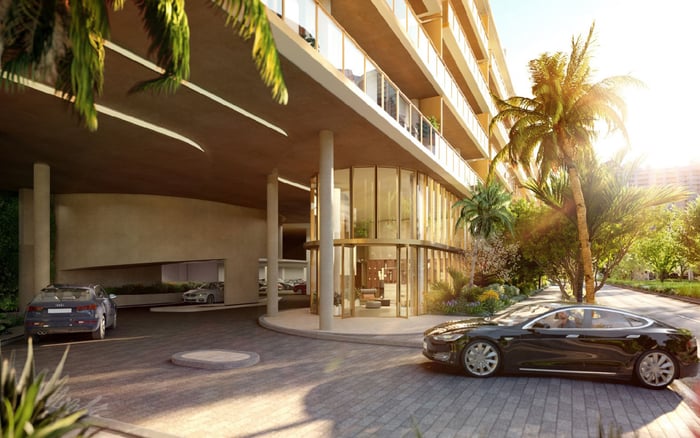
For a sense of the caliber of new-construction offerings many buyers evaluate in Brickell, explore The Residences at 1428 Brickell.
South Florida is not a single, uniform market. Resilience priorities shift by neighborhood, microclimate, and building type.
In Brickell, buyers often weigh vertical living and the logistics that come with it. Backup power policy, elevator operations, and continuity of access can matter as much as envelope performance because density and vertical circulation shape daily experience.
In Miami Beach, salt air exposure and waterfront conditions can elevate concerns around corrosion management and envelope detailing. Buyers may also look closely at how lobbies, garages, and access points are designed to manage intense rain.
In Fort Lauderdale, the mix of waterfront condominiums and single-family residences makes diligence more varied. Condo buyers focus on shared systems and governance. Home buyers often concentrate on roof assemblies, openings, and on-property power strategy.
In West Palm Beach, luxury buyers frequently balance lifestyle access with a desire for predictable operations. The best buildings can feel serene because maintenance programs and preparedness planning are mature.
Across all of these areas, the advantage of new construction is not simply that it is new. It is that it can deliver integrated design and modern detailing, provided the developer executed with discipline and the building is operated with the same seriousness.
Use this checklist as a conversation guide with your broker, the developer’s team, and building management.
Document requests
Envelope and openings
Systems
Operations
The goal is not to extract proprietary details. It is to confirm that the building you are buying is engineered and operated with the same level of thought you apply to your portfolio.
What documents should I request to verify hurricane resilience in new construction? Request a written overview of the building’s approach to wind, water, and power continuity, then ask for supporting documentation that shows verification, not just intent. Practical examples include written descriptions of testing and inspection practices, commissioning scope for key systems, and the building’s severe-weather operating plan. The objective is a consistent paper trail from design intent to execution and operations.
How can I evaluate windows and doors without relying on sales language? Ask the team to describe the full opening assembly and how it is detailed at the interface with the surrounding wall. Then press on installation and water management at the sill and threshold. The most useful answers explain how water is directed, how seals are maintained, and what the building expects for service over time, especially for operable components.
In an outage, what questions should I ask about backup power priorities? Ask what stays powered, for whom, and for how the plan is managed operationally. Clarify what is supported in common areas, what policies govern elevators and access control, and how the building communicates during disruption. Request the most current written description of priorities and confirm how the systems are maintained and tested.
How do building operations and management affect resilience after move-in? Design establishes potential, but operations determine performance. Ask how management prepares for severe weather, how residents are notified, how systems are checked and restarted, and how vendors are coordinated. In a condominium, also understand governance, reserve planning, and the building’s posture on proactive maintenance for envelope and critical systems.
How should resilience considerations differ between Brickell and Miami Beach? In Brickell, vertical living makes continuity of access, elevator operations, and building-level backup power policy central to day-to-day resilience. In Miami Beach, exposure conditions can shift emphasis toward corrosion management, envelope detailing, and how entry points and garages handle intense rain. In both, prioritize documentation and a clear operational plan.
For tailored guidance on evaluating South Florida buildings with discretion and rigor, connect with MILLION Luxury.
If branded residences are on your mind — as a home or as an allocation — we would be glad to share what we are seeing, privately.
Begin a quiet conversation