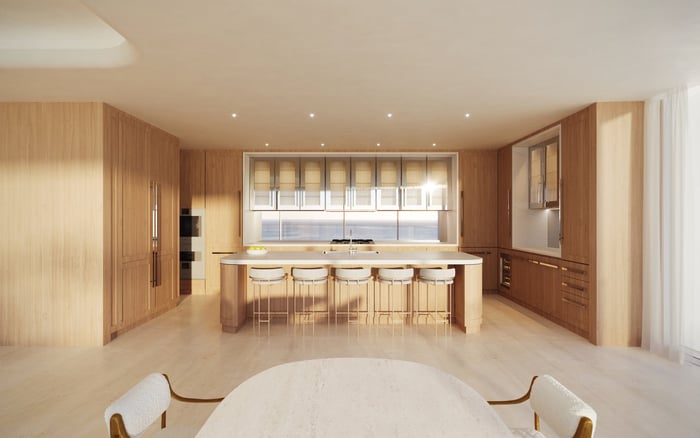
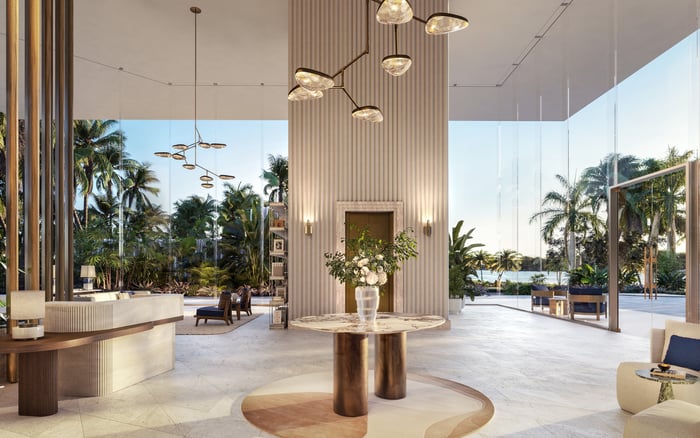
Shore Club Private Collections Miami Beach reframes the 2026 luxury condo decision around turnkey-furnished value, hospitality-grade readiness, and the true cost of owner-managed customization.

Shore Club Private Collections Miami Beach arrives as sophisticated buyers are asking what a truly finished residence is worth. Not simply the sofa, lighting, tableware, or drapery package, but whether a fully curated, turnkey-furnished home can justify a premium by removing the months of decisions, coordination, procurement, installation, and revision that often follow closing.
That makes Shore Club Private Collections Miami Beach less a conventional condominium comparison than a bundled ownership proposition. The residential component is part of the redevelopment of the historic Shore Club site in Miami Beach, with private residences set within a broader hospitality master plan that includes an Auberge Resorts-managed hotel component. The result is a product intended to feel less like a blank canvas and more like an immediate, controlled arrival.
For 2026 buyers, the test is clear: does an “arrive and live” residence deliver enough value to outweigh the appeal of a less curated luxury alternative with greater customization after closing?
At the top of the market, time has become a luxury asset in its own right. A global owner using Miami Beach as a seasonal base, family retreat, or second home may not want to manage designers, approvals, procurement delays, inspections, warehouse coordination, and installation calendars from another city or country. For that buyer, a turnkey-furnished residence is not simply a convenience. It is a way to convert uncertainty into immediate use.
The distinction is especially meaningful in ultra-luxury condominiums, where the cost of delay can be measured in more than invoices. A residence that sits unoccupied while interiors are specified and furnished carries an opportunity cost. The owner loses time in the home, risks design fatigue, and may face execution gaps between architectural intent and the final living experience.
Shore Club’s value proposition should therefore be evaluated as a complete package: interior execution, furnishings, design coordination, and reduced owner friction. The physical furniture is only one layer. The larger value is the orchestration.
The Shore Club site is distinctive because it combines prime oceanfront land, historic structures, and new ultra-luxury residential construction. That mix is not easily replicated in Miami Beach, where the strongest locations are often already spoken for and historic fabric can meaningfully shape the character of a redevelopment.
The broader master plan includes Art Deco and mid-century elements alongside new residences, giving the project a different emotional register than a purely new tower. For buyers who prefer heritage with contemporary execution, this matters. It creates a sense of place that cannot be purchased later through a furniture package.
The residential offering is framed around tower residences and villa-style product within one Miami Beach plan. That variety may appeal to buyers with different privacy, view, and lifestyle preferences, while preserving the overarching identity of a single ultra-luxury residential and hospitality setting.
A fair evaluation of Shore Club Private Collections Miami Beach should not compare turnkey furnishings with the retail cost of furniture alone. The stronger comparison is the full owner-managed path: design fees, purchasing, logistics, installation, approvals, revisions, time loss, and execution risk.
In a typical high-end post-closing process, a buyer may secure a residence, then begin the work of making it livable at the desired level. Even with an excellent design team, that process can be demanding. Lead times shift. Imported pieces arrive at different intervals. Custom millwork or specialty installations can create dependencies. What begins as personalization can become a second project after the first purchase.
Shore Club reverses that sequence. It asks buyers to accept a curated vision earlier in exchange for less friction later. That will be compelling for the owner who values hospitality-grade readiness. It may be less compelling for the buyer who sees customization itself as part of the pleasure of ownership.
Turnkey-furnished residences can be powerful at resale because future buyers may also value immediate use. A home that photographs well, shows cohesively, and functions from day one can reduce psychological barriers for an incoming owner. In a market where branded residences and curated interiors increasingly shape expectations, that advantage can matter.
But resale liquidity depends on the design package remaining broadly desirable. A distinctive interior can elevate a residence, yet an overly specific aesthetic can narrow the buyer pool. The best turnkey strategy is not simply expensive. It is durable, proportionate, and aligned with the architecture, the location, and the lifestyle promise.
This is where Shore Club’s hospitality context becomes relevant. A buyer is not only purchasing furnishings. The buyer is buying into a complete sensibility: private residential life connected to a larger resort-caliber environment. If that sensibility remains elegant rather than trend-driven, the turnkey premium has a better chance of retaining meaning beyond the first owner.
For pre-construction and new-construction buyers, due diligence should be practical and exacting. The first question is what is included in the turnkey package. Buyers should understand which furnishings, fixtures, decorative elements, appliances, accessories, and design components are part of the purchase, and which items remain optional or excluded.
The second question is control. Can a buyer modify selections, or is the value tied to accepting a complete design package? Flexibility may matter to some owners, while others may prefer the assurance of a fully resolved interior without additional decisions.
The third question is ongoing cost. Maintenance, replacement, insurance, hospitality-related services, and association structures can all influence the long-term value of a furnished residence. Details should be reviewed before a buyer assigns a premium to convenience.
Finally, buyers should examine timing, inventory, and delivery specifics before making a 2026 decision. The strongest turnkey value exists when the finished product, the service environment, and the buyer’s intended use all align.
The ideal buyer for Shore Club Private Collections Miami Beach is not necessarily the one seeking maximum customization. It is the buyer who values discretion, time savings, and a ready-made standard of living. This may include international owners, seasonal Miami Beach residents, and families who want to move from acquisition to use with minimal delay.
In market shorthand, Miami Beach can suggest many lifestyles, from nightlife proximity to quiet oceanfront retreat. Shore Club’s positioning is more specific: historic setting, hospitality adjacency, private residential execution, and a turnkey-furnished experience intended to reduce the burden on the owner.
That is the real 2026 buyer test. If the purchaser values control above all else, the premium may feel restrictive. If the purchaser values time, coherence, and immediate usability, Shore Club’s furnished delivery may be the point rather than the add-on.
What is Shore Club Private Collections Miami Beach? It is the private residential component of the redevelopment of the historic Shore Club site in Miami Beach.
Is Shore Club connected to a hotel component? Yes. The redevelopment includes an Auberge Resorts-managed hotel component alongside the private residences.
What does turnkey-furnished mean for buyers? It means the residence is positioned around ready-to-live ownership, with furnishings and design coordination forming part of the broader value proposition.
Why is the 2026 buyer test important? Buyers must decide whether reduced friction, completed interiors, and immediate usability justify a premium over less curated luxury alternatives.
Is the value only in the furniture? No. The larger value is the curated ownership experience, including execution, coordination, and time saved after closing.
Who may benefit most from this format? Global ultra-high-net-worth owners and seasonal users who value readiness, convenience, and hospitality-grade living may find it especially compelling.
What should buyers verify before purchasing? They should confirm furnishing inclusions, delivery details, current inventory, maintenance structure, and any customization options.
Could turnkey furnishing help resale? It may help if future buyers also value immediate use, but the design package must remain broadly appealing.
What makes the Shore Club site distinctive? It combines prime oceanfront land, historic Art Deco and mid-century elements, and new ultra-luxury residential construction.
Is Shore Club better for customization-focused buyers? It may be less ideal for buyers who want to direct every design decision, and more suitable for those prioritizing a finished experience.
When you're ready to tour or underwrite the options, connect with MILLION.
If branded residences are on your mind — as a home or as an allocation — we would be glad to share what we are seeing, privately.
Begin a quiet conversation