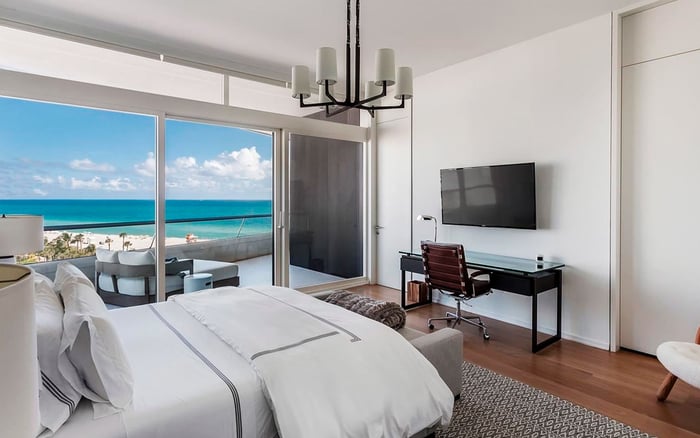
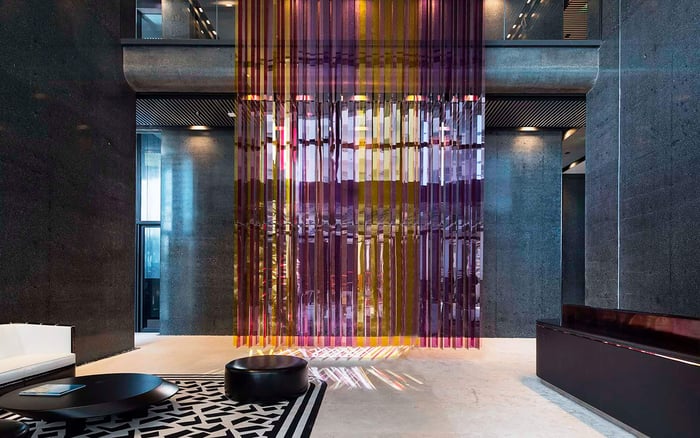
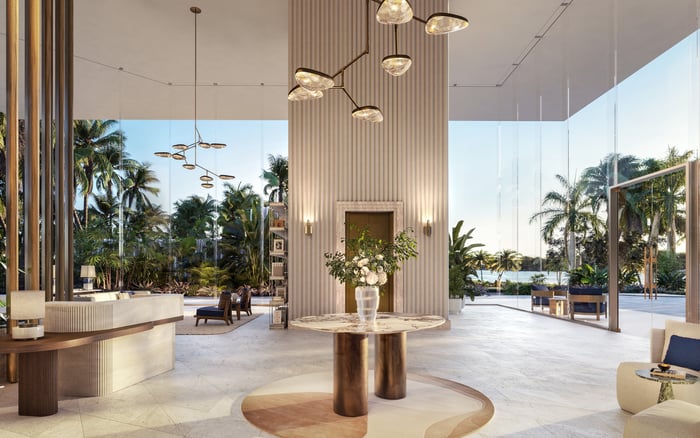
Setai Residences Miami Beach remains a reference point for direct-sand living because its appeal is built on oceanfront proximity, hotel-style service, Asian-inspired design, and the idea that the beach functions as an extension of home.
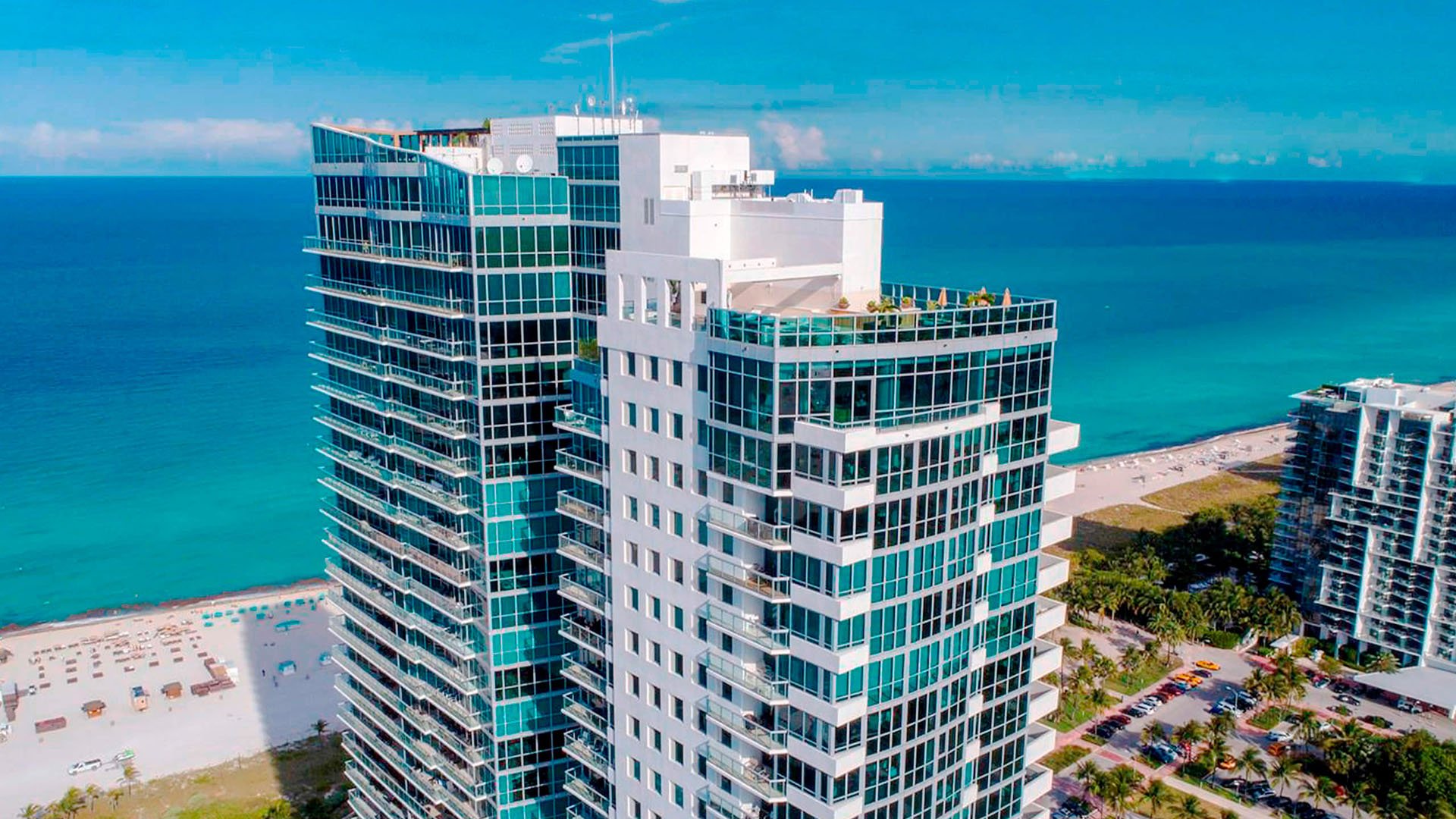
In Miami Beach, an ocean view can be beautiful without being definitive. A residence may face the Atlantic, frame the horizon, or sit within a short walk of the water, yet still deliver a lifestyle that remains adjacent to the beach rather than integrated with it. Direct-sand living is a narrower, more exacting standard. It asks whether the beach is part of the home’s daily rhythm, not merely a scenic backdrop.
That distinction is why Setai Residences Miami Beach remains relevant in the ultra-prime conversation. Setai is best understood as an established ultra-luxury oceanfront condominium, not a new-development launch competing on novelty. Its value proposition is grounded in its Miami Beach oceanfront position, where the sand, the service environment, and the residential experience are meant to feel connected.
For buyers studying the upper end of Miami Beach, this matters. “Near the beach” describes convenience. “Ocean-view” describes exposure. Direct-sand living describes a more complete condition: a home whose location and operations make the shoreline feel like an extension of private life.
Setai’s importance is less about newness than durability. In a market that continually introduces fresh design languages, branded concepts, and amenity narratives, an established building can still shape expectations when its core proposition remains clear. Setai has that clarity: ultra-luxury residential living on the oceanfront, supported by a hotel-style service model and a distinctive design identity.
The hotel-style service component is central. In direct-sand settings, the experience is not defined only by the physical threshold between building and beach. It is also shaped by how seamlessly the property manages arrival, privacy, hospitality, and daily comfort. For the ultra-luxury buyer, service level and beachfront access often matter as much as the view itself.
Setai’s Asian-inspired design is another defining part of its identity. It distinguishes the building from more conventional Miami Beach oceanfront towers by giving the residential atmosphere a calmer, more composed character. That design language supports a broader idea of retreat, especially in a location where the surrounding environment can be vibrant, public, and highly visible.
This is where Design & Architecture becomes more than a visual category. At Setai, architecture and operations work together to shape the lived experience of oceanfront proximity. The result is a property that continues to serve as a case study in how mature luxury buildings can influence what buyers expect from true beachfront condominium living.
The strongest direct-sand buildings do not treat the beach as an amenity in the ordinary sense. They make it part of the residential lifestyle. That is the lens through which Setai should be read. Its relevance comes from the combined effect of site planning, service, design, and beach adjacency, rather than from a single headline feature.
For beach-access buyers, the practical question is not simply whether the water is nearby. It is whether the transition from residence to oceanfront feels natural, protected, and worthy of the home’s price category. Oceanfront value in Miami Beach is often strongest when the building’s daily life and the shoreline feel deliberately aligned.
This is also why Lifestyle matters so much in the direct-sand category. A buyer may be comparing square footage, views, finish levels, and building reputation, but the deciding factor can be more experiential: how it feels to wake up, move through the property, and reach the sand without the lifestyle becoming fragmented. Setai’s appeal rests on that integrated feeling.
In that sense, the beach is not simply scenery. It becomes a living room without walls, a wellness ritual, a social setting, and a quiet measure of rarity. Miami Beach has many residences with coastal glamour. Fewer are positioned around the idea that the sand itself is part of the home’s daily vocabulary.
Direct-sand living exists within a larger spectrum of luxury coastal ownership. Some buyers want the newest design statement. Others prioritize a discreet, established address with a proven resort-residential rhythm. Setai belongs firmly in the latter conversation, where maturity can be an advantage because the lifestyle proposition is already legible.
Contemporary Miami Beach buyers may naturally compare the feeling of Setai with other residential names that shape the local oceanfront dialogue, including 57 Ocean Miami Beach and The Perigon Miami Beach. Those comparisons are useful not because every building offers the same experience, but because they clarify how different projects express proximity to the Atlantic.
The distinction is especially important for owners who are not simply buying a view. A high-floor panorama can be spectacular, but direct-sand living asks for more than visual drama. It asks whether the building’s service culture, spatial planning, and oceanfront setting reinforce one another. Setai’s continued relevance comes from that alignment.
The same buyer might also look at hospitality-inflected Miami Beach offerings such as Shore Club Private Collections Miami Beach or consider the established cachet associated with Faena House Miami Beach. In each case, the deeper question is not only “What can I see?” It is “How does the building make the beach part of everyday life?”
Setai Residences Miami Beach shows why the most compelling beachfront condominium stories are not always the newest ones. In South Florida’s ultra-prime market, a mature building can remain influential when its lifestyle promise is specific, durable, and difficult to replicate. Direct-sand living is one of those promises.
For buyers, Setai offers a useful framework. First, separate direct-sand living from broader coastal marketing. Second, evaluate service as part of the real estate, not as an accessory. Third, consider design identity as a contributor to calm, privacy, and daily enjoyment. Finally, ask whether the beach feels like an extension of the residence or simply an attractive destination nearby.
That framework is particularly valuable in Miami Beach, where the language of luxury can become expansive. Setai narrows the conversation. It reinforces the idea that true oceanfront living is measured not only by the Atlantic beyond the glass, but by the quality of the relationship between home, service, design, and sand.
Is Setai Residences Miami Beach a new-development launch? No. It is best understood as an established ultra-luxury oceanfront condominium in Miami Beach.
Why does Setai fit the direct-sand living conversation? Its value centers on living on the Miami Beach oceanfront, not simply being near the water or having an ocean view.
What makes direct-sand living different from ocean-view living? Ocean-view living emphasizes sightlines. Direct-sand living emphasizes the daily connection between the residence, services, and the beach.
Why is service important in a beachfront condominium? In the ultra-luxury category, service shapes privacy, comfort, and ease, which can matter as much as the view itself.
How does Setai’s design identity influence its appeal? Its Asian-inspired design helps create a distinctive atmosphere that separates it from more conventional Miami Beach oceanfront towers.
Is the beach considered an amenity at Setai? The stronger interpretation is that the beach functions as an extension of the residential lifestyle rather than a simple amenity.
Why do mature luxury buildings still matter in Miami Beach? Established buildings can remain benchmarks when their service model, design language, and oceanfront setting continue to meet buyer expectations.
Should buyers compare Setai only with newer projects? No. Setai is most useful as a reference point for true oceanfront living, whether compared with new offerings or other established addresses.
What should a buyer evaluate when considering direct-sand living? Look at beach adjacency, service culture, site planning, privacy, and whether the shoreline feels integrated into daily life.
Why is Miami Beach central to this conversation? Miami Beach combines global luxury demand with rare oceanfront settings, making direct-sand living a defining priority for many buyers.
If you'd like a private walkthrough and a curated shortlist, connect with MILLION.
If branded residences are on your mind — as a home or as an allocation — we would be glad to share what we are seeing, privately.
Begin a quiet conversation