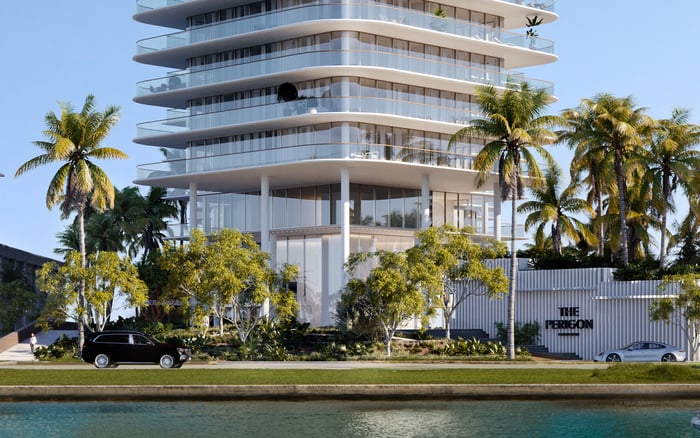
A buyer-focused guide to evaluating developer incentives at The Perigon Miami Beach before contract, with emphasis on enforceability, total economics, and resale discipline.

At The Perigon Miami Beach, the incentive conversation should begin with a simple premise: nothing meaningful exists until it is measured, priced, and written into the deal. The project sits within Miami Beach’s ultra-luxury oceanfront condominium segment, where buyers are often evaluating a primary residence, a second residence, or a long-horizon South Florida asset. In that context, a developer incentive is not a casual courtesy. It is part of the total acquisition structure.
That distinction matters because high-end buyers are rarely persuaded by the word discount alone. They want to know whether an incentive changes actual cash outlay, improves basis, reduces friction at closing, or simply adds a lifestyle feature with limited financial weight. A closing credit may alter the buyer’s immediate economics. A furniture package may improve convenience but may not carry the same appraised or resale significance. A finish upgrade may be valuable if it replaces a future capital expense, but less compelling if it reflects a design choice the next owner may not value.
The Perigon Miami Beach is marketed around privacy, exclusivity, service, and architectural quality. Those qualities are central to the premium-oceanfront proposition. Yet even in a building defined by discretion and design, the contract remains the only place where incentive value becomes enforceable.
Before signing, a buyer should place every promised incentive into a unit-level financial model. The relevant question is not, “What is the stated value?” It is, “What is the value against the purchase price, price per square foot, closing costs, and likely resale assumptions?”
Deposit flexibility, for example, may be highly valuable to a buyer managing liquidity across multiple properties or private investments. A closing credit may be more direct because it offsets defined closing expenses. Finish upgrades may be attractive if they align with the buyer’s design expectations and reduce future customization costs. Membership-related benefits may enhance lifestyle, but they should be examined carefully for transferability, expiration, conditions, and practical usage.
This is where hard and soft concessions must be separated. Hard concessions reduce cash outlay, improve financing efficiency, or produce an identifiable economic benefit. Soft concessions can be elegant, useful, and marketable, but they may not reduce the buyer’s basis in the same way. In an oceanfront, new-construction, pre-construction, second-home context such as The Perigon Miami Beach, that distinction is essential because the buyer is often comparing the property not only with other Miami Beach residences, but also with alternative uses of capital.
A disciplined buyer should create a side-by-side comparison: contract price, estimated closing costs, incentive value, timing of benefit, tax or accounting treatment where relevant, and resale value impact. The goal is not to reduce the residence to a spreadsheet. It is to ensure that the emotional appeal of the oceanfront setting does not obscure the economic terms of the acquisition.
Developer incentives may communicate something beyond the individual deal. They can reflect sales velocity, inventory strategy, construction-financing considerations, or a preference to preserve public-facing pricing while negotiating privately. None of those signals is automatically negative. In luxury development, maintaining headline pricing can protect existing buyers, support appraisal logic, and preserve brand positioning.
Still, buyers should ask why a particular incentive exists and why it applies to a specific residence. Is it available across inventory, or only on certain lines, floors, exposures, or remaining residences? Does it apply to the preferred view corridor, or to a residence that requires more buyer education? Does the incentive change if the buyer selects a different floor or configuration? These are not adversarial questions. They are the questions a serious buyer asks before committing substantial capital.
The current South Florida luxury-condo environment adds another layer. High construction costs, sensitivity to interest rates, and sharper expectations for oceanfront buildings all influence how developers structure offers. In some cases, incentives create momentum without resetting the visible price architecture. In others, they may be tied to a narrow set of residences where the developer wants to complete a specific sales objective.
For a buyer at The Perigon Miami Beach, the incentive should be interpreted alongside product quality, location, service level, design credibility, and the broader strength of the development plan. A strong incentive attached to a strong residence can be compelling. A generous incentive attached to a less desirable position in the building may require a more cautious resale analysis.
The practical objective before contract is to convert every promised benefit into language with clear timing, value, conditions, and remedies. A verbal assurance in a sales conversation is not enough. A marketing reference is not enough. An email may help create a record, but the purchase agreement and related documents should govern.
Buyers should look for specificity. If the incentive is a credit, when is it applied and against what charges? If it is an upgrade, who selects the materials, what is the budget, what happens if the desired item is unavailable, and who bears any overage? If it is deposit flexibility, what are the exact milestones, default provisions, and deadlines? If it is a membership-related benefit, is it transferable, revocable, time-limited, or subject to third-party approval?
The contract should also address remedies. If the incentive is not delivered as promised, does the buyer receive a credit, a substitute, a price adjustment, or another defined remedy? Luxury buyers often focus on the residence, the view, the privacy, and the service program, all rightly so. But the sophistication of the purchase is revealed in the closing documents.
There may also be tradeoffs. An incentive can come with less negotiable terms elsewhere, stricter closing deadlines, reduced flexibility on modifications, or a narrower window for buyer decisions. The value of the incentive should be weighed against any concessions the buyer is making in return.
An incentive package should not be analyzed apart from the developer’s broader position. A sophisticated buyer will review track record, capital strength, pre-sale posture, lender considerations, and the development’s ability to execute at the promised level. The point is not to assume weakness. It is to understand leverage.
In ultra-luxury Miami Beach, buyers are purchasing more than interior square footage. They are buying confidence in construction quality, service delivery, privacy, long-term building operations, and resale relevance. If an incentive appears unusually strong, it deserves an explanation. If an incentive appears modest, it may still be meaningful when attached to the right residence, the right exposure, and the right contractual protection.
The best approach is calm, discreet, and analytical. Ask what the incentive is worth. Ask why it is being offered. Ask whether it applies to comparable residences. Ask whether it is hard or soft value. Ask where it appears in the contract. Then ask what the buyer gives up to receive it.
At The Perigon Miami Beach, the incentive conversation should support the larger decision: whether the residence, the economics, and the legal terms align with the buyer’s expectations for a premium oceanfront acquisition. When those pieces are in balance, the incentive becomes not a sales tactic, but a refined component of the transaction.
What is the first thing to review in a developer incentive package? Confirm whether the incentive is written into the purchase agreement with clear value, timing, conditions, and remedies.
Are verbal incentives meaningful before contract? They may guide the negotiation, but they should not be relied upon unless converted into enforceable contract language.
What are examples of hard concessions? Hard concessions may include closing credits, defined cash-value benefits, or deposit terms that reduce or improve the buyer’s capital outlay.
What are examples of soft concessions? Soft concessions may include furniture packages, certain upgrades, or lifestyle benefits that may have limited resale or appraised value.
Should incentives be compared against price per square foot? Yes. The stated value should be measured against purchase price, price per square foot, closing costs, and future resale assumptions.
Can an incentive indicate something about sales velocity? It can. Incentives may reflect inventory strategy, financing considerations, or a desire to preserve headline pricing while negotiating privately.
Do incentives apply equally to all residences in a building? Not always. Buyers should ask whether incentives apply broadly or only to specific lines, floors, exposures, or remaining residences.
Can an incentive come with tradeoffs? Yes. It may be paired with stricter deadlines, less flexible contract terms, or reduced negotiation room elsewhere in the transaction.
Why does developer strength matter when evaluating incentives? Track record, capital strength, and execution capacity help a buyer interpret whether an incentive is strategic, routine, or a sign to investigate further.
How should a buyer approach The Perigon Miami Beach before signing? Treat each incentive as part of the total acquisition economics and verify every material term before contract.
To compare the best-fit options with clarity, connect with MILLION.
If branded residences are on your mind — as a home or as an allocation — we would be glad to share what we are seeing, privately.
Begin a quiet conversation