Completed towers can offer immediate clarity in South Florida luxury real estate, but the deeper question is ownership quality: governance, carrying costs, liquidity, lifestyle fit, and whether the residence will still feel intelligent after the first impression fades.
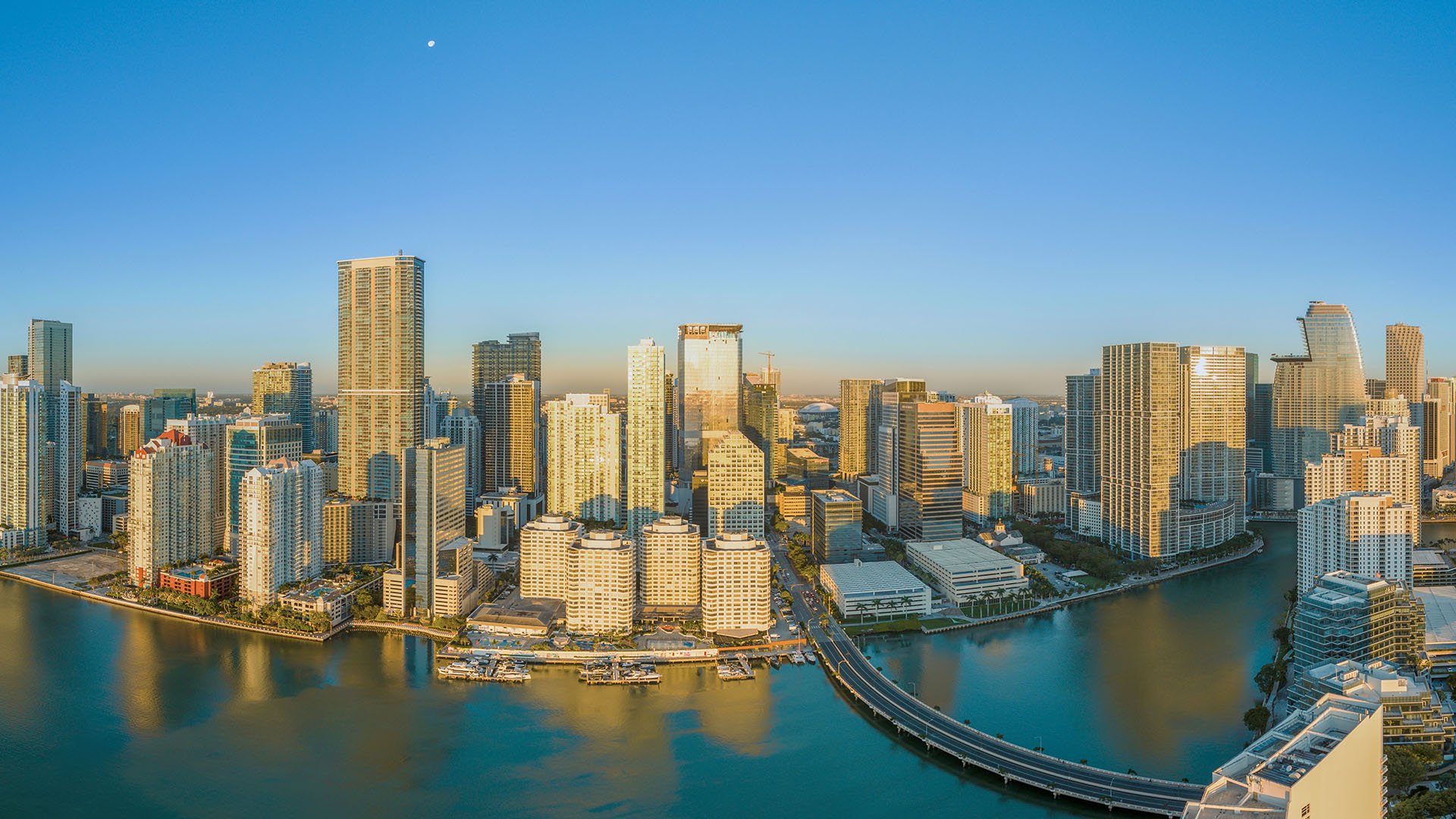
In South Florida luxury real estate, a completed tower carries a distinct kind of reassurance. The building can be walked. The lobby can be felt. The elevator sequence, valet choreography, pool deck, corridor scale, service culture, and residence views are no longer promises held in renderings. They are lived conditions, available for judgment in real time.
That certainty matters, especially for buyers who value clarity. Yet completion does not eliminate the most important ownership question. It simply moves it. Instead of asking whether the tower will be delivered as imagined, the buyer must ask whether the residence will be as intelligent to own as it is seductive to tour.
For luxury buyers, that distinction is not academic. A South Florida residence is often a lifestyle instrument, a capital allocation, a family base, a seasonal refuge, or some combination of all four. Completed-tower confidence should therefore be treated as the beginning of diligence, not the end of it.
A completed tower lets a buyer evaluate atmosphere with unusual precision. Morning light, afternoon glare, terrace usability, arrival sequence, garage flow, acoustic privacy, amenity culture, and staff rhythm all become tangible. These are the qualities that shape daily life but can be difficult to understand before a building opens.
The emotional advantage is significant. A buyer can stand in the residence and decide whether the floor plan has grace, whether the view feels protected enough, and whether the common spaces support the way the household actually lives. In a market where design language is often polished and persuasive, the completed building restores the authority of direct experience.
But that same clarity can create its own risk. Because so much is visible, buyers may assume the invisible elements are equally settled. They may focus on finishes, views, and amenities while underweighting association culture, ownership rules, operating discipline, insurance sensitivity, capital planning, and future resale depth. The visible can be comforting. The invisible is where long-term ownership is usually decided.
The central question is not simply, “Do I like this residence?” It is, “Will this residence remain easy, elegant, and rational to own?” That is a broader inquiry. It includes monthly carrying costs, building governance, operational maturity, the condition of shared spaces, resident profile, rental parameters, pet policies, storage, parking, service consistency, and the building’s ability to preserve its reputation over time.
For a primary resident, those details influence daily comfort. For a seasonal owner, they affect friction. For an investor-minded purchaser, they influence liquidity and tenant appeal. For a family planning to hold through multiple cycles, they determine whether today’s excitement becomes tomorrow’s burden.
The distinction between new construction and resale is often framed as a matter of age, design, and immediacy. In practice, it is also a question of evidence. A completed building offers evidence. The buyer can read the common areas, observe service protocols, understand resident behavior, and see whether the property has begun to develop a coherent identity. That evidence should be weighed as carefully as the view.
South Florida is not one luxury market. Brickell speaks a different language from Surfside, and a buyer comparing Miami Beach with Sunny Isles is not merely choosing between addresses. The buyer is choosing tempo, privacy, commute logic, dining habits, school proximity, beach access, boat culture, airport rhythm, and the degree of public energy they want near home.
A completed tower can clarify the building, but it cannot make the wrong neighborhood feel right. The polished residence that works beautifully for a weekend may not suit a full season. The high-amenity tower that feels exciting during a preview may feel too active for a buyer seeking calm. Conversely, a quieter building may feel understated at first but prove more satisfying for an owner who prizes discretion.
This is why the ownership question must be asked at two levels. First, does the building function beautifully? Second, does the address reinforce the life the buyer is trying to build? The strongest acquisitions usually satisfy both. They are not only architecturally persuasive. They are behaviorally aligned.
A serious completed-tower review should move beyond the residence door. Buyers should understand how the building is run, how decisions are made, and whether the association appears to act with discipline. The tone of management, the condition of amenity spaces, the consistency of staff interactions, and the clarity of rules can reveal a great deal about future ownership.
Financial review matters as much as aesthetic review. Carrying costs should be understood in relation to services, reserves, insurance, staffing, and the physical complexity of the building. A low number is not always a virtue if it comes at the expense of maintenance. A higher number may be reasonable if it supports a level of service and preservation that protects the building’s standing.
Buyers should also study the residence as a future resale asset. The best floor plan is not always the largest. The most compelling view is not always the most dramatic on day one. Practical elegance has value: good proportions, useful outdoor space, natural light, storage, privacy between bedrooms, and a kitchen that works for both quiet mornings and hosted evenings.
In a completed tower, negotiation is often more grounded because the buyer and seller are discussing an existing asset. That can bring discipline to pricing and reduce ambiguity around condition, timing, and delivery. It can also sharpen the conversation around what is included, what must be improved, and how quickly the residence can be occupied.
Still, completed inventory should not be treated as uniform. One residence may command a premium because its line, elevation, exposure, condition, or furnishing quality is meaningfully superior. Another may require patience because its advantages are subtler. Sophisticated buyers avoid reducing the decision to price per square foot alone. They weigh irreplaceability, usability, and the likelihood that another comparable opportunity will appear.
The most confident purchase is not always the most aggressive one. It is the one where the buyer understands why the residence deserves attention, what its ownership obligations are, and where its future audience may come from. In South Florida, where lifestyle and liquidity often intersect, that clarity is a luxury in itself.
Completed-tower confidence can encourage buyers to move quickly, but patience remains a competitive advantage. A second visit at a different time of day may reveal light, noise, traffic, or service patterns that were not apparent initially. A deeper review of building documents may confirm confidence or introduce caution. A careful comparison across neighborhoods may clarify whether the first impression was emotional or enduring.
This does not mean hesitation for its own sake. The finest residences often require decisiveness. It means that decisiveness should be built on the right information. In the ultra-premium segment, the best buyers are rarely rushed by surface glamour. They are moved by coherence.
A completed tower should answer many questions. It should not prevent the buyer from asking better ones. The ownership question behind completed-tower confidence is ultimately about fit, governance, cost, lifestyle, and exit. When those elements align, the purchase can feel both indulgent and exacting, precisely the balance South Florida luxury demands.
Why do completed towers appeal to luxury buyers? They allow buyers to experience the residence, amenities, service rhythm, views, and atmosphere before making a decision.
Does a completed tower remove ownership risk? No. It reduces uncertainty around delivery, but buyers still need to evaluate governance, costs, rules, and long-term building quality.
What should buyers review beyond the residence itself? Association documents, carrying costs, reserves, insurance posture, rental rules, pet policies, parking, storage, and service standards all matter.
Is new construction always better than resale? Not necessarily. New construction may offer freshness, while resale can offer evidence of how a building actually performs.
How important is neighborhood fit? It is essential. A beautiful residence in the wrong lifestyle setting can become less satisfying over time.
Should buyers focus mainly on price per square foot? No. That metric can be useful, but it should be balanced with floor plan quality, view, condition, privacy, and scarcity.
Can a completed tower help with faster occupancy? Often, yes. A completed residence may allow a buyer to plan use, furnishing, and timing with greater clarity.
What makes a completed residence more liquid later? Strong proportions, desirable exposure, functional outdoor space, building reputation, and broad buyer appeal can support future liquidity.
Why does governance matter in a luxury condominium? Governance influences maintenance, service culture, capital planning, rule enforcement, and the building’s long-term reputation.
What is the best mindset for evaluating completed-tower confidence? Treat visible quality as an invitation to deeper diligence, not as a substitute for it.
For a tailored shortlist and next-step guidance, connect with MILLION.
If branded residences are on your mind — as a home or as an allocation — we would be glad to share what we are seeing, privately.
Begin a quiet conversation.jpg&width=700&height=438&fit=cover)