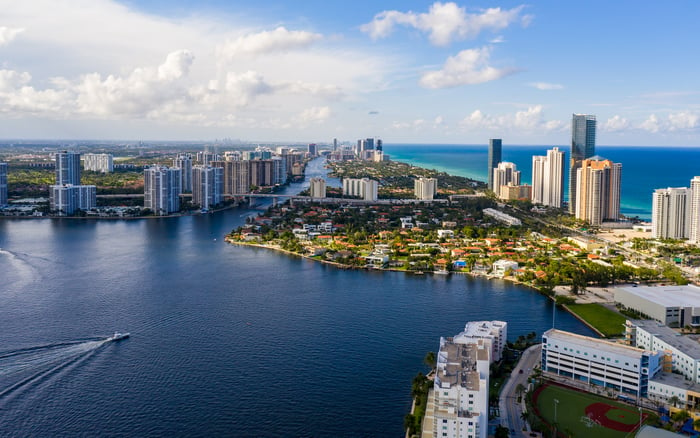
In South Florida, branded residences are not simply a logo on the porte cochère. The real premium is operational: service standards, staffing depth, owner recognition programs, and the daily cadence of a building run like a five-star property. This editorial breaks down what that premium can mean in practice across Miami Beach and Brickell, using well-known hospitality playbooks from Ritz-Carlton, Four Seasons, and Aman as a lens for buyers evaluating both branded and non-branded options.

Branded residences are often introduced in the language of lifestyle, yet the most durable value is rarely the lobby fragrance or the font on the invitation. The hidden premium is operational: the difference between a building that is merely beautiful and one that is consistently, predictably managed at a five-star cadence.
In markets like Miami Beach and Brickell, that operational edge matters because buyers are not simply purchasing square footage. They are buying time, discretion, and a standard of care that holds whether they are in residence for three months or three weeks.
At their best, branded residences translate hospitality systems into a private-home environment: training, service rituals, staffing depth, vendor relationships, and the often-overlooked question of who answers the phone-and how-when you need something at 9:30 p.m. on a Sunday.
While every brand promises excellence, the way it operationalizes “excellence” can differ in ways that are easy to feel day to day. For buyers, understanding these distinctions helps clarify which brand aligns with how you live.
Ritz-Carlton is known for formalized service standards. The brand’s Gold Standards include a credo centered on genuine care and comfort, and its well-known motto: “We are Ladies and Gentlemen serving Ladies and Gentlemen.” It also codifies the guest experience in the Three Steps of Service: a warm greeting using a guest’s name, anticipation and fulfillment of needs, and a fond farewell using the guest’s name. In a residential setting, that kind of system tends to show up as consistency: a front-of-house team that remembers preferences, a concierge culture oriented toward follow-through, and a building that runs on rituals rather than improvisation.
Four Seasons approaches the same goal through a people-first culture. The brand emphasizes that how it treats its employees is central to delivering exceptional guest experiences, reinforced by principles such as respect, teamwork, and personal pride in work. For residents, the practical translation is often less about ceremony and more about continuity: a team that stays, knows the property, and delivers calm, confident solutions without fanfare.
Aman’s positioning is different again. The name itself is tied to “peace,” and the ethos is serenity-led, favoring quiet luxury over overt, logo-forward signals. When executed well, that can translate into a residential experience centered on privacy, spatial calm, and a tone of restraint that appeals to buyers who prefer luxury to feel almost invisible.
A branded residence can be residential-only or part of a mixed-use tower that includes a hotel. This is not a technicality-it shapes privacy, lobby traffic, amenity access, staffing patterns, and even how “home” feels when you arrive.
A residential-only project can deliver a more controlled environment by design: fewer transient guests, fewer large-scale event cycles, and a daily rhythm anchored in residents rather than hotel occupancy. In Miami Beach, The Ritz-Carlton Residences Miami Beach is widely described as residential-only, with 111 residences plus 15 villas and completion in 2019. Buyers who prioritize a quieter entry sequence often gravitate to this model, particularly if they spend significant time in residence.
In Brickell, a mixed-use tower can offer a different kind of advantage: a deeper hospitality infrastructure and an amenity ecosystem influenced by hotel operations. Four Seasons Residences Miami is a mixed-use tower in Brickell that includes residences and a Four Seasons hotel, described as a 70-story building completed in 2003, with residential floors above the hotel components. For some buyers, the appeal is straightforward: the building can feel like it has a city-grade engine behind it.
Neither approach is universally “better.” The decision comes down to whether you want your residence to feel like a private club or a world-class address with hotel energy curated around you.
A logo can be leased; operations must be built. When evaluating a branded residence, look past the brochure and pressure-test the hidden premium with questions that reveal daily execution.
1) Standards that can be taught and measured.
Brands that codify service tend to deliver more consistent outcomes across staff turnover. The practical advantage is predictability: fewer “it depends who is on shift” moments.
2) Staffing depth and escalation paths.
In a true hospitality-led building, the concierge is not only pleasant but empowered: equipped with vendor networks, clear protocols, and the authority to solve problems without sending you through a loop.
3) Owner recognition and ecosystem benefits.
Some brand families extend benefits designed specifically for residence owners, including recognition platforms and owner-oriented perks within a broader portfolio. Even if you rarely use them, these structures can signal that the residence is not an accessory to the hotel business, but a product category with its own operating model.
4) Residential governance that respects privacy.
The more a building’s culture prioritizes discretion, the more it should show up in practical ways: controlled access, quiet communications, and a front desk that treats your home like a home.
5) Design alignment with the brand promise.
If the brand is about serenity, the residence should not feel overly theatrical. If the brand is about ritual and precision, the building should feel orderly and well-composed.
This is also where non-branded luxury becomes a legitimate competitor. If you can find a non-branded building whose management team delivers comparable staffing, responsiveness, and discretion, the branded premium may narrow. In that comparison, focus less on the name and more on whether the building operates like a five-star property on an ordinary Tuesday.
In Miami Beach, the appeal of branded living is often about simplifying life in a high-demand coastal environment. A well-run branded building can make arrivals and departures feel frictionless and reduce the cognitive load that comes with maintaining a second home.
For buyers looking at newer-generation Miami Beach inventory beyond legacy trophy buildings, it can be useful to compare brand-led operations with highly design-driven, non-branded options. In North Beach and Mid-Beach corridors, for example, a project like 57 Ocean Miami Beach can anchor a conversation about what matters more to you: branded service systems, or a different blend of architecture, scale, and privacy.
And for those drawn to an especially quiet, minimal expression of luxury, the Aman worldview is worth understanding. Aman Hotel & Residences Miami Beach has been described as an under-construction beachfront project around 3425 Collins Avenue, involving two 16-story towers with both hotel keys and condo residences, including a tower designed by Kengo Kuma. Reported starting pricing for the condo residences has been cited around $4 million. The precise value proposition will ultimately be proven in execution, but the intent is clear: a serenity-led environment where luxury is felt more than announced.
Brickell’s density and pace create a different set of priorities. Here, the hidden premium often centers on frictionless city living-a building that can support spontaneity. Dinner plans change. Meetings run late. Guests arrive early. Your home has to keep up.
Four Seasons Residences Miami, located at 1425 Brickell Avenue, is frequently referenced as a mixed-use model with residences above the hotel. Reported unit sizes range from roughly 611 to 5,798 square feet, with pricing that has been publicly cited from about $850,000 to around $19.5 million, depending on residence specifics. The relevance is not the exact range, but what it signals: the tower accommodates a wide spectrum of lifestyles, from pied-à-terre ownership to large-format, full-time residence.
For buyers also considering newer Brickell offerings, it can be helpful to calibrate expectations by touring a few different product types. A more residential-forward tower like 2200 Brickell can clarify whether you want a quieter, owner-centric atmosphere. If you are drawn to the theater of fashion-branded living, 888 Brickell by Dolce & Gabbana frames a different kind of premium, where design identity becomes part of the daily ritual.
A disciplined comparison makes the decision feel less emotional and more architectural.
Start with the life you actually lead: Do you entertain frequently? Travel often? Require strict privacy? Want hotel-adjacent dining and wellness? Or do you prefer a building that disappears into the background?
Then evaluate the building as an operating system.
Response time and authority: Who can approve a solution when something breaks or plans change?
Staff continuity: Do you see familiar faces, or constant turnover?
Concierge capability: Are they proactive, or purely reactive?
Arrival sequence: Does it feel controlled and residential, or public and event-driven?
Owner-only culture: Is the building oriented toward residents, or shared with a broader audience?
If you want one final lens, ask yourself this: would you still love the building if the brand plaque were removed? If the answer is yes, you likely found real quality. If the answer is no, you may be paying for symbolism rather than performance.
To ground the comparison across South Florida, tour at least one branded and one non-branded property in the same neighborhood. In Surfside, for example, The Surf Club Four Seasons Surfside can serve as a reference point for what a mature luxury hospitality culture feels like when it is translated into a residential context.
Are branded residences always attached to a hotel? No. Some are residential-only, while others are part of mixed-use towers with hotel components.
What is the “hidden premium” in a branded residence? It is usually operational: staffing depth, service standards, and consistent execution day to day.
Does Ritz-Carlton have formal service standards? Yes. The brand codifies service through its Gold Standards and Three Steps of Service.
How does Four Seasons differ in service approach? Four Seasons emphasizes a people-first culture, linking employee care to guest experience quality.
What does Aman’s brand ethos typically prioritize? A serenity-led, peace-centered expression of luxury that favors discretion over overt signaling.
Is a residential-only branded building more private? Often, yes, because there are no hotel guests, though privacy still depends on design and management.
Do mixed-use hotel-and-residence towers have advantages? They can, especially in amenity depth and hospitality infrastructure, but they may feel busier.
How should I compare branded vs non-branded buildings? Use a checklist focused on operations: response time, staff continuity, access control, and governance.
Are advertised price ranges reliable? They are typically indicative; actual pricing depends on unit specifics, timing, and negotiated terms.
What is the simplest test of true quality? Ask if you would still choose the property without the brand name on the building.
For a confidential assessment and a building-by-building shortlist, connect with MILLION Luxury.
If branded residences are on your mind — as a home or as an allocation — we would be glad to share what we are seeing, privately.
Begin a quiet conversation