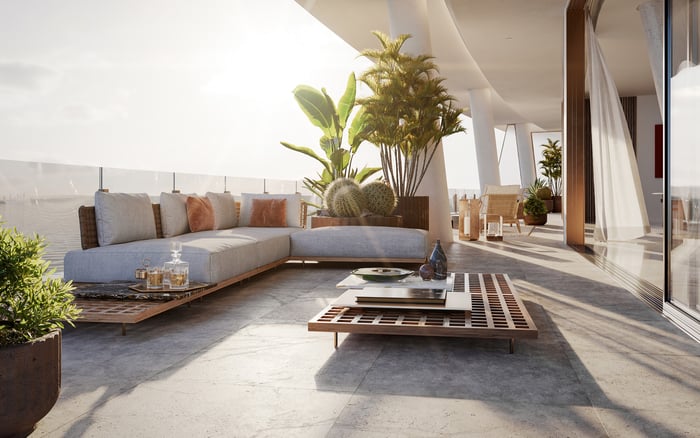
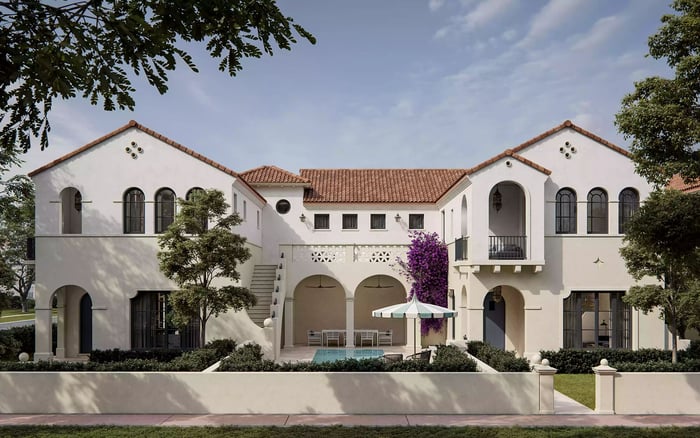
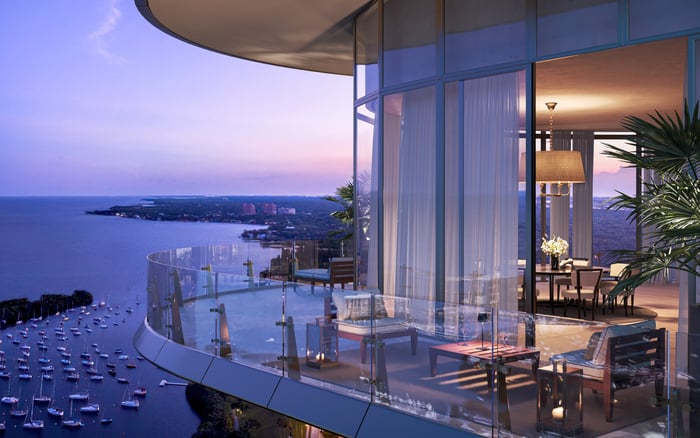
Outdoor kitchens, sky terraces, and deep balconies have become the new status symbols in South Florida’s luxury condo market. This editorial examines why buyers are paying for outdoor square footage, what to look for in coastal-grade build quality, and where indoor-outdoor living is being executed at the highest level across Miami’s waterfront neighborhoods.
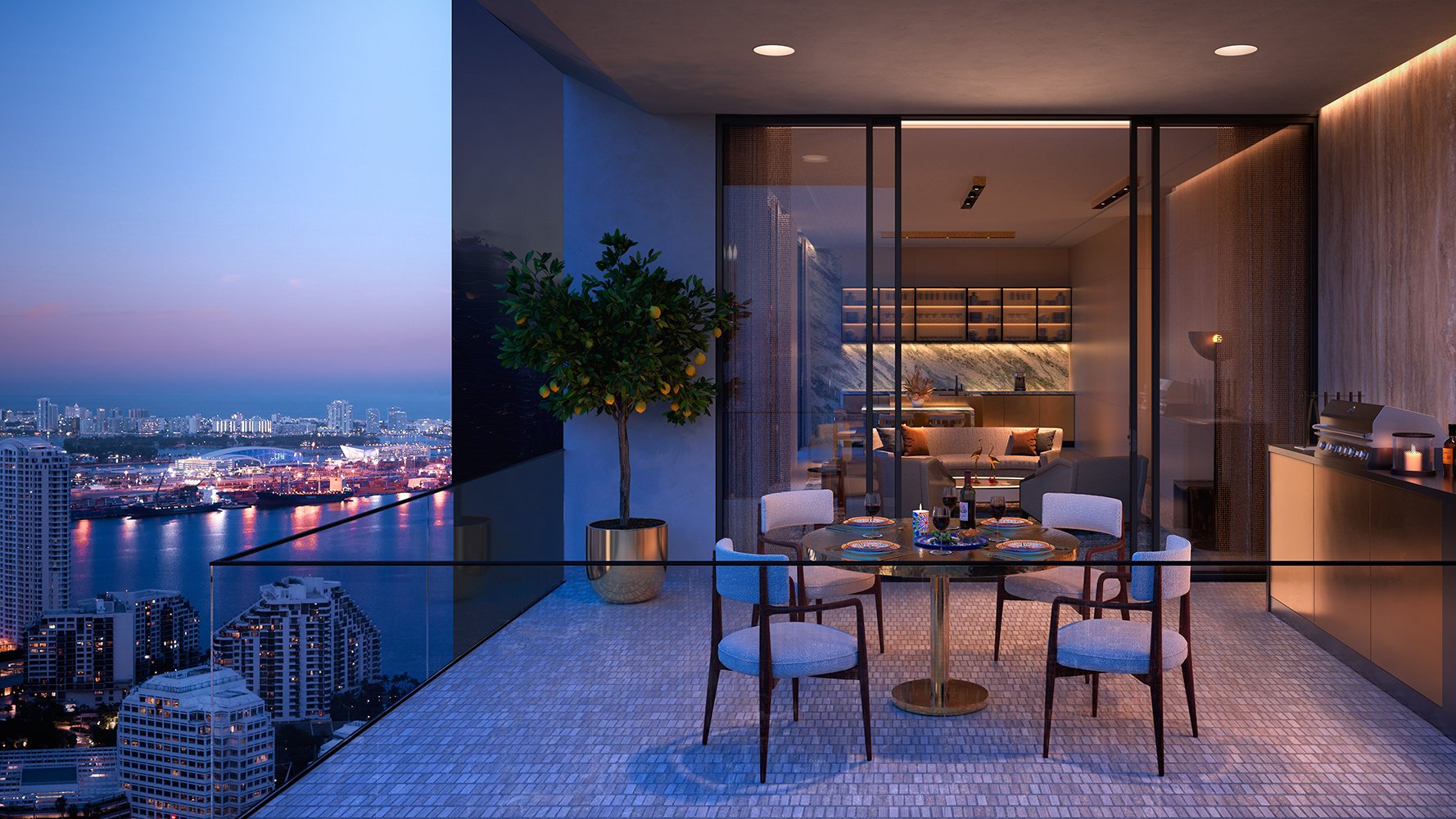
In South Florida, luxury has always been in conversation with the horizon. What’s changed is where that relationship is actually lived. Today’s buyer isn’t satisfied with a view framed by glass-they want the room outside the room: a terrace deep enough for dining, lounging, and cooking, designed with the same intention as the interior.
This shift isn’t just aesthetic; it’s behavioral. Entertaining is more casual, wellness is more daily than occasional, and privacy is increasingly prized-even in full-service buildings. The result is a sharper premium on outdoor square footage that functions, not simply photographs well.
In Edgewater, Coconut Grove, and select waterfront pockets farther north, developers have answered with oversized balconies, summer kitchens, rooftop terraces, and amenity decks that blur the line between private residence and boutique resort. For buyers, the takeaway is straightforward: outdoor space has become one of the clearest differentiators between “nice” and truly exceptional.
An outdoor kitchen is rarely just about cooking. It’s about cadence: a morning espresso outside, a quiet lunch between calls, a late-afternoon aperitivo that doesn’t require leaving home. In a market where many residences already offer floor-to-ceiling glass and premium finishes, the ability to host outdoors becomes real lifestyle leverage.
Cost matters, too. Outdoor-kitchen installations are often estimated roughly in the $5,000 to $50,000-plus range, depending on size, materials, and appliance selections. In the luxury tier, that “plus” is meaningful, because coastal conditions can demand upgraded components and more robust detailing. For resale buyers, a thoughtfully executed outdoor kitchen can represent real value versus retrofitting after closing.
The best versions feel architectural: properly scaled counters, integrated storage, and a layout that anticipates service flow. The mediocre ones read as afterthoughts. When touring, evaluate the outdoor kitchen the way you would an interior-proportions, clearances, and how the terrace actually performs once furnished.
Outdoor living is seductive. It’s also technical. Before you pay for the dream, confirm the terrace can perform like a real room.
Start with glazing and wind performance. Impact-resistant windows and doors are a baseline expectation, and hurricane-oriented design commonly pairs impact-rated glazing with reinforced structural approaches. Buildings also vary in how they manage water intrusion, salt exposure, and long-term durability.
Next, scrutinize materials. Salt air is unforgiving. Stainless and stone can be excellent-when specified and maintained for a marine environment. Ask yourself: do the metals signal longevity or first impressions? Are cabinet faces protected from direct exposure? Does the flooring maintain traction when wet? Does the railing system feel substantial?
Then, focus on usability. A beautiful balcony that can’t comfortably accommodate a dining table is a viewing platform, not outdoor living. Depth matters as much as width. The most livable terraces are zoned-cooking, dining, lounging-with circulation that doesn’t force guests to squeeze past furniture.
Finally, privacy and orientation are quiet luxuries. Height can help, but so can thoughtful placement, landscaping, and façade design. Outdoor space is most valuable when it genuinely feels like yours.
Some buildings have become reference points for how South Florida does this best.
In Edgewater, Biscayne Beach is a 51-story, 399-unit condominium completed in 2017, with residences known for floor-to-ceiling impact glass and oversized balconies oriented toward Biscayne Bay. At the top of the building, select penthouses are designed around large terraces with outdoor summer kitchens, and some upper penthouses are marketed with sky terraces that include private pools and summer kitchens. The point isn’t extravagance for its own sake-it’s the idea that the best seat in the residence is outside.
In Coconut Grove, the language is more garden than skyline. Grove at Grand Bay is a BIG-designed luxury development recognized for deep terraces and indoor-outdoor living, and it is associated with landscape design by Miami-based landscape architect Raymond Jungles. The pairing matters: architecture creates the platform; landscape gives it atmosphere. For buyers who care about texture, shade, and how a balcony feels at 2 p.m. in August, this approach can be the difference between a terrace you visit and a terrace you live on.
Also on the shortlist is Vita at Grove Isle, an ultra-luxury, low-density condominium with 65 residences in a private-island setting. The residences are designed with large wrapped terraces, with marketing citing 13-foot-5-inch-deep terraces for standard homes. Penthouses are positioned around private rooftop terraces that can include pools and summer kitchens, with outdoor space described as adding thousands of square feet. Low density changes the experience: fewer neighbors, more quiet, and a stronger sense of arrival.
Branded living has also entered the conversation in a more mature way. In Coconut Grove, the concept behind Four Seasons Residences Coconut Grove is service-led, positioning the home as both sanctuary and hospitality experience. For some buyers, that service infrastructure is the unseen “amenity” that makes outdoor living effortless-hosting outside becomes less work and more ritual.
Miami tends to lead the narrative, but the design logic is increasingly regional. In Hollywood, Icon Beach Waterfront Residences is planned as a 38-story tower, with groundbreaking expected in 2026 and completion targeted for 2028. The outdoor programming described for the project includes an outdoor cinema, summer kitchens, and a waterfront event space. Residences are described as 1 to 3 bedrooms, roughly 948 to 2,580 square feet, with pricing reported to start around $825,000.
For the luxury buyer, what’s notable is less the price point and more the thesis: developers are building community around outdoor experiences. The amenity deck is no longer an afterthought. It’s the social heart of the building.
At the very top of the market, ultra-high-end demand remains active, with South Florida logging 361 sales of homes priced at $10 million-plus in 2025. The number underscores the region’s ability to attract decisive, often cash-driven buyers. These buyers aren’t simply purchasing square footage; they’re purchasing ease. Outdoor living, when executed correctly, reads as ease.
Design culture is reinforcing the shift as well. Biophilic thinking and stronger indoor-outdoor transitions are becoming more visible in luxury home design. In practical terms, that translates to more natural materials, deeper greenery integration, and a more deliberate choreography between interior finishes and exterior conditions. The best terraces now feel like curated rooms, not leftover balconies.
A terrace can feel spectacular on day one and underwhelming by year five if it wasn’t engineered for real life. When you evaluate a building, lead with the unglamorous questions.
First, maintenance. How will the building handle salt exposure across railings, façade details, and exterior lighting? Are terrace drains positioned correctly? Do doors operate smoothly? A luxury residence shouldn’t require constant tinkering.
Second, power and utility readiness. Even if a summer kitchen is already in place, confirm the layout supports how you entertain. Is there adequate counter space for catering? Is there a logical location for a beverage refrigerator? Does the terrace offer shade, or will you need an architectural solution?
Third, wind comfort. Height and orientation can deliver beautiful views and challenging microclimates. If possible, experience the terrace at different times of day. A space that’s perpetually too windy becomes decorative.
Finally, consider how outdoor living aligns with your neighborhood preference. Edgewater’s skyline energy can pair beautifully with a dramatic bayfront terrace. Coconut Grove’s more intimate, leafy character may favor wraparound terraces that feel like elevated gardens. For buyers seeking a refined Grove address with a modern sensibility, Grove at Grand Bay remains a compelling reference point.
If you want a new-construction lens on outdoor living, Edgewater continues to evolve, with options such as Aria Reserve Miami and EDITION Edgewater shaping how the next wave of buyers will define “home” against the bay. The most successful residences will be those where the terrace feels inevitable, as if the architecture couldn’t have been drawn any other way.
For the buyer who values privacy as a form of luxury, the private-island proposition of Vita at Grove Isle offers a distinct expression of indoor-outdoor living: fewer residences, generous terraces, and rooftop potential that reads more like a villa than a condo.
Do outdoor kitchens add resale value in South Florida condos? Often, yes-especially when the installation is coastal-grade and fully integrated into a terrace that’s genuinely usable.
What is a realistic budget range for an outdoor-kitchen install? Directionally, $5,000 to $50,000-plus depending on size, materials, and appliances.
Why do buyers care so much about terrace depth? Depth determines whether you can comfortably dine, lounge, and circulate without crowding.
Are rooftop terraces common in Miami luxury condos? They’re most often found in penthouses, where private rooftop space may include pools and summer kitchens.
What should I look for in hurricane-ready outdoor living features? Favor impact-rated glazing, robust structural detailing, and exterior components built for wind and water.
Is indoor-outdoor design just a trend? It’s becoming a lifestyle baseline, reinforced by biophilic design and daily wellness routines.
How does low density change the outdoor-living experience? Fewer neighbors typically means more privacy, quieter terraces, and a more exclusive feel.
Do amenity decks matter if I have a large private terrace? Yes-well-designed outdoor amenities can expand your hosting options beyond your residence.
How long does it take to build a new waterfront condo tower? Timelines vary, but some projects target groundbreaking and completion windows spanning multiple years.
Which neighborhoods are most aligned with terrace-forward luxury living? Edgewater and Coconut Grove are strong contenders, each offering a distinct indoor-outdoor lifestyle.
For a discreet conversation and a curated building-by-building shortlist, connect with MILLION Luxury.
If branded residences are on your mind — as a home or as an allocation — we would be glad to share what we are seeing, privately.
Begin a quiet conversation