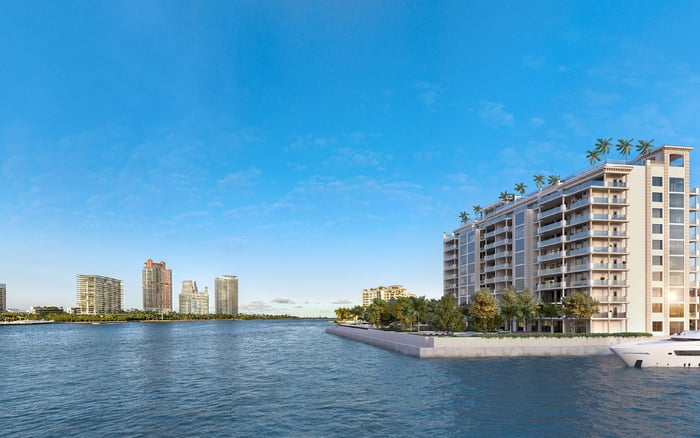
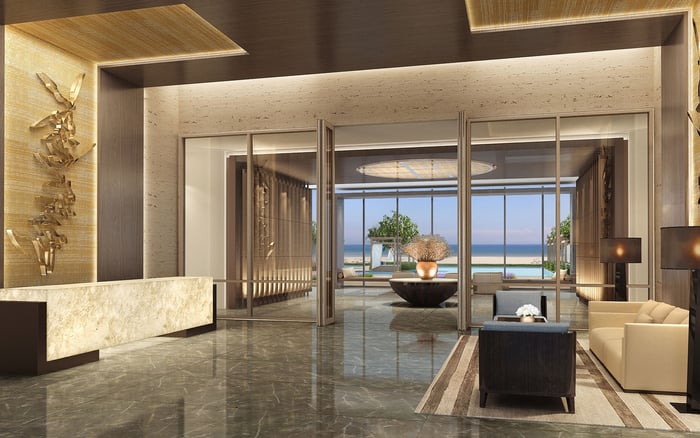
A discreet, buyer-oriented comparison of Miami and Sydney’s trophy waterfront markets, with 2026-focused takeaways on scarcity, pricing power, taxes, supply, and climate-risk diligence for South Florida principals.
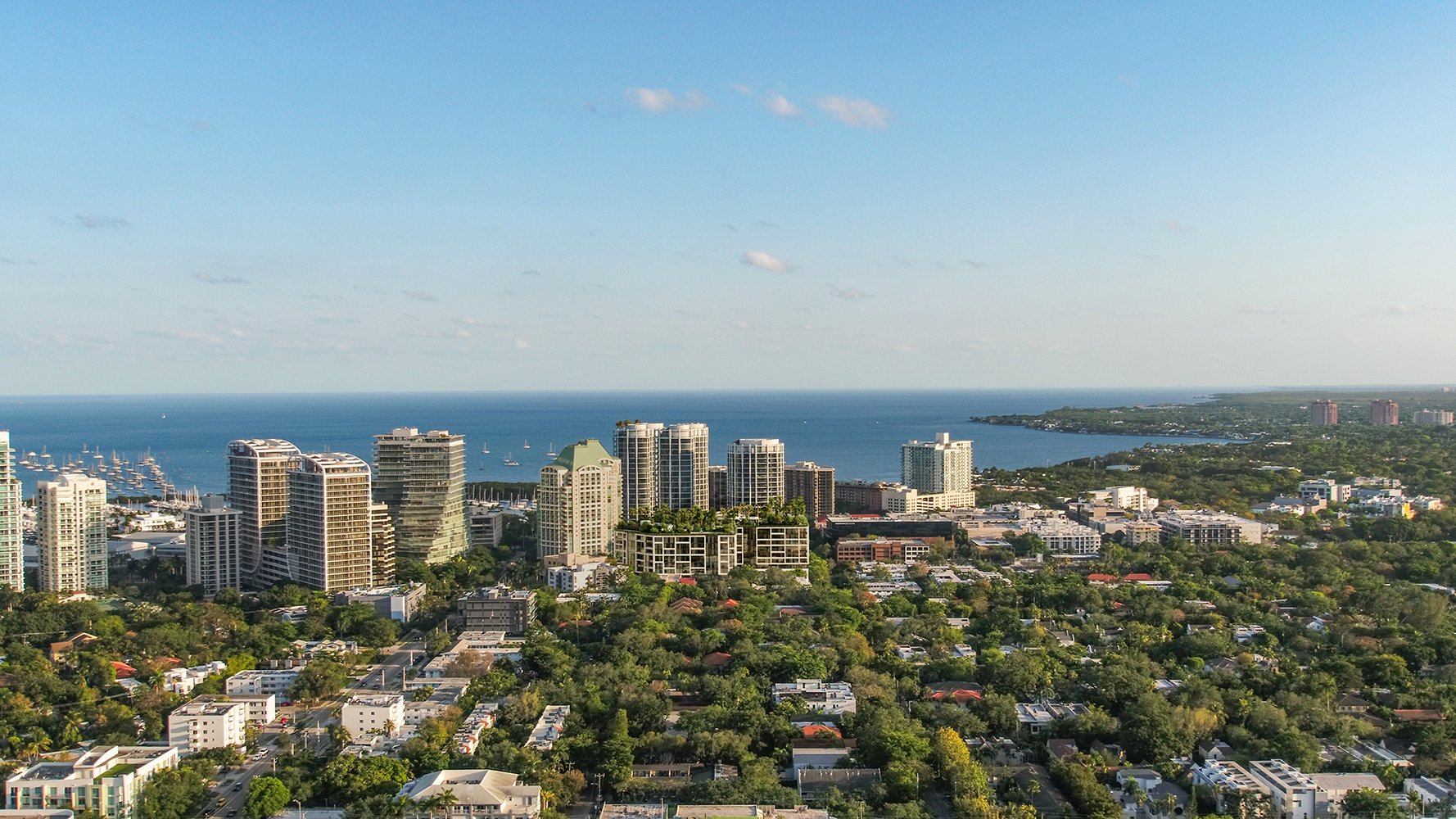
For South Florida’s ultra-premium buyer, “waterfront” is no longer a single descriptor. It’s a stack of attributes that increasingly trade like separate asset classes: direct ocean access versus fixed-bridge restrictions, protected harbor frontage versus open-bay exposure, newer construction versus legacy stock, and the quality of the building’s capital plan.
Heading into 2026, Miami’s luxury market is showing continued depth at the very top. Through July 2025, South Florida recorded 262 sales above $10M-a pace that points to roughly 426 by year-end, near the 444 high-water mark earlier in the decade. At the same time, trophy pricing in Miami’s $10M-plus segment has reset higher, with record pricing discussed at roughly $7,600 per square foot in 2025.
Sydney, by contrast, reads like a scarcity laboratory. In one of its most prestigious waterfront enclaves, Point Piper, only four sales were recorded in the 12 months to September 2025, with a median house price of A$17.3M. That’s not simply demand-it’s the market structure of a place where turnover is optional, not required.
The practical takeaway for South Florida principals isn’t that one city is “better.” It’s that Miami and Sydney price waterfront for different reasons-and those reasons should shape how you underwrite a purchase in 2026.
Miami’s uppermost tier has become more stratified, with a clearer split between “luxury” and “trophy.” In Miami-Dade, the number of single-family deals above $3,000 per square foot rose to 28 in the first seven months of 2025, up 115% year-over-year. The implication is straightforward: buyers are paying a measurable premium for the right micro-location and a very particular product standard.
For a waterfront buyer, this stratification shows up in three places:
First, access. “No fixed bridge” and true ocean access remain defining value drivers for boating-oriented households. The market consistently assigns different pricing tiers to homes that can clear the bay and reach open water without operational friction.
Second, infrastructure. Docks, seawalls, and the quality of waterfront hardscaping have shifted from “nice to have” to underwriting essentials. In 2026, assuming every waterfront edge is equivalent is an avoidable risk.
Third, the property’s ability to hold its position in a market with new choices arriving. Miami’s luxury pipeline is substantial: more than 15,000 luxury condo units are expected across 40-plus developments in 2026. That doesn’t mean today’s best assets weaken. It means the middle of the market has more substitutes-and only the most defensible locations and execution are likely to preserve pricing power.
In this context, a buyer considering a statement Brickell residence may look at the experiential positioning of 888 Brickell by Dolce & Gabbana or the architectural proposition at The Residences at 1428 Brickell as a benchmark for what “trophy condo” means now, not what it meant five years ago.
Sydney’s prestige waterfront behaves differently because scarcity is structural. Ultra-thin sales volumes in prime harbor-adjacent pockets are the point. Owners don’t have to trade, and when they do, the pool of true substitutes is narrow.
Listing volumes in prime areas have been described as materially below typical levels, and the market’s outlooks tend to rest on a simple thesis: constrained supply plus enduring demand equals upward pressure. Forecasts in Sydney’s prestige segment have centered around mid-single-digit growth through end of 2026 for both prestige houses and luxury apartments.
For South Florida buyers, the Sydney comparison is useful because it clarifies what Miami must be for a waterfront premium to stay durable. Miami can’t compete with Sydney on pure scarcity because Miami is still building. Miami competes on a different mix: lifestyle, global accessibility, product innovation, and a tax and ownership framework that can materially alter after-tax cost of carry.
Florida remains one of the few U.S. states with no state personal income tax. For principals with meaningful taxable income, that single line item can dominate any “Miami versus elsewhere” comparison over a long hold.
Property taxes also require a more nuanced read than a typical first-year estimate. Florida’s homestead framework includes the Save Our Homes cap, which limits annual assessed-value increases for qualifying owner-occupants. For a buyer planning to establish primary residency, this can reduce long-term property-tax growth relative to a scenario where assessed values simply ratchet with market pricing. There are also 2026 property-tax relief proposals under discussion that could further reduce homestead tax burdens if enacted.
Sydney’s ownership economics are different, and for an international buyer the effective holding-cost equation can vary widely depending on residency status, structure, and local rules. The point isn’t to model two legal systems in one sitting. It’s to recognize why Miami’s trophy segment can remain liquid: carrying the asset can be strategically efficient for the right buyer profile.
Another reason Miami remains resilient is demand diversity. Over an 18-month period ending June 2025, international buyers accounted for 49% of sales in a set of new construction, pre-construction, and condo conversion projects totaling 9,115 units across 37 developments.
In practice, that means Miami’s waterfront and near-waterfront product isn’t dependent on a single buyer story. Primary residents, second-home owners, and global investors all participate, and their motivations differ. That diversity can cushion the market when any one cohort pauses.
It also influences which submarkets feel “tight” even in a building cycle. Areas with limited developable frontage or stricter neighborhood character tend to preserve scarcity. Consider the discreet appeal of Bay Harbor’s lower-density positioning and wellness-forward living, where a buyer might compare a newer boutique concept like The Well Bay Harbor Islands against more traditional ultra-luxury inventory.
Across global coastal cities, waterfront homes can command substantial premiums relative to comparable non-waterfront stock. But in 2026, the premium is less about the romance of a view and more about the coastline you’re actually buying.
For South Florida, the due diligence stack has become more technical:
Water access and navigation: “No fixed bridge” remains a premium driver for boating households, but it should be verified against actual routes, tides, and planned infrastructure.
Condition and capital plan: seawalls, dock systems, and building envelope maintenance matter. The best view can’t compensate for deferred waterfront engineering.
Insurance realities: the market’s pricing increasingly reflects the buyer’s ability to insure and maintain the asset without operational surprises.
For Miami Beach and Surfside, where true beachfront and curated amenity ecosystems can justify trophy pricing even amid broader supply growth, buyers tend to focus on best-in-class execution and long-term stewardship. Properties like The Surf Club Four Seasons Surfside illustrate how the market prices a controlled, legacy-caliber experience rather than just “oceanfront.”
Miami’s 2026 luxury pipeline is often discussed as a single number, but it should be underwritten as categories.
Category one is true trophy product: rare sites, exceptional design, and an amenity strategy that remains defensible even as competitors deliver. Category two is high-quality luxury that is still substitutable, where buyer choice expands with every new delivery. Category three is “market luxury,” where pricing power depends heavily on broader economic conditions.
The smartest 2026 buyer underwrites not just the unit, but the unit’s future comparables. Ask: when the next wave of luxury inventory arrives, will your asset still be the obvious choice for your buyer profile? If you’re buying for privacy, do you have it? If you’re buying for boating, is your access truly frictionless? If you’re buying for walkability and services, does the neighborhood support your daily life without compromise?
In Brickell, for instance, the conversation is often about skyline views and service culture, but the underwriting should also account for how the building differentiates itself inside a dense field. In Miami Beach, it’s about beachfront stewardship, lifestyle continuity, and the longevity of the address.
Coastal markets are being repriced not only by demand, but by risk literacy. Miami faces significant sea-level-rise projections and growing attention to flooding impacts and adaptation. In Australia, climate hazards including flood risk are already influencing market outcomes, with increasing emphasis on disclosure, insurance, and valuation implications.
For the South Florida waterfront buyer, 2026 diligence should include a practical resiliency review:
Elevation and flood pathways in the immediate micro-area.
Building systems and backup power posture where applicable.
Waterfront edge condition and maintenance cadence.
Insurance strategy and expected long-term carrying costs.
This isn’t about avoiding waterfront. It’s about buying the right kind of waterfront: the property whose engineering, governance, and location can carry the premium through multiple market cycles.
At the top end, buyers are behaving less like speculators and more like portfolio managers.
They’re choosing assets that can be held comfortably. Miami’s long-hold wealth creation has been meaningful: a Miami single-family home bought in Q4 2009 and sold in Q4 2024 gained $555,900, compared with a $306,600 U.S. average, while a Miami condo gained $342,600 versus a $252,000 U.S. average. That kind of history doesn’t guarantee future returns, but it helps explain why quality assets can remain attractive when the hold period is measured in years, not quarters.
They’re also separating “waterfront” into its components and paying for the components that match their lifestyle. A boater pays for access. A beach household pays for stewardship and service. A privacy-first principal pays for controlled entry and low turnover. In 2026, paying for the wrong version of waterfront is the most common mistake.
Is Miami’s $10M-plus market still active heading into 2026? Yes. South Florida logged 262 $10M-plus sales through July 2025, keeping activity near record pace.
What is driving trophy pricing in Miami right now? A mix of scarce prime sites, global demand, and buyers paying up for exceptional execution.
Does Sydney’s waterfront market behave like Miami’s? Not exactly. Sydney’s top end is defined by extremely low turnover and structural scarcity.
How important is “no fixed bridge” for Miami waterfront value? It can be decisive for boating households because it affects practical ocean access and usability.
Will Miami’s 2026 luxury condo pipeline pressure prices? It can add competition for substitutable product, while the most defensible trophy assets tend to hold.
Are international buyers still meaningful in Miami new development? Yes. International buyers represented 49% of certain new-construction and pre-construction sales recently.
Why do taxes matter so much in a Miami versus global-city comparison? Florida has no state personal income tax, which can materially change the after-tax cost of ownership.
What is the Save Our Homes cap and why should owner-occupants care? It limits annual assessed-value increases for homesteaded properties, potentially reducing long-term tax growth.
How should buyers think about climate risk in waterfront valuation? As a diligence requirement: understand flood pathways, building systems, and long-term insurability.
What is the single most common mistake in buying waterfront in 2026? Treating all waterfront as equal instead of underwriting access, engineering, and long-term governance.
For a tailored shortlist and next-step guidance, connect with MILLION Luxury.
If branded residences are on your mind — as a home or as an allocation — we would be glad to share what we are seeing, privately.
Begin a quiet conversation