In 2026, ultra-luxury buyers are weighing two very different kinds of certainty: Miami’s liquidity and scale versus Ibiza’s scarcity and lifestyle premium. Miami’s $1M+ inventory has pushed past New York City’s, while South Florida continues to post one of its strongest years ever for $10M+ closings, many of them cash. Ibiza, meanwhile, remains a supply-constrained Mediterranean market where price per square meter commands a steep premium and where short-term rental compliance is becoming more formalized. This guide frames the decision the way principals, family offices, and globally mobile owners actually make it: not as a simple “which is cheaper,” but which market better fits your use case, risk tolerance, and time horizon.
Miami and Ibiza sit at opposite ends of the ultra-luxury spectrum. One is a high-volume global gateway where deals clear with notable frequency. The other is an island market where supply constraints and planning limits make availability the most valuable amenity.
In December 2025, Miami carried 10,591 active residential listings priced at $1M+, edging past New York City’s 10,176 and marking the first time in about a decade that Miami moved ahead on that specific measure. The detail matters: inventory is a proxy for both choice and transaction cadence. Miami’s listing flow tends to be steadier year-round, while New York’s luxury inventory swings more seasonally-a dynamic that helps Miami feel continuously tradable.
Ibiza’s sense of inevitability is different. The market story is less about an expanding catalog and more about scarcity premiums in prime areas. Island constraints, environmental sensitivities, and a finite coastline reinforce the idea that the “right house” is often the deal-even when pricing reads ambitious.
South Florida closed 361 home sales at $10M+ in 2025, the second-highest annual total on record, behind only 2021. That volume signals more than bragging rights. It points to a buyer pool that can absorb trophy pricing across multiple neighborhoods, not just a single enclave.
Transaction mechanics at the top end have also skewed heavily toward cash. Practically, cash-forward demand can compress timelines, reduce appraisal friction, and shift the negotiating center of gravity-especially for assets that are truly one-of-one.
Miami’s luxury demand also has a notable out-of-market component, with the New York metro area standing out as an unusually strong feeder. Add the metro’s prominent role in foreign home buying, and Miami’s ultra-luxury stack reads as a diversified base of domestic migration, second-home patterns, and cross-border capital.
In the built environment, that depth shows up in the product spectrum. In Brickell, newer branded and design-led towers support a lifestyle that can feel closer to a private club than a typical condo ownership experience. For buyers prioritizing a modern, walkable core, 888 Brickell by Dolce & Gabbana signals how far the district has leaned into fashion-grade identity and turnkey living.
Ibiza’s 2025 pricing context is unambiguous: average property values were reported around €7,000 to €7,306 per square meter, materially higher than Mallorca in the same comparison set. The premium is not subtle. In that analysis, Ibiza’s pricing carried an estimated 46% premium over comparable Balearic properties and was roughly triple Spain’s national average.
The island’s villa market also skews more ultra-prime than its regional peers, with a much higher share of listings above €1M and above €5M. Average villa list pricing in the cited comparison ran about €4.32M in Ibiza versus about €2.70M in Mallorca-roughly a 60% premium.
That premium is sustained by a buyer pool that remains heavily international and by the island’s year-round global appeal. Yet 2025 commentary also points to normalization from peak frenzy, with more balanced buyer-seller dynamics than earlier post-pandemic years. For a disciplined buyer, “normalizing” can read as opportunity, not caution.
One practical point is regulatory: Spain implemented a Single Rental Registry starting July 1, 2025, requiring short-term and temporary rental properties to register and use an identification code in listings. If your Ibiza plan includes any rental activity, compliance is no longer optional or informal; it becomes a core element of asset management.
In 2026, the headline price is rarely the deciding factor. Carry costs, compliance, and tax exposure shape the true comfort of ownership.
In Florida, property insurance has faced well-publicized turmoil, including carrier exits and rising premiums. Coastal condos, in particular, can feel the impact through higher operating costs and a more cautious underwriting environment. This doesn’t negate Miami’s appeal, but it does mean buyers should treat insurance as a first-order variable-not a closing-day formality.
Florida’s property-tax landscape also evolved in 2025. Counties were given flexibility to remove the 10% cap on annual assessment increases for non-homestead property, a change that can affect some investors’ future tax exposure. For principals holding as a second home under non-homestead status, or for entities holding as an investment, that nuance belongs in the underwriting.
In Ibiza, the key cost-of-ownership wildcard is often operational. The island rewards turnkey, modernized homes, and 2025 market commentary highlights growing buyer attention to sustainability and energy features. In other words, the “cheap renovation” narrative carries less weight at the top end; buyers are paying for execution, permitting reality, and time saved.
Miami’s advantage isn’t just weather. It’s the geometry of access. A Miami base can function as a hub: finance in Brickell, culture and hospitality in Miami Beach, and a range of waterfront residential options that let owners dial privacy up or down.
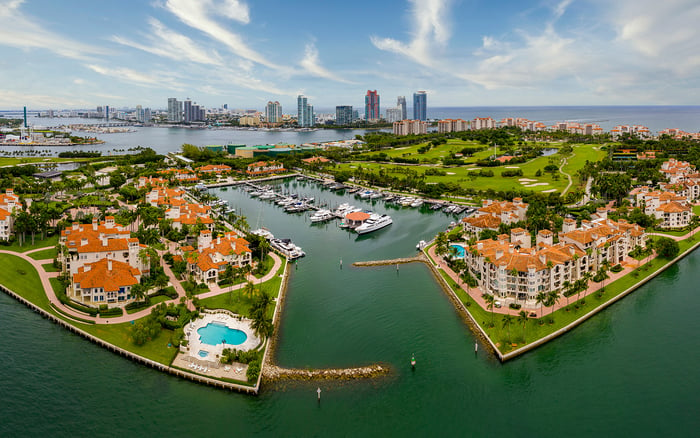
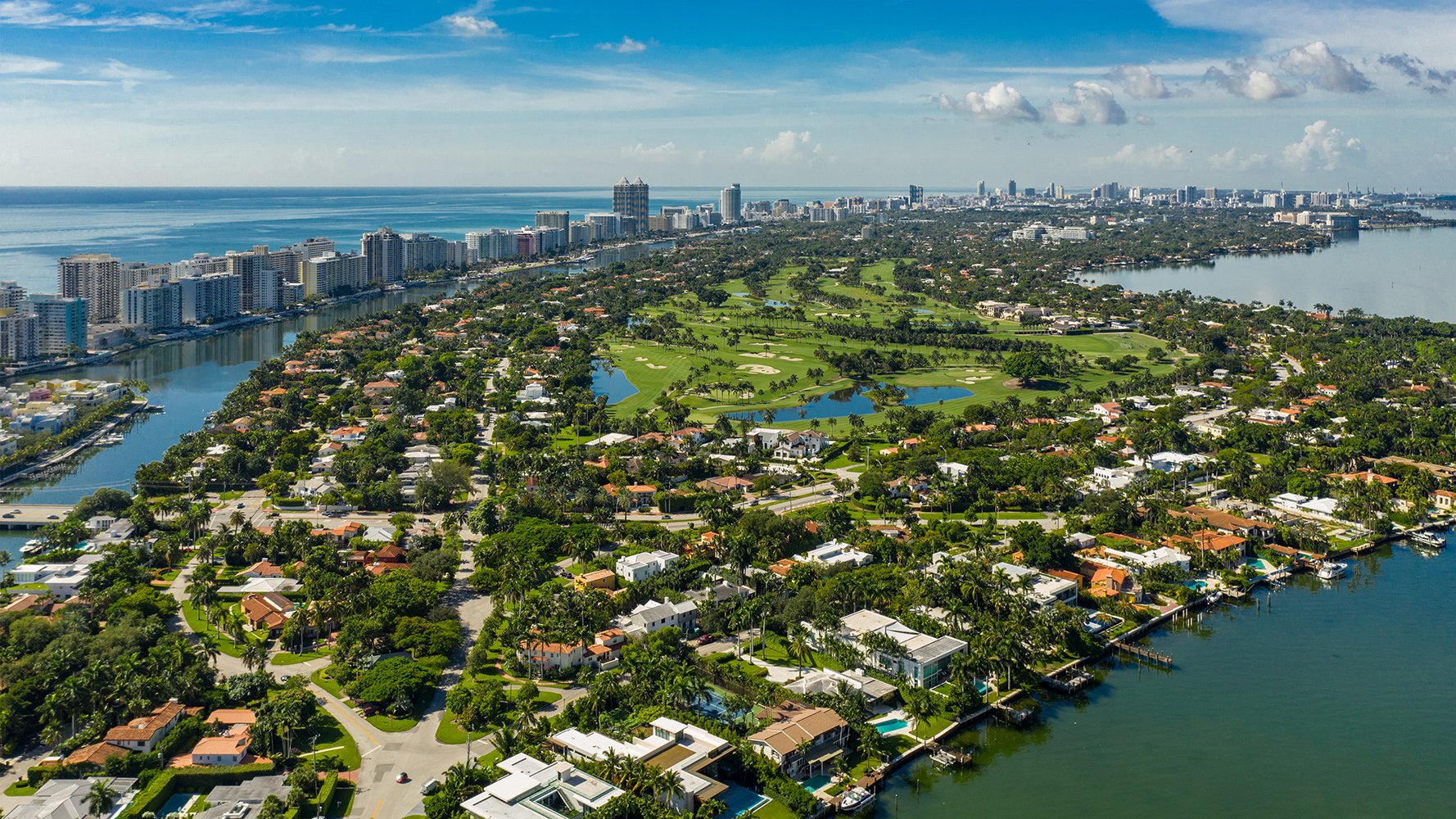
If your use pattern includes frequent arrivals, entertaining, and a desire to lock-and-leave without friction, Miami’s condo market offers a mature answer set. In Miami Beach, ultra-luxury pricing is notably dispersed by neighborhood, with prime submarkets such as South of Fifth and Fisher Island trading at significant per-square-foot premiums. That dispersion is part of the selection process: the “Miami Beach” label alone isn’t granular enough.
For a South of Fifth sensibility, Apogee South Beach captures the district’s discreet, waterfront-centric posture. For buyers who want Miami Beach’s social access but with a modern, design-forward feel, Five Park Miami Beach reflects the next chapter of high-rise living near the beach, where amenities and architecture are expected to be as curated as a private collection.
Ibiza, by contrast, is about cadence. The island is a lifestyle destination that can still feel intimate even when the season is busy. A villa purchase is often a statement about time: longer stays, a slower calendar, and a priority on privacy. The trade-off is accepting lower market thickness than Miami. That is precisely why scarcity premiums exist.
Miami behaves like a globally recognizable market with multiple layers of demand. Large $1M+ inventory and high $10M+ closing volume can support exit optionality across different buyer types, including domestic relocators and international purchasers. Miami’s position as the leading U.S. market for foreign home buying reinforces the idea that, even when one cohort pauses, another can remain active.
Ibiza behaves like a rarity market. Liquidity can be excellent for the right property, but it’s less about constant turnover and more about matching a very specific buyer to a very specific home. In the rental context, yields in the cited comparison were estimated around 4.78% for Ibiza, slightly below Mallorca’s 5.10%. The point isn’t the decimal. The point is that Ibiza is not primarily a yield story at the ultra-prime end; it’s a lifestyle and scarcity story that can be supported by a selective rental strategy-if fully compliant.
Many buyers start with “Miami versus Ibiza,” but the more useful exercise is “which Miami,” because each submarket expresses a different form of inevitability.
Brickell suits the owner who wants a primary-residence feel, walkability, and a global-city rhythm. Miami Beach is for the owner who values the ocean, hospitality, and a visual culture that always feels current. Fisher Island is for the buyer who prioritizes privacy and prestige; it also ranks among the highest-priced condo submarkets in Miami Beach luxury tracking.
For that private-island echelon, Palazzo del Sol represents the kind of low-density, high-finish product that tends to trade on discretion and long-term conviction rather than broad marketing.
From there, Ibiza becomes the intentional counterpoint. If your calendar can accommodate longer stays and you want a home that reads as an estate retreat rather than a city residence, the island can deliver a form of emotional return that is hard to replicate. Just underwrite it with realism: supply constraints can support value, but compliance, condition, and sustainability expectations increasingly determine which homes feel truly prime.
Miami feels inevitable when you value liquidity, variety, and a buyer ecosystem that keeps functioning year-round. The numbers support the thesis: Miami’s $1M+ inventory surpassed New York City’s at the end of 2025, and South Florida’s $10M+ market posted one of its strongest years ever in 2025, with cash playing a dominant role.
Ibiza feels inevitable when you value scarcity, international cachet, and the emotional clarity of an island home. Pricing per square meter reflects that scarcity premium, villa pricing skews higher than neighboring alternatives, and the market’s normalization creates a more navigable negotiating environment for buyers who know exactly what they want.
The right choice is not a debate. It is a fit test.
Is Miami or Ibiza more liquid at the ultra-luxury level? Miami generally offers more consistent year-round liquidity, while Ibiza is more property-specific.
What does Miami’s larger $1M+ inventory signal for buyers? It typically means more selection and a market that can feel tradable across seasons.
How active was South Florida above $10M recently? South Florida recorded 361 closed home sales at $10M+ in 2025, near a record pace.
Do cash purchases matter in Miami’s trophy market? Yes. Cash-dominant deal flow can reduce financing friction and shorten closing timelines.
Why do Ibiza prices command a premium versus nearby islands? Ibiza has been priced at a significant premium per square meter, reflecting scarcity and demand.
Are Ibiza villas meaningfully more expensive than Mallorca villas? In a recent comparison, Ibiza’s average villa list price ran materially higher than Mallorca’s.
What is Spain’s Single Rental Registry and why should owners care? From July 1, 2025, qualifying short-term and temporary rentals must register and use an ID code.
What cost-of-ownership issue is most notable in Florida right now? Property-insurance turbulence can raise operating costs, especially for coastal condo ownership.
What Florida property-tax change should non-homestead owners note? Some counties can remove the 10% cap on annual assessment increases for non-homestead property.
How should a buyer choose between Miami and Ibiza in 2026? Choose Miami for access and liquidity; choose Ibiza for scarcity and a slower, estate-like cadence.
When you're ready to tour or underwrite the options, connect with MILLION Luxury.
If branded residences are on your mind — as a home or as an allocation — we would be glad to share what we are seeing, privately.
Begin a quiet conversation