South Florida luxury buyers are again hearing familiar words: bubble, oversupply, correction. Yet the market’s fault lines today are not a carbon copy of 2008, and the insulation in ultra-luxury is real, driven by cash and global demand. This MILLION Luxury briefing reframes the conversation around what actually broke last time, what merely cooled in 2015-2016, and where today’s risk is most concentrated.
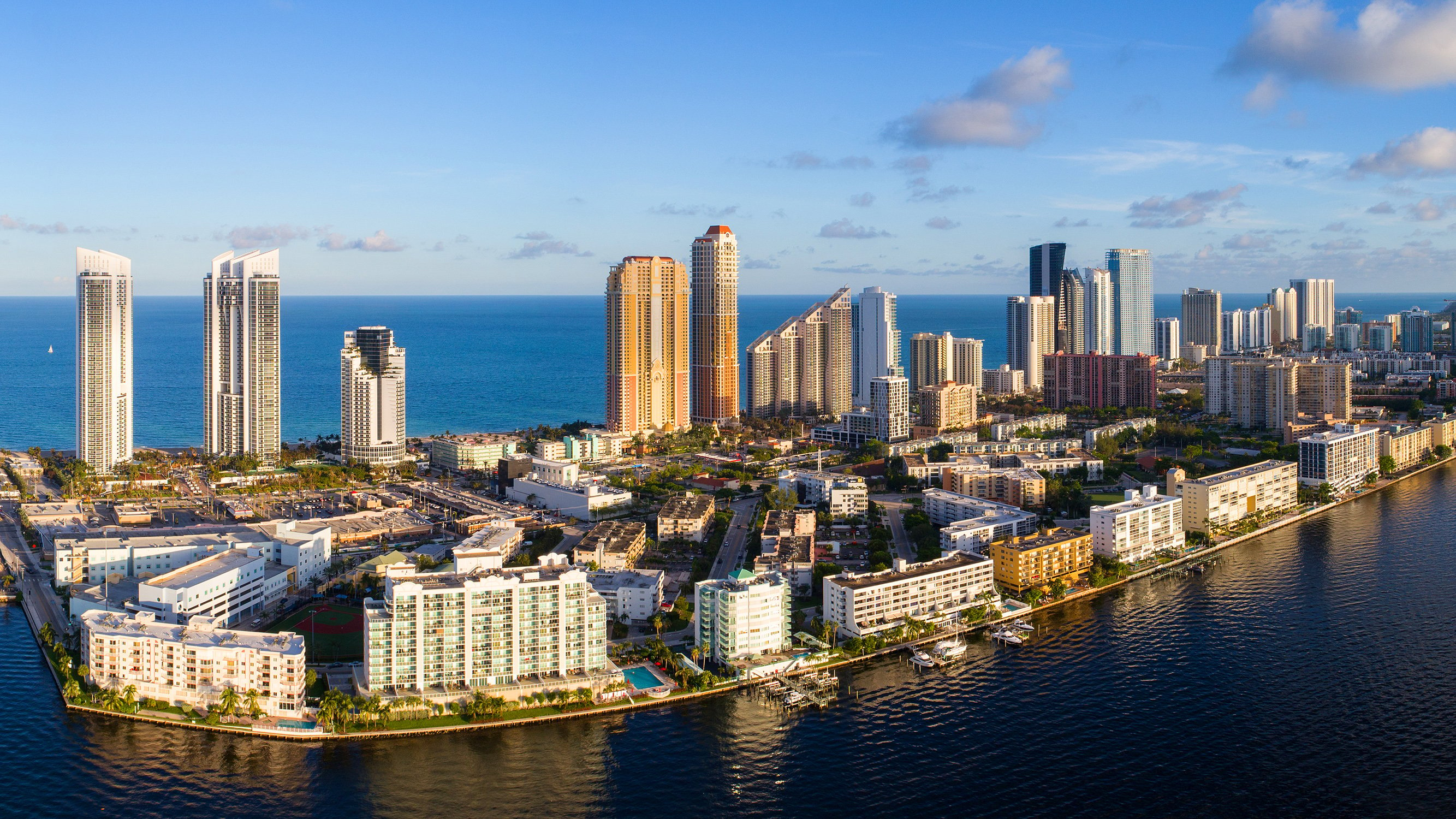
In South Florida, the same headline can describe three very different realities: a pullback in mid-market condos, a pause in discretionary second-home demand, or tighter liquidity for sellers who bought late and need to move early. “Bubble” is a blunt instrument. For an ultra-premium buyer, the sharper question is where fragility concentrates-and where scarcity still governs.
Miami has been flagged as the U.S. market most likely to be in bubble-like conditions among markets studied, with price-to-rent metrics around 20 and characterized as beyond 2006-era extremes. That framing matters, but it does not automatically translate into a uniform crash across neighborhoods and product types. Luxury is segmented: waterfront single-family, boutique new development, legacy trophy condos, and investor-grade inventory can each respond differently when conditions tighten.
The Great Recession era is useful because it shows what a true unwind looks like when inventory and leverage compound. In that cycle, Miami home prices fell about 48% from peak to trough, while Tampa fell about 51%. Florida also became a national epicenter for foreclosures, with at least 10 counties showing foreclosure rates above 5% and Lee County reaching about 12%.
Inventory was the accelerant. By 2008, Florida had roughly 380,000 homes listed for sale-described as about a 20-month supply-far above normal market levels. When supply overwhelms demand and sellers can’t refinance or hold, price becomes the only lever.
The lesson is not “prices can’t fall.” The lesson is that the deepest declines typically require a specific cocktail: abundant listings, forced sales, and financing structures that fail in tandem.
Not every downturn announces itself with foreclosures. South Florida has already lived through a more surgical cooling that still matters for today’s affluent buyer.
During a strong-dollar period in late 2015, Miami single-family sales were reported down 14% year-over-year and condo sales down 16%. Miami Beach was even sharper: single-family sales were reported down 28% and condo sales down 20% in that same quarter. Importantly, commentary from that period noted that homes priced above roughly $3 million were relatively insulated compared with the broader market.
This is the shape of a correction rather than a crash: fewer marginal buyers, longer marketing times, and pricing discipline returning first to product with abundant substitutes.
A defining feature of Miami’s current luxury ecosystem is how much of it runs on equity. Cash sales have been reported at about 40% of Miami closings versus about 27% nationally. In the $10 million-plus tier, about 81% of Miami-area luxury closings were reported to be all-cash.
That matters because cash changes the market’s reflexes. Rate spikes can cool enthusiasm and shift bargaining power, but they don’t automatically trigger a wave of forced selling among buyers who never used high leverage.
The ultra-luxury tier has also shown it can stay liquid even as sentiment softens. Miami’s $10 million-plus market reportedly logged 444 sales in 2021 and 361 sales in 2025-still among the higher annual totals referenced in the same coverage.
International demand remains a meaningful layer of support. International buyers were reported to purchase about $4.4 billion of South Florida residential property in 2025 across about 5,300 homes, representing about 15% of South Florida transactions, versus about 2% nationally and about 5% statewide. Historically, a post-2008 tailwind for Miami included heavy international demand, with Brazilian buyers reported to account for nearly half of apartment purchases in some periods after the subprime crisis.
None of this means every asset is protected. It means the buyers most likely to transact at the top end are generally less rate-dependent, more long-term oriented, and often view South Florida as a lifestyle hedge as much as a financial one.
If 2008’s lesson was inventory, today’s buyer should monitor supply first-especially in the condo segment.
Miami-Dade condo inventory was reported at roughly 14 months of supply in 2025, a level that signals softness and oversupply risk for that segment. In plain terms, when similar units compete, the market starts to price in incentives, closing-cost credits, and quiet reductions. Owners who need a defined exit window can be pushed into price discovery even when a neighborhood’s long-term trajectory remains positive.
This is where selection becomes decisive. Boutique buildings with differentiated design, view corridors, and owner-leaning profiles can behave differently than commodity inventory. In Brickell, for example, buyers evaluating the long arc of urban waterfront living often compare statement new development such as 888 Brickell by Dolce & Gabbana with more conventional stock. The point is not that one is “immune,” but that scarcity and brand-level differentiation can narrow the gap between aspiration and resale.
In Miami-Dade, the “luxury” threshold, defined as the top 5% of single-family sales, was reported at $3.3 million in 2024, up from $2.7 million in 2023. The “ultra-luxury” threshold, defined as the top 1%, was reported at $10 million in 2024, up from $7.2 million in 2023.
For buyers, higher thresholds do two things. First, they pull more properties into the “luxury” conversation, increasing substitution-and therefore negotiation leverage-in the $3 million to $6 million band. Second, they clarify how rare the true ultra segment is. The top end can still reprice, but it often does so with fewer comparable sales, more off-market behavior, and a larger role for seller discretion.
If you’re buying within that expanding luxury band, insist on clarity: recent tradeables, realistic days-to-contract, and the seller’s actual timeline.
South Florida doesn’t move as one market. Treat each neighborhood as a micro-portfolio.
Brickell:
Urban luxury is more sensitive to condo supply cycles, yet it remains a magnet for buyers who prioritize a walkable, service-rich lifestyle. Allocate extra diligence to building financials and competing inventory, while recognizing that new, design-forward product can anchor desirability for years.
Miami Beach:
Demand can be emotional, but liquidity can change quickly when macro narratives shift. Buyers drawn to a more intimate, beach-adjacent experience often gravitate toward boutique offerings such as 57 Ocean Miami Beach, where the appeal is less about “how many units” and more about “how hard is it to replicate.”
Sunny Isles:
The oceanfront tower market can deliver extraordinary views and turnkey living, but it’s also where substitutes can be plentiful. For those who want a newer, high-profile experience, Bentley Residences Sunny Isles illustrates how lifestyle positioning can differentiate even within a corridor of vertical inventory.
Hallandale:
Luxury has been expanding northward, with resort-style communities and newer development influencing buyer expectations. 2000 Ocean Hallandale Beach is a useful reference point for buyers comparing boutique oceanfront living with larger, more commoditized offerings.
The strategic thread is simple: when supply is elevated, buy what can’t be easily swapped. When liquidity is the priority, favor product that historically trades even in quieter seasons.
Luxury buyers can afford patience, but they shouldn’t waste it. A disciplined approach doesn’t require waiting for a headline crash. It requires optimizing optionality.
Cash-heavy segments may still reprice, but they’re less prone to forced-selling cascades.
If the condo market is carrying elevated supply, treat the purchase as a lifestyle asset with time to normalize.
In ultra-luxury, low leverage can mask thin turnover. Look for real transaction depth-not just aspirational asks.
A seller in an oversupplied condo stack is not the same as a seller with a rare waterfront single-family.
In a correction, the best buys are often the most correct: well-positioned, well-managed, and priced to the market you’re in-not the market you remember.
Is Miami in a housing bubble right now? Miami has been characterized as showing bubble-like conditions, but outcomes vary sharply by neighborhood and product type.
Could Miami prices fall like 2008 again? Large declines typically require a combination of excess inventory and forced selling; today’s dynamics are more mixed, especially in cash-heavy tiers.
What happened to Miami prices in the last crash? In the Great Recession cycle, Miami home prices fell about 48% from peak to trough.
Are condos riskier than single-family homes in South Florida? Often, yes-particularly when supply is elevated. Miami-Dade condo inventory has been described around 14 months of supply in 2025.
Does ultra-luxury behave differently from the broader market? Yes. The $10M+ tier has been reported to be overwhelmingly cash, which can reduce sensitivity to rate swings.
How much of Miami luxury is all-cash? Cash sales have been reported around 40% of Miami closings, and about 81% in the $10M+ tier.
What did the 2015-2016 correction look like? Sales volumes softened notably, with Miami and Miami Beach reporting double-digit year-over-year declines in late 2015.
Do international buyers still matter in South Florida? Yes. International buyers were reported to represent about 15% of South Florida transactions in 2025.
What is considered “luxury” in Miami-Dade now? The top 5% single-family threshold was reported at $3.3M in 2024, with ultra-luxury at $10M for the top 1%.
Should I wait to buy until prices drop? If you find a scarce asset you would hold through cycles, disciplined negotiation can matter more than perfect timing.
For a tailored shortlist and next-step guidance, connect with MILLION Luxury.
If branded residences are on your mind — as a home or as an allocation — we would be glad to share what we are seeing, privately.
Begin a quiet conversation