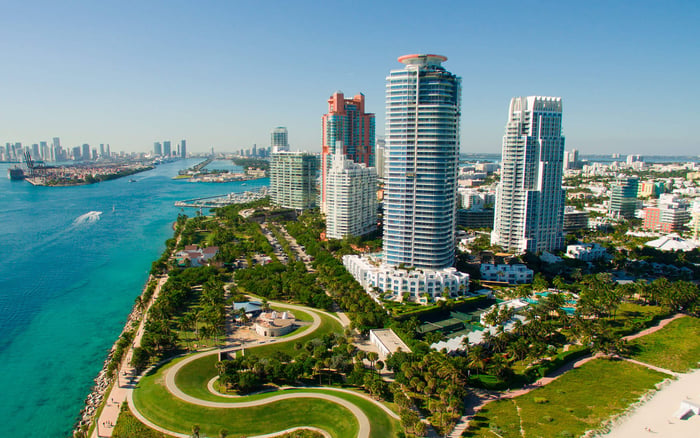
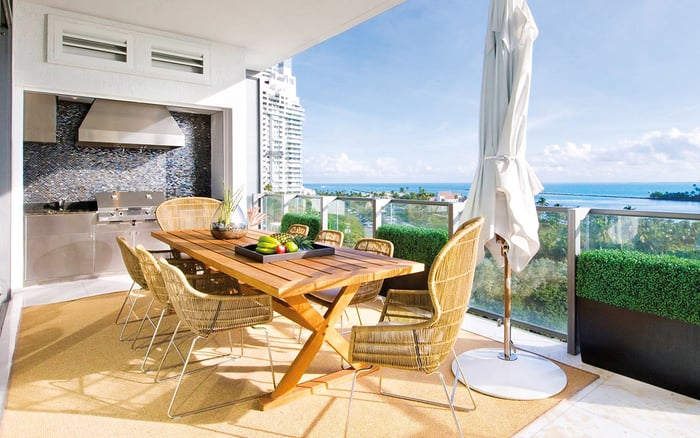
In Miami Beach, the marina-versus-beach choice is less about which waterfront is better and more about which daily ritual leads the household: boating on Biscayne Bay or immediate access to the Atlantic sand.
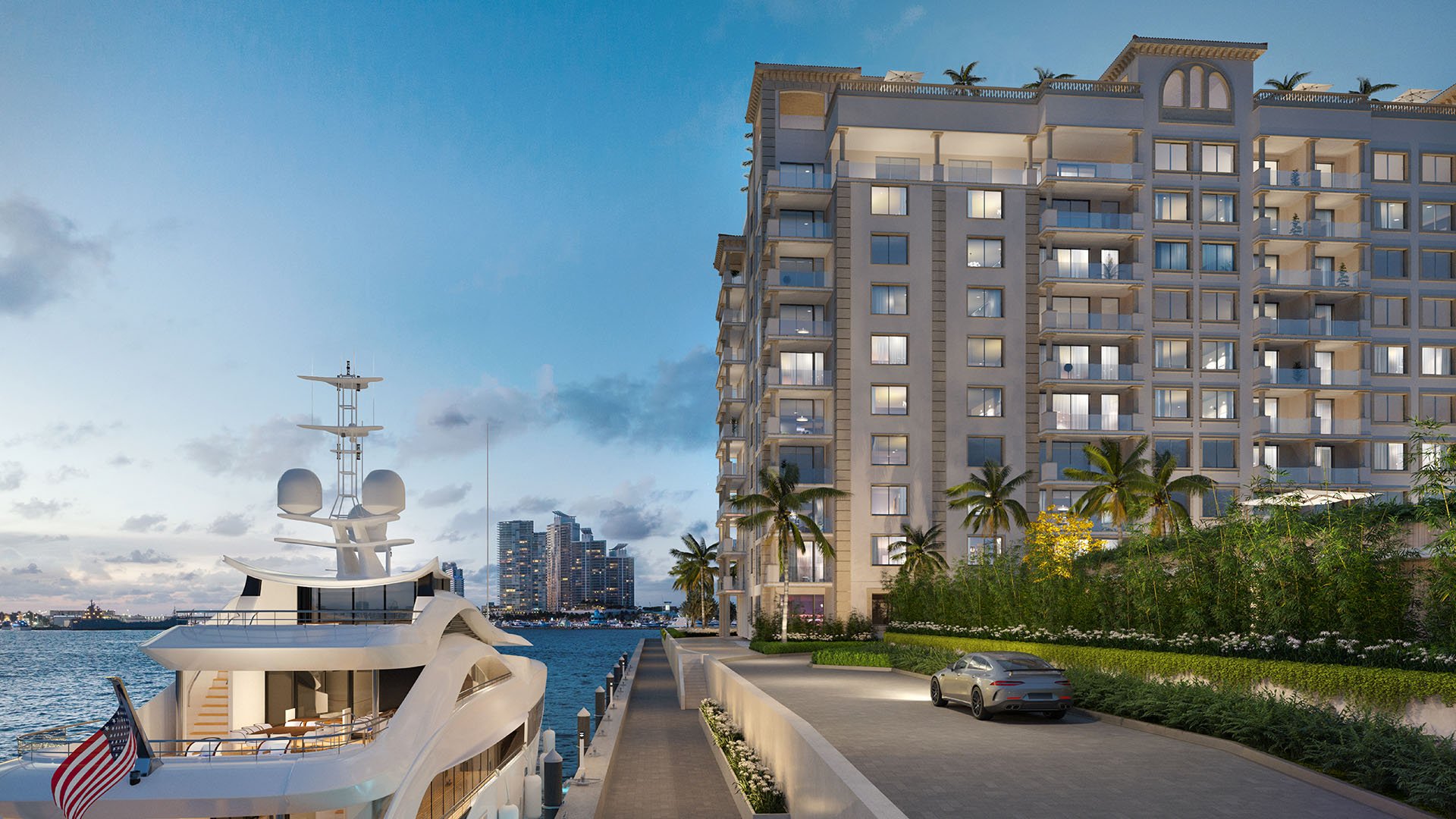
Miami Beach makes waterfront buying feel deceptively simple until the buyer defines the water. The city sits as a barrier island between Biscayne Bay and the Atlantic Ocean, which means marina life and beach life are usually organized on different sides of the same narrow geography. That separation is where the private marina access versus direct beach access decision begins.
A bay-side address can be exceptional, especially for a household built around boats, tenders, sunset runs, and easy movement into Biscayne Bay. An ocean-side address solves a different problem: immediate sand, swimming, walking, and the daily sensory luxury of the Atlantic. Neither is inherently superior. The better choice is the one that matches the household’s actual rhythm.
For search discipline, the useful shorthand is Miami Beach first, then Oceanfront or Marina, Beach-access or Boat-slip, with South of Fifth considered when proximity to both sides matters.
A boat-led buyer should treat marina access as infrastructure, not scenery. The question is not simply whether a property has a nearby slip. It is whether the vessel fits, whether water depth is appropriate, whether bridges affect movement, whether no-wake or speed zones alter operating time, and whether the route to Biscayne Bay and the ocean is practical for the way the owner actually boats.
Miami Beach Marina, at 300 Alton Road in South Beach, is one of the clearest examples of the city’s bay-side yacht infrastructure, with 400 slips and capacity for vessels up to 250 feet. That makes it relevant for buyers with larger-yacht requirements. Sunset Harbour Yacht Club, at 1928 Sunset Harbour Drive, provides another bay-side reference point farther north within the city.
That matters for residences near the southern end of the island. A buyer considering Apogee South Beach or Continuum on South Beach may value the ability to live in a highly serviced residential environment while remaining close to marina infrastructure. The tradeoff is that proximity to a third-party marina is not the same as deeded, on-site, or private dockage. Convenience, control, operating hours, slip terms, and vessel logistics still require careful review.
Marina-oriented real estate carries a different operating profile than beachfront real estate. Buyers should review dock, pier, marina, and submerged-land permissions because these assets are regulated through environmental and submerged-land rules. The presence of a slip or dock is only the opening point.
The deeper questions are practical. Can the owner’s current vessel be accommodated, and can a future vessel be accommodated if the family trades up? Is there sufficient turning room? Are there bridge constraints between the slip and open water? How do boating-speed zones affect daily departures? How does tender movement work when guests, crew, children, pets, provisions, and security are part of the equation?
This is where the romance of yachting meets the discipline of ownership. A spectacular bay view can support a lifestyle, but the value of marina access is ultimately tied to usability. If the vessel is central to the household, the marina must be analyzed with the same seriousness as the residence itself.
For a beach-led household, direct Atlantic access can be more valuable than marina access because it solves the most frequent use case. Morning swims, children’s beach time, ocean walks, guest entertaining, and the simple pleasure of stepping from the building toward the sand are daily benefits, not occasional ones.
The ocean side of Miami Beach is reinforced by the Beachwalk, a roughly seven-mile oceanfront path connecting major beachfront areas. That makes direct beach access both a lifestyle amenity and a mobility amenity. It extends the practical value of the oceanfront beyond views, giving owners a walkable, recreational edge that is difficult to replicate on the bay.
Residences such as 57 Ocean Miami Beach, Shore Club Private Collections Miami Beach, and The Perigon Miami Beach speak to that beach-led logic. The defining amenity is not merely a water view. It is the immediacy of the Atlantic experience and the ability to use the beach without planning around a car, dock, crew, or marina schedule.
The limitation is equally important. Direct beach access does not solve private vessel storage or dockage. A buyer who wants both sand at the doorstep and a yacht ready for spontaneous use may need to compromise, maintain a third-party marina relationship, or select a neighborhood that reduces the distance between the two experiences.
Oceanfront ownership introduces its own constraints. Coastal construction rules regulate work that can affect beaches and dunes, and any beachfront asset should be viewed through the lens of dune protection, erosion, and nourishment programs. The beach is not just an amenity. It is a managed coastal environment.
That does not diminish the appeal of the oceanfront. It simply changes the diligence. Buyers should understand what can and cannot be altered, how dune systems are protected, how restoration or nourishment work may affect the setting, and how building operations handle storm preparation. The most elegant oceanfront ownership is quiet because the operational work has already been considered.
One common mistake is treating flood risk as only a bayfront issue or only an oceanfront issue. In Miami Beach, both sides require disciplined review. Flood-zone mapping is the starting point for understanding mapped exposure, while long-term sea-level trends remain relevant to marina assets and beach assets alike.
Miami Beach’s resilience planning addresses flooding, sea-level rise, and stormwater adaptation, so buyers should review local improvements by neighborhood rather than assuming one side of the island is categorically simpler. Elevation, garage design, mechanical placement, access routes, insurance considerations, and building-level mitigation can matter as much as the postcard view.
The cleanest question is not, “Which waterfront is better?” It is, “Is this household boat-led or beach-led?” A boat-led household should begin with vessel requirements and work backward into the residence. A beach-led household should begin with daily sand and ocean use, then decide whether third-party marina access is enough.
South of Fifth can be a partial hedge because it places certain residences near both the beach and Miami Beach Marina, though usually not in a single property experience. Elsewhere, the decision becomes more specific: bay-side life with stronger boating logic, or ocean-side life with stronger beach logic.
The most successful Miami Beach purchases do not try to win every category. They prioritize the waterfront experience the owner will use most often, then reduce the inconvenience of the secondary experience. That is the difference between buying a view and buying a life that functions beautifully.
Is private marina access better than direct beach access in Miami Beach? Not universally. Marina access is better for boat-led owners, while direct beach access is often better for households focused on swimming, walking, and daily ocean recreation.
Does direct beach access include boat storage? No. Beachfront access typically solves sand and ocean use, but it does not provide private vessel storage or dockage.
Why does Miami Beach separate marina and beach lifestyles? Miami Beach sits between Biscayne Bay and the Atlantic Ocean, so marina infrastructure generally aligns with the bay side while beach access aligns with the ocean side.
What should boat buyers diligence first? Vessel size, slip terms, water depth, bridge constraints, speed zones, and the operating route to Biscayne Bay and the ocean should come first.
Can a third-party marina replace a private slip? It can reduce inconvenience, but it does not fully replicate the control and immediacy of deeded or on-site dockage.
What should beach buyers diligence first? Coastal construction limits, dune protection, erosion conditions, nourishment activity, flood exposure, and building storm protocols deserve early review.
Is South of Fifth a good compromise? It can be, because it places certain residences close to both the beach and marina infrastructure, though the experiences remain distinct.
Does the Beachwalk matter for buyers? Yes. The roughly seven-mile oceanfront path adds daily walkability and recreation value to the ocean side of Miami Beach.
Do bayfront and oceanfront homes both carry flood considerations? Yes. Both should be reviewed for mapped flood zones, elevation, access routes, building systems, and neighborhood resilience planning.
What is the simplest decision rule? Decide whether the household is boat-led or beach-led, then choose the neighborhood and building that minimize the secondary tradeoff.
For a discreet conversation and a curated building-by-building shortlist, connect with MILLION.
If branded residences are on your mind — as a home or as an allocation — we would be glad to share what we are seeing, privately.
Begin a quiet conversation