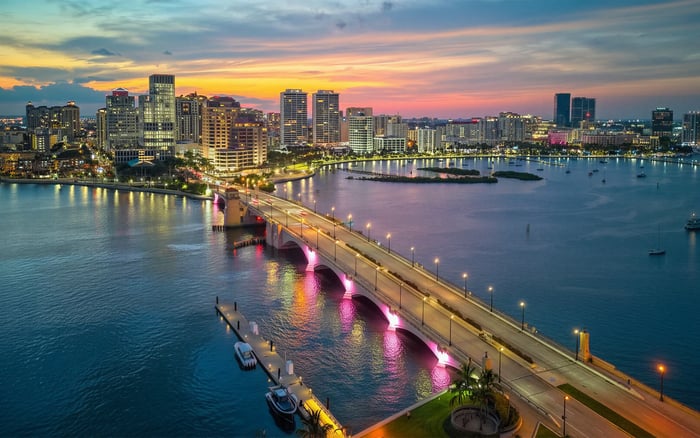
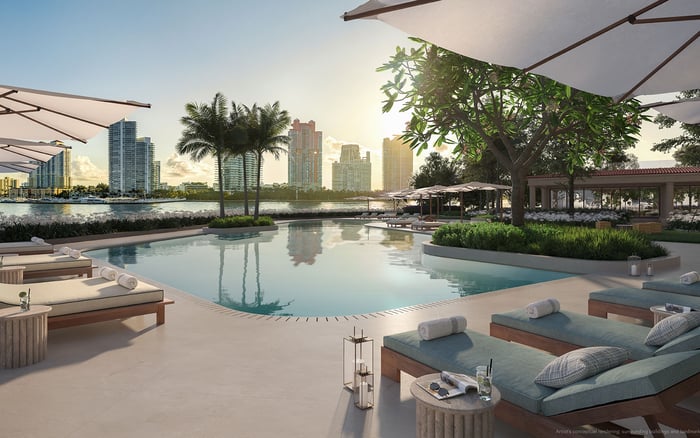
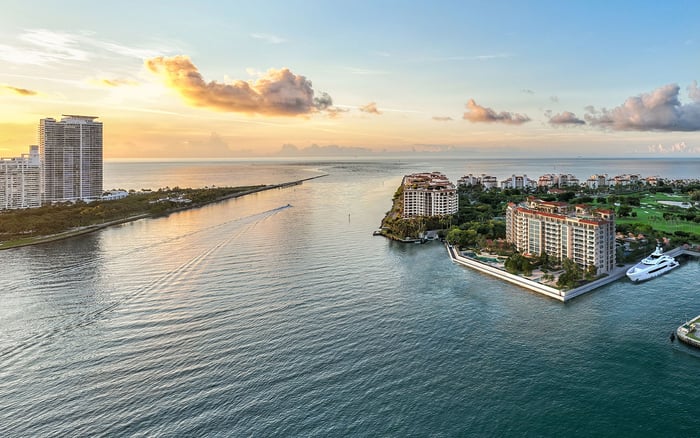
For seasonal luxury owners in South Florida, the better choice between club adjacency and residential privacy depends less on prestige and more on daily rhythm, family use, guest patterns, and how the home will feel during peak season.
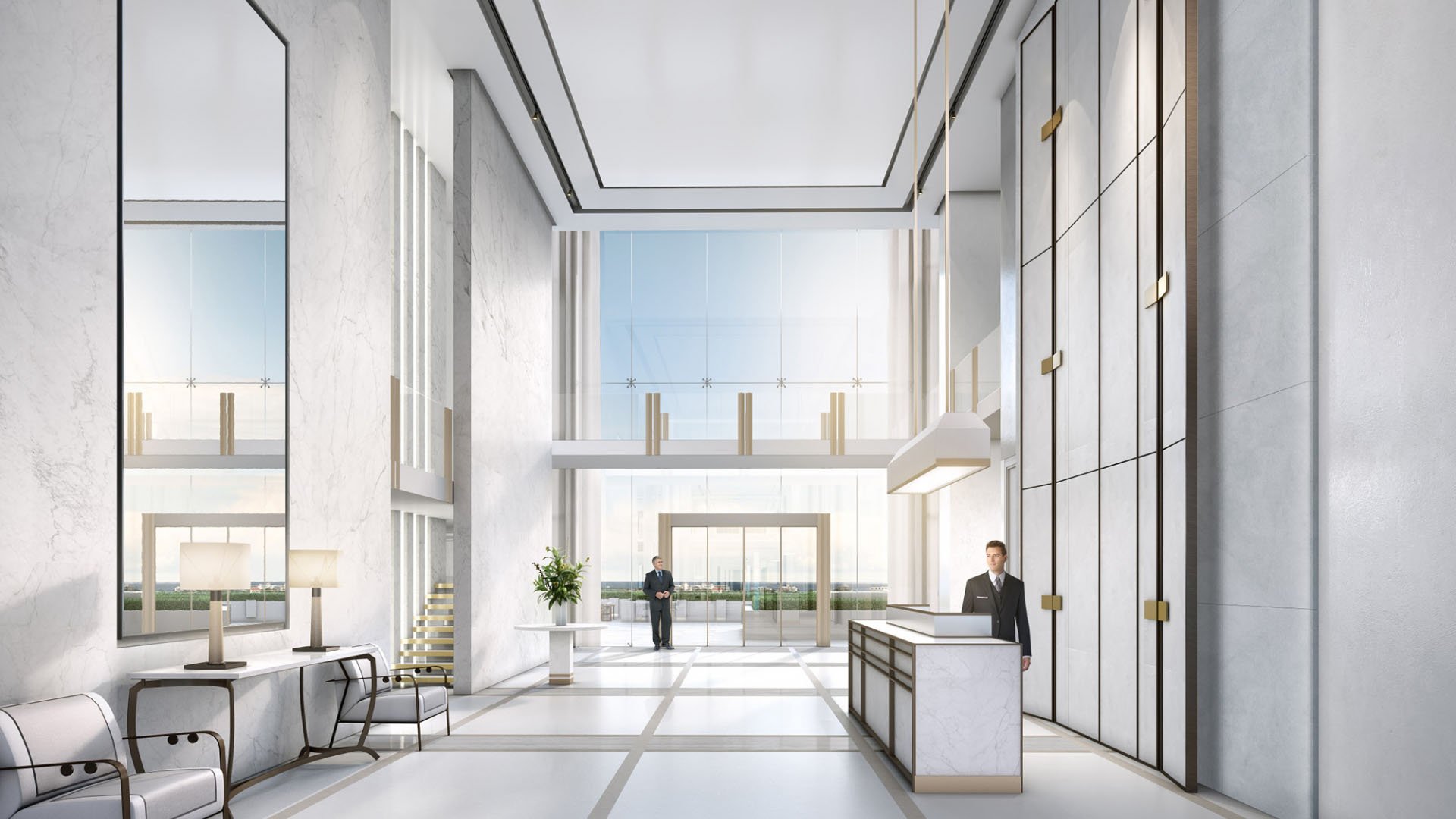
For seasonal owners in South Florida, the purchase is rarely just a matter of square footage, view line, or architectural pedigree. It is a question of tempo. Will the residence function as a social base, with golf, dining, wellness, boating, and a members-only atmosphere close at hand? Or should it operate as a private retreat, insulated from the very activity that makes the season so compelling?
That is the quiet tension behind the choice between club adjacency and true residential privacy. Both can be luxurious. Both can be correct. The mistake is assuming they serve the same owner. A club-adjacent home offers ease, recognition, and a ready-made calendar. A more private residence offers control, separation, and the ability to disappear without leaving the region.
Across Miami Beach, Boca Raton, Palm Beach, Fort Lauderdale, Hallandale Beach, Bay Harbor Islands, and Fisher Island, discerning buyers are not asking which model is more prestigious. They are asking which model will still feel right after the first winter, the first guest-heavy holiday, and the first month when the residence becomes a working household rather than a postcard.
Club adjacency is, at its best, a time-saving luxury. It reduces friction. The owner can move quickly from residence to dining room, fitness ritual, golf, marina, spa appointment, or evening drink without turning every outing into an excursion. For seasonal owners who arrive for a concentrated window, that convenience can be meaningful. The season is short, calendars fill quickly, and proximity has value.
It also solves a social problem. Many seasonal owners want community without having to build it from scratch. A club environment can provide a familiar rhythm of faces, rituals, and invitations. For couples splitting time among several homes, that social infrastructure can make South Florida feel immediately active upon arrival.
When reviewing options such as Shell Bay by Auberge Hallandale, the smarter question is not simply whether the club component is attractive. It is whether the daily path between residence and amenities feels graceful, contained, and optional. Adjacency should feel like access, not exposure.
The best version of club-oriented ownership allows a resident to participate selectively. The weakest version makes the owner feel as though the home is always on the edge of someone else’s program. For seasonal use, that distinction matters.
Privacy is not just about being unseen. In the luxury context, privacy protects rhythm. It gives the household control over arrivals, staff circulation, family routines, visiting guests, children, pets, sleep schedules, and outdoor use. It allows a residence to feel like a home even when the surrounding market is in full seasonal motion.
For many owners, privacy becomes more valuable with time. The first season may be about introductions, dinners, and convenience. The third season may be about quiet mornings, predictable service, and a terrace that does not feel visually or socially porous. Waterfront privacy, in particular, carries a distinct kind of value because the view can be expansive while the living experience remains composed.
Residences associated with more discreet island or enclave living, such as The Residences at Six Fisher Island, tend to enter the conversation when buyers prioritize separation over constant activation. That does not mean rejecting amenities. It means ensuring the amenity life does not compromise the private life.
For a second-home owner, the residence often has to reset the nervous system. If every elevator ride, arrival court, pool deck, or lobby encounter feels socially charged, the property may be lively but not restorative. True privacy is the luxury of choosing when the outside world enters.
Different South Florida markets express this trade-off in different ways. Miami Beach can offer proximity to culture, dining, beach life, and architectural cachet, but the buyer must be precise about noise, access, exposure, and building personality. A residence such as The Perigon Miami Beach may appeal to buyers who want the address energy of the beach while still evaluating how private the day-to-day experience will feel.
Boca Raton often enters the discussion through a different lens. Many seasonal buyers there are thinking about club life, family continuity, established social networks, and ease of ownership. When considering Alina Residences Boca Raton, a buyer might ask whether the surrounding lifestyle supports a polished seasonal routine without making the residence feel like an extension of the social circuit.
Palm Beach and West Palm Beach bring their own balance. The appeal is often a combination of cultural access, waterfront calm, dining, shopping, and a more composed sense of arrival. A property search that includes Alba West Palm Beach should include the same core evaluation: how much of the lifestyle is immediately accessible, and how much of the home remains fully one’s own?
No geography answers the question automatically. A busy address can have an exceptionally private residential experience. A quiet enclave can feel socially intense if its ownership culture is highly interconnected. The building, approach, service model, and resident mix often matter as much as the map.
A full-time owner and a seasonal owner do not use luxury in the same way. Full-time owners often settle into a broader rhythm, with off-peak routines and a deeper tolerance for local logistics. Seasonal owners compress desire into a shorter period. They want arrival to be effortless. They want the best weeks to work immediately.
That compression favors club adjacency for owners who entertain often, arrive with friends, or expect a high level of programmed activity. It can also favor privacy for owners who spend the rest of the year in equally public environments and come to South Florida to withdraw. The right answer depends on what the owner is escaping from, not only what the owner is arriving to.
The guest profile is equally important. If adult children, grandchildren, or rotating friends will use the home, adjacency may reduce the burden on the host. Guests can occupy themselves. But if the household values quiet, privacy prevents the residence from becoming a transit lounge for everyone else’s vacation.
Staffing matters as well. Seasonal homes often run with concentrated service: housekeeping, drivers, chefs, wellness providers, marine services, and property managers. A private residential setting can make that circulation more controlled. A club-adjacent environment may make logistics more convenient, but it must be designed and managed so service does not collide with social life.
Begin with the calendar. Count the weeks you will actually be in residence, then divide them into social weeks, family weeks, recovery weeks, and work-from-home weeks. If the social weeks dominate, club adjacency may carry greater daily value. If recovery and family weeks dominate, privacy may be the wiser anchor.
Next, study thresholds. Luxury is often determined at the threshold between public and private space: the entry sequence, elevator landing, garage arrival, pool approach, marina path, restaurant route, and terrace sight line. If those thresholds are elegant, adjacency can be superb. If they are blurred, even an expensive home can feel overexposed.
Then consider resale psychology. Some future buyers will pay for proximity to activity. Others will pay for sanctuary. The strongest properties make neither buyer feel compromised. They provide access without noise, service without intrusion, amenities without crowding, and views without performance.
Finally, separate brand from behavior. A prestigious name, club, or address may open the door, but it does not guarantee the right daily experience. Walk the property mentally at 8 a.m., 3 p.m., 7 p.m., and midnight in peak season. Imagine guests, deliveries, children, pets, staff, weather, and a full calendar. The correct choice becomes clearer when glamour is tested against routine.
There is no universal winner between club adjacency and true residential privacy. For some seasonal owners, the club is the point: it creates community, structure, and immediate pleasure. For others, the home must remain apart from the season’s intensity, a quiet base from which South Florida can be enjoyed on demand.
The most resilient choice is not the most dramatic one. It is the residence that gives the owner optionality. Club life should be close enough to enjoy without planning, but not so close that it defines the home. Privacy should be strong enough to restore, but not so isolating that the season feels inconvenient.
In South Florida luxury, the highest form of ownership is control over pace. The right residence lets an owner be visible when desired, unreachable when needed, and entirely at ease in between.
Is club adjacency better for seasonal owners who entertain often? Often, yes. Proximity to dining, wellness, recreation, and social spaces can make hosting easier during a compressed season.
Does true residential privacy mean giving up amenities? No. The goal is to separate private living from shared activity, not eliminate services or conveniences.
Which matters more for resale, club access or privacy? Both can support resale depending on the buyer pool. The strongest properties balance access with a calm residential experience.
Should families prioritize privacy over club adjacency? Families often value privacy for routine, sleep, guests, and security. Club access can still be useful if it remains optional.
Is golf access essential for seasonal buyers? Only for buyers who will use it regularly or value the social network around it. Otherwise, it should not outweigh daily residential comfort.
How should buyers evaluate a club-adjacent residence? Focus on thresholds, circulation, noise, sight lines, and whether participation feels optional rather than unavoidable.
Can a Miami Beach residence feel private during peak season? Yes, if the building design, entry sequence, service model, and residence orientation support separation from surrounding activity.
Why is waterfront privacy so valued in South Florida? It can combine expansive views with emotional distance from the pace of the season, which many owners find restorative.
Is Boca Raton more club-oriented than other markets? Boca Raton often appeals to buyers who appreciate established seasonal routines, but each property should be judged individually.
What is the simplest rule for choosing between the two? Choose club adjacency if you want the season to come to you; choose privacy if you want to control when the season enters.
For a discreet conversation and a curated building-by-building shortlist, connect with MILLION.
If branded residences are on your mind — as a home or as an allocation — we would be glad to share what we are seeing, privately.
Begin a quiet conversation