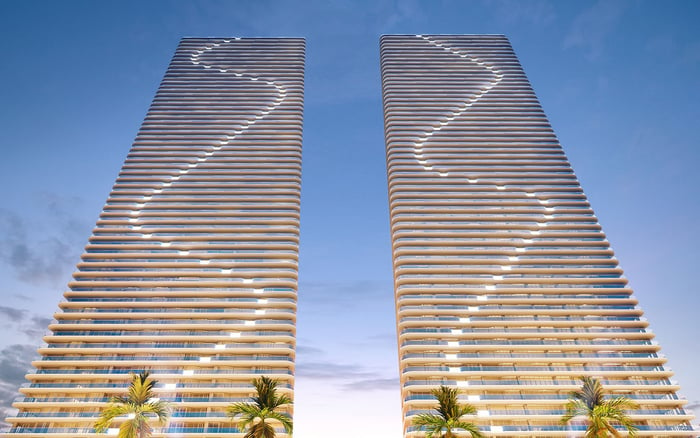
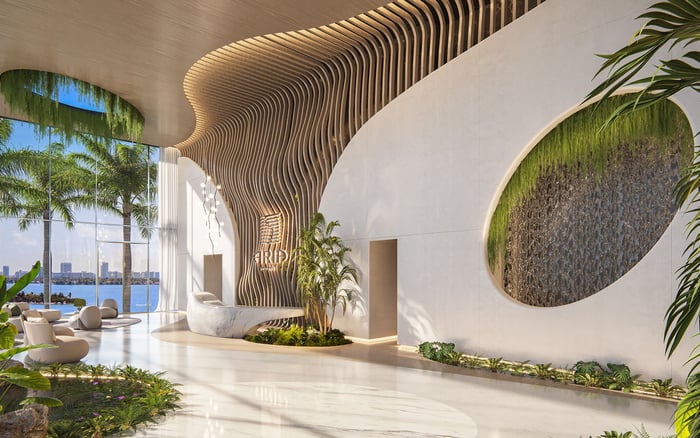
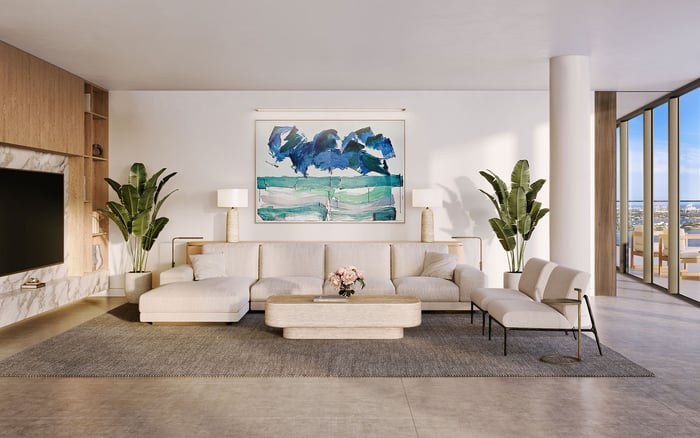
A buyer-oriented guide to choosing between amenity-rich tower living and a quieter, lower-density residential experience in Edgewater, with attention to privacy, service, daily rhythm, views, and long-term livability.
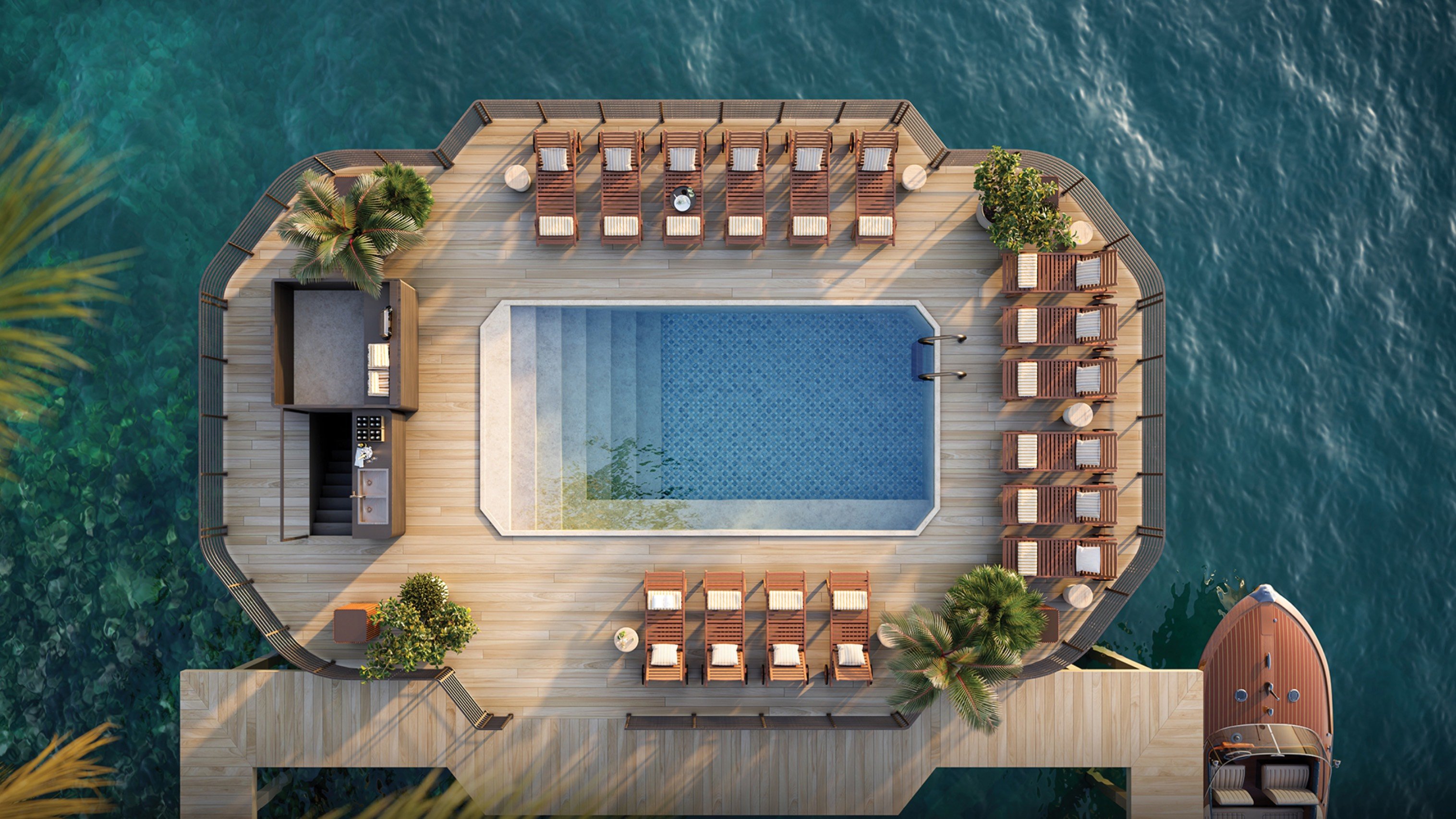
In Edgewater, the choice between a large amenity deck and lower-density living is rarely a simple preference for more or less. It is about how a buyer wants the building to function around daily life. Some residents want a vertical resort, with multiple places to work out, gather, dine, swim, host, and retreat without leaving the property. Others prefer a more residential cadence, where luxury is expressed through privacy, fewer encounters, calmer circulation, and a quieter sense of arrival.
That distinction matters because Edgewater occupies a particular place in the imagination of many Miami buyers: a neighborhood where water, skyline, design, and convenience converge. Yet within that broad appeal, the lived experience can vary dramatically. Two residences may both offer views and contemporary finishes, while the building culture feels entirely different depending on density, amenity programming, elevator flow, parking experience, guest traffic, and how often residents actually share spaces.
For new-construction buyers, projects such as Aria Reserve Miami and EDITION Edgewater frame the larger lifestyle conversation: not just what the residence contains, but what the building contributes every day.
A large amenity deck is most compelling for buyers who see the building as an extension of the residence. If the household uses wellness spaces frequently, entertains often, works remotely, or wants children and guests to have multiple areas to occupy, a robust amenity environment can add genuine daily utility.
The appeal is not only the number of spaces. It is the separation of uses. A well-conceived amenity program allows morning fitness to feel distinct from afternoon lounging, evening hosting, children’s activity, quiet reading, and private meetings. For buyers moving from single-family homes or larger full-service condominiums, this can soften the transition into vertical living. The residence may be high above the city, but life still has zones.
Large decks can also create a sense of community. That is an asset for residents who want a social building, seasonal owners who prefer an immediate sense of place, and buyers who value a hospitality tone. The best examples feel curated rather than crowded, with spaces that encourage residents to stay in the building rather than simply pass through it.
The tradeoff is that scale must be managed. A large amenity program can lose its elegance if access, staffing, acoustics, and circulation are not carefully considered. Buyers should ask whether the amenity level feels like a private club or a busy hotel lobby. The difference is subtle during a sales presentation and obvious after move-in.
Lower-density living appeals to a different instinct. It is for the buyer who values the pause between city and home. The luxury is not necessarily fewer amenities, but fewer interruptions. Shorter walks from elevator to residence, quieter hallways, less competition for preferred spaces, and a more discreet atmosphere can be more valuable than another lounge or pool.
This is where boutique sensibility becomes important. A lower-density building can feel more personal, especially for buyers who prize recognition, privacy, and a residential tone over a resort atmosphere. The arrival sequence may feel calmer. The elevator experience may feel more private. The building may encourage a closer relationship between staff and residents, depending on how operations are structured.
In Edgewater, The Cove Residences Edgewater offers a useful reference point for buyers considering a quieter residential expression within the neighborhood. The question is not whether one format is objectively better. It is whether the buyer wants the building to energize daily life or reduce friction around it.
Lower-density living can also suit owners who travel often. For them, the ideal residence is easy to leave, easy to return to, and simple to manage. They may use the pool less than they value privacy at the entry, security, and a building culture that feels composed at all hours.
The Edgewater conversation has matured beyond a single buyer archetype. Some buyers are drawn to the neighborhood for a full-service, high-rise lifestyle that makes the most of Miami’s climate and water orientation. Others arrive with a more selective brief: a generous floor plan, a meaningful terrace, graceful common areas, and a building that does not feel overprogrammed.
This is why the amenity decision should be made from the inside out. Begin with the household’s actual week. How often will the gym be used? Will guests stay frequently? Is a children’s area essential or irrelevant? Does the owner want to host outside the residence, or is entertaining primarily private? Will the residence function as a primary home, second home, or long-term hold?
A buyer considering Villa Miami, for example, may focus on how the building’s identity supports a refined way of living, while another buyer may prioritize the breadth of shared spaces elsewhere. Both can be correct. The mistake is comparing amenity menus without asking how those amenities will actually be used.
The most revealing tour does not start with finishes. It starts with movement. Buyers should pay attention to the arrival sequence, valet or parking transition, lobby scale, elevator planning, corridor feel, and the path from residence to amenities. These moments determine whether daily life feels seamless or theatrical in the wrong way.
In a larger amenity building, study how spaces relate to one another. Are active and quiet uses separated? Can residents use the pool without passing through event areas? Is there enough variety to prevent every resident from gathering in the same place at the same time? Are outdoor spaces shaded, comfortable, and genuinely usable during different parts of the day?
In a lower-density building, ask the opposite questions. Is there enough amenity depth to support the lifestyle? Does the smaller scale still provide the services expected at the price point? Is the staff model aligned with the building’s promise? Does privacy come with convenience, or does the buyer sacrifice too much for quiet?
Waterfront proximity can heighten the stakes, because views and outdoor living often become the emotional center of the purchase. A beautiful outlook may win the first showing, but the building’s operational rhythm determines satisfaction over time.
From a resale perspective, both formats can be persuasive when they are coherent. Amenity-rich buildings are strongest when the spaces feel useful, maintained, and aligned with the resident profile. Lower-density buildings are strongest when privacy, service, and design discipline are unmistakable.
Buyers should be wary of paying for amenities they will rarely use, just as they should be cautious about selecting a quieter building that lacks the practical services they expect. The best purchase is not the one with the longest feature list. It is the one where the building’s promise matches the owner’s life.
In Edgewater, that is the essence of the decision. The amenity deck asks, “How much of your life do you want downstairs?” Lower-density living asks, “How much calm do you want before you reach your front door?” The answer changes from buyer to buyer, and often from one stage of life to the next.
Is a large amenity deck better for full-time living? It can be, especially if the household uses wellness, lounge, pool, and hosting spaces often. The key is whether the spaces feel functional rather than simply expansive.
Is lower-density living always more private? Often it can feel more private, but design and operations matter. Elevator planning, staffing, and circulation are just as important as the number of residences.
What should Edgewater buyers tour first? Start with arrival, lobby, elevators, corridors, and the route to amenities. These daily transitions reveal more about livability than finishes alone.
Do larger amenity programs increase value? They can support value when residents use them and when they are maintained well. Unused or poorly planned spaces may feel less compelling over time.
Who should consider a boutique building? Buyers who value privacy, calm, familiarity, and a more residential atmosphere should consider it. The appeal is often emotional as much as practical.
Does a terrace matter more than shared outdoor space? For many buyers, yes, because private outdoor space is always available. Shared outdoor amenities still matter when they add variety and scale.
Is Edgewater mainly for primary residents or second-home buyers? It can appeal to both, depending on the building. Primary residents may prioritize daily convenience, while second-home buyers may prioritize ease and service.
How should buyers compare amenity fees? Compare the cost with actual use, staffing quality, maintenance expectations, and convenience. A fee is easier to justify when the building improves daily life.
Can a quieter building still feel luxurious? Yes. Luxury can be expressed through restraint, privacy, materials, service, and ease rather than through a large number of shared spaces.
What is the best way to shortlist comparable options for touring? Start with location fit, delivery status, and daily lifestyle priorities, then compare stacks and elevations to validate views and privacy.
For a confidential assessment and a building-by-building shortlist, connect with MILLION.
If branded residences are on your mind — as a home or as an allocation — we would be glad to share what we are seeing, privately.
Begin a quiet conversation