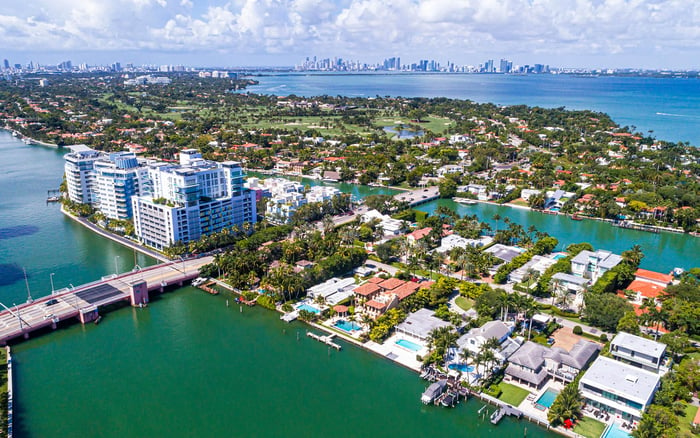
A discreet buyer’s guide to insurance planning for waterfront ownership, from policy architecture and association review to closing timelines and stewardship after purchase.

For a buyer moving from Greenwich to Bal Harbour, the real estate conversation often begins with architecture, privacy, service, and the quality of the water view. Insurance planning belongs in that conversation just as early. On the waterfront, coverage is not merely a closing requirement. It is part of the ownership structure, the financing strategy, and the long-term stewardship of a significant asset.
South Florida buyers tend to evaluate residences through several lenses at once: lifestyle, building quality, association governance, exposure, and liquidity. Insurance sits quietly inside each of those decisions. A condominium residence, a single-family estate, and a marina-oriented property can present very different planning questions, even when they share the same coastal address. The goal is not to make insurance the center of the purchase. The goal is to keep it from becoming a surprise.
The most prepared purchasers treat insurance as a diligence track that runs alongside inspections, legal review, financing, and association document analysis.
Waterfront ownership can involve multiple layers of exposure. A buyer may need to consider the residence itself, interior finishes, personal property, temporary displacement, liability, flood considerations, wind considerations, and, in a condominium, the relationship between the unit owner’s policy and the building’s master policy. Each layer should be reviewed before a buyer assumes that a premium estimate is final.
This is particularly important for buyers comparing the character of Bal Harbour, Surfside, Miami Beach, Sunny Isles, Fort Lauderdale, and Palm Beach County. The geography may feel continuous from the air, but each property has its own building envelope, elevation profile, association structure, maintenance history, and ownership responsibilities. Those details matter.
For example, a buyer considering Rivage Bal Harbour may approach planning differently than a buyer looking at a larger estate-style scenario or a marina-adjacent residence farther north. The address is only the starting point. The insurance file should be built around the property’s actual obligations, not assumptions about the neighborhood.
Many buyers arriving from Greenwich are already familiar with sophisticated asset management. They understand estate planning, property staff, private collections, security systems, and the need for advisory teams. The difference in South Florida is that waterfront ownership often places more emphasis on coordination among several policies and several responsible parties.
A condominium owner, for instance, does not control the master policy, but that policy may affect how the owner structures interior coverage. A single-family owner may have more direct control, but also more direct responsibility. A residence with substantial art, wine, jewelry, designer furnishings, smart-home systems, outdoor kitchens, or custom millwork may require a more bespoke discussion than a standard policy review.
The most efficient approach is to request an insurance review before the buyer is emotionally committed to a single residence. That review should be practical, not theatrical. What is the likely coverage architecture? What deductibles may apply? What exclusions should be examined? What inspections or documentation might be requested? How long will underwriting take? These questions are basic, but in a competitive purchase they can protect both leverage and timing.
Luxury condominium ownership creates a common misunderstanding: buyers sometimes assume the building’s coverage and the owner’s coverage move together. They do not. The association’s policy, the unit owner’s policy, and the buyer’s personal liability planning should be reviewed as separate pieces that must fit cleanly.
Before closing, counsel and the insurance advisor should review the association documents, current insurance summaries, deductible framework, maintenance obligations, and any areas where the unit owner may be responsible for improvements, betterments, or interior elements. The point is not to challenge the building’s structure. It is to understand it.
This matters across oceanfront and bayfront properties alike. A buyer comparing Oceana Bal Harbour with a different coastal condominium should not rely only on prestige, service, or view corridor. The insurance question is more granular: what does the association insure, what does the owner insure, and where could gaps appear?
At the ultra-premium level, the residence is often only one part of the risk profile. A buyer may have seasonal occupancy, domestic staff, visiting family, private chefs, collectors’ items, vehicles, watercraft access, or substantial terrace furniture. Coverage should reflect actual use, not a simplified version of ownership.
A lock-and-leave residence may require different planning than a primary waterfront home. A residence intended for frequent entertaining may raise different liability questions than a private retreat. A buyer who plans to renovate immediately after closing should coordinate coverage before work begins, especially where contractors, stored materials, and temporary vulnerabilities are involved.
For buyers drawn to Miami Beach, the conversation should be similarly tailored. A residence such as The Perigon Miami Beach may appeal for its design context and coastal setting, but a prudent buyer still needs the same disciplined review of personal property, liability, and interior finish exposure.
Insurance can influence the purchase timeline, particularly when financing is involved. Lenders may require evidence of adequate coverage before closing, and underwriting questions can take time. Even an all-cash buyer benefits from early review because insurance findings can inform negotiations, reserves, and post-closing planning.
The best practice is simple: request preliminary insurance guidance during diligence, not after the contract is fully in motion. If a buyer waits until closing week, there may be less time to compare options, address underwriting questions, or resolve documentation issues. The residence may still close, but the buyer’s position may be less elegant than it could have been.
This is especially relevant for waterfront purchases where the buyer’s advisory team includes counsel, wealth advisors, lenders, property managers, and insurance specialists. A coordinated team can identify friction early and keep the transaction calm.
The insurance planning conversation is not limited to Bal Harbour. Buyers looking north to Fort Lauderdale, Pompano Beach, Hillsboro Beach, or Palm Beach County should apply the same discipline. The appeal may shift from beach frontage to boating access, from resort-style service to quieter residential privacy, but the diligence framework remains consistent.
In Fort Lauderdale, buyers may be comparing condominium service with marina lifestyle, or evaluating how seasonal use will shape coverage. A property such as Four Seasons Hotel & Private Residences Fort Lauderdale belongs in a different lifestyle category from a private canal home, yet both require careful questions about responsibility, deductibles, and personal liability.
The farther a buyer expands the search, the more important it becomes to avoid broad assumptions. South Florida is not a single insurance market in practice. Every property deserves its own file.
Insurance planning should not stop at closing. Waterfront ownership changes over time. Renovations are completed. Collections move in. Furnishings are upgraded. Staff arrangements evolve. A residence that begins as a seasonal escape may become a primary home, or the reverse. Each change can affect the adequacy of coverage.
An annual review should include the owner’s policy, umbrella liability, association updates, recent improvements, appraisals for significant property, and any new use patterns. For condominium owners, annual association materials should be read with care. For single-family owners, maintenance records, roof condition, impact openings, mechanical systems, and security measures may all become part of a more complete ownership file.
The larger point is cultural. Waterfront insurance is not simply a premium to be paid. It is an ongoing expression of disciplined ownership.
When should a waterfront buyer start insurance planning? Ideally before or during contract diligence, so coverage questions do not become last-minute closing issues.
Is condo insurance different from single-family insurance? Yes. Condo planning must coordinate the unit owner’s coverage with the association’s master policy and governing documents.
What should buyers ask about a condominium master policy? They should review what the association insures, what deductibles may apply, and what interior responsibilities remain with the owner.
Does an all-cash buyer still need early insurance review? Yes. Even without lender requirements, early review helps clarify risk, cost, timing, and post-closing stewardship.
Should personal collections be discussed separately? Yes. Art, jewelry, wine, designer furnishings, and other valuables may require tailored documentation and coverage.
Can renovations affect insurance planning? Yes. Work after closing may change risk, require contractor documentation, and affect how the residence should be covered.
Is Bal Harbour insurance planning the same as Greenwich planning? Not always. The advisory mindset may be similar, but coastal exposure, association structures, and policy coordination can differ.
How should seasonal owners approach coverage? They should discuss occupancy patterns, monitoring, staff access, security, and procedures for extended absences.
What role does liability coverage play? Liability planning can be essential for owners who entertain, employ household staff, host guests, or maintain waterfront amenities.
Should insurance be reviewed after closing? Yes. Annual reviews help keep coverage aligned with renovations, personal property, association updates, and lifestyle changes.
For a tailored shortlist and next-step guidance, connect with MILLION.
If branded residences are on your mind — as a home or as an allocation — we would be glad to share what we are seeing, privately.
Begin a quiet conversation