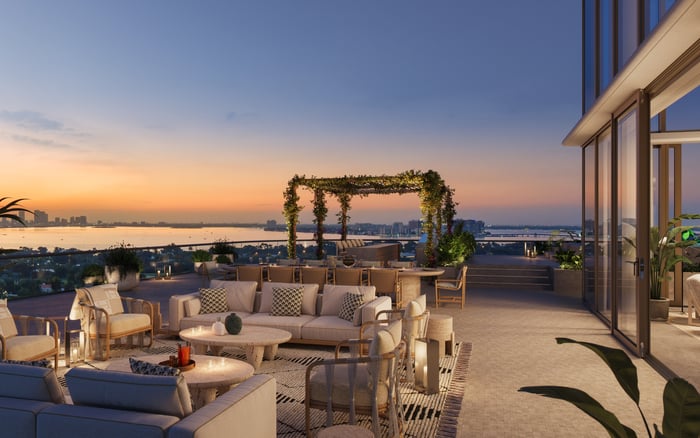
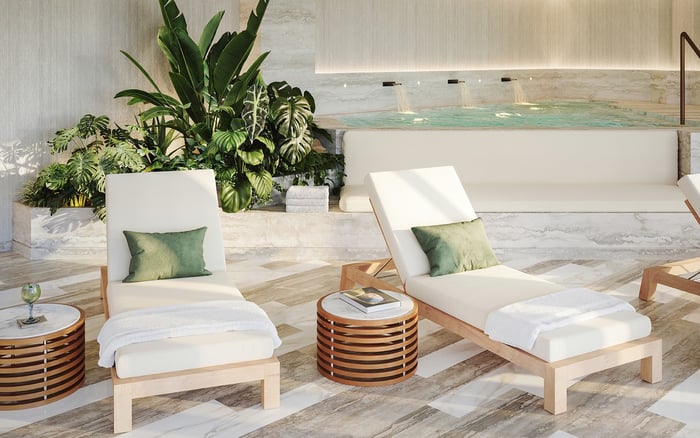
In Downtown Miami, “luxury” increasingly splits into two distinct propositions: large-scale, amenity-forward vertical living and limited-supply, design-forward privacy. Paramount Miami Worldcenter and One Thousand Museum, both delivered in 2019, embody these opposing philosophies at the highest level.
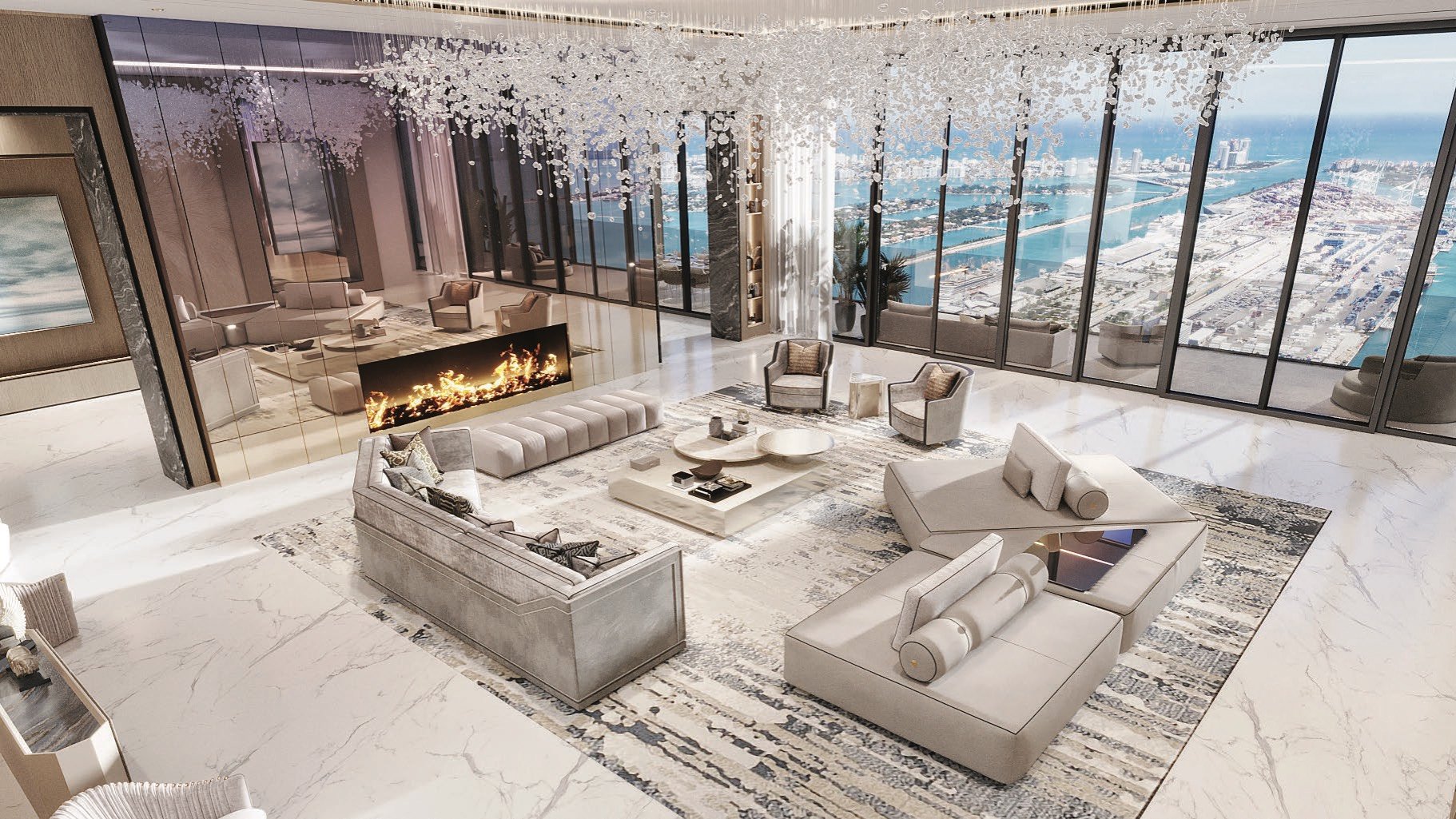
Downtown Miami has evolved into a market where “luxury” is no longer a single aesthetic. Buyers can now choose between two clear propositions: high-density, high-energy vertical living built around a deep amenity stack, and limited-supply, design-credentialed residences where privacy and architecture carry the premium.
Two 2019 completions make the contrast easy to read. Paramount Miami Worldcenter sits within the Miami Worldcenter master-planned ecosystem and prioritizes scale, convenience, and daily optionality. One Thousand Museum faces Museum Park and prioritizes scarcity, architectural distinction, and controlled access. Neither is inherently “more luxury.” The better fit is the one that matches your routine, your travel cadence, and what you want your building to do for you once you step inside.
In this MILLION Luxury editorial, we examine what each tower communicates about the ownership experience you are actually buying.
Paramount Miami Worldcenter is a 58-story residential condo tower at 851 NE 1st Ave in Downtown Miami. Publicly reported specifications place it at roughly 749 feet with 569 residential units, signaling a large-format luxury address rather than a boutique inventory.
Architecturally, Paramount was designed by Elkus Manfredi Architects as part of the broader Miami Worldcenter development. For many buyers, that context matters. A master-planned district can feel less like a single building purchase and more like entry into an engineered neighborhood, with a consistent design language and an intentional mix of uses. Elkus Manfredi also reports that the project achieved LEED Silver certification, a detail that often reads less as a status marker and more as shorthand for contemporary systems and baseline building standards.
Paramount’s identity is inseparable from its amenity thesis. The building’s official marketing emphasizes a “most amenities” positioning, and its lineup is promoted as spanning multiple pools plus sports and recreation features such as courts and even a soccer field. The practical implication is straightforward: the tower is designed to operate like a self-contained vertical resort, supporting an active, social, on-property lifestyle that can compress daily decision-making. For owners who want energy, variety, and convenience without leaving the building, this is the point.
One Thousand Museum is a Zaha Hadid Architects designed residential tower on Biscayne Boulevard, facing Museum Park. Its address is 1000 Biscayne Blvd, Miami, FL, and publicly reported specs cite a 62-story height and approximately 707 feet overall.
Where many luxury towers signal their identity primarily through interiors, One Thousand Museum is defined by its exterior exoskeleton, which functions as both structure and architecture. The construction narrative is part of the building’s lasting mystique: the exoskeleton was reported to be delivered and assembled as roughly 5,000 separate pieces. Zaha Hadid Architects also notes that this structural approach enables largely column-free interiors, a technical detail with everyday value. Cleaner spans can translate into more flexible layouts, simpler furnishing, and view corridors that read as continuous rather than interrupted.
For ultra-premium buyers, the defining differentiator is not only design but also supply. Market coverage describes the building as having 83 residences, a number that materially changes the ownership feel. Fewer neighbors typically means fewer transactions, less noise around pricing, and a stronger sense that what you own is difficult to reproduce in the same location.
Resident offerings are presented as curated luxury and wellness, and the building includes a private rooftop helipad along with a bank-quality vault with safe deposit boxes for residents. For most owners, these features are not about daily use. They are about removing friction when it matters and reinforcing that the tower is built for a narrow, high-expectation lifestyle.
The building’s profile has also been amplified by high-visibility ownership. Realtor.com reported that David and Victoria Beckham purchased a penthouse here for about $20 million in 2020.
To explore the residence profile and positioning, see One Thousand Museum Downtown Miami.
In luxury real estate, amenities are rarely just “extras.” They reveal the building’s operating theory of how residents live, entertain, and recover time.
Paramount’s approach is breadth and programmability. A tower designed around multiple pools, sport courts, and a long menu of activity spaces tends to attract buyers who value optionality without planning. It can also suit owners who split time between cities and prefer a building that feels active upon arrival, with many ways to plug into social and wellness routines without having to coordinate off-property.
One Thousand Museum’s approach is curation. The differentiators are not a long list of activities, but a sense of controlled access, elevated privacy, and singular features that are difficult to substitute. A helipad, for example, is less about everyday convenience and more about reducing logistical friction on high-stakes days. The vault reads similarly: it is a signal of a particular security posture and a certain type of resident expectation.
The right question is not “which has more?” It is “which aligns with my default week?” If your life is built around at-home entertaining, wellness routines, and choosing to leave the building deliberately, curated amenity sets often feel coherent. If your life is built around spontaneity, guests, and a desire for on-property variety, scale can translate into a different form of luxury.
Floor plans often explain a building more honestly than any brochure.
At One Thousand Museum, the exoskeleton-driven structure supports largely column-free interiors. In practice, that can mean cleaner sightlines, more freedom in furniture placement, and living areas where the view wall becomes the primary visual anchor rather than an interior grid.
At Paramount, the story is different. The building is publicly described as offering a wide range of floor plans, from smaller units through larger residences, allowing it to serve a broader range of buyer and renter segments than a limited-supply tower. For an owner, that breadth can create more entry-point options and a larger set of comparable sales, depending on your horizon and your approach to resale.
Location is not simply proximity. It is the pace you inherit and the atmosphere you live inside.
Paramount’s positioning is tied to Miami Worldcenter as a master-planned district, which typically appeals to buyers who like momentum and ecosystem. Reported project coverage also described the tower as construction-complete in 2019 and characterized it as a roughly $500 million project, a scale that tends to correlate with substantial common areas, operational complexity, and a building that functions like a small neighborhood.
One Thousand Museum’s positioning is tied to Museum Park adjacency and the permanence of its architectural identity. The value proposition is often described less in terms of “what’s coming” and more in terms of what feels fixed: the park, the water, the skyline axis, and the building’s own iconic form.
Even for Downtown-focused buyers, the Miami-beach question keeps resurfacing: do you want the rhythm of the beach corridor or the immediacy of the city core?
For those drawn to a contemporary, design-forward lifestyle near the ocean, Five Park Miami Beach is frequently discussed as a new-generation statement address that speaks to buyers who want Miami Beach energy with a modern residential lens.
If your preference leans toward classic hospitality DNA and a more heritage-inflected sense of arrival, Shore Club Private Collections Miami Beach offers a narrative rooted in Miami Beach’s storied resort culture.
For buyers who want an ultra-established global luxury signal and the discretion that tends to come with it, Setai Residences Miami Beach reads as a refined, internationally legible choice.
And for those who prioritize brand standards, service culture, and a calmer, more residential cadence, The Ritz-Carlton Residences® Miami Beach enters the conversation as a service-oriented alternative that can complement a Downtown holding.
If your shortlist is Paramount versus One Thousand Museum, the most productive lens is not “better,” but “better for me.”
Start with four buyer-oriented tests:
First, privacy tolerance. If you want fewer neighbors and a more tightly controlled resident ecosystem, limited-supply buildings tend to align with that preference.
Second, amenity use. If you will genuinely use a broad amenity deck frequently, an amenity-forward tower can feel like an extension of your square footage.
Third, architectural preference. If you value iconic architecture as permanent differentiation, One Thousand Museum’s design and structural expression are central to its proposition.
Fourth, resale and liquidity posture. A 569-unit building and an 83-residence building do not behave the same in terms of how often inventory appears and how pricing is discovered. Your own timeline matters.
Are Paramount Miami Worldcenter and One Thousand Museum both in Downtown Miami? Yes. Paramount is in Downtown Miami at 851 NE 1st Ave, and One Thousand Museum is at 1000 Biscayne Blvd facing Museum Park.
Which building is taller? Paramount is publicly reported at about 749 feet, while One Thousand Museum is reported at about 707 feet.
Which building is more exclusive by unit count? One Thousand Museum is described as having 83 residences, compared with Paramount’s reported 569 units.
Who designed each tower? Paramount was designed by Elkus Manfredi Architects. One Thousand Museum was designed by Zaha Hadid Architects.
What is the defining architectural feature of One Thousand Museum? Its external exoskeleton, which functions as both structure and architecture and supports largely column-free interiors.
Does One Thousand Museum really have a helipad? Yes. The building publicly highlights a private rooftop helipad.
What does LEED Silver mean for Paramount buyers? It is a reported certification that can indicate modern standards in design and building systems.
What is Paramount best known for? Its branding emphasizes an unusually large amenity offering, with multiple pools and sports or recreation options.
Why do some buyers still prefer Miami-beach over Downtown? Many prioritize proximity to the ocean, resort culture, or service-driven living, which can be reflected in options like Five Park Miami Beach or The Ritz-Carlton Residences® Miami Beach.
Which buyer profile fits each building best? Paramount often suits buyers seeking variety and an amenity-rich ecosystem; One Thousand Museum often suits buyers prioritizing rarity, privacy, and architectural distinction.
For discreet guidance across South Florida’s top addresses, connect with MILLION Luxury.
If branded residences are on your mind — as a home or as an allocation — we would be glad to share what we are seeing, privately.
Begin a quiet conversation