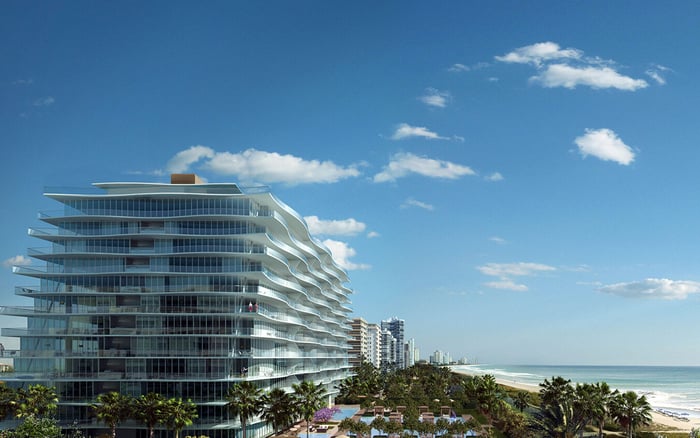
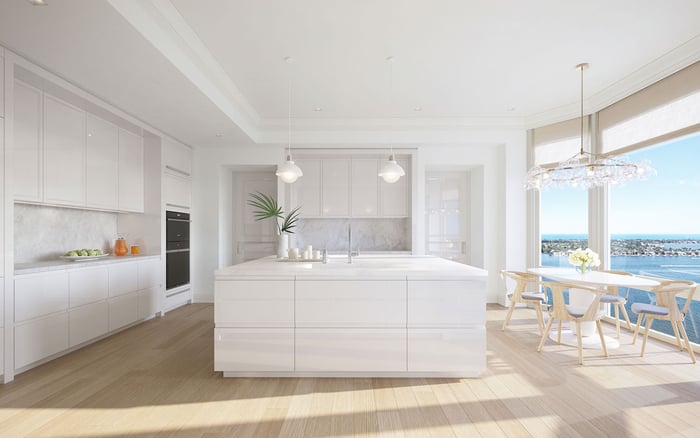
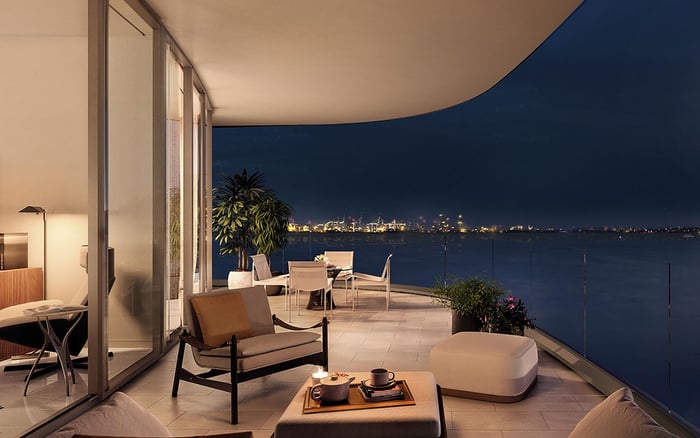
A buyer-focused comparison of Fendi Château Residences Surfside and South Flagler House, showing how oceanfront branding and Intracoastal architecture shape penthouse scale, roof-level privacy, and outdoor rooms in South Florida luxury living.
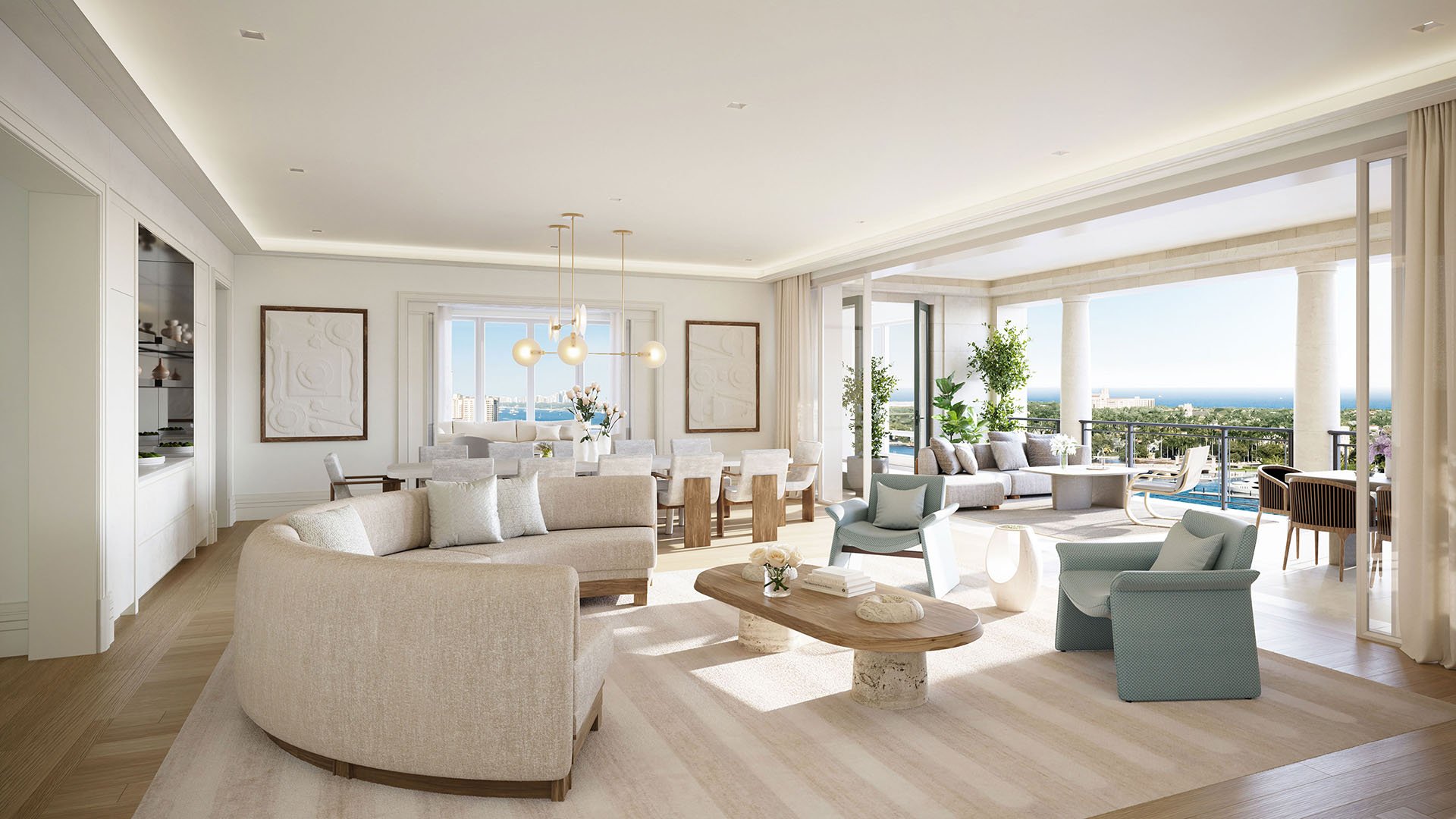
In South Florida’s most rarefied condominium market, the penthouse has become less an apartment category than a private estate translated into the sky. The old vocabulary of bedrooms, interior square footage, and elevator access is no longer enough. Buyers now study the full composition: interior volume, terrace depth, outdoor dining capacity, wind protection, roof-level privileges, service choreography, and the ability to live with the ease of a house while retaining the security and discretion of a staffed building.
That is why Fendi Château Residences Surfside and South Flagler House West Palm Beach make such a useful comparison. One is rooted in Surfside’s Atlantic oceanfront culture, where luxury is read horizontally through broad exposure, resort-like privacy, salt air, and the coded language of a fashion house. The other belongs to West Palm Beach’s South Flagler Drive context, where the Intracoastal, Palm Beach across the water, skyline presence, and architectural expression shape a more vertical idea of estate living.
Both speak to the same buyer instinct: securing a residence that feels house-like without sacrificing height, views, service, or lock-and-leave simplicity. Yet the way each building culture defines scale is distinctly different.
At Fendi Château, the penthouse idea begins with oceanfront identity. Surfside does not ask a building to compete with a dense skyline. It asks the residence to absorb the horizon. The value proposition is therefore less about urban prominence and more about width, privacy, and the emotional power of direct Atlantic exposure.
This is the horizontally oriented precedent in the comparison. Its luxury is not only in being high above the beach, but in how much of the ocean a residence can claim visually and spatially. A larger terrace, broader frontage, and calmer transition between interior and outdoor rooms can matter as much as another enclosed salon. The penthouse is strongest when it behaves like a coastal house: open to light, conscious of wind, and protected enough for frequent use.
The Fendi association adds another layer. A fashion-branded residence is not merely a logo placed on a building; it signals a culture of materials, curation, service expectation, and lifestyle editing. For some buyers, that brand lens creates confidence that the residence will feel composed, finished, and socially legible from the lobby to the private outdoor areas.
South Flagler House represents a different South Florida grammar. Its West Palm Beach setting faces the Intracoastal and speaks across the water to Palm Beach. Here, penthouse value is shaped by height, architectural character, façade presence, and layered views: water, island, city, and sky.
The cultural frame is more architectural than fashion-branded. The building participates in a Palm Beach-adjacent conversation where arrival, proportion, and exterior expression carry unusual weight. A buyer is not only purchasing upper-floor living; the buyer is selecting a place within the evolving skyline of South Flagler Drive, with the Intracoastal as both foreground and social theater.
That creates a more vertical, city-estate reading of the penthouse. The residence may still pursue the privacy and scale of a house, but the drama comes from elevation and orientation rather than low, broad beach frontage. In this model, the terrace is not only an outdoor room. It is a viewing platform, a dining room over water, and a private threshold between urban life and Palm Beach’s softer horizon.
Buyers often use the phrase “roof rights” as if it were only a legal matter. Legally, the details must be confirmed in the condominium documents, offering materials, and any exclusive-use provisions. Culturally, however, roof-level space communicates something just as important: who gets to occupy the top of the building, how private it feels, and whether that area functions as a true extension of the penthouse or simply as a shared amenity.
In an oceanfront Surfside building, roof access can read as a private resort layer. It may be imagined as a garden, open-air lounge, plunge-pool environment, or elevated continuation of the residence below. The question is whether the roof feels connected to daily life or ceremonial, used mainly for special moments.
In the South Flagler House context, the roof condition is more urban and vertical. It can carry skyline presence and social symbolism. A private roof area above the Intracoastal feels different from a roof beside the Atlantic: less about uninterrupted horizon, more about layered views and evening atmosphere. For the penthouse buyer, that distinction affects not only pleasure, but resale language.
South Florida buyers have become more sophisticated about outdoor space. A balcony may photograph well, but a true outdoor room must be livable. It needs depth, shade, furniture logic, planting strategy, privacy from neighbors, and protection from the particular waterfront condition it faces.
At Fendi Château, direct Atlantic exposure brings horizon views, salt air, and coastal drama. It also makes wind and storm resilience central to how terraces are planned and perceived. The best outdoor rooms in this setting must feel open without feeling exposed. That often means thinking carefully about enclosure, corners, overhangs, and the ability to dine outside without turning the experience into a weather event.
At South Flagler House, the Intracoastal setting produces a different outdoor room. The wind condition is not identical to open ocean exposure, and the view is more layered. Terraces address water, Palm Beach, passing movement, and the West Palm Beach skyline. The buyer may value longer evening use, more urban privacy, and a terrace that behaves as a salon under the sky rather than a beachfront deck.
A buyer deciding between these two models should begin with lifestyle, not floor plans. If the dream is horizontal oceanfront living, resort privacy, and a branded environment with a strong design identity, Surfside has a persuasive logic. If the dream is vertical estate living, architectural presence, Intracoastal views, and proximity to Palm Beach’s cultural orbit, West Palm Beach becomes the more natural fit.
The next question is how each building defines privacy. Does the elevator sequence feel residential and discreet? Do outdoor rooms have meaningful separation? Is roof-level space private, shared, or merely suggestive? Is the terrace usable in the hours when the buyer actually entertains?
Finally, buyers should treat outdoor square footage as seriously as interior planning. In South Florida’s top tier, the terrace, roof layer, and wind-conscious outdoor room are no longer bonus spaces. They are part of the estate program. The most compelling penthouses are not simply larger. They are better composed for climate, view, privacy, and ritual.
Why compare Fendi Château Residences Surfside with South Flagler House? They represent two distinct South Florida penthouse cultures: branded Atlantic oceanfront living and architectural Intracoastal tower living.
Is penthouse scale mainly about interior square footage? No. At this level, scale includes terraces, outdoor rooms, roof access, privacy, service, and how the residence functions as a house in the sky.
What makes Surfside different for penthouse buyers? Surfside emphasizes direct Atlantic exposure, horizontal frontage, ocean views, salt air, and a quieter beachside luxury rhythm.
What makes South Flagler House different? Its West Palm Beach setting frames value through height, architectural presence, Intracoastal views, and the dialogue with Palm Beach.
Are roof rights automatically included with a penthouse? Not necessarily. Buyers should review the governing documents to understand whether roof areas are deeded, limited common elements, or shared amenities.
Why does wind protection matter so much? A terrace is only truly valuable if it can be used comfortably. Wind, shade, exposure, and privacy determine how often outdoor rooms are enjoyed.
Is an oceanfront terrace better than an Intracoastal terrace? Neither is universally better. Oceanfront terraces favor horizon drama, while Intracoastal terraces often offer layered views and a different rhythm of use.
How does branding affect a luxury residence? Branding can shape expectations around materials, service, lifestyle curation, and the overall social identity of the building.
Why is architectural character important on South Flagler Drive? The corridor faces Palm Beach and the Intracoastal, so façade expression, arrival sequence, and skyline presence become part of the value.
What should buyers prioritize when evaluating a penthouse? Focus on daily usability: privacy, outdoor comfort, view quality, roof-level control, service flow, and whether the home feels genuinely estate-like.
To compare the best-fit options with clarity, connect with MILLION.
If branded residences are on your mind — as a home or as an allocation — we would be glad to share what we are seeing, privately.
Begin a quiet conversation