A practical luxury-buyer guide to assessing Brightline proximity through privacy, operating cost exposure, daily livability, and long-term residential fit.
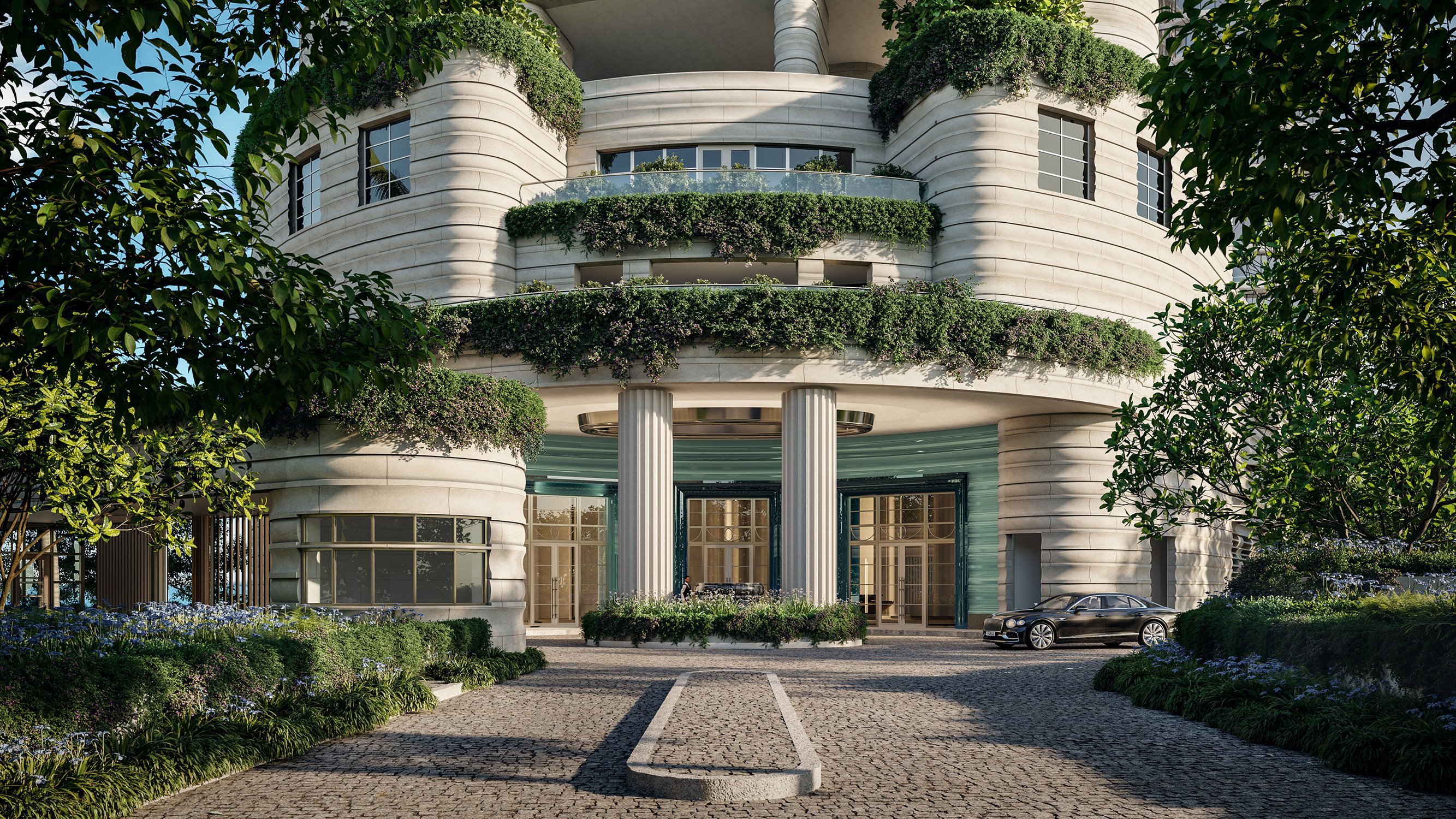
Brightline proximity can be a meaningful advantage for a South Florida residence, but distance alone is a blunt measure. A home may appear close on a map yet feel inconvenient in daily life. Another may sit farther away while offering a calmer approach, easier valet flow, and better separation from traffic. For ultra-premium buyers, the question is not simply whether the train is nearby. It is whether the home’s relationship to that mobility improves life without introducing unwanted exposure.
Begin with the route from the front door to the station area. Consider the drive pattern, the pedestrian experience, the rideshare pickup sequence, and the likely conditions at peak hours. A five-minute theoretical trip can lose appeal if it involves congested turns, awkward curb cuts, or limited staging space. Conversely, a more measured commute can feel effortless when the approach is clear, private, and predictable.
The same lens applies in Brickell, Downtown, and Aventura, whether the mandate is Investment, Second-home, or New-construction. Proximity is not inherently good or bad. It is a design, operations, and lifestyle question.
Privacy should be examined before convenience. Buyers often focus on access, but the more important issue is how that access changes the way a property is experienced. A residence near a busy mobility corridor may bring more vehicle movement, pedestrian circulation, delivery activity, and short-stay traffic into the surrounding streetscape. None of these factors is automatically disqualifying, but each should be clearly understood.
For condominium buyers, study the sequence from garage or valet to elevator to residence. A discreet arrival matters, especially for owners who entertain, travel frequently, or prefer a low profile. If guests, staff, residents, delivery drivers, and visitors all converge at the same point, the building may feel less private than its finishes suggest. A polished lobby has value, but controlled circulation is often more important.
For single-family buyers, evaluate sightlines, perimeter exposure, service access, and the degree to which street activity reaches the home. Landscaping, walls, gate placement, and driveway depth can create meaningful separation. A home close to transportation can still feel secluded if its arrival sequence is composed and layered.
Brightline proximity can influence carrying costs in subtle ways. Buyers should avoid treating carrying costs as a fixed monthly line item until they have studied how the location functions. Parking strategy, insurance considerations, security expectations, building staffing, valet intensity, maintenance wear, and association operations can all shape the ownership experience.
In a high-service condominium, convenience often comes with infrastructure. More active arrivals and departures may require stronger staffing, more robust access control, and more disciplined management. These features can be worth paying for, but they should be viewed as part of the cost of living well, not as incidental amenities.
For investors, the analysis is different but equally exacting. A location with strong mobility appeal may support broader demand, yet higher operating costs can narrow the margin. The cleanest acquisition is one where the convenience premium is supported by the building’s service model and by the buyer’s intended use. A primary residence, a seasonal home, and a long-term hold may each justify a different cost profile.
Daily comfort is the most revealing test. Ask how the residence will feel on a normal Tuesday morning, not only during a weekend showing. Does the neighborhood soundscape support rest? Is the balcony or terrace genuinely usable? Are arrivals graceful after dinner, after travel, and during rain? Does proximity make life easier, or does it simply look efficient on paper?
Noise deserves careful attention, but it should be assessed with nuance. The experience can vary by floor height, orientation, glazing quality, surrounding structures, landscape buffers, and the position of outdoor living spaces. A residence may be close to movement yet protected by massing and design. Another may be farther away but exposed through an open corridor of sound.
Comfort also includes mental ease. Owners should not feel as if every outing requires a logistical calculation. The best homes near transit allow residents to choose between private car, rideshare, walking, or train access without sacrificing calm at home. Optionality is the luxury, not forced dependence on any one mode.
Before assigning value to Brightline proximity, ask precise questions. How often will the owner realistically use the train? Is the home being purchased for personal convenience, guest access, resale positioning, or rental appeal? Does the building’s design support the extra activity that proximity may invite? Are arrival and departure patterns dignified enough for the price point?
The strongest properties tend to make proximity feel invisible. They provide access when desired, then recede into privacy when the resident returns home. This balance is especially important in South Florida, where luxury buyers often want urban reach without urban fatigue.
A premium is more defensible when the residence offers three things at once: an efficient route to the station area, a protected living environment, and a cost structure that feels proportionate to the service level. If one of those elements is missing, the premium should be questioned.
When two homes appear similar, Brightline proximity can serve as a useful tie-breaker, but only after the fundamentals are settled. Floor plan, views, building quality, outdoor space, privacy, parking, and management should remain the core filters. A location advantage cannot rescue a home that fails the daily living test.
Walk the property at different times if possible. Study the surrounding streets in the morning, late afternoon, and evening. Pay attention to curb movement, horns, delivery zones, traffic stacking, and the ease of entering and leaving the building. For a luxury buyer, these small details can determine whether a property feels serene or merely expensive.
Also consider the future buyer. A well-positioned residence near mobility can be attractive, but only if it does not feel compromised. The resale audience will ask the same questions about sound, privacy, access, and carrying costs. A disciplined purchase today should anticipate those questions before they become negotiation points later.
The most successful Brightline-adjacent purchase is rarely the closest home. It is the home that integrates access into a larger pattern of ease. It allows the owner to move through South Florida with less friction while preserving the qualities that define true luxury: quiet, discretion, beauty, control, and time.
That is why the evaluation should be calm and rigorous. Proximity can be a genuine lifestyle enhancement, but it should never be treated as a substitute for architectural quality or residential privacy. The right home makes transportation feel like an amenity. The wrong one makes it feel like a condition.
Is being closer to Brightline always better? No. The better purchase is the residence that combines useful access with privacy, sound control, and a graceful arrival sequence.
What should luxury buyers inspect first? Start with the path from residence to station area, including valet, garage, curb flow, and the quality of the surrounding streetscape.
Can Brightline proximity affect carrying costs? It can, especially where higher activity requires more staffing, security, parking management, or maintenance intensity.
How should privacy be evaluated in a condominium? Look at lobby circulation, elevator control, valet design, service routes, and how residents are separated from visitors and deliveries.
Does proximity matter for a Second-home buyer? Yes, but only if it reduces travel friction without making the residence feel busier or less restful when occupied.
Is Brightline proximity useful for Investment positioning? It can broaden appeal, but the convenience premium should be weighed against operating costs and the quality of the building.
What role does New-construction play in this analysis? Newer residences may offer stronger glazing, access control, and service design, but each building still needs individual review.
Should sound be tested from inside the residence? Yes. Evaluate sound from primary bedrooms, terraces, living spaces, and any rooms intended for work or rest.
How does Downtown differ from quieter residential areas? Downtown can offer strong access and energy, but buyers should be more exacting about arrival flow, privacy, and daily calm.
What is the ideal outcome? The ideal home makes Brightline access feel optional, convenient, and discreet while preserving comfort inside the residence.
For a tailored shortlist and next-step guidance, connect with MILLION.
If branded residences are on your mind — as a home or as an allocation — we would be glad to share what we are seeing, privately.
Begin a quiet conversation.jpg&width=700&height=438&fit=cover)