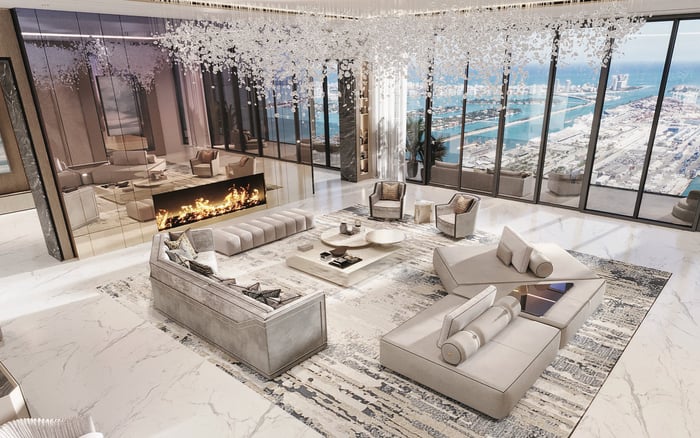
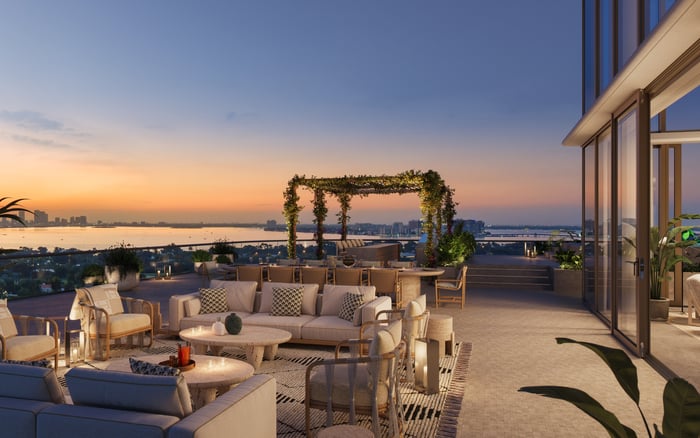
A discreet buyer’s guide to One Thousand Museum, the Zaha Hadid Architects-designed residential tower across from Museum Park. We examine the exoskeleton engineering, low-density residence mix, amenity stack, and what this address signals in the Downtown Miami luxury market.
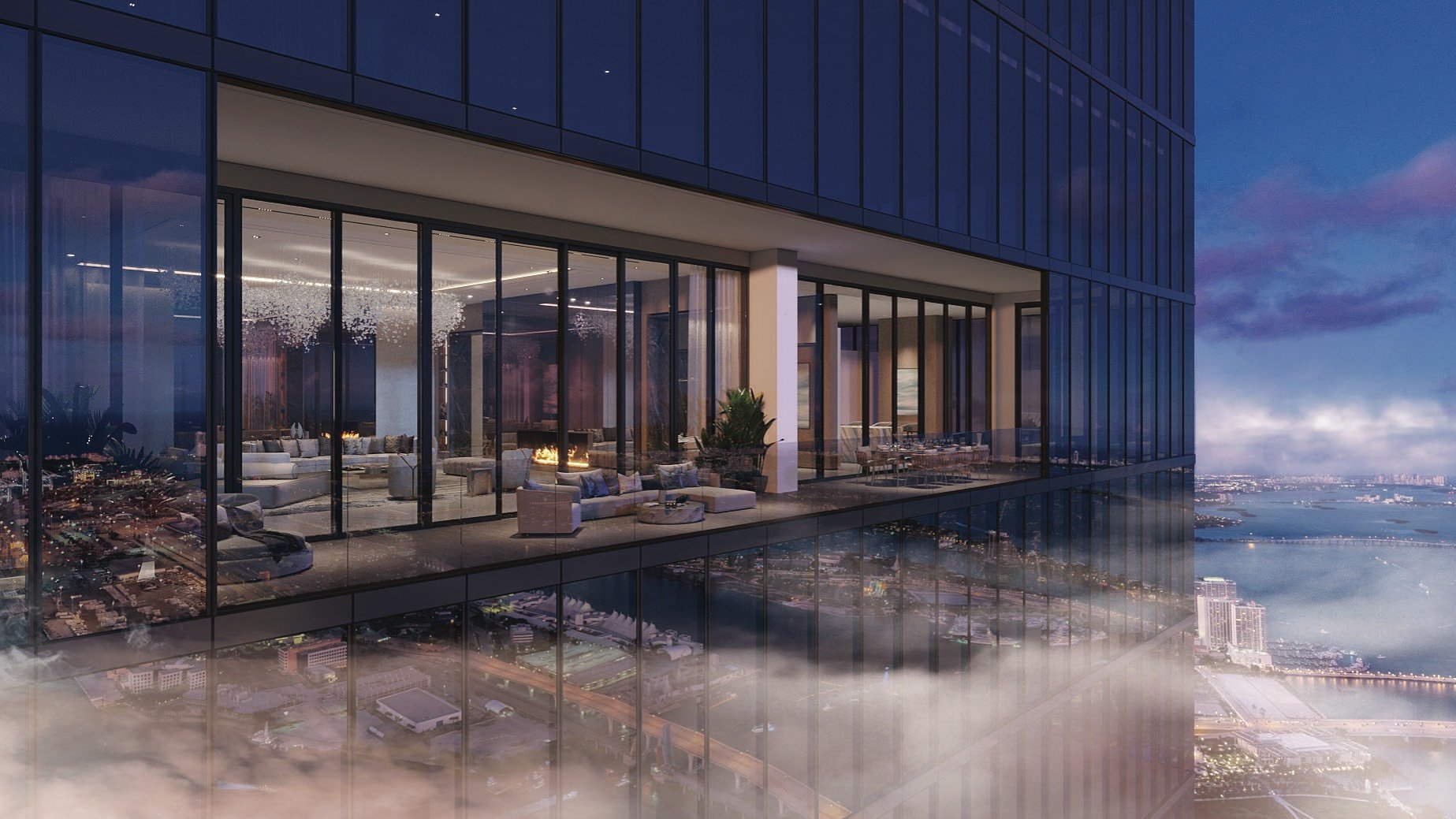
In a skyline crowded with new glass, true architectural authorship is still rare. One Thousand Museum Downtown Miami stands apart because it is not simply a tall residential tower with luxury finishes. It is a sculptural work by Zaha Hadid Architects, set at 1000 Biscayne Boulevard directly across from Museum Park, moments from the Pérez Art Museum Miami and the Frost Museum of Science.
Its presence is immediate: a 62-story silhouette rising about 216 meters (709 feet), defined by an exterior structural frame that reads as contemporary design at city scale. For buyers who weigh long-term cultural relevance alongside square footage and views, that distinction can carry real value.
With a July 2020 announcement from Zaha Hadid Architects after construction finished in 2019, the tower also marks a specific chapter in the evolution of Downtown Miami. It reflects the period when the luxury narrative broadened from waterfront-only living to a lifestyle anchored by arts, institutions, and an urban core.
One Thousand Museum’s defining move is its concrete exoskeleton: a structural concept expressed on the exterior, rather than concealed within a conventional internal column grid. This is not aesthetic theater for its own sake. By carrying structural logic to the outside, the design is associated with more open, column-reduced interiors and a stronger emphasis on panoramic sightlines.
For a buyer, the architecture raises two practical questions.
First, does the structure support large-format living rather than chopped-up plans? The premise here is yes. When interior columns are minimized, rooms can be organized around views, circulation reads cleaner, and furniture planning tends to feel less compromised.
Second, will the building read as timeless or purely trend-driven? A Hadid exoskeleton is unmistakable, but it is also rooted in engineering logic. The exterior frame is described as being formed with roughly 5,000 pieces of glass-fiber-reinforced concrete (GFRC), used as cladding and as stay-in-place formwork for poured structural concrete. In other words, the form is integrated with the structure, not applied as a decorative screen.
According to ArchDaily, the tower contains 83 luxury residences spanning duplex townhouses, half-floor units, full-floor units, and a duplex penthouse. That range is more than a marketing menu. It points to a core driver of high-rise luxury: privacy.
Half-floor and full-floor layouts typically translate to quieter lobbies, fewer immediate neighbors, and a residential rhythm that can feel closer to a single-family home in the sky. Published floor-plan marketing supports the broader thesis that the building prioritizes large footprints and low residences per floor.
For buyers comparing premium towers, this matters. Many new projects sell luxury through amenity volume and brand adjacency. One Thousand Museum leans into scarcity, layout scale, and a spatial experience shaped by a structural concept that you can see and feel.
Ultra-luxury is no longer defined by having a pool and a fitness room. The differentiator is how a building choreographs health, privacy, and time.
One Thousand Museum is widely marketed around a private rooftop helipad. In South Florida, where many owners split time across multiple homes and cities, direct-access arrival is less about spectacle and more about controlling a schedule.
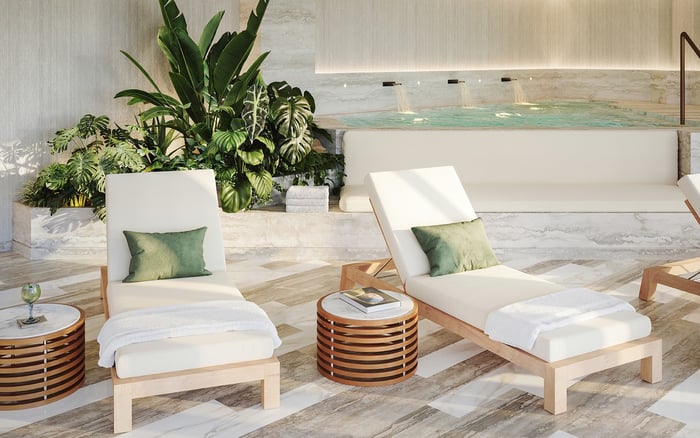
The amenity stack also includes a double-height aquatic center with an indoor pool and skyline views. That indoor environment matters in a climate defined by heat, humidity, and seasonal weather patterns. It supports year-round training and a more private wellness routine.
Service is the other half of the promise. The development announced a partnership with Forbes Travel Guide to implement Forbes-style service standards for residents. For buyers accustomed to hotel-level cadence, that signals an intent toward consistent, professionalized operations rather than “concierge” as a vague label.
A building that looks unconventional still lives in conservative realities: wind, structure, construction tolerances, and long-term performance. One Thousand Museum’s team included DeSimone Consulting Engineers as structural engineer, with Plaza Construction serving as general contractor.
The project’s visibility was reinforced when Engineering News-Record recognized it with a Global Best Project award in the Specialty Construction category. Awards do not replace due diligence, but they can indicate that the building’s complexity was evaluated beyond local marketing.
For buyers, the reassurance is straightforward: the signature move was not improvised. It was engineered, executed, and recognized within the broader construction community.
Trophy towers attract attention, and attention can become part of the asset. In 2020, David and Victoria Beckham reportedly purchased a One Thousand Museum penthouse for about $20 million, a headline that helped cement the building’s position in mainstream luxury coverage.
Pricing is commonly described in the multi-million-dollar range, often cited publicly from roughly $6 million up to $20 million-plus depending on the residence and market conditions. For many buyers, the more durable value logic is not the top-line number. It is the combination of authored architecture, a low residence count, and a location that ties daily life to Miami’s cultural core.
When weighing resale or a long-hold strategy, it helps to ask how unique the product truly is. Finishes can be upgraded and replicated. A globally recognizable structural identity is harder to duplicate, and that can shape perception over time.
South Florida luxury increasingly comes down to choosing between two different “centers.” Downtown offers cultural institutions, skyline perspectives, and proximity to business corridors. Miami Beach, by contrast, is anchored by ocean adjacency, resort-neighborhood walkability, and a different social cadence.
If your lifestyle is beach-first, you may be comparing new or reimagined Miami Beach offerings such as Five Park Miami Beach, which speaks to newer residential energy near the park and the beach, or Shore Club Private Collections Miami Beach, which signals a more hospitality-forward, legacy beachfront context. For buyers who prefer established resort sensibility and brand recognition, Setai Residences Miami Beach often sits on that shortlist.
None of these are substitutes for One Thousand Museum. They are different answers to the same question: do you want your home to operate as a private aerie above the city’s cultural campus, or as a resort-adjacent residence framed by the Atlantic?
One Thousand Museum rewards buyers who tour with intention. A few lenses tend to clarify whether the building fits your priorities.
First, study how the interior reads with furniture. Column-reduced spaces can feel exceptionally calm when properly furnished. They can also feel exposed if the plan relies too heavily on glass and view. The difference is not the view itself. It is proportion.
Second, treat the amenity stack as part of your actual routine. An indoor aquatic environment and rooftop access are lifestyle tools, but only if you will use them. If your days are built around offshore boating or beach time, your personal utility curve may point elsewhere.
Third, consider arrival and departure as daily lived experience. The building’s positioning across from Museum Park can create a particular rhythm: morning light over the bay, museum walks, and proximity to Miami’s institutional spine.
Finally, evaluate identity. With Zaha Hadid Architects, the signature is explicit. If you value discreet minimalism above authored form, it may feel expressive. If you value architecture as collectable, it can feel inevitable.
Where is One Thousand Museum located?
It is at 1000 Biscayne Boulevard in Downtown Miami, across from Museum Park.
Who designed the building?
It was designed by Zaha Hadid Architects.
How tall is the tower?
It rises about 216 meters (709 feet) and is 62 stories.
When was it completed?
Zaha Hadid Architects announced completion in July 2020, after construction finished in 2019.
How many residences are in the building?
ArchDaily reports 83 residences.
What types of residences are offered?
The mix includes duplex townhouses, half-floor units, full-floor units, and a duplex penthouse.
What is the exoskeleton, in practical terms?
It is an exterior structural frame that can reduce interior columns and support open layouts.
Does the building have a helipad?
It is marketed with a private rooftop helipad as a defining amenity.
What wellness amenities stand out?
The building includes a double-height aquatic center with an indoor pool and skyline views.
What service standards are associated with the tower?
The development announced a partnership with Forbes Travel Guide to implement Forbes-style service standards.
For a private, buyer-led conversation about Downtown and Miami Beach trophy residences, connect with MILLION Luxury.
If branded residences are on your mind — as a home or as an allocation — we would be glad to share what we are seeing, privately.
Begin a quiet conversation