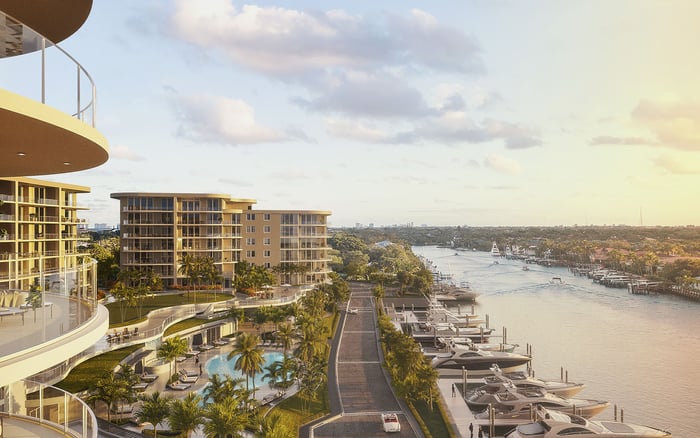
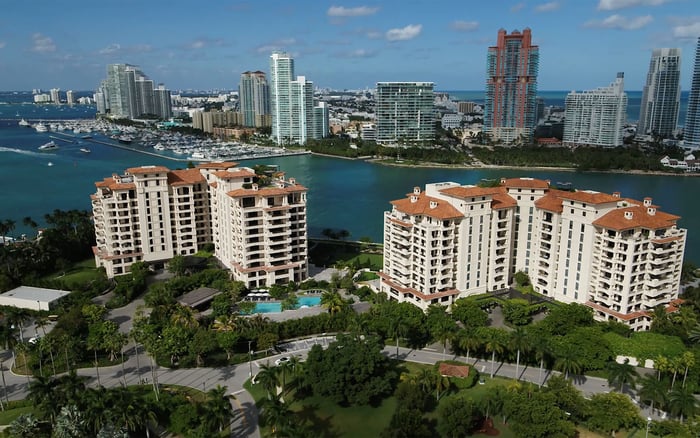
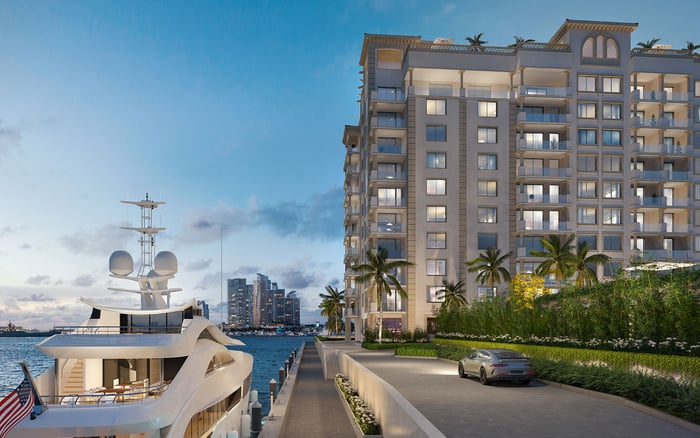
A discreet buyer’s guide to evaluating arrival privacy at Palazzo del Sol, from Fisher Island access and on-island circulation to lobby, elevator, service, and residence-entry protocols.
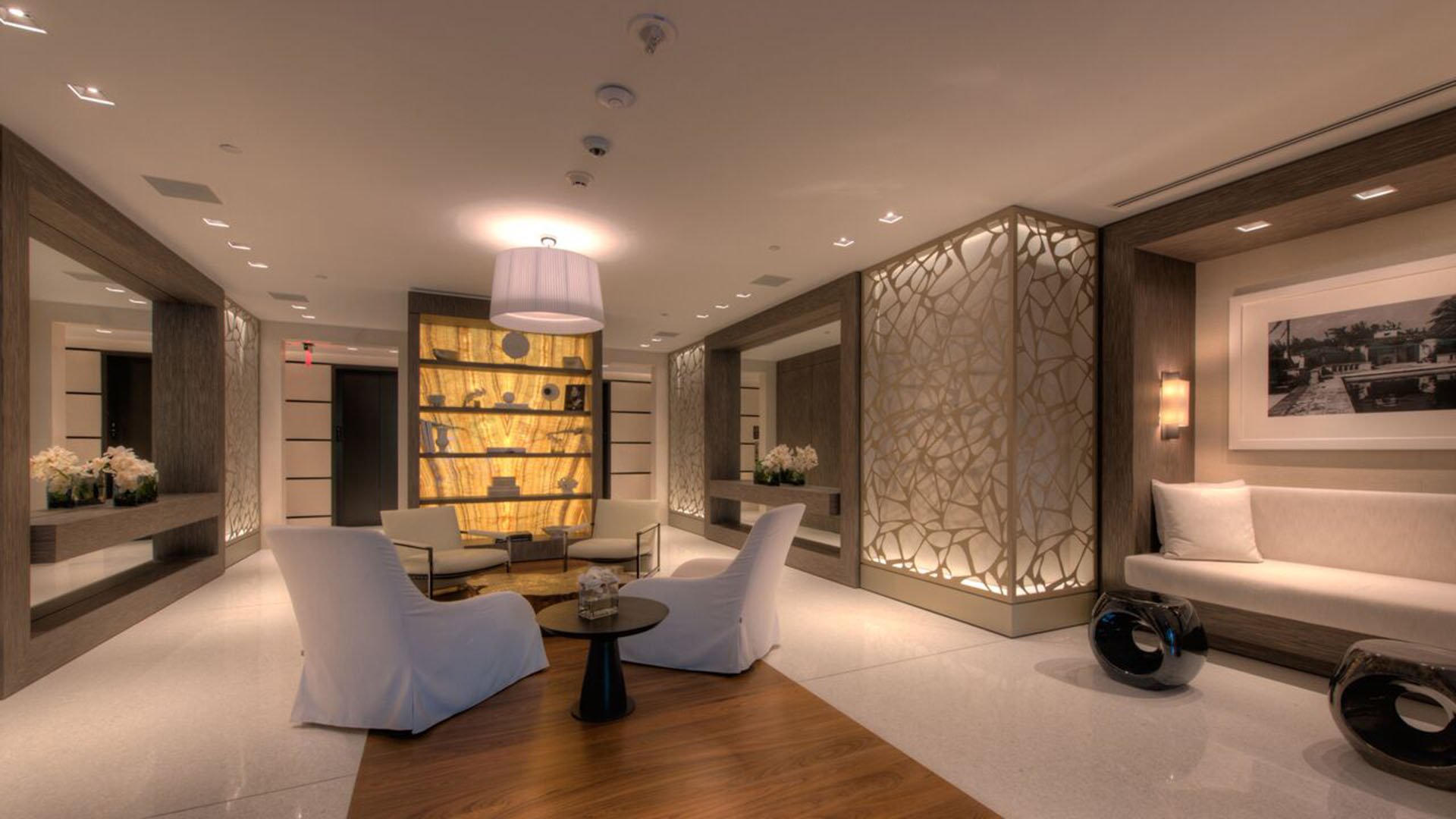
At Palazzo del Sol, the essential privacy question is not simply what happens at the front desk. For a serious buyer, arrival privacy should be evaluated as a complete sequence: island access, on-island circulation, building forecourt, lobby, elevator, and residence entry. Each layer can protect discretion, but each can also create a moment of visibility.
That distinction matters on Fisher Island, where the water-separated setting is central to the privacy proposition. The island environment can reduce casual exposure, yet the arrival path begins well before a resident reaches the building. Patterns can become visible near access points, marina activity, internal roads, common areas, or anywhere a repeated routine can be observed.
For buyers comparing Palazzo del Sol Fisher Island with other ultra-private South Florida addresses, the issue is less spectacle than governance. Who controls the gate before the gate? Who sees the vehicle, the guest list, the staff manifest, the delivery, or the late-night arrival? Privacy is not a single amenity. It is a chain of custody.
A proper walkthrough should begin with a simple exercise: trace every route by which a resident, guest, staff member, vendor, or service provider can reach the residence. Each route may carry a different level of visibility, documentation, pre-clearance, and human discretion.
The island-arrival point deserves particular attention because it can reveal movement patterns before the resident is anywhere near Palazzo del Sol. Buyers should ask whether vehicles, guests, staff, and vendors are pre-cleared before arrival, who approves that clearance, and who can later access those records. A system that is efficient for operations may still create a discoverable trail.
It is also wise to ask where a person could realistically see or photograph an arrival. The answer may include access points, nearby vessels, marina areas, internal roads, terraces, amenity spaces, or common corridors. In a Fisher Island context, privacy is enhanced by separation, but not made automatic by it.
A sophisticated buyer should distinguish island-level controls from condominium-level controls. Some policies may be governed by broader community or island rules, while others sit with building management or condominium documents. The distinction affects consistency, enforcement, and remedies.
Ask who controls each layer: island access, on-island circulation, the building forecourt, lobby reception, elevator access, service circulation, and final residence entry. If different entities oversee different points, the buyer should understand how information is shared and how exceptions are handled.
This is where legal and operational review becomes essential. Privacy language may sound reassuring in conversation, but enforceability depends on whether the promise is contractual, policy-based, or simply marketing language. A buyer should request written policies, not verbal impressions.
The building arrival itself should be evaluated with architectural calm and operational skepticism. The porte-cochère or drop-off should be studied for sightlines, waiting-area exposure, staff positioning, and the ability to stage arrivals discreetly. A beautiful entry can still be exposed if vehicles queue visibly or guests wait in shared spaces.
Lobby privacy turns on circulation. Buyers should ask whether residents, guests, vendors, staff, and service providers share the same paths. If service providers cross the main lobby, deliveries are visible from resident areas, or guest handling occurs in full view of other occupants, the privacy experience changes.
Elevator access is another decisive layer. Buyers should ask whether elevators are private, semi-private, keyed, destination-controlled, or shared with other residences and service traffic. A direct elevator entry can feel highly discreet, but the buyer should still examine what happens before the doors close and after they open.
At the residence level, questions should include whether there is a private vestibule, staff or service entry, or secondary route that reduces exposure. In an exclusive-area property, the most valuable privacy may be the absence of incidental contact rather than any visible security gesture.
Back-of-house operations can reveal more than a formal entrance ever does. Staff corridors, loading areas, package rooms, housekeeping routes, and service elevators may disclose occupancy patterns, travel habits, entertaining schedules, or renovation activity. For high-profile owners, those patterns can be as sensitive as a name on a door.
Buyers should request written policies on staff discretion, guest handling, contractor access, emergency access, media inquiries, and confidentiality expectations. The issue is not only whether personnel are polite and professional. The issue is whether the building has a repeatable protocol when discretion is tested.
Ask how management responds to unwanted visitors, process servers, drones, investigations, media inquiries, or high-profile guest arrivals. These scenarios may be rare, but luxury privacy is most revealing under pressure. A gated-community mindset is useful only if the procedures remain calm, documented, and consistently applied.
Modern privacy is partly physical and partly informational. Buyers should ask what cameras, license-plate readers, visitor logs, access-control systems, and staff records capture during the arrival sequence. They should then ask how long the data is retained, who can review it, and under what circumstances it can be shared.
The goal is not to eliminate security records. Secure buildings need operational memory. The goal is to understand the balance between protection and exposure. A visitor log can help manage access, but it can also become a record of social, business, or family patterns. The same is true for vehicle records, contractor logs, and recurring service schedules.
In a marina and waterview environment, sightlines can also be layered with digital records. A buyer may value water access and visual openness, but should still ask how visible arrivals are from vessels, docks, terraces, and surrounding common areas.
Arrival privacy cannot be fully understood during a polished midday tour. A buyer should conduct a privacy walkthrough at different times of day, paying attention to access timing, staff shifts, amenity traffic, deliveries, neighbor activity, and evening arrivals.
The best walkthrough is practical. Arrive as a resident would. Pause where a vehicle might wait. Observe who is nearby. Ask how a guest is received. Ask where a vendor is routed. Take the elevator path staff would use, if permitted. Consider the difference between a quiet morning and a crowded social evening.
For resale buyers, this exercise can be especially revealing because the building is not theoretical. The privacy experience can be tested in real conditions rather than imagined from plans. In the Miami Beach luxury orbit, discretion often comes down to choreography, not just address.
What should buyers ask first about Palazzo del Sol arrival privacy? Start by asking who controls each layer from island access to residence entry, and how those layers coordinate.
Is Fisher Island’s setting enough to guarantee privacy? No. The water-separated setting is important, but buyers should still examine every arrival point before reaching the building.
Why does the island-arrival point matter? It can reveal movement patterns before a resident reaches Palazzo del Sol, especially if routines become predictable.
Should buyers ask about different arrival routes? Yes. Different permitted access routes may create different levels of visibility, logging, and operational control.
What should be reviewed at the porte-cochère? Study sightlines, waiting exposure, staff placement, and whether arrivals can be staged discreetly.
How important is elevator configuration? Very important. Ask whether elevators are private, keyed, destination-controlled, or shared with other residents or service traffic.
Can service areas affect owner privacy? Yes. Staff routes, loading areas, package rooms, and service elevators can reveal occupancy and lifestyle patterns.
What written policies should a buyer request? Request policies on staff discretion, guest handling, contractors, emergency access, media inquiries, and confidentiality.
When should a privacy walkthrough happen? Walk the sequence at different times of day to test traffic, deliveries, staff shifts, and neighbor activity.
Are privacy promises always enforceable? Not always. Buyers should confirm whether promises are contractual, policy-based, or simply marketing language.
If you'd like a private walkthrough and a curated shortlist, connect with MILLION.
If branded residences are on your mind — as a home or as an allocation — we would be glad to share what we are seeing, privately.
Begin a quiet conversation