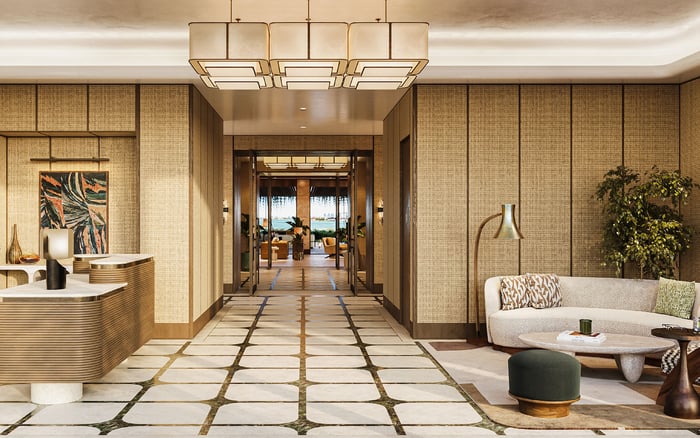
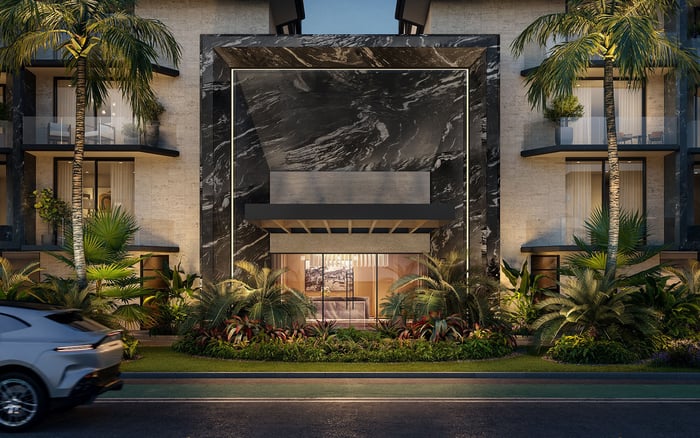
A privacy-first editorial guide to choosing between Fisher Island and Key Biscayne, focused on sightlines, neighboring towers, terraces, arrivals, and long-term discretion.
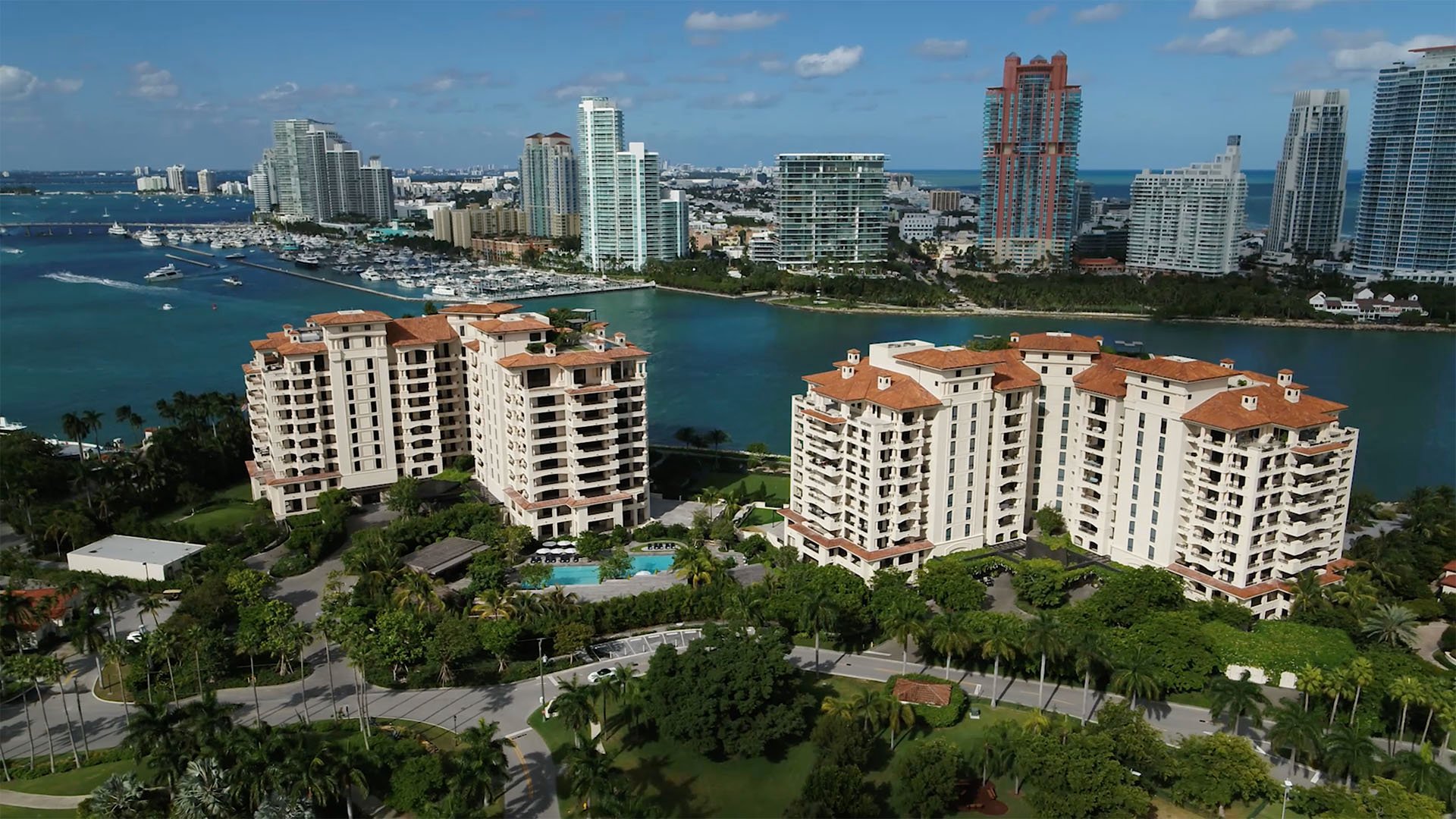
For a certain South Florida buyer, privacy is not a slogan. It is the architecture of daily life: how one arrives, who can see into a terrace, whether a primary suite faces another building, and how much of the view is water, sky, landscape, or glass. That is why the choice between Fisher Island and Key Biscayne often begins with a simple but revealing question: how close do you want to feel to neighboring towers?
Both names carry emotional weight. Fisher Island suggests a highly controlled residential world, while Key Biscayne offers a softer island rhythm with its own appeal. Yet the real privacy decision is rarely settled by reputation alone. It comes down to angles, setbacks, building orientation, floor height, vegetation, balcony depth, service circulation, and the way a home receives light throughout the day.
A buyer comparing Palazzo del Sol with a Key Biscayne residence is not merely comparing finishes or amenities. The sharper question is whether the daily experience feels visually insulated or visually porous. Privacy is measured in the moments when the curtains are open, guests are on the terrace, and the home still feels composed.
Fisher Island tends to attract buyers who want separation to be part of the residential proposition. The appeal is not just exclusivity in the abstract; it is the sense that the environment has been organized around fewer unintended encounters. For buyers concerned about neighboring towers, that controlled context can be decisive.
Still, not every residence on any island performs the same way. A privacy-minded buyer should study the exact stack, the angle of adjacent buildings, and whether the terrace looks across open water, landscaped space, or another residential elevation. Even in a coveted enclave, privacy remains highly unit-specific.
Residences such as Palazzo della Luna often enter the conversation for buyers who want the Fisher Island lifestyle but still need to evaluate exposure carefully. The most desirable plan is not always the highest floor or the most dramatic view. Sometimes it is the home where the primary rooms, outdoor spaces, and circulation pattern feel least observed.
For larger-format living, The Links Estates at Fisher Island can appeal to buyers who prioritize the feel of a private residential setting over a conventional tower experience. The point is not to assume privacy from the name alone, but to test how each residence behaves from morning to evening.
Key Biscayne appeals to buyers who want island living with a different cadence. For those focused on neighboring towers, the decision often requires a more granular inspection. The right Key Biscayne residence can feel serene and discreet, while the wrong exposure may create more visual contact than a privacy-first buyer expects.
This is where discipline matters. A buyer should walk the home at different times of day, stand at the edge of the terrace, look back into the living room from outside, and study what is visible from neighboring balconies. Floor plans can be elegant, but the lived experience depends on sightlines. Glass, water, and sky are beautiful, yet reflective surfaces and opposing elevations can make a home feel less private than it appears in photography.
At Oceana Key Biscayne, for example, a buyer should evaluate the particular residence rather than treating the building name as the answer. Exposure, orientation, and terrace relationship matter as much as the address. The strongest Key Biscayne choice is usually the one that balances openness with a sense of retreat.
The cleanest way to compare Fisher Island and Key Biscayne is to conduct a neighboring tower test. Stand in every major room and ask five questions. What can I see? Who can see me? What changes at night? Does the terrace feel like a room or a stage? Will future resale buyers feel the same level of comfort?
Privacy-minded buyers should be especially alert to bedrooms, bathrooms, family rooms, and dining terraces. A dramatic living room can tolerate a more public view if the private rooms are protected. A spectacular terrace, however, loses value if it feels directly aligned with another tower’s balconies.
Height helps, but it is not a complete solution. Higher floors may clear certain obstructions, yet they can also introduce longer sightlines from distant buildings. Lower floors can sometimes benefit from landscaping, podium separation, or a more sheltered perspective. The best privacy is not simply vertical; it is compositional.
A residence at The Residences at Six Fisher Island should be studied through that same lens. The right question is not whether the project is prestigious. It is whether the home’s plan, outlook, and arrival sequence support the level of discretion the buyer expects.
Privacy begins before the front door. The arrival sequence, parking experience, elevator configuration, lobby rhythm, and amenity circulation all shape how discreet a property feels. Some buyers care less about being seen from another building and more about how frequently they cross paths with residents, guests, staff, and service providers.
Fisher Island often resonates with buyers who want a more curated sense of entry and exit. Key Biscayne may resonate with those who prioritize a relaxed island lifestyle while accepting that privacy must be selected carefully at the unit level. Neither answer is universally superior. The better choice is the one that matches the buyer’s tolerance for visibility.
This is where language in the search brief matters. Terms such as Fisher-island, Key-biscayne, Gated-community, Exclusive-area, Oceanfront, and Palazzo del Sol Fisher Island can help organize priorities, but they do not replace physical evaluation. A true privacy search should identify what type of exposure is acceptable, what is not negotiable, and where lifestyle outweighs seclusion.
Choose Fisher Island if the primary objective is a more controlled residential envelope and if the buyer values separation as part of the lifestyle. It may suit those who want privacy to be embedded in the daily routine, from arrival to terrace use to entertaining.
Choose Key Biscayne if the buyer wants a distinctive island setting and is willing to be highly selective about stack, exposure, and building relationship. It can be an excellent choice when the residence itself solves the privacy equation through orientation, setbacks, and a calm visual field.
In both cases, the final decision should be made from inside the home, not from a brochure, a map, or a building name. Privacy is experiential. It is the quiet confidence that the residence can remain open, luminous, and lived in without feeling observed.
Is Fisher Island always more private than Key Biscayne? Not always. Fisher Island may offer a more controlled context, but privacy still depends on the specific residence, exposure, and sightline conditions.
Can a Key Biscayne condo feel as private as a Fisher Island residence? Yes, if the stack, orientation, terrace position, and neighboring building relationships are favorable. The evaluation must be unit-specific.
What is the first thing to check for neighboring tower privacy? Stand in the primary rooms and terrace, then identify who can see into the home during the day and at night.
Do higher floors automatically provide better privacy? Not automatically. Height can improve certain views, but it can also create long-range exposure to other buildings.
Are terraces more important than interiors for privacy? Both matter, but terraces often reveal privacy issues quickly because they expose how the home relates to nearby elevations.
Should buyers visit at night before deciding? Yes. Interior lighting can change visibility, making nighttime visits essential for privacy-sensitive buyers.
Does landscaping solve neighboring tower exposure? It can soften some views, especially on lower levels, but it should not be treated as a complete substitute for good orientation.
How should couples with different privacy preferences decide? They should rank non-negotiables first, such as bedroom exposure, terrace comfort, arrival discretion, and entertaining needs.
Is privacy important for resale? Yes. A residence that feels visually protected can appeal to future buyers who value discretion and everyday comfort.
What is the best way to compare specific residences? Tour each home with a privacy checklist focused on sightlines, terrace exposure, arrival sequence, and nighttime visibility.
If you'd like a private walkthrough and a curated shortlist, connect with MILLION.
If branded residences are on your mind — as a home or as an allocation — we would be glad to share what we are seeing, privately.
Begin a quiet conversation