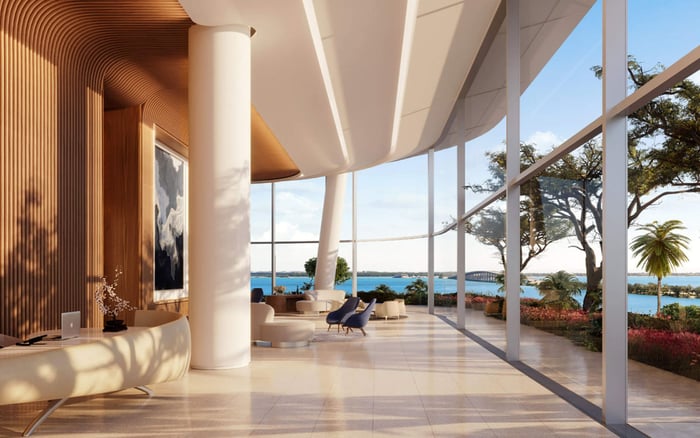
A discreet buyer’s guide to Miami Beach bay-view residences where privacy, scale, circulation, and daily rhythm matter as much as the view itself.
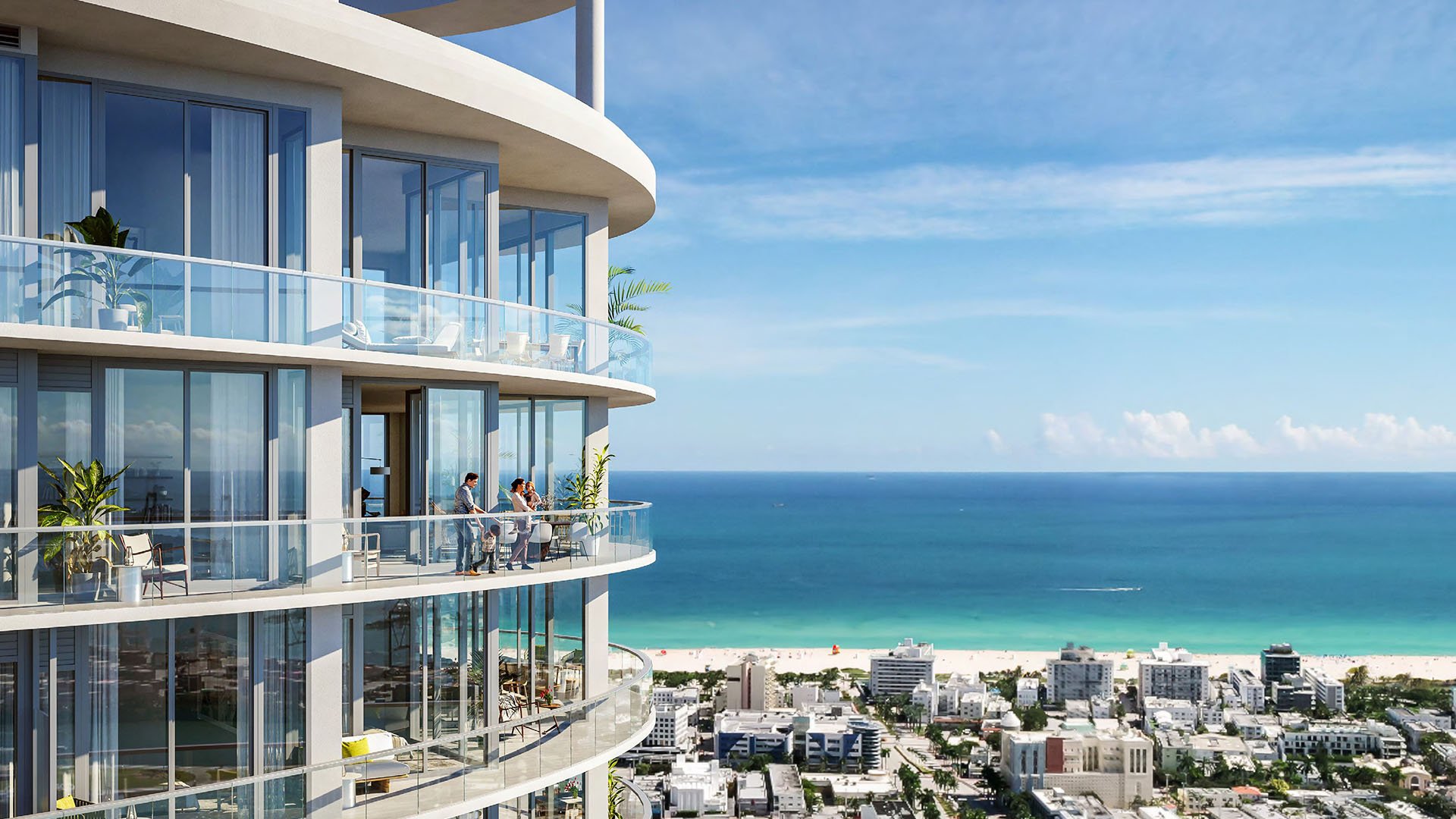
For the Miami Beach buyer seeking water, the question is no longer simply whether a residence looks west across Biscayne Bay. The more revealing question is how that view lives day after day. Does the elevator feel private at peak hours? Does the lobby remain composed on weekends? Does the terrace allow dinner at sunset without the sense of being on display? For a certain category of buyer, the best bay view is not the loudest or the highest. It is the one paired with lower social density.
This is a nuanced search. Bay views can be cinematic, but a residence can still feel busy if the building’s circulation, amenities, arrival sequence, or floor plan places too many people into the same daily patterns. The most refined Miami Beach searches now weigh atmosphere as seriously as outlook. Privacy, proportion, and control of movement matter as much as the postcard view.
In this context, a buyer may use shorthand such as Miami Beach, waterview, boutique, balcony, low-floor, and second-home living to organize priorities. Those terms do not replace due diligence, but they do capture the essence of the brief: a calmer way to live on the water.
Lower social density is not only about the number of residences in a building. It is also about how residents move, gather, park, receive guests, and use amenities. A larger property may feel calm if it separates circulation elegantly. A smaller building may feel busy if every resident is funneled through one narrow experience.
For bay-view buyers, the ideal residence should offer separation without isolation. The arrival should feel orderly. The elevator experience should not become part of the social calendar. Amenities should be available without feeling performative. Above all, the view should remain the central luxury, not a consolation prize after navigating a crowded building.
The most sophisticated buyers often study three daily moments: morning departure, late-afternoon return, and weekend use. These moments reveal whether a property’s design supports privacy or merely promises it. A residence that feels serene at those times is more likely to preserve the quiet enjoyment a bay-view buyer is seeking.
1. Low-rise bayfront residence - direct water orientation
A low-rise bayfront residence can be compelling for buyers who want the bay to feel immediate rather than distant. The appeal is not height, but intimacy: water, sky, and terrace reading as one continuous living environment.
The lower-density advantage depends on the building’s scale and circulation. Buyers should look for residences where the approach to the home feels measured, with fewer interruptions between arrival and private space. The best examples create the sense that the bay belongs to the residence, not to a large public-facing amenity deck.
2. Boutique condominium residence - quieter building rhythm
A boutique condominium can suit buyers who value recognition without exposure. In the right setting, fewer shared routines can translate into calmer lobbies, less elevator congestion, and a more residential tone.
The key is to distinguish true quiet from mere smallness. A boutique property should feel well planned, not compressed. Service access, guest flow, package handling, and parking movement deserve close attention. These details often determine whether boutique living feels graceful or inconvenient.
3. Corner bay-view residence - broader outlook and separation
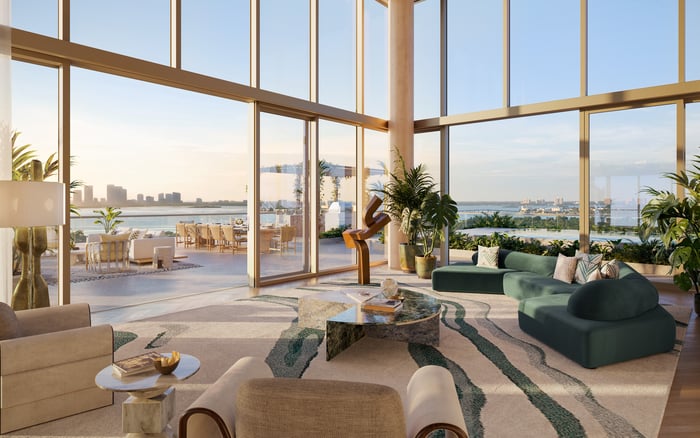
A corner residence can give a bay-view buyer a stronger sense of openness, particularly when primary living areas and outdoor space are positioned to widen the visual field. The advantage is psychological as much as architectural: more glass, more horizon, and fewer direct sightline conflicts.
For lower social density, floor position and corridor relationship matter. A corner home that feels set apart from elevator traffic can offer a more private daily experience. Buyers should study how the entry sequence protects the living spaces from the building’s common rhythm.
4. Terrace-forward residence - private outdoor living
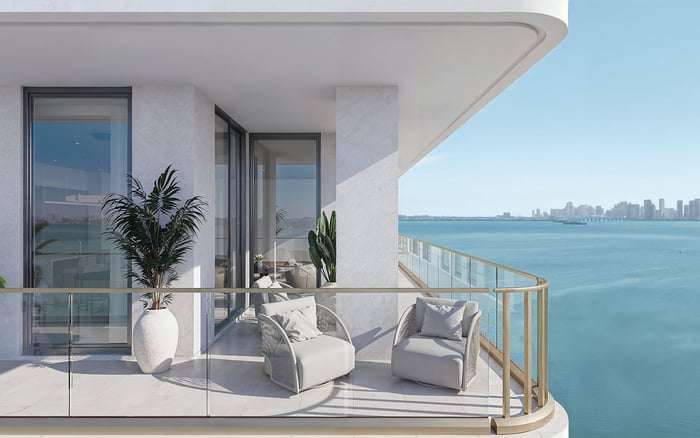
A terrace-forward residence is ideal for buyers who want the bay view to support meals, reading, entertaining, and quiet evening rituals. The terrace should feel like a true room, not a narrow ledge attached to the facade.
Privacy depends on orientation, depth, and neighboring sightlines. A terrace can be visually dramatic yet socially exposed. The most desirable layouts allow outdoor use without constant awareness of adjacent balconies, amenity areas, or passing activity.
5. Primary-suite-facing-bay residence - view as daily ritual
Some buyers prioritize the bay view from the main living room. Others want it to begin and end the day. A residence with the primary suite oriented toward the bay can create a more personal connection to the water, especially for owners who use the home as a retreat.
This type works best when the private wing is meaningfully separated from entertaining spaces. The goal is not simply to see the bay from bed, but to make the residence feel composed, layered, and quietly indulgent.
A floor plan can reveal whether a residence is designed for spectacle or for life. Bay-view buyers should examine the relationship between entry, kitchen, living room, terrace, and primary suite. A strong plan typically allows the view to unfold gradually while still giving daily spaces practical proportions.
Flow-through layouts may be appealing when they balance light, ventilation, and separation. Yet the most important point is not the label. It is whether the plan supports privacy. If guests move naturally toward the bay-facing entertaining areas while bedrooms remain discreet, the residence will usually feel more refined.
Buyers should also consider the depth of the residence. Shallow plans can give many rooms exposure, but may compromise furniture placement. Deeper plans can feel grand, but may leave some spaces dependent on artificial light. The right answer depends on how the owner intends to live, entertain, and retreat.
In an ultra-prime residence, amenities should improve life without creating a resort-like crowd. For lower social density, the most important amenities are often the least theatrical: well-managed arrival, thoughtful valet flow, composed fitness spaces, discreet service areas, and private-feeling outdoor zones.
A bay-view buyer should be careful with properties where the amenity program becomes the dominant identity. Large social areas can be attractive, but they may also increase traffic and noise. A more discreet amenity mix can preserve the feeling of a private waterfront home within a condominium setting.
This does not mean avoiding amenities. It means asking whether amenities are scaled and managed for the residents who will actually use them. Calm is an operational luxury as much as a design feature.
A beautiful bay view can seduce quickly. A better residence holds up after repeated visits at different hours. Sunset may reveal drama, but mid-morning reveals glare. Weekends reveal use patterns. Rainy days reveal how interiors feel without the theatrical sky.
Buyers should also think carefully about ownership purpose. A full-time residence may require different privacy standards than a seasonal home. A lock-and-leave owner may prioritize services and arrival. A family may care more about separation between entertaining areas and bedrooms. A collector may focus on wall space, lighting, and controlled circulation.
The strongest Miami Beach bay-view purchase is the one where architecture, outlook, and building rhythm support the same lifestyle. When those elements align, lower social density becomes more than an abstract preference. It becomes the defining luxury of the home.
What does lower social density mean for a Miami Beach residence? It means the home and building feel calmer in daily use, with less crowding in shared spaces and a more private rhythm.
Is a smaller building always better for privacy? Not necessarily. Layout, management, elevator design, and amenity flow can matter as much as overall building size.
Are bay views more valuable than ocean views? Value depends on the buyer’s priorities. Bay views often appeal to those who prefer sunsets, skyline perspective, and calmer water scenery.
Should buyers focus only on high floors? No. Lower floors can offer intimacy with the water, while higher floors may provide broader views and more separation.
Why does elevator design matter? Elevators shape the daily experience of privacy, especially during peak arrival, departure, and weekend periods.
What makes a terrace feel private? Depth, orientation, neighboring sightlines, and distance from amenity areas all influence whether outdoor space feels discreet.
Can amenity-rich buildings still feel low density? Yes, if amenities are well scaled, well managed, and distributed in a way that avoids crowding.
How should seasonal buyers evaluate these residences? They should focus on security, service, ease of arrival, maintenance, and whether the home feels effortless after time away.
What is the biggest mistake bay-view buyers make? They fall for the view before testing how the residence functions during ordinary daily routines.
How can buyers vet social-media claims about a luxury listing? Cross-check permits, condo documents, and verified sales records, then tour comparable units for real-world context.
For a discreet conversation and a curated building-by-building shortlist, connect with MILLION.
If branded residences are on your mind — as a home or as an allocation — we would be glad to share what we are seeing, privately.
Begin a quiet conversation