In South Florida’s ultra-premium market, racquet sports have evolved from casual recreation to a measurable lifestyle signal. Tennis remains the legacy standard, pickleball is the social accelerant, and padel is increasingly the “clubby” upgrade that reads as new, design-forward, and developer-led. For buyers, the question is not which sport is best, but which court experience aligns with privacy expectations, sound considerations, land constraints, and the community’s programming culture. This MILLION Luxury editorial breaks down how each sport performs as an amenity, what it telegraphs about a property’s positioning, and the practical details that can protect enjoyment and long-term value.
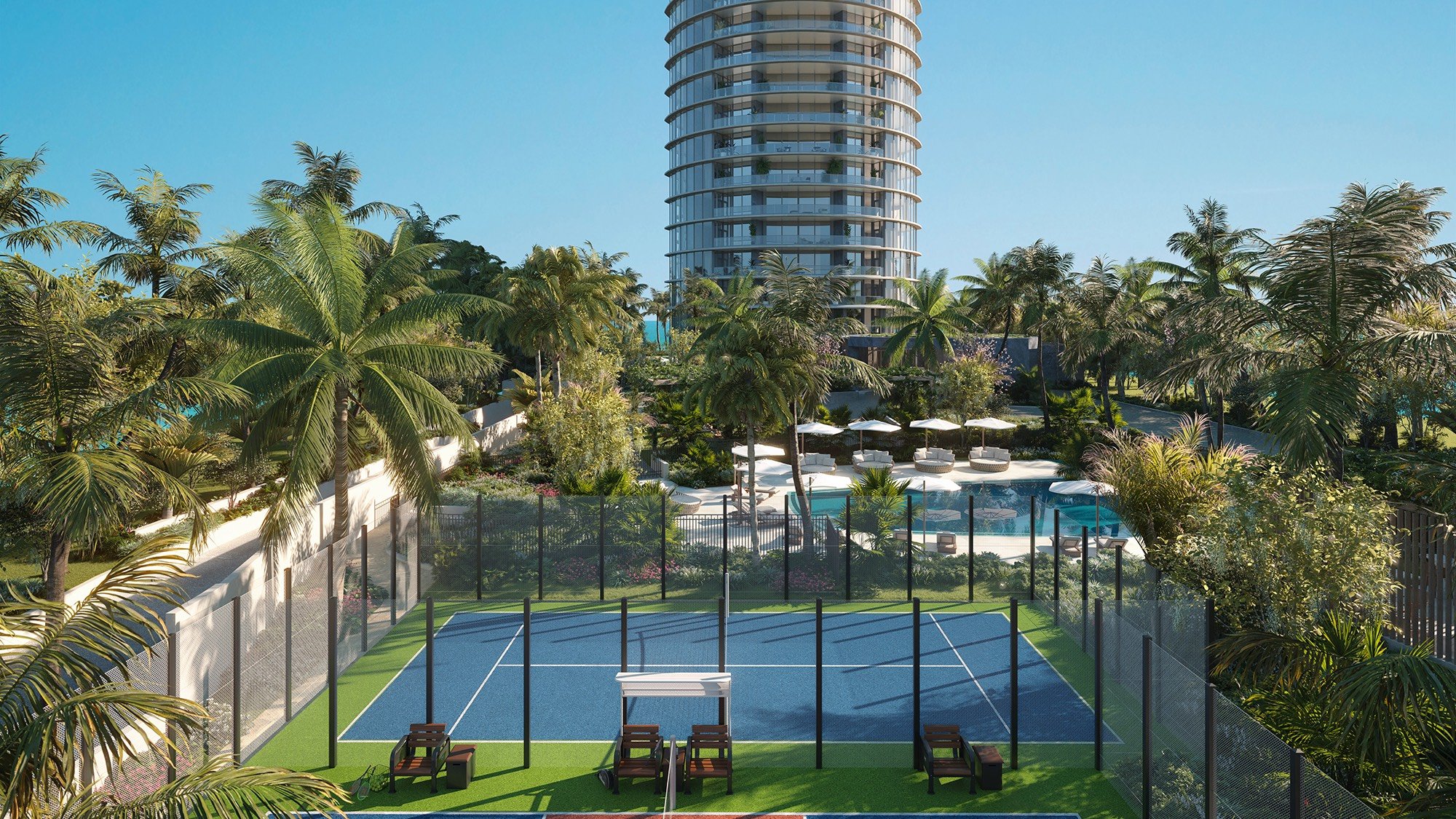
In South Florida, the most persuasive amenities don’t behave like accessories. They operate as daily ritual. Racquet sports have moved into that category because they combine wellness, social access, and a tangible “third place” within a residential ecosystem. The demand is difficult to dismiss. Pickleball participation in the U.S. has surged 223% over the past three years, reaching about 36.5 million Americans who have played at least once. On the padel side, clubs worldwide grew 22% in 2024, with 3,282 new clubs opening, for a global total of 15,933 clubs and 50,436 courts. For luxury developers and HOA boards, those figures translate directly into programming expectations, court access, and a buyer’s confidence that a community feels current. In other words, courts are no longer just painted rectangles. They’re culture, scheduling, acoustics, and the kind of social theater that can make a building or gated community feel alive, without feeling chaotic.
Tennis remains the anchor in many established clubs and resort-style communities because it’s familiar, structured, and often tied to formal instruction, leagues, and long-standing member traditions. For luxury buyers, tennis signals continuity: a place that’s been curated over time, with a clubhouse rhythm that extends beyond any single trend. Tennis also carries a clean, enduring perception of prestige. Even for residents who don’t play regularly, courts imply a level of land planning and amenity investment that goes beyond the basics. From a buyer’s perspective, tennis is most compelling when three things are true: court maintenance is consistent, the program is credible (lessons, mixers, match play), and the courts are positioned with enough separation from residences to protect quiet enjoyment. Tennis can be a “set it and forget it” amenity, but only when it’s operated that way.
Pickleball’s appeal in luxury communities is straightforward: it’s approachable, quick to learn, and inherently social. It fills the calendar with minimal friction, and it often becomes the amenity that turns new residents into familiar faces. But pickleball is also the racquet sport where design decisions can either create delight or trigger objections. Noise is the recurring issue, especially when courts sit too close to bedrooms, terraces, or quiet pool decks. In the right context, courts can help sell homes; in the wrong context, proximity can work against a property when the sound profile isn’t thoughtfully managed. For buyers, due diligence should be practical. Visit at peak hours. Stand where your unit’s primary outdoor space would be. Ask about operating hours and whether any acoustic mitigation is built into the layout. A well-placed pickleball amenity can read like a private social club. A poorly placed one can feel like an avoidable compromise.
Padel’s momentum in luxury real estate isn’t accidental. Developers are increasingly adding padel courts as high-end amenities to attract buyers, and the sport’s aesthetic, along with its “membership” energy, often aligns with ultra-premium positioning. Two practical factors matter in South Florida: land economics and build complexity. Padel’s smaller court footprint, often cited as roughly one-third the size of a tennis court, can be more land-efficient in dense, high-value markets where every square foot competes with pools, gardens, and arrival sequences. Build costs are often cited around $50,000 to $100,per Court depending on specifications and indoor versus outdoor configuration, which makes the decision feel intentional rather than decorative. Buyers should look for padel executed as a destination, not an afterthought. A notable local example is Reserve Padel at SoLé Mia in North Miami, positioned with indoor and outdoor courts alongside wellness and fitness components. That lifestyle-campus approach is often what allows padel to register as properly luxury: curated lighting, controlled hours, and a social environment that feels energetic, but managed.
In South Florida’s luxury market, the question is less about resale “math” and more about alignment. Different buyer segments respond to different signals: - Tennis tends to resonate with legacy club households and buyers who want a complete, multi-generational amenity package.
Luxury buyers should evaluate court amenities the way they evaluate a spa or a rooftop pool: by how they’re governed. Key indicators of a well-run racquets environment include: - Buffering and orientation. Courts should be placed to protect residences and quiet zones.
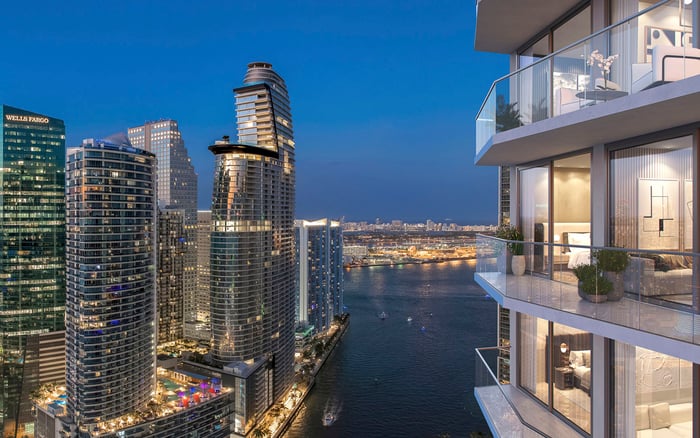
Racquet culture expresses itself differently across the region, and the most compelling properties tend to integrate courts into a broader lifestyle story. In Hallandale, the private-club model has become part of the luxury conversation, with communities that emphasize curated amenities and membership-grade programming. A buyer seeking a resort-level environment with a broader amenity ecosystem often considers projects such as Shell Bay by Auberge Hallandale, where the surrounding area’s luxury trajectory makes lifestyle amenities feel central rather than supplemental. In Surfside and Miami Beach, where privacy and quiet are prized, the question is often how racquet sports coexist with a calm residential tone. Buildings like The Surf Club Four Seasons Surfside reflect a buyer profile that values restraint, with amenities that feel deliberate and protected from unnecessary noise and foot traffic. In Brickell, density changes the equation. Land is expensive, and amenity design must be efficient and highly curated. The modern luxury buyer often wants wellness and social energy, contained within a controlled environment. That’s why lifestyle-forward towers such as 2200 Brickell can be part of the broader conversation about how urban luxury increasingly competes on daily experience. Up the coast, West Palm Beach’s luxury evolution has sharpened demand for amenities that support year-round living, not just seasonal occupancy. A waterfront-minded buyer comparing buildings may treat wellness and recreation as essential, with projects like Alba West Palm Beach reflecting the region’s elevated expectations for full-service lifestyle.
A court amenity can be a differentiator, but only if it functions the way you intend. Before committing, ask questions that reveal how the amenity performs in real life: - How many courts are there per resident population, and what does peak time feel like?
Tennis remains the enduring emblem of club completeness. Pickleball is the fastest way to build community and daily momentum, but it requires intelligent placement and clear governance. Padel is the emerging premium layer: efficient, design-forward, and increasingly used as a luxury differentiator. For buyers, the best amenity is the one you’ll actually use, in a setting that respects privacy and quiet while still delivering social oxygen. In South Florida, that balance is what turns a court into value.
Is tennis still considered a luxury amenity in South Florida? Yes. Tennis continues to signal established club culture when courts are well maintained and programmed.
Why is pickleball everywhere in Florida communities right now? Participation has surged nationally, and the sport’s social, low-barrier format fits community living.
Does a pickleball court always increase a home’s appeal? Not always. It can be a strong selling point for players, but noise and proximity can create objections.
What makes padel feel more “premium” than pickleball to some buyers? Padel is often positioned as a club-style, design-forward experience with curated programming.
How much space does a padel court require compared with tennis? Padel is commonly cited as having a footprint roughly one-third the size of a tennis court.
What does it typically cost to build a padel court? Build costs are widely cited around $50,000 to $100,per Court depending on specifications.
Should buyers worry about court noise in condo buildings? Yes. Visit during peak play times and evaluate sound where you would live, especially for pickleball.
Are racquet amenities more important for full-time or seasonal residents? Both benefit, but full-time residents often value consistent programming and daily usability more.
What’s the best sign that a racquets program is well run? Clear hours, fair reservations, visible maintenance, and active programming usually indicate quality.
If I don’t play, should I still care about courts in a building or community? Yes. Courts influence noise, traffic flow, and the social character of shared spaces. Explore South Florida’s most design-forward, lifestyle-driven residences with MILLION Luxury.
For tailored guidance, speak with MILLION Luxury.
If branded residences are on your mind — as a home or as an allocation — we would be glad to share what we are seeing, privately.
Begin a quiet conversation