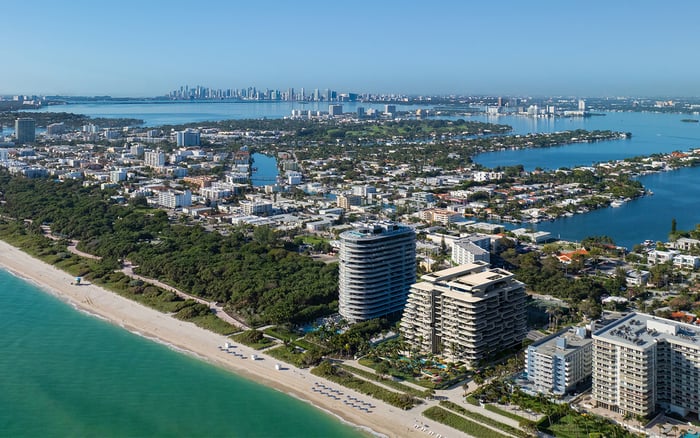
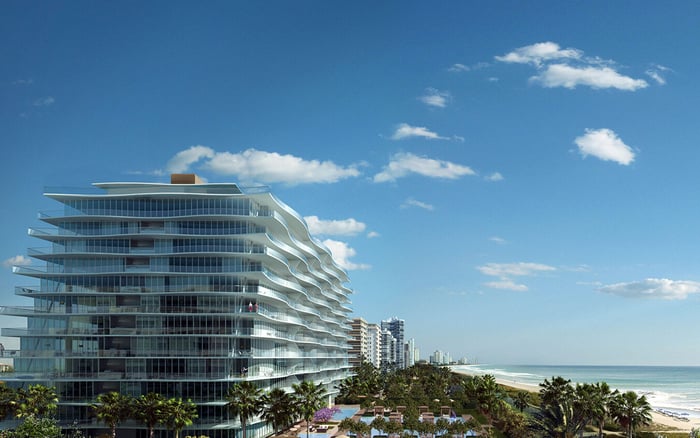
A buyer-focused comparison of ORA by Casa Tua Brickell and The Surf Club Four Seasons Surfside through the lens of smart-home readiness, data privacy, service responsiveness, and day-to-day primary-residence fit.
For a buyer seeking a primary Miami base, ORA by Casa Tua Brickell and The Surf Club Four Seasons Surfside represent two distinct definitions of ease. ORA by Casa Tua Brickell is the urban proposition: a Brickell tower lifestyle suited to buyers who want proximity to business, dining, and the vertical rhythm of the city. The Surf Club Four Seasons Surfside is the oceanfront alternative: a Surfside setting shaped by hospitality expectations and a calmer coastal cadence.
That contrast matters because primary-home buyers evaluate a residence differently than seasonal owners. The questions extend beyond views, finishes, and amenities. A full-time or near-full-time Miami resident must ask how the building works on a Tuesday morning, how quickly issues are escalated, how digital systems protect private information, and whether guests, vendors, hotel patrons, restaurant visitors, or city traffic affect the feeling of home.
The central choice is therefore not simply Brickell versus Surfside. It is urban residential infrastructure versus oceanfront hospitality culture. For a buyer who wants a city base, ORA may feel more aligned with daily access and movement. For a buyer who values calm, service rituals, and coastal separation, The Surf Club may feel more reassuring.
Smart-home readiness is often marketed through convenience: lighting scenes, climate control, access credentials, resident communication, and integration potential. The more serious question is what sits behind the interface. In a primary residence, the digital backbone deserves the same scrutiny as the kitchen, closet systems, or view corridor.
At ORA by Casa Tua Brickell, the appeal is a Brickell branded-tower environment that may attract buyers seeking a current-generation residential platform. That does not mean a buyer should assume every preferred system, platform, or future upgrade is already solved. It means the buyer should use the building tour as a prompt for deeper verification: wiring capacity, network resilience, unit-level control flexibility, building app functions, package and visitor notifications, elevator access logic, and whether future smart-home customization can be added cleanly without compromising warranties or building standards.
At The Surf Club Four Seasons Surfside, the smart-home question is different. The building’s appeal is tied to its oceanfront hospitality context as much as to any digital feature list. Buyers should focus on how residential technology supports a private daily environment. Can residents communicate requests efficiently? Are access permissions clear? Does the experience feel residential within a broader luxury ecosystem? Does the technology support service, or does it create unnecessary friction?
The key is not to choose the building with the longest feature list. The key is to identify which building’s digital infrastructure matches your life. A Brickell owner who works from home, entertains often, and wants rapid movement between meetings and dining may prioritize connectivity and convenience. A Surfside owner may prioritize a quieter interface, fewer disruptions, and systems that make hospitality feel invisible.
Data privacy has become one of the most important but least glamorous questions in branded residential ownership. Every access point can create a record: guests, vendors, deliveries, service requests, amenity reservations, valet interactions, and resident communications. For ultra-premium buyers, privacy is not only about discretion in public spaces. It is also about how personal information moves through a building’s operating ecosystem.
In Brickell, ORA by Casa Tua Brickell may attract buyers who want an energetic, highly connected urban base. That energy brings convenience, but it also makes digital discipline essential. Buyers should ask how resident app data is handled, who can view service requests, how guest and vendor permissions are created, and whether access credentials can be limited, audited, or revoked. For executives, family offices, founders, and international owners, those details can be as relevant as parking or storage.
In Surfside, The Surf Club Four Seasons Surfside presents a different privacy framework. Buyers who want a primary home without an overt resort feeling should focus on separation: residential arrival, guest flow, service access, amenity boundaries, and how the building distinguishes owners from transient visitors.
Neither model is automatically more private. Brickell’s challenge is density and urban activity. Surfside’s challenge is the presence of a hospitality ecosystem. A serious buyer should request a clear explanation of privacy protocols without expecting sensitive operational details to be disclosed casually. The goal is to understand whether the building’s culture treats privacy as a design principle, not merely a concierge courtesy.
Service responsiveness is where the comparison becomes most personal. ORA by Casa Tua Brickell offers the appeal of a Brickell branded residential concept in the middle of Miami’s high-rise urban energy. For a primary resident, responsiveness should be assessed through practical scenarios: a technology issue before a video call, a delayed delivery, a guest arriving while the owner is away, or an urgent maintenance request after business hours.
The Surf Club Four Seasons Surfside carries a different expectation because buyers often associate the setting with a hospitality-led service culture. The question is not whether the setting is luxurious. It is how the service structure performs when the request is ordinary, repetitive, or time-sensitive.
For both properties, buyers should ask about escalation paths. Who receives a request first? When does it move to management? How are unresolved items tracked? Are resident issues handled differently from hotel or restaurant matters? How does the property communicate delays? A polished welcome is expected. The real test is whether the building remains composed after move-in, after the first service issue, and after the hundredth minor request.
Brickell rewards proximity. ORA by Casa Tua Brickell is better aligned with buyers who want the city close at hand: offices, dining, private meetings, cultural movement, and the sense that Miami is operating just outside the lobby. This is a compelling fit for owners who do not want a resort atmosphere at home, but who are comfortable with urban intensity. Brickell offers convenience, energy, and density. It is not a quiet coastal village, and that honesty is part of its value.
Surfside rewards removal. The Surf Club Four Seasons Surfside is better aligned with buyers who prefer a calmer oceanfront residential environment over downtown intensity. The setting may suit those who want service, beach proximity, and a softer daily cadence. The due-diligence question is whether the hospitality component enhances life or becomes the very traffic a primary buyer hopes to avoid.
The strongest buyers will not ask which address is more impressive. They will ask which address is easier to live in. If your Miami life is business-centered, socially active, and urban, ORA may make more sense. If your Miami life is restorative, hospitality-led, and coastal, The Surf Club may be the more natural fit.
Before choosing either residence, ask for a private walkthrough focused on daily operation, not just finishes. Test phone signal and Wi-Fi expectations in the areas you will actually use. Ask how resident apps, access credentials, package rooms, valet requests, amenity reservations, and service tickets function. Clarify how visitors, domestic staff, drivers, contractors, and recurring vendors are approved and monitored.
For ORA, focus on whether the urban platform supports your routine. For The Surf Club, focus on how the hospitality environment protects the residential experience. In both cases, the most valuable luxury is not novelty or nostalgia. It is reliability.
Which property is more urban in character? ORA by Casa Tua Brickell is the more urban option, positioned in Brickell with proximity to business, dining, and high-rise city energy.
Which property is more oceanfront and resort-oriented? The Surf Club Four Seasons Surfside is the oceanfront alternative, with a Surfside setting shaped by hospitality expectations.
Is ORA automatically better for smart-home technology? Not automatically. Buyers should still verify wiring, systems, controls, access logic, and upgrade flexibility.
Is The Surf Club automatically better for service? It may appeal strongly to buyers who value hospitality-led service, but responsiveness should still be tested through practical daily scenarios.
What should privacy-focused buyers ask first? Ask how guest access, vendor permissions, resident app data, service requests, and building communications are managed and separated.
Which is better for buyers avoiding resort traffic? ORA avoids a beachfront hospitality setting, while The Surf Club requires careful review of how residential life is separated from resort-related activity.
Which is better for a primary residence? ORA may suit an urban primary lifestyle, while The Surf Club may suit a calmer coastal primary lifestyle with service support.
Should buyers prioritize amenities or operations? For primary use, operations often matter more. Connectivity, privacy, access control, and response times shape everyday satisfaction.
What is the biggest risk in comparing these properties? The biggest risk is treating them as interchangeable branded residences when they serve very different daily lifestyles.
What is the best way to shortlist comparable options for touring? Start with location fit, delivery status, and daily lifestyle priorities, then compare stacks and elevations to validate views and privacy.
For a confidential assessment and a building-by-building shortlist, connect with MILLION.
If branded residences are on your mind — as a home or as an allocation — we would be glad to share what we are seeing, privately.
Begin a quiet conversation