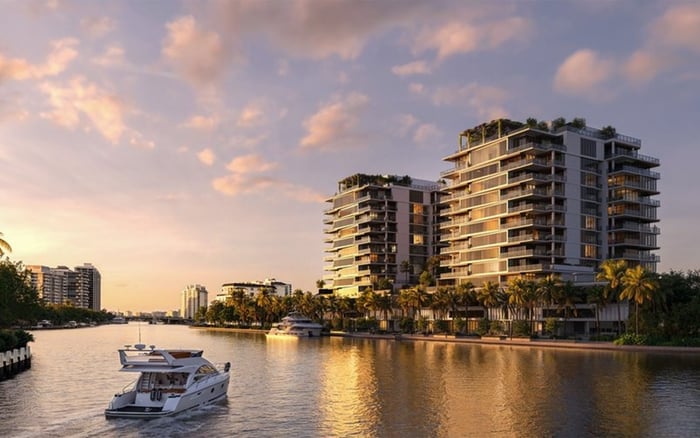
A discreet due-diligence framework for aligning a Fort Lauderdale residence with school logistics, recurring travel, privacy expectations, and building operations.
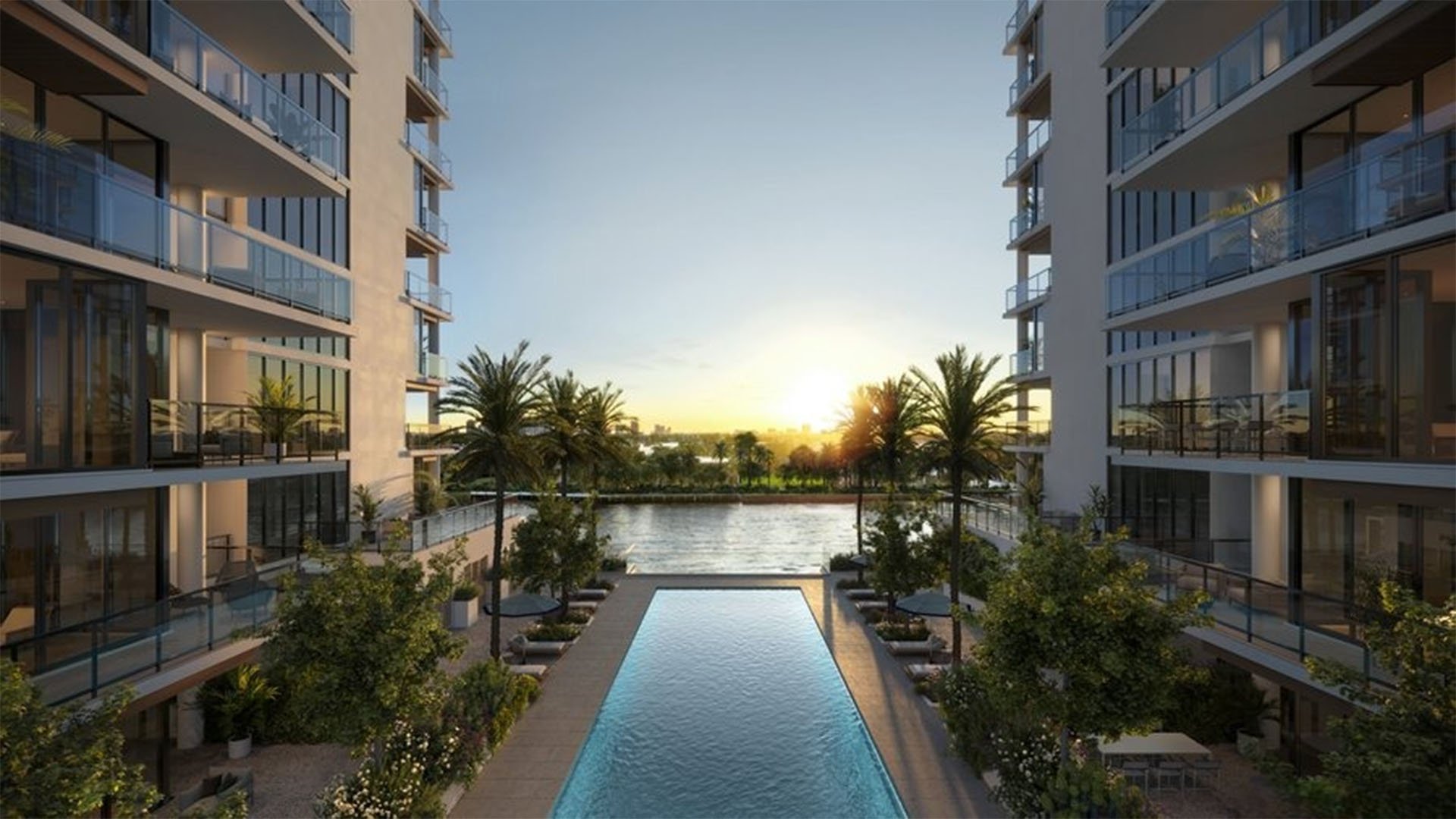
A compelling residence can command attention through its architecture, views, materials, and service. Yet for a household buying new or vertical luxury in Fort Lauderdale, the more consequential questions often extend beyond the residence itself. Private-school planning, commute rhythm, and security should enter the discussion before a preferred floor plan creates emotional momentum.
This is not an argument for reducing a home to logistics. It is an argument for ensuring that logistics support the life envisioned there. A residence that functions beautifully on a quiet weekend may feel very different during a school morning, an airport departure, a late return, or a day involving several drivers and guests.
For buyers considering Fort Lauderdale Beach, the city’s interior neighborhoods, or a waterfront setting, the sequence is straightforward: define the household’s recurring movements, assess how each property supports them, and only then compare the finer distinctions of design.
Private-school selection is personal, and the residential decision should not presume a final enrollment outcome. Instead, buyers can map several plausible school scenarios and assess the implications of each. The useful questions are practical: Who drives, at what time, with how many children, and what happens when schedules diverge?
A school review should account for morning departure, afternoon collection, extracurricular activities, caregiver handoffs, and the possibility of siblings attending different campuses. Test the route rather than relying solely on a map. Repeat the test at the hours relevant to the household, noting the full door-to-door experience, including garage departure and arrival procedures.
Here, the distinction between a tower and a single-family residence becomes tangible. Vertical living can introduce elevators, valet coordination, loading areas, and controlled access into the school-day sequence. None is inherently positive or negative. The question is whether that operating rhythm matches the family’s expectations.
A comparison involving Sixth & Rio Fort Lauderdale should therefore extend beyond the residence under consideration. Buyers should assess how the location fits their actual weekday circuit and how the building’s anticipated procedures align with recurring departures.
Private-school planning also warrants a contingency view. Consider schedule changes, visiting relatives, a new caregiver, and the occasional need for one adult to manage several movements. The strongest choice is often the one that remains workable when the day is less than perfect.
A commute is not one number. It is a sequence encompassing departure preparation, building exit, road travel, parking, and arrival. Buyers should model each component for the journeys that matter most, whether they involve an office, airport, school, club, marina, medical appointment, or another residence.
Create a weekly movement map of frequent destinations and likely travel windows. Then test the highest-friction combinations. A buyer examining Four Seasons Hotel & Private Residences Fort Lauderdale might consider how a beach-oriented address fits weekday obligations, evening plans, and early departures. The aim is not to predict every trip, but to identify patterns that could shape daily satisfaction.
Commute review should also reflect who is traveling. One household may prioritize a direct morning routine, while another values flexibility for staff, teenagers, guests, or multiple vehicles. A second-home owner may focus more heavily on arrival and departure days; a primary resident may give greater weight to repeated weekday movement.
The governing principle is simple: evaluate the trip you will repeat, not the trip you hope will be typical. New-construction buyers should revisit the exercise as plans, operating procedures, and personal circumstances develop.
Luxury security is best assessed as a layered operating system. Buyers should ask how residents, guests, vendors, deliveries, domestic staff, and vehicles are expected to move through the property. The quality of that choreography matters as much as any isolated feature.
Request clear explanations of access control, visitor authorization, package handling, parking access, elevator movement, emergency communication, and after-hours procedures. Establish who is responsible for each step and how exceptions are managed. Privacy-sensitive households should also examine the separation-or lack of separation-among residents, service providers, and public-facing activity.
When considering The Ritz-Carlton Residences® Fort Lauderdale, or any managed residence, buyers should review the applicable documents and current representations rather than infer protocols from branding. Security expectations should be incorporated into the due-diligence checklist and verified with appropriate advisers.
The same discipline applies to St. Regis® Residences Bahia Mar Fort Lauderdale. Ask how the proposed resident experience aligns with the household’s threshold for discretion, convenience, and controlled access. For a pre-completion purchase, distinguish clearly among what is represented, what is documented, and what remains subject to change.
A concise scorecard prevents the decision from being dominated by the most visually persuasive property. Assign a weight to each household priority, then evaluate every candidate against the same questions. Categories might include school-day resilience, recurring commute fit, guest handling, staff access, vehicle procedures, privacy, emergency planning, and adaptability.
Separate nonnegotiables from preferences. A view may be highly desirable, while a workable morning routine may be indispensable. A generous amenity program may impress, while predictable access procedures may contribute more to daily ease. Buyers should review the final scorecard with legal, financial, insurance, education, and security advisers as appropriate.
The result is not a mechanical answer, but a clearer conversation about trade-offs. In Fort Lauderdale, the strongest luxury purchase is the residence whose architecture and operations support the same life.
When should school logistics enter the property search? Before the shortlist narrows, allowing likely routines to inform location and building type.
Should buyers choose a school before choosing a residence? Not necessarily. They can test several plausible school scenarios without assuming admission or enrollment.
What is the best way to assess a commute? Travel the complete route at relevant times, including the building exit, parking, and arrival sequence.
Why review more than estimated drive time? Because elevators, vehicle retrieval, access points, and parking can shape the full door-to-door routine.
How should a second-home buyer approach commute planning? Emphasize airport days, guest arrivals, property-management access, and the journeys most likely during stays.
What should a security review include? Examine resident access, visitors, vendors, deliveries, parking, elevators, emergencies, and after-hours protocols.
Is a staffed entrance enough to establish security quality? No. Buyers should understand the complete staffing, technology, authorization, communication, and exception process.
How can buyers compare a tower with a single-family home? Apply the same household scenarios to both, then compare responsibility, privacy, convenience, and operational control.
What deserves special attention in a pre-completion purchase? Separate documented commitments from concepts that may evolve, and have qualified advisers review the governing materials.
What is the most useful final decision tool? A weighted scorecard that distinguishes nonnegotiable daily requirements from desirable features.
For a confidential assessment and a building-by-building shortlist, connect with MILLION.
If branded residences are on your mind — as a home or as an allocation — we would be glad to share what we are seeing, privately.
Begin a quiet conversation