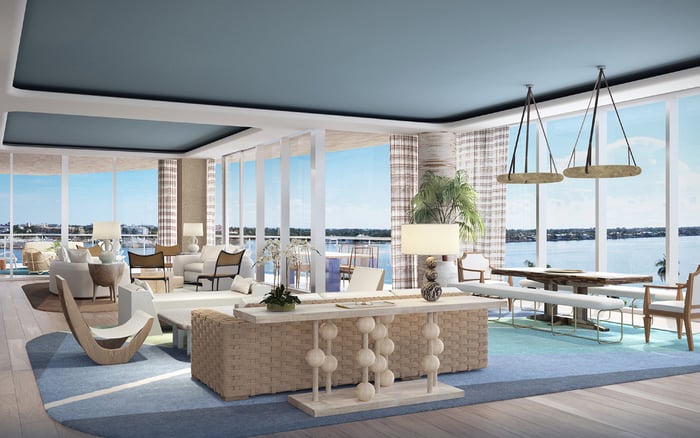
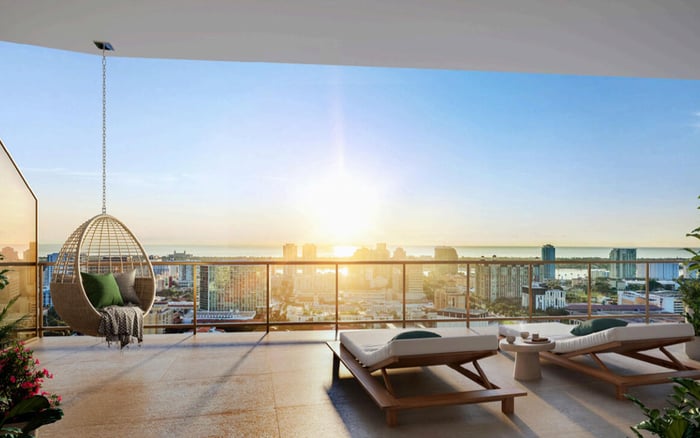
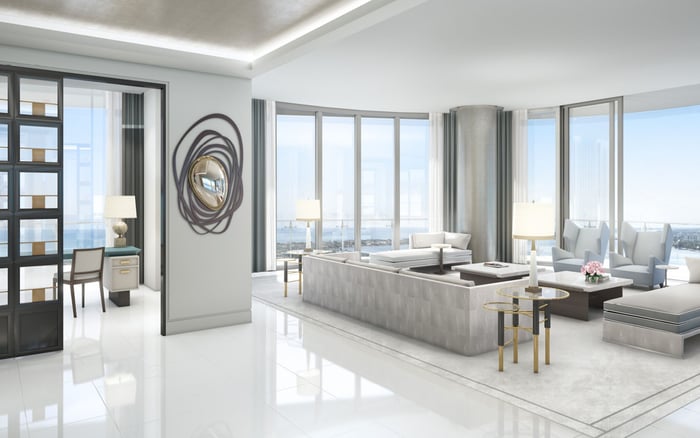
Forté on Flagler reframes the West Palm Beach condominium conversation around a practical luxury question: how easily does daily life move between the private residence and the outdoor pool environment? For ultra-luxury buyers, convenience can determine whether an amenity becomes part of a true routine or remains a beautiful but underused feature.
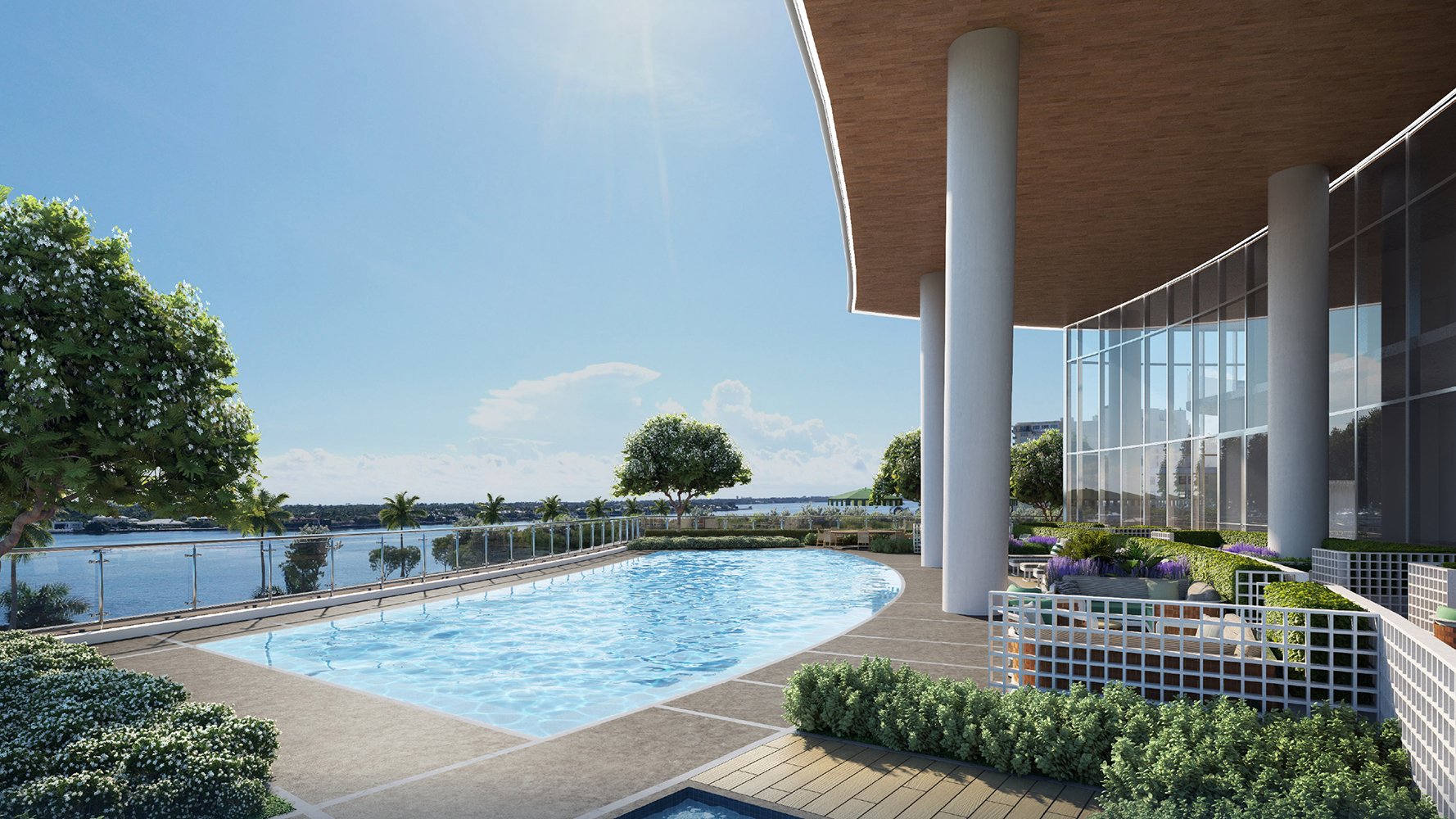
At the upper end of the West Palm Beach condominium market, buyers rarely decide on square footage alone. They study arrival sequences, privacy, light, service, views, and the way a residence supports ordinary days as gracefully as formal weekends. Forté on Flagler West Palm Beach sits directly in that conversation for buyers evaluating a more substantial South Florida condominium lifestyle.
Its appeal is not simply that it is a luxury condominium. The more relevant point is that Forté on Flagler West Palm Beach is discussed in the context of buyers seeking large-format living rather than a conventional second-home condominium experience. That distinction changes how amenities are judged. A buyer who intends to live generously, host family, stay for longer stretches, and treat the property as a primary lifestyle asset will ask a more exacting question: how easily does the building allow me to use what I am paying for?
That is where pool-to-residence convenience becomes quietly decisive. A pool may be visually compelling in a presentation, but if reaching it feels indirect, exposed, or inconvenient, its role in daily life can diminish. In a waterfront condominium setting, the pool and outdoor amenity area often become part of the resident’s everyday resort environment. The more naturally that environment connects to the private residence, the more valuable it can feel.
Forté on Flagler is part of a West Palm Beach luxury dialogue shaped by buyers who understand South Florida expectations for privacy, service, scale, and design. These buyers are often comparing the feel of a residence, not only its specifications, and they tend to notice whether the building supports the way they actually want to live.
That matters because the strongest ownership experience is rarely built on one feature alone. A large residence can provide private comfort. A refined building environment can establish tone. Outdoor amenities can extend daily life beyond the walls of the home. When those elements work together, a condominium can feel less like a place used occasionally and more like a true residence.
Even within that elevated frame, convenience remains practical. A buyer weighing pool use, views, new-construction appeal, resale considerations, and West Palm Beach lifestyle priorities is often trying to determine which features will still matter after the first season of ownership. The answer usually lies in how often the feature is used.
For many condominium owners, the pool is not an occasional amenity. It is the outdoor room. It is where a morning swim happens, where children gather, where guests experience the property without leaving the building, and where a quiet hour in the sun becomes part of a daily ritual.
That role is especially important when the outdoor resort experience must be delivered by the building itself. The pool deck, landscape, seating, shade, privacy, and circulation all become part of the residence’s lived value. If those elements feel easy to access, they can support a lifestyle that feels relaxed rather than scheduled.
This is why an impressive pool can underperform if access feels inconvenient. If using the pool requires too much planning, too many transitions, or the sense of moving through public building zones rather than extending one’s home, the amenity becomes less spontaneous. Luxury buyers often notice this immediately. They may not describe it in technical language, but they know whether a building makes leisure feel effortless.
At this level, convenience is not the opposite of luxury. It is one of luxury’s clearest expressions. The most successful buildings remove friction from daily life. They allow residents to move between private and shared spaces with discretion, comfort, and minimal interruption.
Pool-to-residence convenience matters because it changes behavior. When the pool feels like an extension of the home, residents are more likely to use it for a short swim, a spontaneous afternoon, or a casual moment with visiting family. When access feels remote, the same resident may reserve the pool for planned occasions only. That difference may seem small during a sales presentation, but it becomes meaningful over years of ownership.
The buyer decision often turns on these small frictions. A large residence may satisfy the private living requirement. A polished view may satisfy the emotional requirement. But the outdoor amenity experience must satisfy the everyday requirement. If the pool is easy to reach and easy to return from, it can become part of a daily pattern rather than a photographed feature.
Resale value is never protected by beauty alone. It is supported by the durability of demand, and demand is often strongest for features future buyers can imagine using immediately. Amenities integrated into daily routines tend to be more defensible than amenities residents rarely use.
That does not mean every buyer values the same thing. Some prioritize privacy above all else. Others care most about entertaining, wellness, family use, or lock-and-leave simplicity. Across those preferences, however, usability is a common thread. A buyer may admire a dramatic amenity, yet pay closer attention to whether it fits naturally into how they live.
For Forté on Flagler West Palm Beach, the broader proposition is not only presentation. It is whether the building can make the ownership experience feel residential, immediate, and repeatedly enjoyable. The pool is a crucial test because it sits between architecture and lifestyle. If it is convenient, it becomes part of the home’s functional luxury. If it is not, it risks remaining part of the brochure.
A serious buyer should treat the pool path as carefully as the view line from the main living room. The question is not simply where the pool is located, but how the resident experiences the journey. Is the path intuitive? Does it preserve the sense of privacy expected in an ultra-luxury building? Does returning from the pool feel comfortable and discreet? Can the amenity be used casually, or does it feel like an outing?
Buyers should also consider how different members of the household will use the space. A couple may value a quick morning swim. Guests may want an easy transition from lunch to the pool. Family members may use the outdoor environment at different times of day. The stronger the circulation, the more flexible the lifestyle.
This is where a large-format condominium mindset becomes relevant. Buyers who want the comfort of a private home with the benefits of a serviced building often expect the pool to support the same sense of ease found inside the residence.
Forté on Flagler West Palm Beach belongs to a market where the details of daily use can be as important as the first impression. Residence scale supports a more substantial way of living. Refined design can add confidence. But the pool-to-residence relationship can determine whether the outdoor amenity becomes a defining part of ownership.
The essential takeaway is simple: convenience can convert an amenity from a marketing feature into a daily lifestyle benefit. For ultra-luxury buyers, that conversion matters. It shapes how often the property is enjoyed, how easily guests are hosted, and how persuasively the residence may present itself to future buyers.
Why does pool-to-residence convenience matter at Forté on Flagler? It matters because luxury buyers often judge amenities by daily usability, not just appearance. Easy movement can make the pool feel like an extension of the residence.
Is Forté on Flagler West Palm Beach relevant for buyers comparing South Florida luxury condominiums? Yes. The project fits a West Palm Beach luxury conversation where buyers evaluate privacy, scale, service, amenities, and everyday convenience.
Who is the likely buyer for Forté on Flagler? The project is positioned for buyers considering a more substantial condominium lifestyle rather than a purely occasional second-home experience.
Why is the pool especially important in a luxury condominium? The pool often functions as an outdoor room, supporting everyday relaxation, family use, guest time, and spontaneous leisure.
Can a beautiful pool still be a weak amenity? Yes. If access from the residences feels inconvenient, a visually impressive pool may be used less often than expected.
How can convenience affect perceived value? When an amenity is easy to use, residents are more likely to integrate it into daily routines, which can increase its perceived value.
Does pool access influence resale potential? It can support the resale story because amenities that residents actually use are often more defensible than amenities that remain occasional.
What should buyers evaluate during a tour? Buyers should study the path from residence to pool, privacy along the route, ease of return, and whether the experience feels effortless.
How should buyers think about pool access versus residence size? Both matter, but they solve different parts of the decision. Residence size supports private living, while convenient pool access supports daily outdoor use.
What is the main buyer takeaway? At this level, convenience is not a minor detail. It can determine whether an amenity becomes part of the owner’s real lifestyle.
For a confidential assessment and a building-by-building shortlist, connect with MILLION.
If branded residences are on your mind — as a home or as an allocation — we would be glad to share what we are seeing, privately.
Begin a quiet conversation