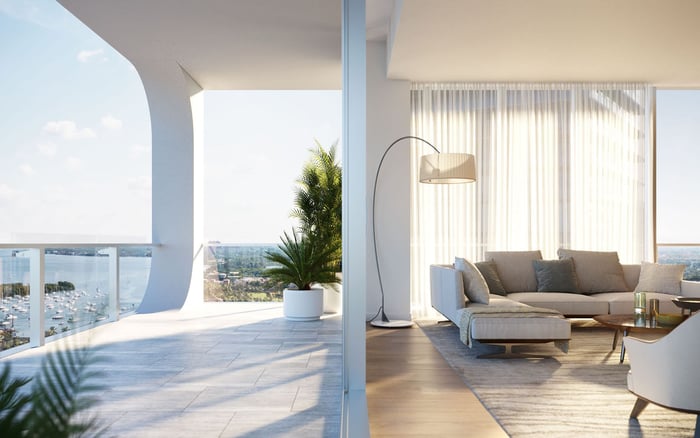
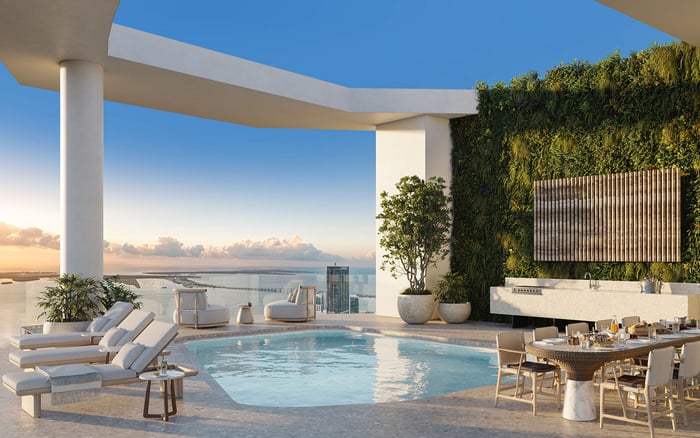
A buyer-oriented guide to choosing between ocean-view and Intracoastal-view residences in South Florida, with lifestyle, privacy, boating, design, and resale considerations for luxury waterfront clients.
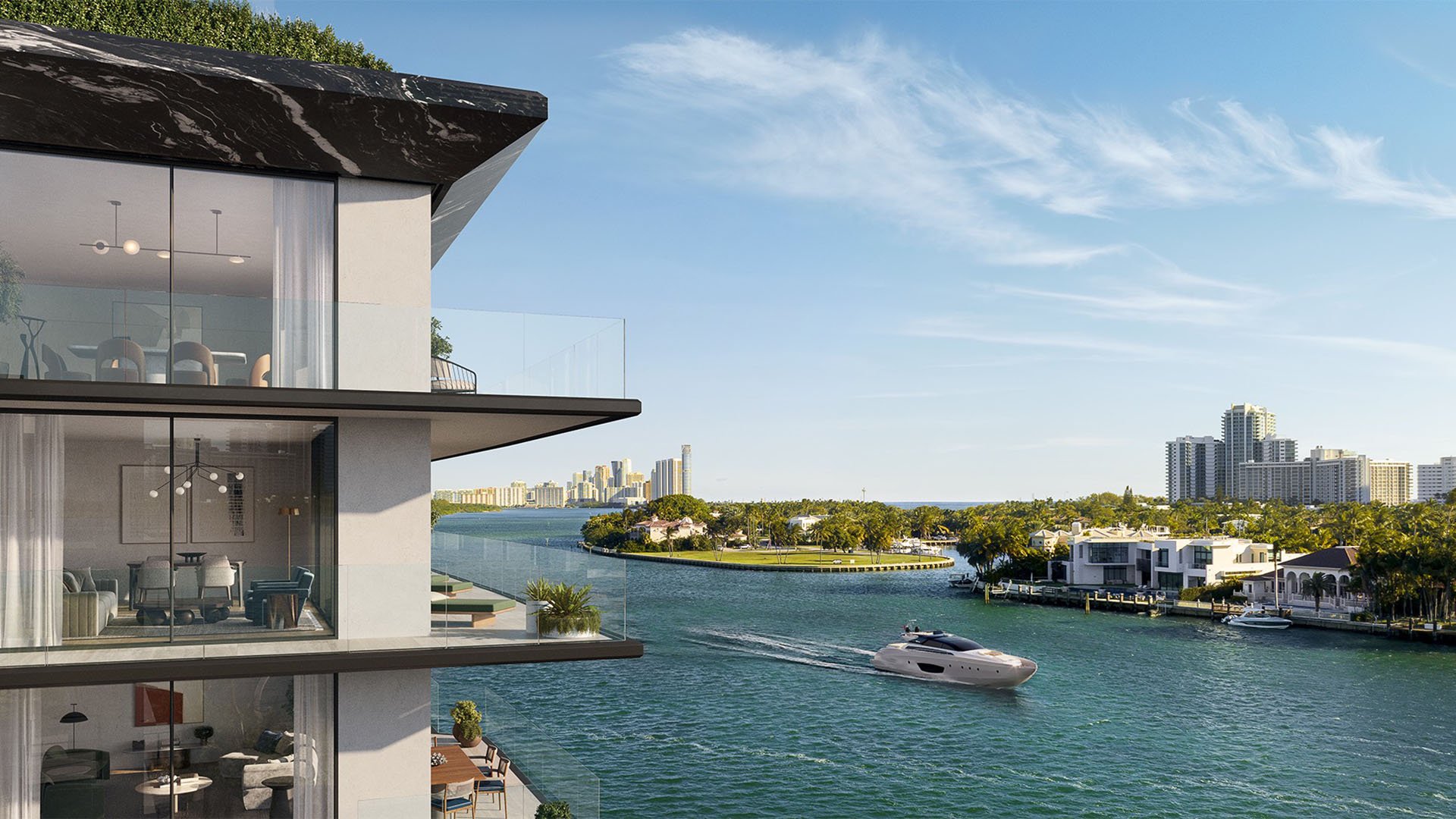
In South Florida, waterfront real estate is often discussed as though all blue water were interchangeable. It is not. An ocean view and an Intracoastal view can offer two distinct versions of daily life, even when both are framed by glass, terraces, and the same coastal light.
An oceanfront residence tends to speak in broad gestures: horizon, sunrise, breeze, distance, and a resort-like sense of remove. An Intracoastal or bayfront residence can feel more cinematic and social, with passing boats, evening reflections, shoreline architecture, and a closer relationship to the city around it. Neither is inherently superior. The stronger choice is the one that matches how you intend to live.
For some buyers, the ideal morning is quiet coffee facing the Atlantic. For others, the essential pleasure is watching yachts pass at golden hour before dinner. That distinction becomes especially important in South Florida, where Miami Beach, Surfside, Sunny Isles, Fort Lauderdale, Boca Raton, and Palm Beach each express waterfront living differently.
Ocean views are prized for their visual clarity. The Atlantic creates a clean line, a consistent mood, and a natural sense of separation from the world behind the building. For buyers who value serenity, the ocean can feel like a private landscape, even in a dense coastal corridor.
This is the appeal of residences such as 57 Ocean Miami Beach, where beachfront living centers on openness, air, and direct engagement with the coast. In a similar way, The Perigon Miami Beach belongs in the conversation for buyers drawn to the architectural drama of living at the edge of the Atlantic.
The ocean buyer often prioritizes light quality, terrace depth, window orientation, and the emotional power of waking up to water that appears uninterrupted. Privacy can also be central to the appeal. Looking east, many residences face open water rather than another building. That visual calm is difficult to replicate.
Yet ocean living demands disciplined due diligence. Buyers should study building maintenance standards, balcony usability, glazing, building orientation, and the practical experience of wind, salt air, and sun exposure. The view may be magnificent, but the residence must be engineered and managed for coastal life.
Intracoastal and bay views create a different kind of luxury. Instead of a still horizon, the view has layers: water, bridges, islands, boats, skyline, lights, and neighboring waterfront homes. It is less minimal and often more animated.
That makes it compelling for buyers who want a water view that changes throughout the day. Morning may bring soft reflections. Afternoon may show movement across the water. Evening often becomes the defining moment, when lights from the opposite shore create a more urban and intimate atmosphere.
In Bay Harbor Islands, La Baia North Bay Harbor Islands illustrates why many buyers gravitate toward protected-water settings: the lifestyle can feel residential, connected, and water-focused without requiring an oceanfront address. In Miami’s Edgewater corridor, Aria Reserve Miami fits a different version of the same preference, where bay and city views become part of a more metropolitan waterfront rhythm.
Intracoastal living also appeals to buyers who think seriously about boating. A residence does not need to have a private boat slip to suit a boating household, but proximity to marinas, waterways, and yacht clubs may shape the decision. If marina access is central to your lifestyle, the view should be considered alongside dockage, navigation convenience, parking, service access, and the time it takes to move from residence to water.
The most revealing question is simple: when will you actually use the view? A primary resident who begins the day early may value the ocean differently from a seasonal owner who entertains at sunset. A family that spends weekends on the water may prioritize Intracoastal orientation, while a buyer seeking restoration after travel may prefer the quiet of the Atlantic.
If your residence will function as a private retreat, ocean views can deliver a sense of escape. If it will operate as a social base, Intracoastal views may create more conversation and variety. If you work from home, consider glare, screen placement, and afternoon heat. If you entertain often, study how the terrace feels after dark, not only during a midday showing.
Aventura and Brickell buyers may approach the question differently as well. In Aventura, waterfront living often intersects with boating, shopping, and a more residential rhythm. In Brickell, water views may be judged against skyline energy, access, and the vertical drama of urban life. The most expensive view is not always the most useful one.
Height changes everything. A high-floor ocean residence may deliver an expansive horizon, while a lower-floor beachfront home may feel more connected to sand, palms, and the sound of surf. On the Intracoastal, a higher floor can widen the perspective, while a lower floor can make the water feel immediate and personal.
Architecture matters just as much as elevation. Wide frontage, corner exposure, floor-through layouts, and terrace placement can transform an ordinary view into an exceptional daily experience. Conversely, a famous address with compromised sightlines may not live as well as a more discreet building with better orientation.
In Surfside, Ocean House Surfside belongs to the ocean-view conversation for buyers focused on scale, setting, and the quieter side of coastal living. The lesson is broader than any one project: the building must support the view. Ceiling heights, glass quality, shade, privacy from neighboring towers, and room proportions all affect how the water is experienced.
Luxury buyers should think about resale, but not at the expense of lifestyle fit. A water view can help define value, yet the strongest long-term choices usually combine view quality with livability, building reputation, floor plan, service, and location.
Ocean views can carry emotional power because they are visually rare and instantly legible. Intracoastal views can be equally compelling when they offer depth, movement, and an elegant relationship to boating culture. The important point is to avoid buying a label. “Ocean” alone does not guarantee a better living experience, and “Intracoastal” does not mean secondary.
Study the exact line of sight from the primary suite, kitchen, living room, and terrace. Visit at more than one time of day if possible. Notice sound, privacy, traffic flow, elevator experience, arrival sequence, and how the residence feels when the view is not the only thing you are noticing.
Choose an ocean view if you want horizon, sunrise, visual calm, and a more resort-like atmosphere. Choose an Intracoastal view if you want boating culture, evening lights, and a livelier waterfront tableau. Choose a bay or mixed-water view if you want a balance between city energy and open water.
The best South Florida waterfront purchase is rarely about a single postcard moment. It is about the way a residence performs every morning, every evening, and every season you own it. The right view should not merely impress guests. It should improve your private routine.
Are ocean views always better than Intracoastal views? No. Ocean views offer horizon and calm, while Intracoastal views often provide movement, lights, and boating energy.
Which view is better for boating households? Intracoastal or bayfront settings may be more practical for buyers who prioritize boating access, dockage, or marina proximity.
Do oceanfront residences feel more private? They can, especially when the primary exposure faces open water rather than neighboring buildings. Privacy still depends on height, orientation, and nearby development.
Should I choose a higher floor for the best view? Not automatically. Higher floors can expand perspective, while lower floors may feel more connected to water, landscaping, and the beach.
What should I evaluate besides the view? Study the floor plan, terrace usability, building maintenance, service standards, parking, arrival experience, and privacy.
Is an Intracoastal view better at night? Many buyers prefer Intracoastal views after dark because shoreline lights and passing boats add atmosphere and depth.
Can a bay view be a good compromise? Yes. A bay view can combine open water, skyline drama, and a more urban waterfront lifestyle.
How important is terrace orientation? Very important. Orientation affects light, shade, wind, privacy, and how comfortably you can use outdoor space.
Are ocean-view homes more exposed to coastal conditions? Buyers should carefully review building systems, maintenance standards, glazing, and terrace materials in any coastal residence.
What is the smartest way to decide between the two? Begin with your daily routine, then compare specific residences by sightline, usability, privacy, amenities, and access.
To compare the best-fit options with clarity, connect with MILLION.
If branded residences are on your mind — as a home or as an allocation — we would be glad to share what we are seeing, privately.
Begin a quiet conversation