A discreet buyer’s guide to the way Coral Gables residences balance generous amenities with privacy, controlled access, and the quieter expectations of luxury living.
In Coral Gables, luxury is rarely about spectacle. The city’s enduring appeal rests on proportion, landscaping, architectural restraint, and daily life held just beyond the public gaze. For buyers evaluating high-end residences here, the central question is no longer whether a property offers amenities. It is whether those amenities can be enjoyed without compromising privacy, control, or security.
That balance matters in a market where buyers may be coming from waterfront estates, gated enclaves, private clubs, or full-service towers in denser parts of Miami. They expect convenience, but not exposure. They want wellness rooms, pools, lounges, fitness areas, package handling, guest accommodations, and concierge support. They also want to know who can access those spaces, how circulation is managed, and whether the experience feels residential rather than theatrical.
Coral Gables rewards subtlety. The most successful residences do not announce security with a heavy hand. They embed it in the plan. A controlled arrival, a well-managed lobby, an intuitive elevator sequence, and a staff culture built around discretion can matter as much as the amenity itself.
Privacy in Coral Gables begins before a resident reaches the front door. The experience is shaped by the approach from the street, the visibility of parking and drop-off areas, the separation of resident and service functions, and the amount of friction required for a guest or vendor to enter the property. A residence may feel calm because the building is quiet. It may also feel calm because its operational systems have been carefully considered.
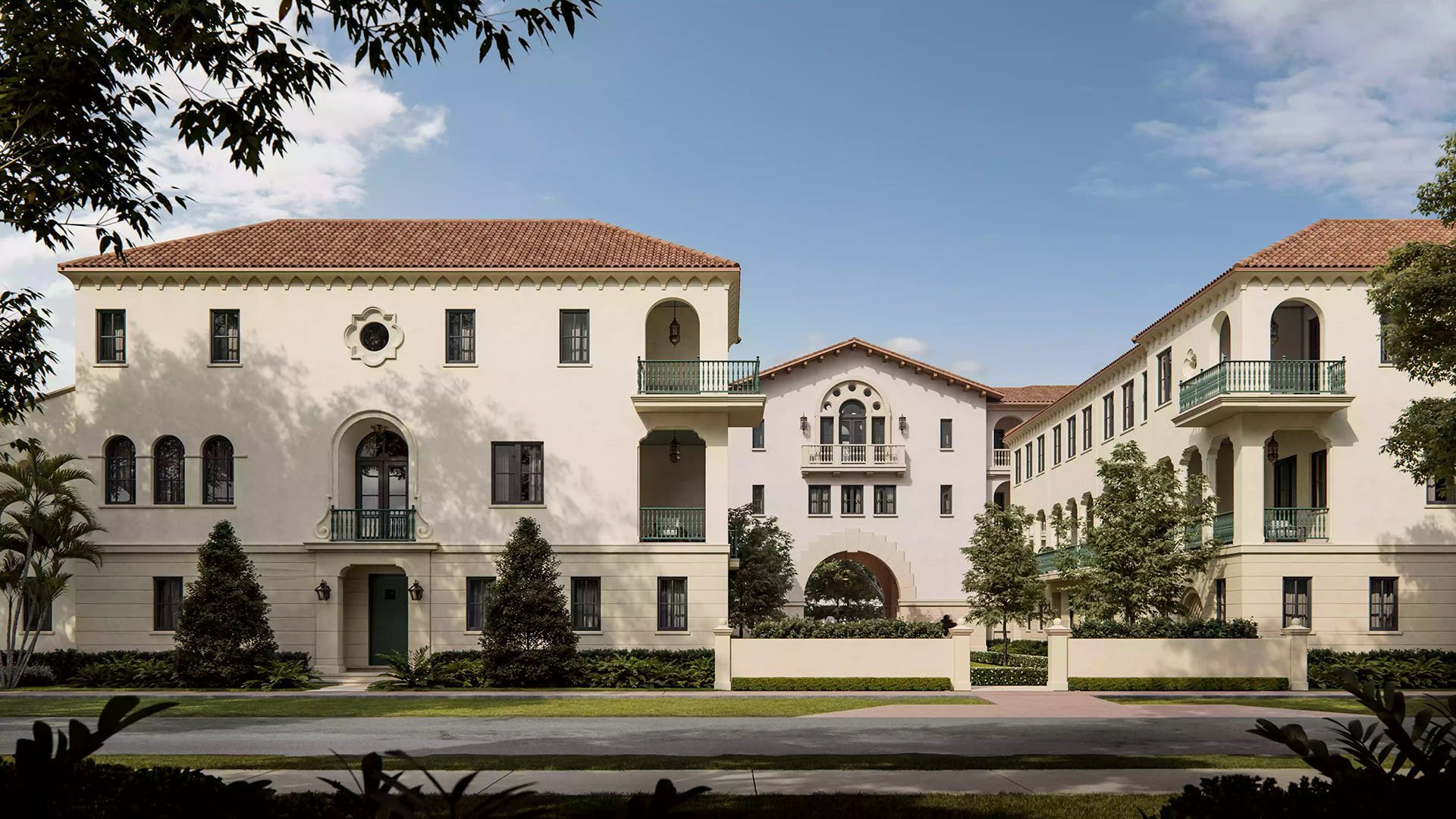
This is where smaller-scale luxury can be especially powerful. Boutique buildings and townhome-inspired residences often offer a more legible environment than larger towers. Residents can understand who belongs, where visitors wait, and how staff interact with owners. In settings such as The Village at Coral Gables, buyers tend to look closely at how the residential environment supports a sense of neighborhood while still preserving personal space.
For families, privacy also extends into routine. School runs, household staff, visiting relatives, drivers, tutors, trainers, and deliveries all create repeated access moments. The more elegant the building, the less visible those moments should feel. A well-balanced residence allows daily life to function smoothly without turning the home into a public lobby.
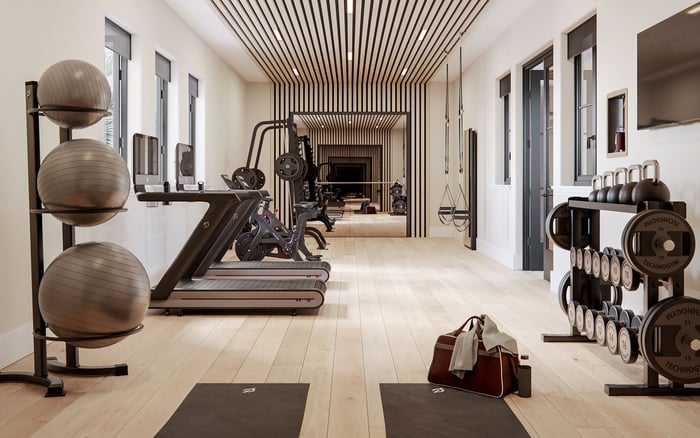
The challenge with amenities is not abundance. It is atmosphere. A pool, fitness suite, club room, library, garden terrace, or wellness area can add genuine value, but only if it feels reserved for residents rather than staged for strangers. In Coral Gables, buyers are often drawn to amenity programs that feel intimate, useful, and calm.
The best amenity spaces are not necessarily the largest. They are the ones that are well located, acoustically controlled, visually shielded, and simple to reserve or access. A fitness room overlooking a private garden may feel more luxurious than a grand gym exposed to a busy arrival court. A shaded outdoor lounge with limited seating may deliver more day-to-day satisfaction than an oversized deck that becomes difficult to manage.
Projects such as Ponce Park Coral Gables illustrate why buyers increasingly study the relationship between amenity and setting. The question is not just what is included, but whether the offering feels compatible with the quieter residential character that defines the area.
A privacy-led amenity strategy also considers hours, staffing, guest policies, and maintenance access. Residents may not ask for these details first, but they feel them immediately after moving in. If a wellness space is constantly traversed by staff, if a lounge is too visible from the street, or if guest access feels casual, the amenity loses its elevated quality.
Security in Coral Gables should feel like choreography. The most appealing systems are layered and discreet: controlled entry, trained personnel, monitored access points, secure parking, thoughtful lighting, and circulation patterns that prevent unnecessary crossover. Buyers do not want to feel watched. They want to feel protected without being reminded of it.
A gated community can offer one expression of that preference, especially for single-family buyers who prioritize controlled ingress and a residential enclave feeling. Condominium and townhome residences must solve the same issue through architecture and operations. The goal is to create a sequence in which each threshold makes sense: street to arrival, arrival to lobby, lobby to elevator, elevator to residence, and residence to private outdoor space.
Technology helps, but it is not a substitute for judgment. Cameras, access systems, and digital credentials are only as effective as the protocols behind them. In luxury residential settings, staff training is part of the architecture of security. A doorman or concierge who understands discretion can be more valuable than an elaborate system used inconsistently.
The best security is quiet enough that guests perceive hospitality first, while residents understand the level of control behind the scenes.
Privacy is often designed through sightlines. Where do windows face? How exposed is a terrace? Can neighboring residences look directly into living rooms? Does the pool area sit below a ring of balconies, or does it have its own garden enclosure? These are practical questions with luxury consequences.
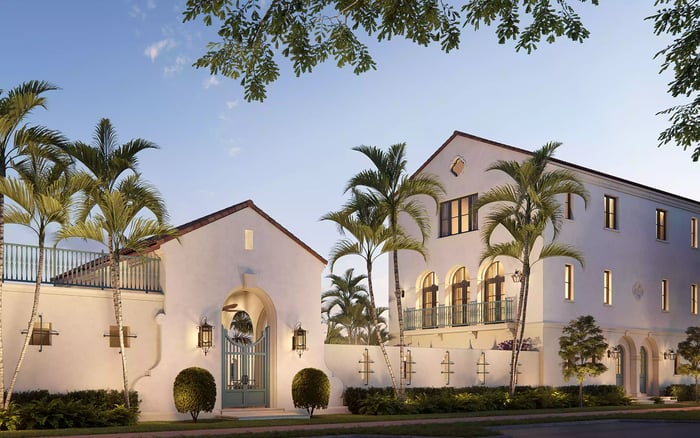
Coral Gables buyers often respond to residences that use landscaping as a privacy instrument. Hedges, palms, courtyards, loggias, shaded paths, and garden walls can soften the boundary between shared and private life. They also allow security to feel natural. A landscaped threshold can be more welcoming than a hard barrier, while still creating separation.
At Cora Merrick Park, for example, a buyer can use the project as a lens for evaluating how a residence participates in an established urban fabric while still preserving residential calm. The same principle applies across Coral Gables: architecture must manage connection and seclusion at once.
Inside the residence, privacy depends on plan logic. Bedrooms should feel removed from entertaining areas. Service entries, where available, should reduce household disruption. Terraces should be usable at different times of day without feeling exposed. Luxury is not simply a view; it is the ability to decide when to be visible.
Coral Gables appeals strongly to buyers who value routine, education, and established residential character. Private-school access is often part of a broader lifestyle conversation, but families also need the home itself to function securely. That means thinking beyond gates and cameras to the rhythm of everyday life.
Children’s friends, caregivers, tutors, coaches, vendors, and extended family all create access considerations. A building with clear guest protocols can make hospitality easier rather than more restrictive. Residents should be able to welcome people without surrendering control of the environment.
Package rooms, service corridors, pet access, bicycle storage, and parking all matter in this equation. These are not glamorous details, but they determine whether a property remains calm under real use. A beautifully furnished lobby cannot compensate for disorderly deliveries or poorly managed visitor flow.
For search and buyer shorthand, terms such as Coral Gables, gated community, private school, and pool often appear around this topic. Behind those words is a deeper preference: residences that let owners enjoy a full lifestyle while keeping household life composed and protected.
A polished presentation can make every amenity sound private. Buyers should go further. Ask how guests are registered, how vendors are scheduled, how staff are trained, how parking is accessed, and whether amenity spaces can be reserved. Ask what happens during high-use periods. Ask how the property distinguishes residents, guests, service providers, and short-term visitors.
It is also worth visiting at different times of day. Morning school departures, late-afternoon deliveries, evening guest arrivals, and weekend amenity use can each reveal something different. Privacy is not a static feature. It is a performance standard that must hold up across daily patterns.
Buyers comparing Coral Gables with nearby neighborhoods should pay attention to density and personality. A building that feels appropriate in Brickell or Miami Beach may feel too exposed in Coral Gables. Conversely, a residence without enough service may fall short for buyers accustomed to staffed luxury living. The ideal property blends the Gables preference for discretion with the convenience of a modern amenity package.
The result should feel effortless: a home that supports wellness, hosting, family life, and secure arrivals while keeping the owner’s private world intact.
Why is privacy so important in Coral Gables luxury residences? Buyers often choose Coral Gables for its quieter residential character, so amenities must support daily comfort without creating exposure.
Can a residence have strong amenities and still feel private? Yes. The key is thoughtful placement, controlled access, acoustic separation, and rules that keep shared spaces calm.
What security features should buyers evaluate first? Focus on arrival control, parking access, guest registration, staff training, lighting, and elevator or building entry protocols.
Are boutique residences better for privacy? They can be, especially when fewer residents share amenities, but execution matters more than size alone.
How should buyers evaluate a residential pool? Look at visibility, guest policies, seating density, sound control, landscaping, and whether the space feels genuinely resident-focused.
Do family buyers have different privacy needs? Often, yes. Families may need more structured visitor access for caregivers, tutors, relatives, school friends, and vendors.
Is visible security a luxury advantage? Not always. In Coral Gables, the most desirable security often feels discreet, layered, and hospitality-driven.
What role does landscaping play in privacy? Landscaping can screen views, soften boundaries, guide movement, and make controlled access feel elegant rather than defensive.
Should buyers ask about amenity rules before purchasing? Absolutely. Rules around guests, reservations, hours, and staffing can define whether amenities remain serene over time.
What is the ideal balance for a Coral Gables residence? The ideal balance is generous service and amenity access paired with calm circulation, controlled entry, and a strong sense of personal retreat.
To compare the best-fit options with clarity, connect with MILLION.
If branded residences are on your mind — as a home or as an allocation — we would be glad to share what we are seeing, privately.
Begin a quiet conversation