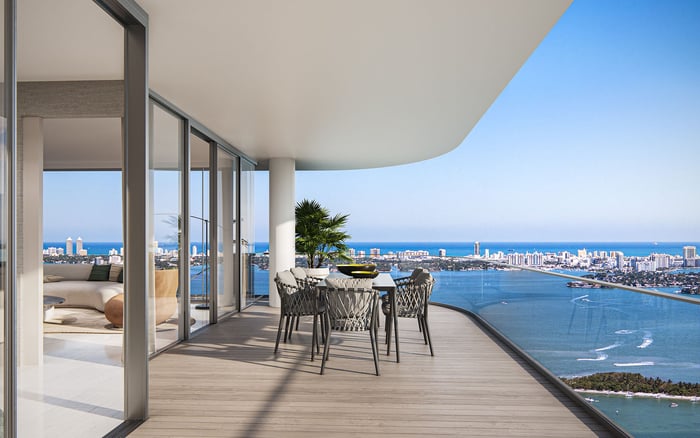
A discreet buyer’s guide to how Miami’s waterfront and skyline-view residences may preserve desirability over time, with emphasis on scarcity, sightline quality, lifestyle fit, and resale discipline.
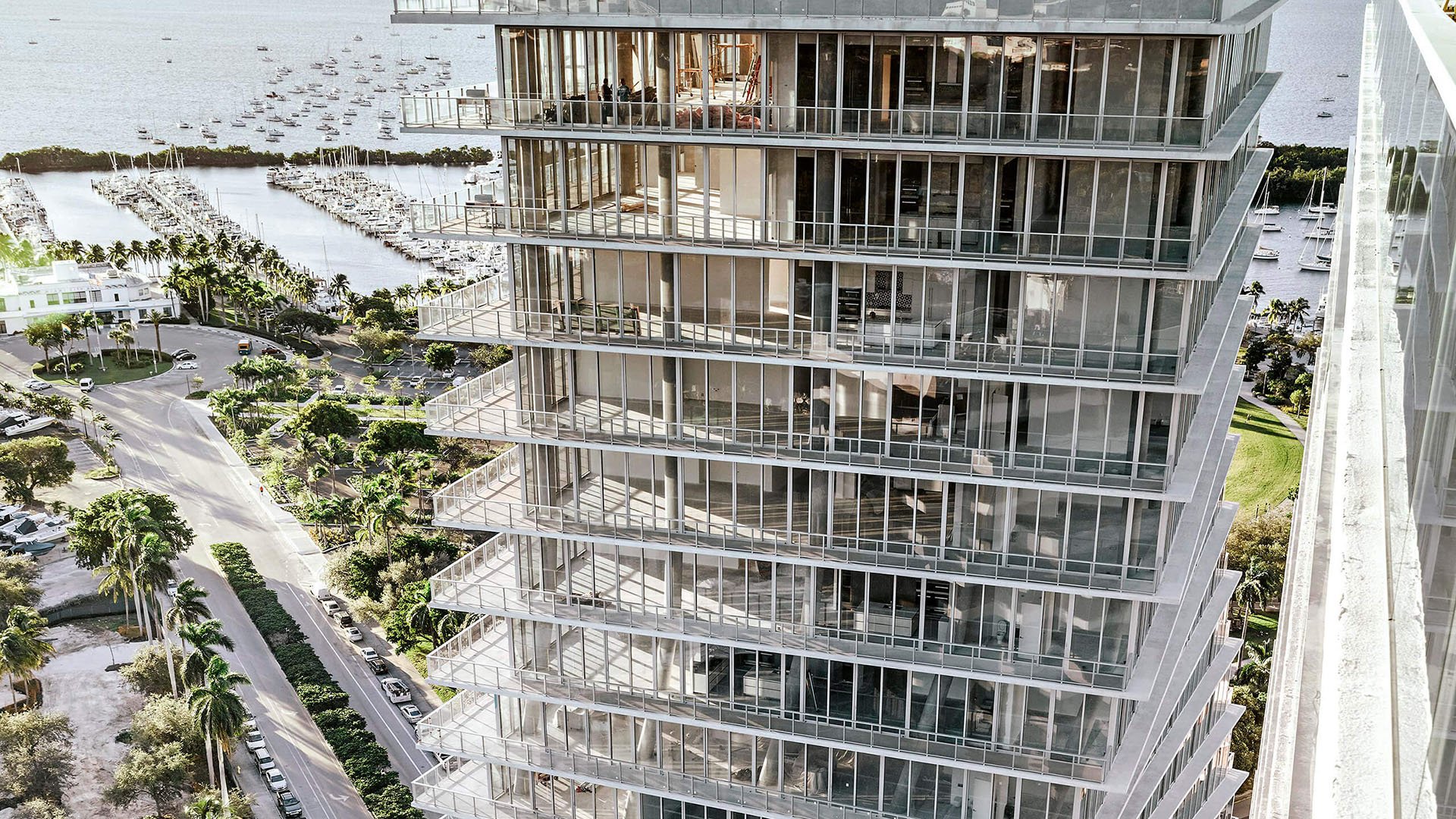
In Miami, a view is never a minor line item. It shapes first impressions, daily rhythm, the buyer pool, and the eventual resale conversation. Yet the most valuable outlook is not always the most dramatic. The question is not simply whether water outperforms skyline, or whether height automatically wins. The more useful question is which view is hardest to replace, easiest to live with, and most likely to remain desirable when the market becomes selective.
For luxury buyers, waterfront and skyline exposures serve different emotional purposes. Waterfront living offers calm, horizon, light, and a sense of resort-like remove. Skyline living offers energy, urban theatre, and the feeling of being inside Miami’s vertical evolution. Both can hold value, but they hold it for different reasons. The strongest purchase is usually the one where view, building quality, floor plan, neighborhood, and long-term scarcity all reinforce one another.
In practical buyer language, this is an investment conversation shaped by oceanfront frontage, waterview orientation, high-floor exposure, and new-construction execution, especially in Brickell, Edgewater, Downtown, Surfside, and the coastal neighborhoods that frame Miami’s luxury market.
Waterfront value begins with scarcity. There is only so much land that can offer direct exposure to the ocean, bay, Intracoastal, or a meaningful waterway. That scarcity can support long-term desirability when the residence also delivers privacy, usable outdoor space, strong building stewardship, and an interior plan that gives the principal rooms the best exposure.
The appeal is not merely visual. Waterfront buyers often value the way light enters the home, the feeling of separation from traffic, and the psychological ease of looking across open space. In Miami Beach, residences such as The Perigon Miami Beach speak to that enduring desire for water, architecture, and a quieter beachfront sensibility. In Surfside, The Delmore Surfside fits a similar buyer instinct: fewer distractions, a refined coastal setting, and a view experience that feels connected to place.
The caution is that not all water views are equal. A narrow canal view, a partial glimpse between neighboring towers, or an exposure compromised by nearby activity may not command the same loyalty as a broad, composed outlook. Buyers should distinguish between water as a label and water as a living experience. The best waterfront residences make the view feel effortless from the moment one enters the home, not only from a corner of the terrace.
Skyline views hold value differently. They are less about natural scarcity and more about urban relevance. A great skyline residence captures movement, architecture, light, and night-time drama. It tells the owner that Miami is not outside the window, but part of the home’s atmosphere.
This is why Brickell, Downtown, and Edgewater continue to attract buyers who want height, convenience, and a sense of connection to the city. A residence at The Residences at 1428 Brickell can appeal to a buyer who wants a sophisticated urban address with views that engage the financial district and the bay-facing cityscape. In Edgewater, Villa Miami sits within a neighborhood where the conversation often blends bay outlooks with skyline energy, making the distinction between water and city less binary.
The long-term question for skyline views is protection. A high floor can be compelling, but a buyer should consider what may happen around the sightline. If the outlook depends on a vacant parcel, a low-rise neighbor, or a narrow corridor through surrounding towers, the premium should be treated carefully. A skyline view that feels layered, broad, and architecturally rich tends to be more resilient than one dependent on a single angle.
Miami’s most compelling residences often blur the categories. A bayfront home may frame both water and skyline. A Downtown tower may offer Biscayne Bay by day and a glowing urban panorama by night. These hybrid views can be particularly attractive because they speak to multiple buyer profiles at resale.
For example, Waldorf Astoria Residences Downtown Miami belongs to a Downtown context where height and skyline identity are central to the appeal, while the broader Miami setting keeps water in the conversation. This type of duality can be powerful: the home feels metropolitan without giving up the larger visual signature of the city.
Hybrid views should still be judged with discipline. The best version is not a compromise, but a composition. Water, skyline, sky, and orientation should work together. If one must stand in a specific corner to understand the premium, the view may be more marketable in photography than in daily life.
Long-term value is rarely decided by the view alone. It is the interaction of view quality with fundamentals. A premier exposure in a weak building can be less compelling than a slightly less dramatic view in a building with better service, design, privacy, and maintenance culture. Buyers should evaluate the whole proposition.
First, consider irreplaceability. Direct oceanfront exposure or a broad bay view may be difficult to recreate. Second, consider permanence. A skyline view with protected corridors or meaningful height may retain its character better than a lower-floor view facing future development. Third, consider usability. A beautiful terrace that is too windy, too exposed, or poorly connected to the living areas may not deliver the lifestyle premium implied by the view.
Finally, consider the next buyer. A collector may pay for drama, but the broader resale audience often pays for clarity. The view should be immediately legible: wide water, elegant skyline, sunset orientation, sunrise calm, or a rare combination. If the value proposition requires too much explanation, the premium may be thinner in a more discerning cycle.
A waterfront buyer should ask whether the view feels private, whether principal rooms capture it naturally, and whether the building’s setting reinforces the sense of exclusivity. A skyline buyer should ask whether the exposure is high enough, wide enough, and architecturally interesting enough to remain compelling as the surrounding neighborhood matures.
The right answer also depends on lifestyle. If mornings, quiet, and horizon matter most, waterfront may be the more durable emotional purchase. If restaurants, culture, offices, and city energy define the week, skyline may be the more rational luxury. For many Miami buyers, the ideal is a residence that offers water by day and skyline by evening.
The most prudent approach is to pay for the view you will use every day, not merely the view that looks strongest in a presentation. In the ultra-premium segment, value follows lived quality. A residence that makes the owner pause every morning will usually communicate that same feeling to the next buyer.
Do waterfront views always hold value better than skyline views? Not always. Waterfront can benefit from scarcity, but skyline views can be highly resilient when height, orientation, and surrounding context are strong.
What makes a Miami water view more valuable? Breadth, privacy, natural light, and a direct relationship to the main living spaces matter more than simply being near water.
Are skyline views riskier than waterfront views? They can be if the sightline is vulnerable to future nearby construction. A broad, high, layered skyline exposure is generally more defensible.
Is a partial water view worth paying for? It depends on how often the view is visible in daily life. If it feels incidental, the premium should be approached carefully.
Which buyers prefer skyline views? Buyers who value urban energy, height, night-time drama, and proximity to dining, offices, and culture often gravitate toward skyline residences.
Which buyers prefer waterfront views? Buyers seeking calm, horizon, privacy, and a resort-like daily rhythm often find waterfront residences more emotionally durable.
Can a lower floor hold value with a good view? Yes, if the exposure is composed, private, and unlikely to be blocked. Height helps, but it is not the only measure of quality.
Should investors prioritize view or building quality? Both matter, but building quality, service, layout, and long-term appeal should support any view premium.
What is the best view for resale in Miami? The strongest resale views are easy to understand immediately: broad water, protected skyline, or a refined combination of both.
How should a buyer compare two residences with different views? Compare the daily experience, the permanence of the outlook, the floor plan, and the likely depth of the future buyer pool.
To compare the best-fit options with clarity, connect with MILLION.
If branded residences are on your mind — as a home or as an allocation — we would be glad to share what we are seeing, privately.
Begin a quiet conversation