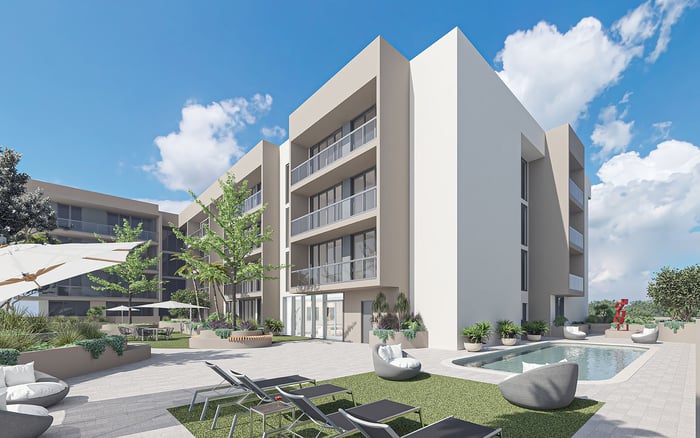
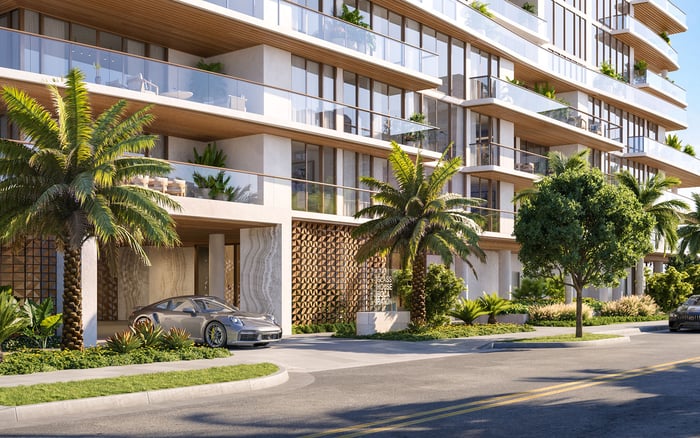
A buyer-oriented comparison of Coconut Grove’s Mr. C Tigertail Residences and OPUS, focusing on scale, privacy, finishes, services, and lifestyle fit.
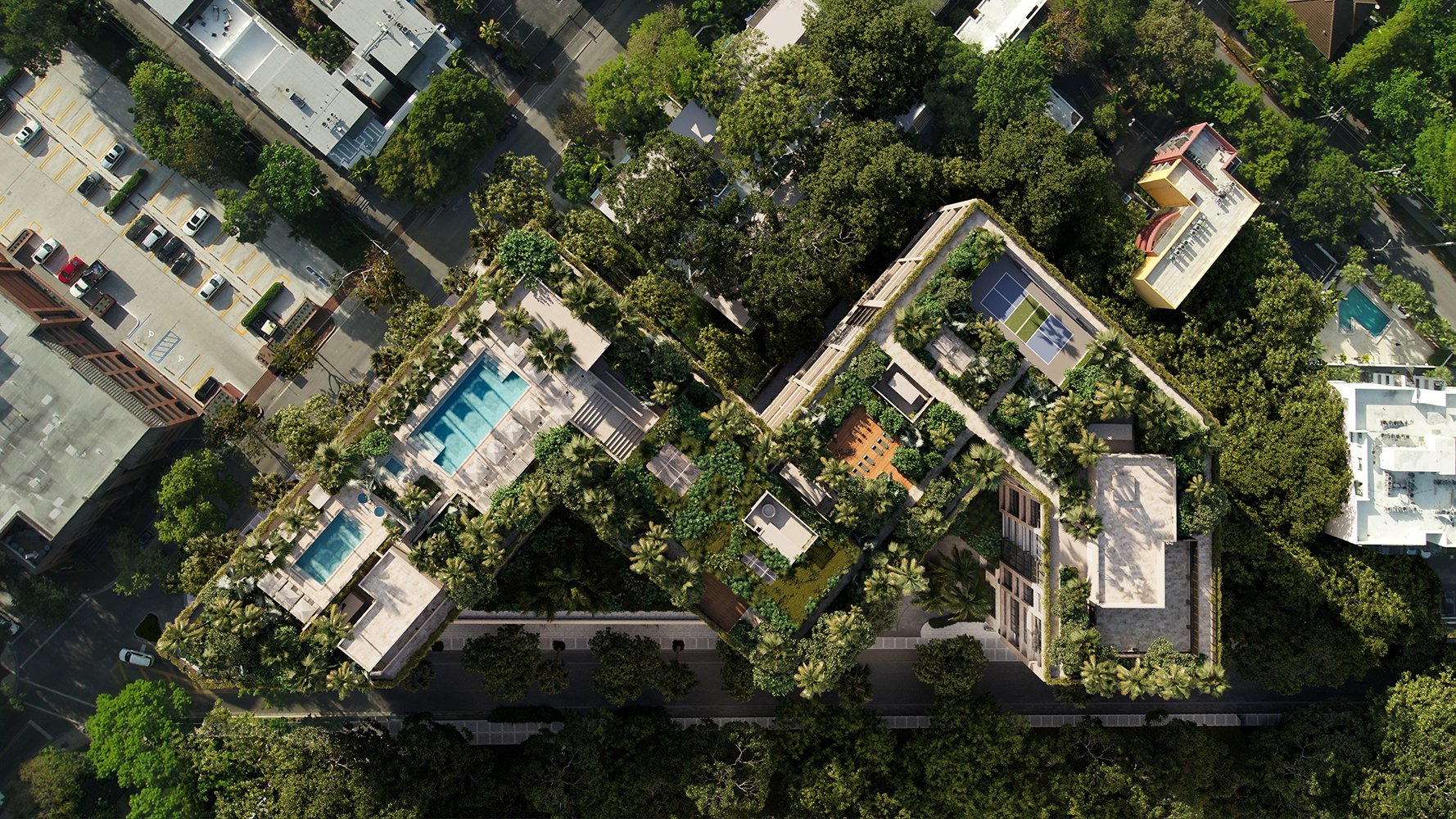
Coconut Grove’s luxury story has long been less about spectacle and more about rhythm. Think morning coffee before a walk under banyan canopies, a midday run toward the marina, and evenings that feel distinctly residential instead of resort-driven. For buyers focused on new construction, two names increasingly shape the decision set, each with a clear point of view.
On one side is Mr. C Tigertail Coconut Grove, a 21-story tower marketed with 125 residences across one- to four-bedroom layouts. On the other is Opus Coconut Grove, a 6-story, 14-residence offering that leans into scarcity and discretion.
Both speak to buyers who want the Grove’s intimacy without sacrificing modern specifications. The real difference is not simply price or floor plan. It is how you want the building to operate around you: as a quiet private address with minimal friction, or as a service-forward residence where the “hotel living” concept is central to daily life.
OPUS is boutique by definition. Fourteen residences changes the feel of everything: arrivals tend to be calmer, neighbors are fewer, and shared spaces often read as an extension of a private home rather than a programmed destination. Public materials emphasize privacy-forward planning, including semi-private elevator foyers and 12-foot ceilings, alongside a tech-ready baseline with pre-wiring for smart home automation and motorized window treatments.
Mr. C Tigertail, with 125 residences, trades that micro-scale intimacy for a broader amenity and service ecosystem. The project is positioned around a concierge-style, hotel-inflected model that pairs lifestyle amenities with a more structured sense of staffing and daily support. The right choice depends on whether you want your building to recede into the background, or to actively shape the tempo of your week.
At this price tier, the most meaningful interior distinction is rarely the mood board. It is the level of control, and how the developer intends the finished product to look and feel at delivery.
Mr. C Tigertail residences are marketed with 10-foot ceilings, floor-to-ceiling glass, private terraces, and “spa-like” bathrooms. Published specifications cite ItalKraft Italian cabinetry and Sub-Zero and Wolf appliances, along with European porcelain tile flooring and solid-core interior doors. Customization is presented as curated and controlled, typically through limited palettes rather than fully bespoke redesigns.
OPUS approaches interiors with similar discipline, but at a different scale. Development materials describe 12-foot ceilings and semi-private elevator foyers, with 3- and 4-bedroom residences planned for larger layouts and substantial outdoor terraces depending on the home. Kitchens are specified with Italian cabinetry paired with Miele and Sub-Zero and Wolf appliances. Finish descriptions include porcelain tile floors, stone or quartz countertops, and solid-core interior wood doors, all as marketed and subject to change.
Practically, both projects aim for a refined, brand-consistent delivery. If your priority is to buy, close, and enjoy a cohesive residence without managing a full design build-out, that approach can be a feature. If your goal is to reinvent the interiors from the studs, neither project is positioned as an open-ended canvas.
In South Florida’s new-construction market, amenity lists can look similar until you consider who will actually use them and how often.
Mr. C Tigertail’s positioning centers on “hotel living,” with concierge-style services and a suite of lifestyle amenities that, per marketing materials, includes a pool environment plus fitness and spa components. For many owners, the value lies in consistency: a reliable front-of-house experience, predictable service standards, and a building that can feel active even when you are in and out of town.
OPUS offers a concentrated amenity mix designed for a smaller ownership base: a rooftop pool and deck, a fitness center, spa rooms that include sauna and steam plus massage functionality, a business lounge, and wine storage or cellar features described in the project brochure. With only 14 residences, these spaces may feel more like private club rooms than public amenities.
Parking is also a meaningful point of distinction at OPUS, which is set to incorporate Klaus MultiBase G63 automated parking systems. For some owners, that reads as a clean, modern solution. For others, it is a lifestyle decision worth experiencing firsthand, particularly if multiple drivers, guests, or larger vehicles are part of daily routines.
Luxury in Coconut Grove is rarely about being seen. It is about being close, quietly, to what matters. Dinner Key Marina remains one of the area’s signature boating hubs and a meaningful lifestyle anchor for owners who want water access while staying in a residential neighborhood.
This is also why some buyers compare the Grove’s new offerings to Miami Beach. Miami Beach can deliver a more overt resort cadence, especially in buildings designed around hospitality.
For a hospitality-forward residential lens, some purchasers look at Shore Club Private Collections Miami Beach as a reference point for branded lifestyle thinking. Others consider the long-standing appeal of Setai Residences Miami Beach, where the expectation of service is woven into the identity of the address. And for buyers who prefer a quieter, legacy-oriented brand posture, The Ritz-Carlton Residences® Miami Beach often comes up as a benchmark for a more discreet version of hotel-adjacent living.
Those Miami Beach comparisons can be useful even if you ultimately buy in the Grove. They clarify the underlying question: do you want your home to feel residential first, or do you want it to feel like a private suite within a larger managed experience.
At this level, buyers tend to underwrite both lifestyle fit and execution risk.
OPUS publishes a phased payment schedule in project materials: 20 percent at contract, 10 percent at groundbreaking, 10 percent at top-off, and 60 percent at closing, with timing noted as subject to change. For some purchasers, that structure supports balance-sheet planning and keeps capital available for other allocations during the build cycle. It also reinforces a basic reality of pre-delivery purchases: timelines and specifications can evolve, and the contract should be reviewed with that flexibility in mind.
For Mr. C Tigertail, pricing is marketed from roughly $999,000 up to roughly $9 million depending on unit type and floor. The project’s address is 2678 Tigertail Ave, Miami, FL, and it is publicly associated with Arquitectonica for architecture and Meyer Davis Studio for interiors. Those are meaningful signals of design intent, but the day-to-day value still comes down to lived execution: layout efficiency, terrace usability, and how consistently the building delivers on its service promise once occupied.
Most buyers can narrow this choice quickly by defining a few non-negotiables.
First, decide your preferred social density. If you want a small community where you may recognize every resident and shared spaces rarely feel busy, OPUS’s 14-residence scale aligns naturally. If you want a fuller service environment and do not mind a larger resident population, Mr. C Tigertail’s 125 residences support that operating model.
Second, decide how much the building should do for you. Concierge-style living can be especially valuable if you travel frequently, entertain often, or prefer delegated logistics. Conversely, if you want your home to feel self-sufficient and private, a boutique building with a tightly edited amenity program can be the more elegant solution.
Third, examine the finish strategy with clear expectations. Both projects emphasize specified packages with high-end appliances and premium materials as marketed. If you prefer controlled choice and a cohesive delivered product, this is ideal. If you want fully bespoke interiors, align your expectations early.
Finally, treat the decision as lifestyle architecture, not just real estate. Coconut Grove rewards owners who value walkable routines, outdoor terraces, and proximity to marine life. The right building is the one that supports your rhythm without asking to be the main character.
What is the scale of Mr. C Tigertail Residences? It is marketed as a 21-story tower with 125 residences across one- to four-bedroom homes.
What is the scale of OPUS Coconut Grove? It is marketed as a 6-story boutique condominium with 14 total residences.
Where is Mr. C Tigertail located? Project materials place it at 2678 Tigertail Ave, Miami, FL in Coconut Grove.
Where is OPUS located? It is marketed at 3137 SW 27th Ave, Coconut Grove, FL 33133.
Who is credited for Mr. C Tigertail’s design? Architecture is attributed to Arquitectonica, with interiors by Meyer Davis Studio.
Who is credited for OPUS design? It is designed by Kobi Karp Architecture and Interior Design with interiors and design by João Armentano, per development materials.
How do ceiling heights compare? Mr. C Tigertail is marketed with 10-foot ceilings; OPUS is marketed with 12-foot ceilings.
What kitchen appliance brands are specified? Mr. C Tigertail materials cite Sub-Zero and Wolf; OPUS materials cite Miele plus Sub-Zero and Wolf, as marketed.
What is OPUS’s published payment schedule? It is marketed as 20 percent at contract, 10 percent at groundbreaking, 10 percent at top-off, and 60 percent at closing, subject to change.
What nearby lifestyle anchor is often cited in Coconut Grove? Dinner Key Marina is widely referenced as a major local boating hub.
For private guidance on Coconut Grove new-construction options, connect with MILLION Luxury.
If branded residences are on your mind — as a home or as an allocation — we would be glad to share what we are seeing, privately.
Begin a quiet conversation