
A discreet, buyer-oriented look at two very different luxury propositions on Brickell: boutique wellness-forward design at 2200 Brickell and branded, classic-material luxury at The St. Regis Residences, Miami. We compare what matters most in daily living: kitchens, baths, flooring, privacy, and the service-and-amenity stack that defines the St. Regis experience.
In South Florida’s ultra-premium market, “finish level” is no longer a simple ladder of nicer stone and brighter fixtures. It reads more like a living philosophy expressed through materials, layout discipline, and the operational layer you experience once the door closes.
Brickell makes this divide easy to see. Buyers are comparing a boutique, wellness-forward building to a branded tower where service is part of the product.
That is the lens for 2200 Brickell, publicly presented as a five-story condominium with 105 residences in South Brickell, and St. Regis® Residences Brickell, publicly disclosed as a 50-story bayfront tower planned for 152 residences at 1809 Brickell Avenue. Both signal luxury, but they answer a different question: what should your home do for you every day?
A useful way to compare premium residences is to separate finish level into buyer-relevant categories that show up in daily living:
In Brickell, these categories map cleanly to two archetypes: boutique discretion and branded hospitality.
2200 Brickell is positioned as a smaller-scale alternative to the district’s high-rise rhythm: five stories, 105 residences, and a sensibility the team describes as a contemporary “urban oasis.” Interiors are credited to ODA New York, signaling modern, spatially efficient planning rather than overt classicism.
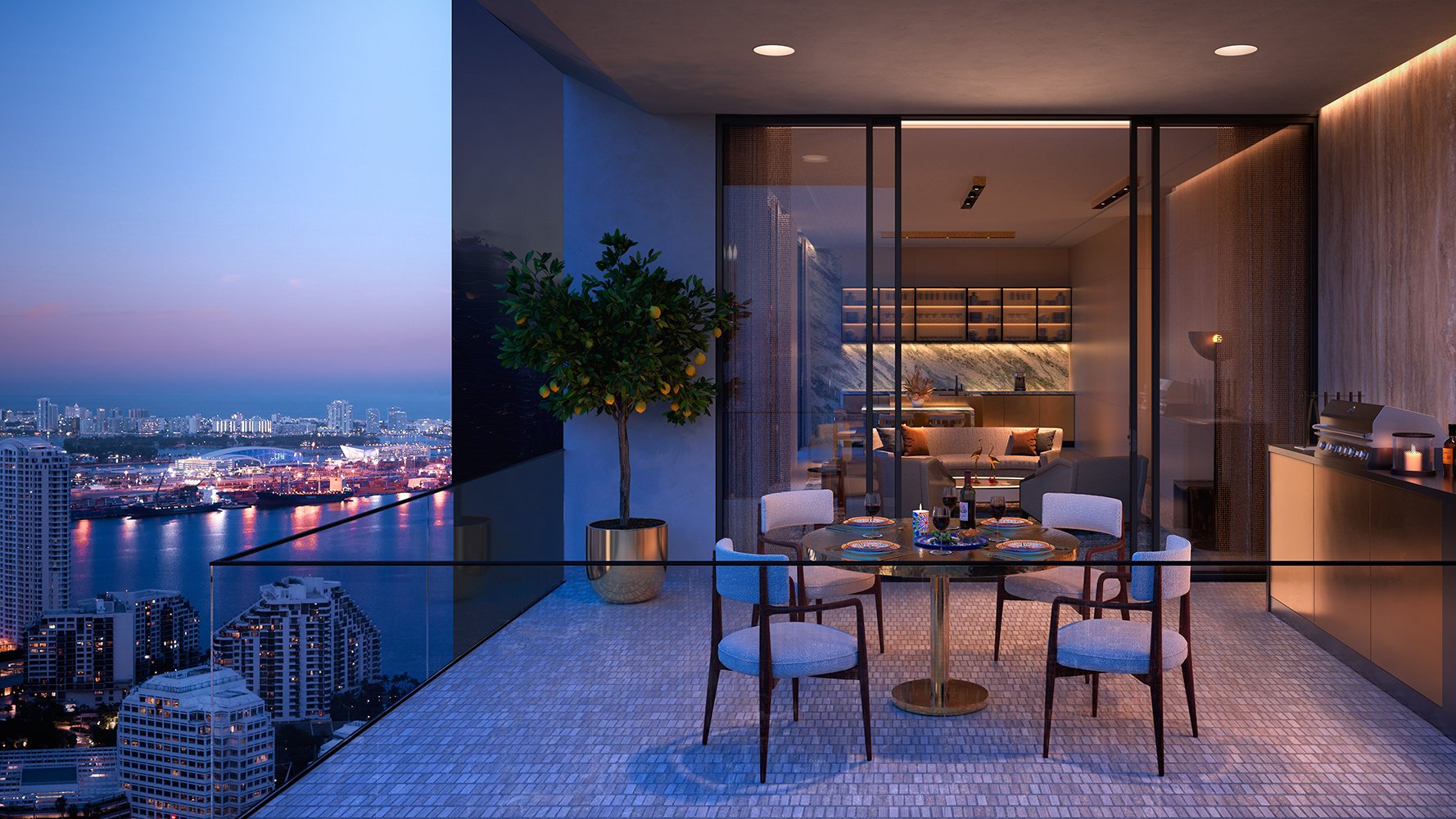
The lifestyle thesis centers on indoor-outdoor living. Public materials emphasize expansive terraces and balconies as a defining feature. In Miami, that matters because the terrace is rarely secondary. For many owners, it becomes the most used “room,” especially if you want Brickell access without an always-on pace.
From a specifications standpoint, kitchens are publicly described with custom cabinetry and stone countertops, paired with Thermador and Bosch appliances. Flooring is specified as large-format tile in living areas with engineered wood in bedrooms. That pairing tends to appeal to buyers who value resilience, simpler maintenance, and comfort underfoot.
A defining note is the marketing focus on the WELL Building Standard, framing finishes and systems around resident health and well-being. In luxury terms, this is less about one signature feature and more about intent: the home should feel restorative, not only impressive.
St. Regis Residences, Miami is publicly positioned with Robert A.M. Stern Architects and Rockwell Group for architecture and interiors. The narrative references Miami’s coastal identity and historic trading heritage, pointing to a refined, classic luxury vocabulary rather than minimalism.
Where 2200 Brickell leans into boutique restraint, St. Regis leans into completeness. Residences are specified with custom European marble flooring. Kitchens are described with custom Italian cabinetry and a fully integrated Sub-Zero and Wolf appliance package. Plumbing fittings for kitchens and baths are specified as Dornbracht, a clear signal of fixture pedigree.
The distinction is not simply higher-cost materials. It is the expectation that the operations and amenity stack match the promise of the brand. The St. Regis differentiator is its signature Butler Service, positioning the building as a managed lifestyle rather than a standalone address.
Kitchens telegraph an intended owner more reliably than any lobby rendering.
At 2200 Brickell, the publicly disclosed Thermador and Bosch pairing reads as practical luxury: strong performance, modern profiles, and a program built for daily use. With custom cabinetry and stone countertops, the emphasis is on clean detailing and functional flow.
At St. Regis, the fully integrated Sub-Zero and Wolf package is a different statement aligned with branded ultra-luxury expectations. Integrated appliances keep the room visually quiet; the luxury is in engineering, fit, and millwork coordination. For many buyers, “integrated” is shorthand for a higher tier of cabinetry planning.
If you entertain often and want the kitchen to read as an extension of architecture, St. Regis has the paper advantage. If you prioritize low-fuss performance within a contemporary palette, 2200 Brickell can feel more effortless.
Both projects lean into spa cues, but they arrive there through different material strategies.
2200 Brickell’s primary bathrooms are publicly presented with double vanities, stone countertops, and spa-style shower features including rainfall showers. Combined with engineered wood in bedrooms and large-format tile in living areas, the result is “livable luxury” that aims to stay crisp while tolerating Miami humidity and daily wear.
St. Regis elevates the sensory experience through marble. Primary bathrooms are specified with marble surfaces and spa components including freestanding tubs and oversized showers. Marble flooring is also specified in the residences. The effect is timeless and materially rich, but buyers should be candid about stewardship. Marble typically requires more care than tile, including sealing and greater susceptibility to etching and staining.
Neither approach is universally better. The right choice depends on whether you want a high-end daily driver or a private-suite feel with museum-grade materials.
For many luxury buyers, privacy is the real purchase, and circulation creates it as much as square footage does.
At 2200 Brickell, the boutique scale is itself a privacy feature. Fewer residences typically means fewer encounters, fewer shared elevator moments, and a calmer cadence. Amenities skew toward daily-use wellness and recreation, including a rooftop pool deck and fitness and wellness spaces, rather than large, hotel-style interior programming.
St. Regis advances privacy more explicitly. Residences are specified with private elevator access and an elevated entry experience. This is a decisive differentiator beyond finishes because it changes the feeling of arrival and the sense of separation once you are home. Add the branded service layer, and the overall environment becomes more managed and more insulated.
A boutique building can feel luxurious precisely because it avoids over-programming. If you prefer amenities that support routine, such as workout, swim, and reset, you may gravitate toward a roof deck and wellness spaces you can use without making an occasion of it.
A branded tower aims for a different outcome: broader amenity programming and service intended to extend the home into a managed lifestyle. St. Regis is publicly described with extensive offerings, including spa and wellness, multiple pools, and marina-related lifestyle positioning. The operative idea is that the building itself becomes a destination.
This is where buyer self-awareness matters. Some owners want to curate life outside the building. Others want the building to curate for them.
South Florida buyers increasingly cross-shop neighborhoods, especially when the decision is more about cadence than commute. In Brickell, luxury often means vertical convenience and proximity to the city’s core. In Miami Beach, luxury is frequently framed around resort adjacency, sand, and a more leisure-forward pace.
If your benchmark is Miami Beach living, it can help to sanity-check your preference set against the market’s most discussed residential offerings. Buyers who track new, design-forward city energy often follow Five Park Miami Beach. Those drawn to legacy glamour and a private-collection sensibility tend to watch Shore Club Private Collections Miami Beach. And for an established, globally recognized luxury address, Setai Residences Miami Beach often enters the conversation.
The point is not that Brickell should mimic Miami Beach. It is that your ideal finish level usually follows your ideal daily rhythm.
Use these final filters to keep the decision grounded:
The best finish is the one that still feels excellent on a Tuesday morning, not only in listing photos.
Is 2200 Brickell a high-rise? No. It is publicly described as a five-story boutique condominium with 105 residences.
Who designed 2200 Brickell’s interiors? Interiors are credited to ODA New York, with a contemporary “urban oasis” concept.
What is the core lifestyle feature at 2200 Brickell? Indoor-outdoor living, with expansive terraces and balconies highlighted in public materials.
What appliances are specified at 2200 Brickell? Thermador and Bosch appliances are publicly specified, alongside custom cabinetry and stone countertops.
Where is St. Regis Residences, Miami planned? It is publicly disclosed for 1809 Brickell Avenue on the bayfront.
Who is associated with St. Regis’ architecture and interiors? Robert A.M. Stern Architects is positioned for architecture, with Rockwell Group for interiors.
What appliances are specified at St. Regis Residences, Miami? A fully integrated Sub-Zero and Wolf appliance package is publicly specified, with custom Italian cabinetry.
What fixtures are specified at St. Regis for kitchens and baths? Dornbracht plumbing fittings are publicly specified.
Is marble flooring a plus or a maintenance risk? It can be both. Marble presents beautifully, but it typically requires more ongoing care than tile.
Which option offers a more service-driven experience? St. Regis, due to its branded hospitality positioning and the signature St. Regis Butler Service.
For private guidance on evaluating finish level and lifestyle fit across Brickell and beyond, visit MILLION Luxury.
If branded residences are on your mind — as a home or as an allocation — we would be glad to share what we are seeing, privately.
Begin a quiet conversation
.jpg&width=700&height=438&fit=cover)