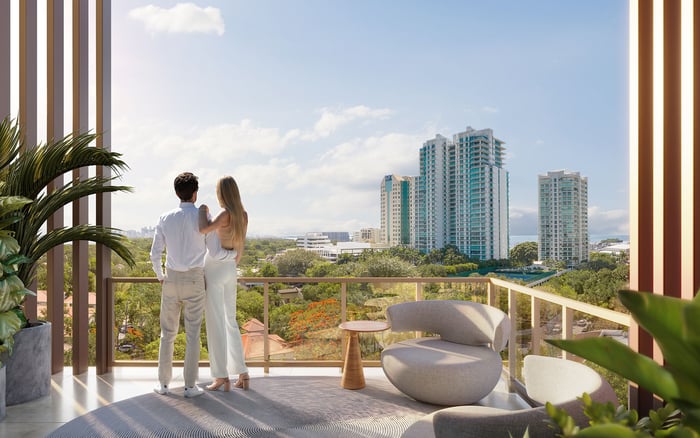
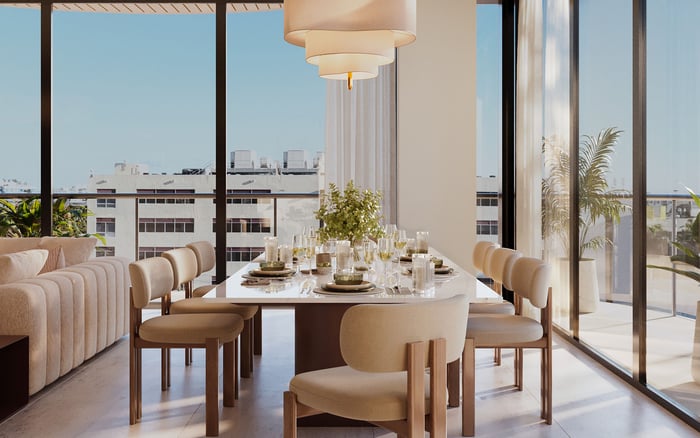
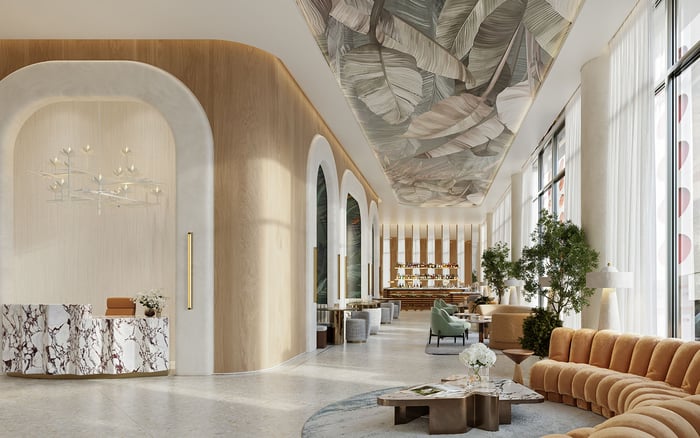
In Coconut Grove, the luxury conversation often narrows to a single question: do you want quiet, curated privacy, or a fully staffed, hotel-caliber lifestyle that feels effortless day after day? This comparison sets **Opus Coconut Grove** against **Four Seasons Residences Coconut Grove** through the lens of discretion, service, daily rhythms, and long-term ownership priorities.

Coconut Grove has a way of making luxury feel personal. The tree canopy, walkable streets, and waterfront pockets reward owners who value rhythm over spectacle. That is why a comparison between Opus Coconut Grove and Four Seasons Residences Coconut Grove is less about which building is “better,” and more about which one aligns with how you actually live.
At a high level, Opus speaks to buyers who want boutique privacy and a smaller, more intimate residential experience. Four Seasons Residences Coconut Grove appeals to those who want high-rise living anchored by a service philosophy associated with a global hospitality flag-and the expectations that come with it. Both can be exceptional. The difference is the operating style: quiet control versus curated convenience.
Privacy starts before you step inside your residence. It is shaped by how you arrive, how often you encounter unfamiliar faces, and how consistent the day-to-day atmosphere feels.
Boutique buildings like Opus tend to create a more residential cadence. Fewer neighbors typically means fewer moving parts: fewer simultaneous arrivals, fewer competing demands on staff, and less “lobby theater.” For many owners, that translates into a clearer, calmer definition of privacy. You are not anonymous, but you are also not on display.
A high-rise, service-led residence like Four Seasons often delivers a different kind of comfort: you can stay largely hands-off. For certain buyers, privacy is less about low density and more about professional management and controlled access. There is reassurance in knowing arrival and daily logistics are handled with a level of formality that mirrors a luxury hotel.
The essential question: do you prefer privacy by scale (fewer residences, fewer touchpoints), or privacy by protocol (more staffing, more structure)?
Service is not one thing. It is a spectrum, and the right choice depends on how often you use the home-and how much you want to outsource.
With a boutique profile, Opus is often best suited to owners who prefer to keep their lifestyle in-house: they may have trusted vendors, personal staff, or simply want a quieter, less intermediated relationship with their home. In these residences, the staff experience can feel more personal and more consistent, because the community tends to be smaller.
Four Seasons Residences Coconut Grove, by contrast, aligns with a higher-touch service identity. The advantage is clear for certain profiles: second-home owners, frequent travelers, and anyone who values predictable execution. In this model, day-to-day needs can be routed through building operations in a way that feels seamless.
The tradeoff is not quality. It is culture. Boutique living often rewards owners who do not mind managing a few decisions themselves. High-rise service living rewards owners who want fewer decisions in the first place.
Amenities are often marketed as checklists, but owners experience them as mood.
In boutique settings, amenities tend to feel curated: the spaces you actually use, designed to be calm, not crowded. Owners who prioritize wellness, quiet work time, and a more private lifestyle often gravitate to this approach. The common areas feel like an extension of home, not a destination.
In a high-rise-especially one associated with a luxury flag-amenities can feel more programmed and more socially active, even when they remain elegant and controlled. That can be a positive if you like the sense that the building is “alive” with service and activity. It can also be a negative if you want common spaces that stay quiet and lightly used.
For buyers who like the Grove but want a different amenity mood nearby, it is worth tracking how other Coconut-grove inventory positions itself, including Arbor Coconut Grove and The Lincoln Coconut Grove. Not as substitutes for Opus or Four Seasons, but as reference points for how “boutique” and “full service” can show up in very different ways.
Ultra-luxury buyers rarely regret finishes. They regret friction.
The livability test is what happens after the first month of ownership: deliveries, guest arrivals, package handling, service access, noise management, and how easily you can leave for a weekend without worrying about the home. A boutique residence can feel wonderfully simple, but simplicity can also mean being comfortable with a more owner-directed approach to certain logistics.
In a high-rise service environment, many of those frictions are designed to be absorbed by the building. The expectation is consistency: a standardized process for access, security, and resident support. For owners who travel frequently, that operational consistency can be the difference between a home you use and a home you merely own.
If your lifestyle includes extended stays, a boutique residence can read more like a true “local” home in Coconut-grove. If your lifestyle includes frequent in-and-out travel, a service-led residence often feels like a private club that happens to be your address.
Most buyers already know their preference, even if they have not given it a name.
tends to fit buyers who:
prioritize discretion and a lower-profile residential experience
want fewer interactions, fewer shared spaces, and a calmer building tempo
value the feeling that the building belongs to residents first
Four Seasons Residences Coconut Grove tends to fit buyers who:
want a staffed environment and a hospitality-grade service posture
travel often and value operational support and consistency
like high-rise living and the predictability of a structured experience
Neither choice is inherently more “luxury.” They are simply different philosophies of luxury.
In the top end of South Florida, resale performance is often shaped by narrative as much as by comps.
Boutique properties can benefit from a scarcity story: a limited number of residences and a low-supply feel that can support long-term desirability, especially among buyers who do not want to share an elevator ride with half the neighborhood. When the product is executed well, the scarcity factor can be durable.
Brand-forward, service-oriented residences can benefit from brand gravity: recognition, buyer comfort, and the perceived reliability of an established service standard. For certain buyers, that recognition can reduce perceived risk, supporting liquidity when markets become selective.
A practical way to frame it: boutique scarcity can resonate with buyers who shop with emotion and privacy-first priorities. Brand gravity can resonate with buyers who shop with operational certainty in mind.
A showing can look perfect and still mislead you. During tours, focus on questions that expose operating reality.
What is the building’s daily traffic pattern? Not just at noon on a weekday, but on weekends and evenings.
How does the building handle guest access and short-notice arrivals? Your lifestyle determines whether this matters.
How are service requests managed, and what is the resident experience of follow-through? Boutique often means personal. High-rise often means standardized.
What is the sound and privacy feel in common areas? Listen for echo, crowding, and the pace of movement.
What does the building optimize for: resident calm or activated convenience? You can sense it within minutes.
This is also where it helps to understand Coconut Grove’s broader luxury context. Buyers comparing the Grove often cross-shop waterfront and island-adjacent living such as Vita at Grove Isle, not because it matches the same exact lifestyle, but because it clarifies what you are truly paying for: intimacy, service, views, or access.
If you want luxury that feels private, quiet, and unmistakably residential, Opus Coconut Grove makes sense as an expression of boutique living in Coconut-grove. If you want luxury that feels orchestrated, supported, and service-led, Four Seasons Residences Coconut Grove delivers the high-rise lifestyle many owners prefer when time is their most limited asset.
The right choice is the one that removes friction from your daily life, not the one that photographs better.
Is Opus Coconut Grove better for buyers who value privacy? Often, yes, because boutique living typically means fewer neighbors and a quieter daily cadence.
Do Four Seasons Residences Coconut Grove owners generally prioritize service? Yes, the appeal is commonly the expectation of a high-touch, hospitality-aligned experience.
Which option feels more “local” to Coconut Grove? Many buyers find boutique buildings feel more residential, while high-rise service living feels more managed.
Which is more suitable for frequent travelers? A service-led residence is usually preferable when you want the building to handle logistics consistently.
Will I see more activity in a high-rise setting? Typically yes, as more residences and staffing often create a more active lobby and amenity rhythm.
Is a boutique building always quieter? Not always, but lower density often reduces shared-space traffic and day-to-day interruptions.
How should I compare amenities between the two? Compare how you will actually use them: calm, lightly used spaces versus activated, service-driven spaces.
Are branded residences always easier to resell? Not always, but brand recognition can widen the buyer pool for those seeking operational certainty.
What should I pay attention to during tours? Focus on arrival, access control, staff responsiveness, and the real feel of common areas at peak times.
Can I cross-shop other Grove projects to clarify my preference? Yes, touring nearby options can quickly reveal whether you prefer boutique calm or full-service energy.
To compare the best-fit options with clarity, connect with MILLION Luxury.
If branded residences are on your mind — as a home or as an allocation — we would be glad to share what we are seeing, privately.
Begin a quiet conversation