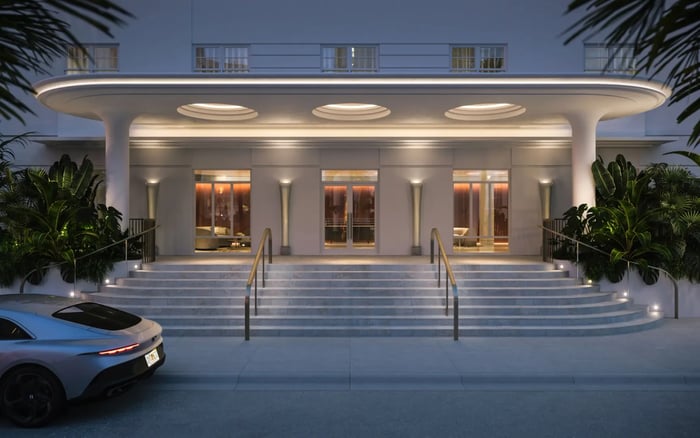
International demand is no longer a headline in South Florida. It is the operating reality of the new luxury market, especially in condo-forward neighborhoods where service, security, and global brand signals matter as much as views. Here is what is pulling capital to Miami and Miami Beach, why branded residences have become the preferred “lock-and-leave” asset, and what sophisticated buyers should pressure-test before they sign a contract.
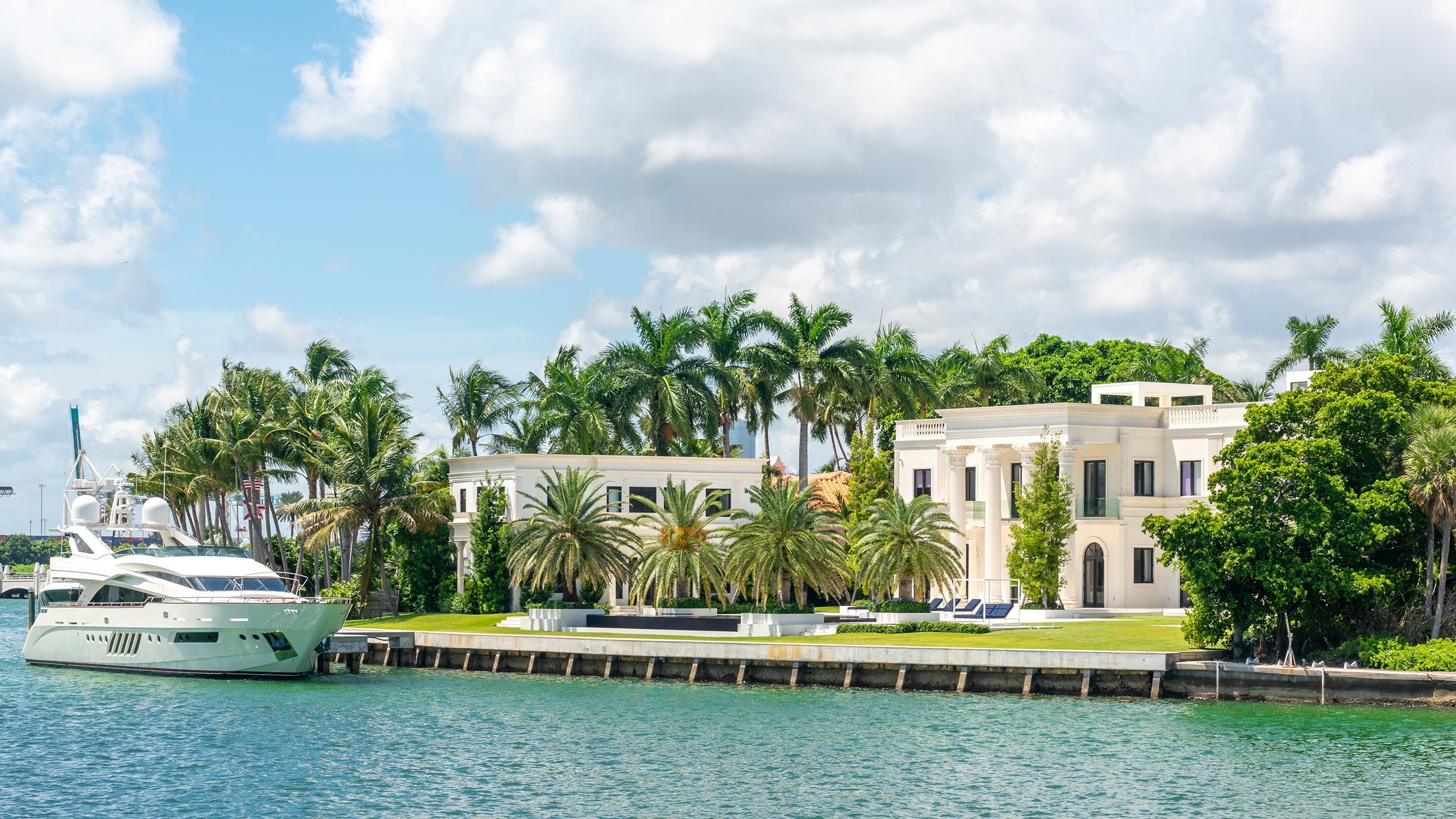
Miami’s luxury market now operates like a true international city, not a seasonal resort punctuated by occasional trophy closings. It has been profiled as the world’s leading second-home market for ultra-high-net-worth individuals, including more than 13,200 second-home owners worth $30 million or more. That scale resets expectations. Privacy becomes assumed, building operations must be impeccable, and demand stays active year-round as buyers benchmark Miami against London, Dubai, and the Riviera.
In South Florida, the liquidity story matters as much as the lifestyle story. The region recorded the second-most $10 million-plus home sales on record, with 361 sales. That figure signals depth, not a handful of anomalies. For international and domestic buyers alike, it supports a simple premise: a residence can be enjoyed as a sanctuary while still behaving like a tradeable asset.
Global capital continues to flow most efficiently into new-construction condos, pre-construction offerings, and condo conversions. A Miami Association of Realtors report said international buyers purchased 52 percent of South Florida new-construction and related units over a roughly 22-month period, up from about 49 percent in the comparable prior period. The same reporting noted buyers from more than 73 countries, underscoring breadth rather than reliance on a single source market.
Another Miami Association of Realtors release described global buyers purchasing 49 percent of South Florida new-construction units, with the majority from Latin America. The point is not merely that demand is strong. It is that many international purchasers are comfortable with the condominium format here, where transactions can be more straightforward than in co-op heavy markets that involve board approvals and layered restrictions.
That preference for clarity helps explain why Downtown and Miami Beach continue to draw attention. Buyers deciding across jurisdictions typically prioritize predictable execution: clean title, transparent building governance, and professional management that feels consistent with other global cities.
Branded residences are not just a design label. They are an operating model aligned with how many global owners use a second home: arrive with minimal friction, leave without anxiety, and trust that the property is cared for at an institutional standard.
Across South Florida, the branded-residence boom has been positioned as a major draw for international and second-home buyers seeking hotel-style service, security, and a lock-and-leave experience. In practice, the brand often functions as shorthand for staffing, training, and systems. For the buyer, that can translate into consistent arrival protocols, discreet package handling, and concierge capability that reads more like a private club than a conventional condominium.
In Downtown, Aston Martin Residences Downtown Miami captures this convergence of global identity and real estate. It is promoted as a 70-story tower with 391 residences. The branding serves a dual role: signaling quality to international audiences and anchoring a lifestyle narrative that is instantly legible, even to buyers still learning neighborhood nuances.
At the top of the market, privacy is not an amenity. It is the asset. The premium for secure enclaves and scarce waterfront positions has been widely covered, including a reported $105 million sale for a waterfront lot on or near Indian Creek. Deals at that level are less about a structure and more about control, meaning control over sightlines, access, and the ability to live without scrutiny.
Miami’s capacity to clear nine-figure trades has also been reinforced by a record-setting $120 million sale on Star Island, highlighted in a Miami-Dade top-sales roundup. Add widely reported ultra-luxury allocations by prominent tech wealth, including Fox Business coverage of Larry Page’s Miami purchases totaling $173.4 million for two Coconut Grove estates, and the pattern is clear. The buyer pool is comfortable writing checks historically associated with legacy coastal markets.
Condominiums participate in that same narrative. South Florida nine-figure sales coverage reported an $86 million penthouse sale at The Surf Club in Surfside, proof that fully serviced condo living can command estate-level pricing when the product is truly rare.
In Miami Beach, the appeal is often less about raw square footage and more about how the residence performs day to day: arrival, discretion, and the feeling of being both protected and unbothered.
For buyers who want oceanfront scarcity paired with hospitality DNA, Shore Club Private Collections Miami Beach is marketed as a limited collection of 49 oceanfront residences, with stated pricing spanning roughly $6 million to $40 million. The key word is limited. In a global luxury market, scarcity tends to be the most durable feature.
For those drawn to an established, internationally recognized lifestyle footprint, Setai Residences Miami Beach reflects the enduring value of a proven service platform. Many second-home owners are not looking to manage Miami. They want Miami managed for them, quietly, consistently, and with taste.
And for buyers who prioritize a brand synonymous with operational rigor, The Ritz-Carlton Residences® Miami Beach aligns with the broader shift toward residences that function like private addresses supported by hotel-caliber back-of-house operations.
Certain motivators are repeated because they are structurally meaningful. Florida’s lack of state income tax is frequently cited by high earners weighing residency and property ownership. Florida’s homestead protections are also commonly referenced as an asset-protection feature for qualifying primary-residence owners.
Sophisticated buyers, however, treat these advantages as a starting point. International purchasers, in particular, can face unique U.S. estate-tax exposure, which may influence how a Miami purchase is structured. These decisions are highly fact-specific. The practical best practice is to align early with qualified cross-border tax and legal advisors and ensure the ownership plan matches the intended use case: true primary residence, second home, or investment.
On financing, foreign-buyer guides note that South Florida lenders may offer programs for foreign nationals, often requiring higher down payments and reserves than U.S. borrowers. That expands options beyond all-cash, but it also affects liquidity planning, especially in pre-construction where buyers must manage staged deposits.
Pre-construction remains a favored entry point because it offers a curated way to buy into a building’s vision before it is fully priced by resale comps. It can also match global planning timelines: secure a position today, then build out residency planning, family scheduling, and furnishing strategy as delivery approaches.
International participation in new-construction purchases shows this is not niche behavior. It is a dominant channel. The discipline is to treat pre-construction as both lifestyle and contract. Understand the deposit schedule, the rules around assignments, and the operational model that will be in place at delivery. Branded residences can reduce uncertainty around service standards, but buyers still need clarity on what is included, what is à la carte, and how the building will be managed over time.
In luxury circles, residency conversations surface quickly, and Miami is no exception. The EB-5 Immigrant Investor Program is frequently referenced in Miami luxury marketing, with commonly cited minimum investment figures of $1.05 million, or $800,000 in a targeted employment area, tied to job-creation requirements.
The key is to separate marketing from suitability. EB-5 is a specialized pathway with specific compliance rules, timelines, and risk considerations. Buyers evaluating it should treat it as a distinct decision alongside the real estate purchase, not automatically the same decision.
In current Miami market commentary, “ultra-luxury” is often described as starting around $5 million to $10 million-plus for condos and $10 million-plus for single-family homes. This stratification explains why the market can feel simultaneously broad and rarefied: the upper tiers have expanded, while true trophy assets remain scarce.
The implication for buyers is straightforward. If the requirement is privacy plus service plus long-term desirability, the field narrows quickly. In that narrow lane, product quality, management credibility, and neighborhood resilience matter more than short-term headlines.
Why is Miami considered a leading second-home market? Miami has been profiled as the world’s leading second-home market for ultra-high-net-worth individuals, supported by a large base of $30 million-plus second-home owners.
How significant are international buyers in South Florida new construction? Recent reporting from the Miami Association of Realtors stated international buyers purchased 52 percent of new-construction and related units over a roughly 22-month period.
Are foreign buyers concentrated in one region? Demand is diversified across 73-plus countries, though reporting also notes Latin America represents a majority share in some new-construction segments.
Why do international buyers often prefer condos in Miami? Miami’s condo-forward inventory can be more straightforward to purchase than co-op heavy markets that may involve board approvals and additional restrictions.
What is driving the popularity of branded residences? Branded residences are associated with hotel-style service, security, and lock-and-leave operations that align with second-home usage.
Is ultra-luxury liquidity real, or just trophy deals? South Florida recorded 361 sales of $10 million-plus homes, suggesting sustained liquidity beyond a handful of exceptional trades.
What kinds of record sales have been reported recently? Public reporting has highlighted a $105 million waterfront lot sale near Indian Creek and a $120 million Star Island sale, among other outsized transactions.
What should foreign buyers understand about taxes and structuring? Foreign buyers can face different U.S. estate-tax exposure, so ownership structure should be reviewed with qualified cross-border advisors.
Can foreign nationals finance a Miami purchase? Some South Florida lenders offer foreign national programs, often with higher down payments and reserve requirements than typical U.S. loans.
How does EB-5 relate to Miami real estate conversations? EB-5 is often mentioned alongside Miami luxury marketing, with commonly cited minimum investments of $1.05 million or $800,000 in a TEA, subject to program rules.
For tailored guidance on South Florida’s most discreet addresses, connect with MILLION Luxury.
If branded residences are on your mind — as a home or as an allocation — we would be glad to share what we are seeing, privately.
Begin a quiet conversation