Coconut Grove’s luxury appeal is less about flash and more about anchors: a working marina, a village-style retail core, parkland, and cultural gardens that make daily life feel curated. This editorial highlights five places and institutions that quietly shape how residents live, walk, educate their families, and spend time outdoors, with context for buyers comparing boutique new construction to full-service towers.
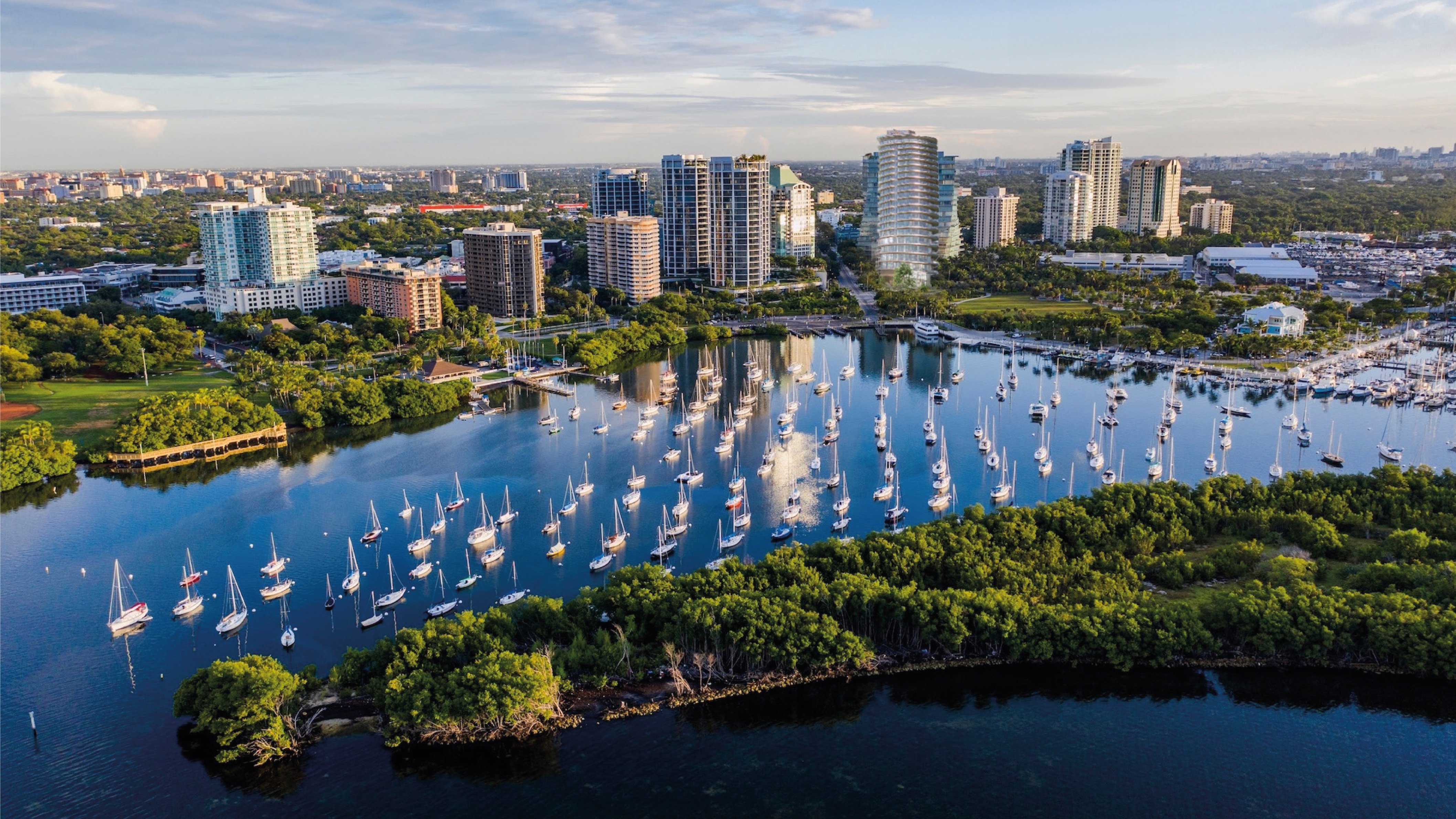
Coconut Grove has never relied on spectacle. Its version of luxury is an unusually complete daily loop: water and boats as part of normal life, a village center that remains human-scaled, parks that are genuinely used, and gardens and museums that reward repeat visits. For buyers, the neighborhood’s value proposition isn’t only the residence itself - it’s the anchors just beyond the front door.
That’s why the Grove continues to attract a specific kind of end user: someone who wants Miami energy nearby, yet prefers a more discreet cadence. It also clarifies why boutique, low-density buildings can hold their own against larger-format, amenitized towers. A refined home in the Grove often operates as a private base camp, with the neighborhood supplying the “amenity stack.”
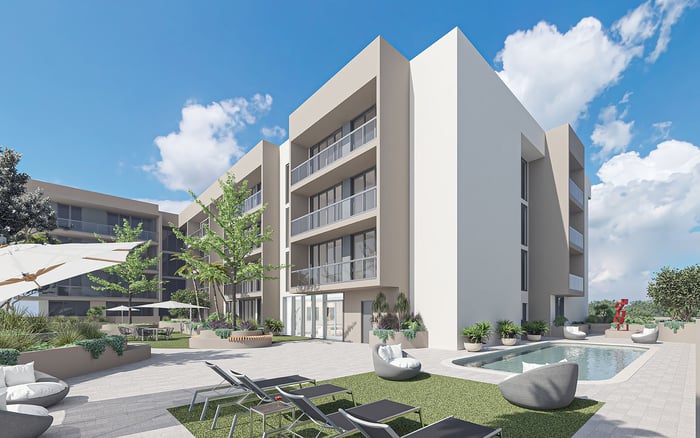
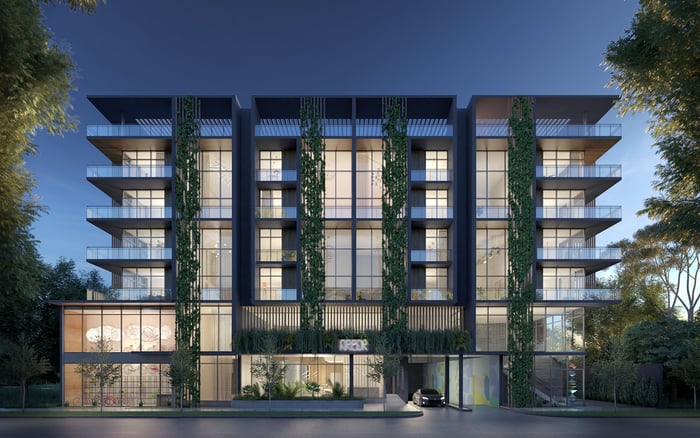
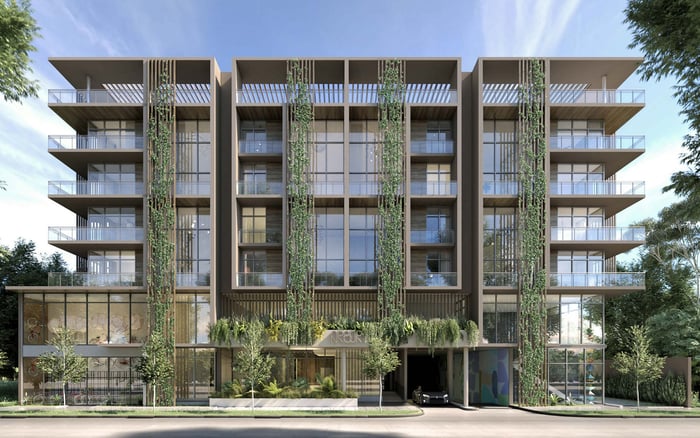
New residential supply reflects that mindset. A project like Arbor Coconut Grove is positioned as boutique and nature-forward, and publicly described as a five-story, 45-residence development in the village core. It’s the type of address where the neighborhood’s anchors become part of the floorplan: mornings at the marina, afternoons in the park, and evenings that begin with a walk - not a rideshare.
Dinner Key isn’t just scenery. It’s a functioning marina facility with a mooring field and related services - an important distinction, because it keeps the waterfront active and practical rather than purely decorative. For residents, it delivers a lived-in maritime atmosphere: boats coming and going, an open-horizon feeling, and a neighborhood rhythm calibrated to the bay.
Luxury buyers who are boat-curious often underestimate how much this shifts day-to-day life. Being able to move from home to waterfront in minutes - even without owning a vessel - can register as more impactful than one more lounge or screening room.
Peacock Park functions as the neighborhood’s shared front yard. It’s a public park in Coconut Grove, and it’s used accordingly: casual recreation, family time, and the kind of open-space decompression that makes dense cities feel more livable.
For buyers, parks like Peacock matter in two ways. First, they preserve visual and spatial relief, supporting long-term neighborhood desirability. Second, they influence how a home “lives” for families and dog owners - especially in condo settings where outdoor access becomes part of daily logistics.
CocoWalk is an open-air shopping and dining destination in the heart of Coconut Grove. What makes it an anchor isn’t any single tenant, but the role it plays: a walkable center of gravity that reduces friction in everyday life. A neighborhood feels more luxurious when it’s easy - when errands and dinner plans don’t require a multi-neighborhood itinerary.
This is where boutique residences can feel especially compelling. When the village core is truly walkable, a well-designed building can prioritize privacy and proportion over a maximal amenities program. That premise also informs the appeal of lifestyle-forward options in the area such as Mr. C Tigertail Coconut Grove, located on Tigertail Avenue near the Regatta Park and Dinner Key area and marketed around a service-centered residential experience.
Vizcaya is one of Miami’s defining cultural destinations, pairing museum programming with a garden experience that feels transportive. For Grove residents, its impact is amplified because it’s not a “once and done” attraction. It’s a repeatable weekend ritual - a place to reset your eyes and re-enter the city feeling composed.
From a real estate lens, proximity to genuine cultural assets helps keep a neighborhood from becoming purely transactional. It also aligns with buyer psychology: many luxury purchasers want more than lifestyle branding. They want real institutions nearby that signal taste, history, and permanence.
The Kampong is a garden site in Miami known for its immersive, tropical setting. Its value as an anchor is subtle but decisive: it reinforces Coconut Grove’s identity as a canopy neighborhood, where greenery isn’t just landscaping - it’s character.
For buyers weighing the Grove against other coastal neighborhoods, botanical assets can sound like a footnote until you live with them. Then you notice how they shape the sensory experience: cooler-feeling streets, softer sound, and a daily palette that reads more resort than metropolis.
The practical takeaway is simple: in Coconut Grove, the neighborhood is part of the amenity package - and that can change what you should pay for inside the building.
If your daily life genuinely includes the waterfront, parks, and village center, you may not need the scale of a mega-tower to feel fully served. That’s why low-density offerings can feel “complete” even at smaller unit counts. Public descriptions of Arbor, for instance, emphasize a nature-inspired, low-density approach and advertise residences roughly spanning 1,466 to 3,185 square feet with 2 to 4 bedroom layouts, plus select townhomes, lofts, and penthouses. Those proportions align with an end-user buyer who wants a real home, not a pied-a-terre.
On the other hand, some buyers want the Grove’s charm but prefer a service-forward lifestyle, which is where brands and hospitality-minded positioning become relevant. The right answer depends on whether you treat Coconut Grove as a primary residence, a second home, or a hybrid base.
For family buyers, schools are often the highest-stakes variable - and Coconut Grove is no exception. The best approach is procedural: confirm attendance zones by address, then evaluate the specific public and private options that fit your child’s needs.
Coconut Grove Elementary is a well-known neighborhood reference point for public-school families, and nearby middle-school options are often part of the conversation, including George Washington Carver Middle School in Coral Gables. Still, the sophisticated move is to verify zoning for the exact address you’re buying, because boundaries can be nuanced and don’t always match what people assume in casual conversation.
If you’re buying pre-construction or planning a move on a tight timeline, school due diligence should happen early - alongside building documents and floorplan review. In luxury transactions, timing is often the hidden cost.
Coconut Grove’s anchors are neighborhood-driven. Miami Beach’s newest luxury inventory is often building-driven: signature architecture, branded programming, and vertical resort living. Many buyers cross-shop the Grove with Miami Beach not because the lifestyles are identical, but because both can deliver privacy and prestige - just expressed differently.
If you’re comparing a leafy village ecosystem to a beachfront, design-forward tower, the right question isn’t “which is better,” but “which matches how you actually live.” A buyer who entertains formally, wants a strong arrival sequence, and prefers an elevated, service-oriented environment may gravitate toward Miami Beach new development such as Five Park Miami Beach or Shore Club Private Collections Miami Beach. Those addresses speak to a different kind of convenience: the building as destination.
For the buyer who wants to walk under trees, keep a car mostly parked, and weave water, parks, and village dining into a normal week, Coconut Grove’s anchors do more of the heavy lifting.
Luxury real estate decisions often over-index on interior finishes and under-index on the daily loop. In Coconut Grove, the loop is the point.
Start by mapping how you want an ordinary week to feel. If your ideal includes mornings near boats at Dinner Key, afternoons in open green space at Peacock Park, a last-minute dinner that begins at CocoWalk, and weekends that rotate between Vizcaya and The Kampong, then evaluate your residence for what it truly is: the private counterpart to a public luxury lifestyle.
That’s the Grove’s quiet power. It offers a complete, rooted version of Miami - and it does so without asking you to perform it.
What makes Coconut Grove feel different from other luxury Miami neighborhoods? The Grove’s luxury is rooted in walkability, greenery, and a working waterfront rather than pure high-rise intensity.
Is Dinner Key Marina only relevant if I own a boat? No. Its everyday boating culture and waterfront access shape the neighborhood’s atmosphere even for non-owners.
Why is Peacock Park considered an anchor for residents? It functions like a shared outdoor living room, adding real open space for recreation and daily decompression.
What is CocoWalk’s role in day-to-day living? It provides a village-center hub for dining and shopping, reducing friction for errands and spontaneous plans.
Are boutique condos a good fit in Coconut Grove? Often yes, because neighborhood amenities can substitute for an oversized in-building amenity program.
How should families approach school planning when buying in the Grove? Confirm attendance by address early, then evaluate the specific public and private options that fit your child.
Is Mr. C Tigertail located near the waterfront? It is on Tigertail Avenue near the Regatta Park and Dinner Key area, which keeps the bay close to daily life.
What kind of buyer is drawn to Arbor Coconut Grove? Buyers who prioritize low-density living and home-like layouts in the village core tend to respond to its positioning.
How does Coconut Grove compare to Miami Beach luxury living? The Grove is neighborhood-anchored and green; Miami Beach often centers on branded buildings and resort-style towers.
What is the best way to choose between neighborhoods at this price point? Choose the place that matches your weekly routine, then pick the residence that supports that routine with ease.
For a confidential assessment and a building-by-building shortlist, connect with MILLION Luxury.
If branded residences are on your mind — as a home or as an allocation — we would be glad to share what we are seeing, privately.
Begin a quiet conversation