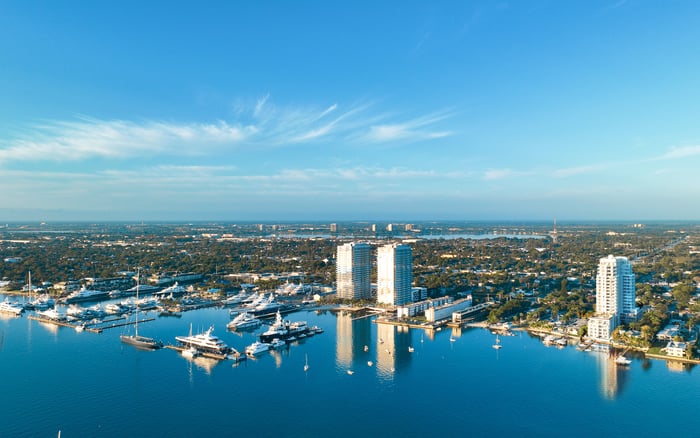
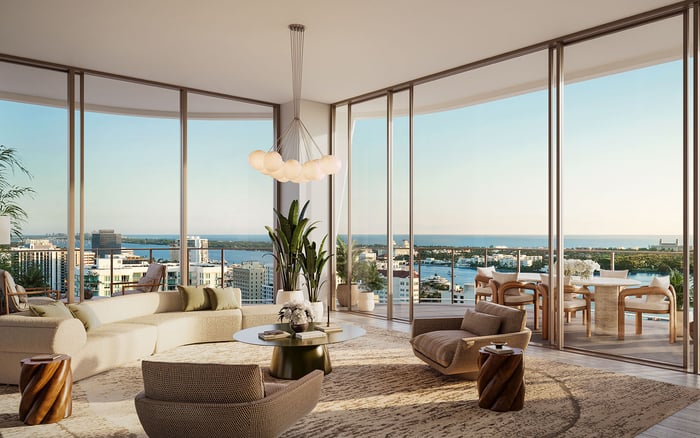
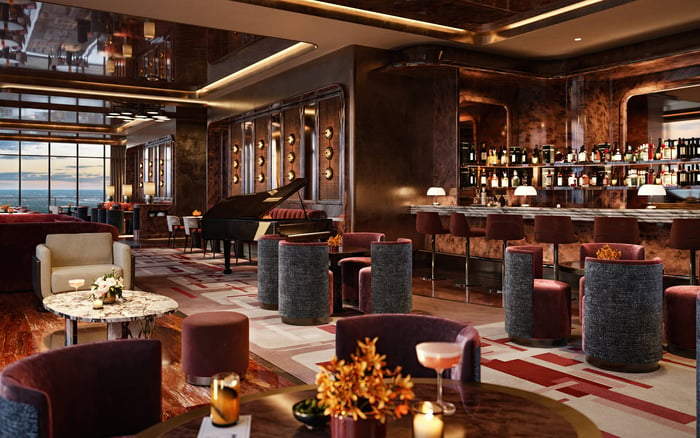
Mr. C Residences West Palm Beach brings the Cipriani family’s Mr. C sensibility to downtown living with a hotel-and-residence program designed around service, wellness, and discreet glamour. With Arquitectonica leading architecture and Meyer Davis Studio shaping interiors, the 27-story, 146-residence tower pairs furnished and unfurnished ownership options with signature Bellini-branded dining and a concierge-forward lifestyle.
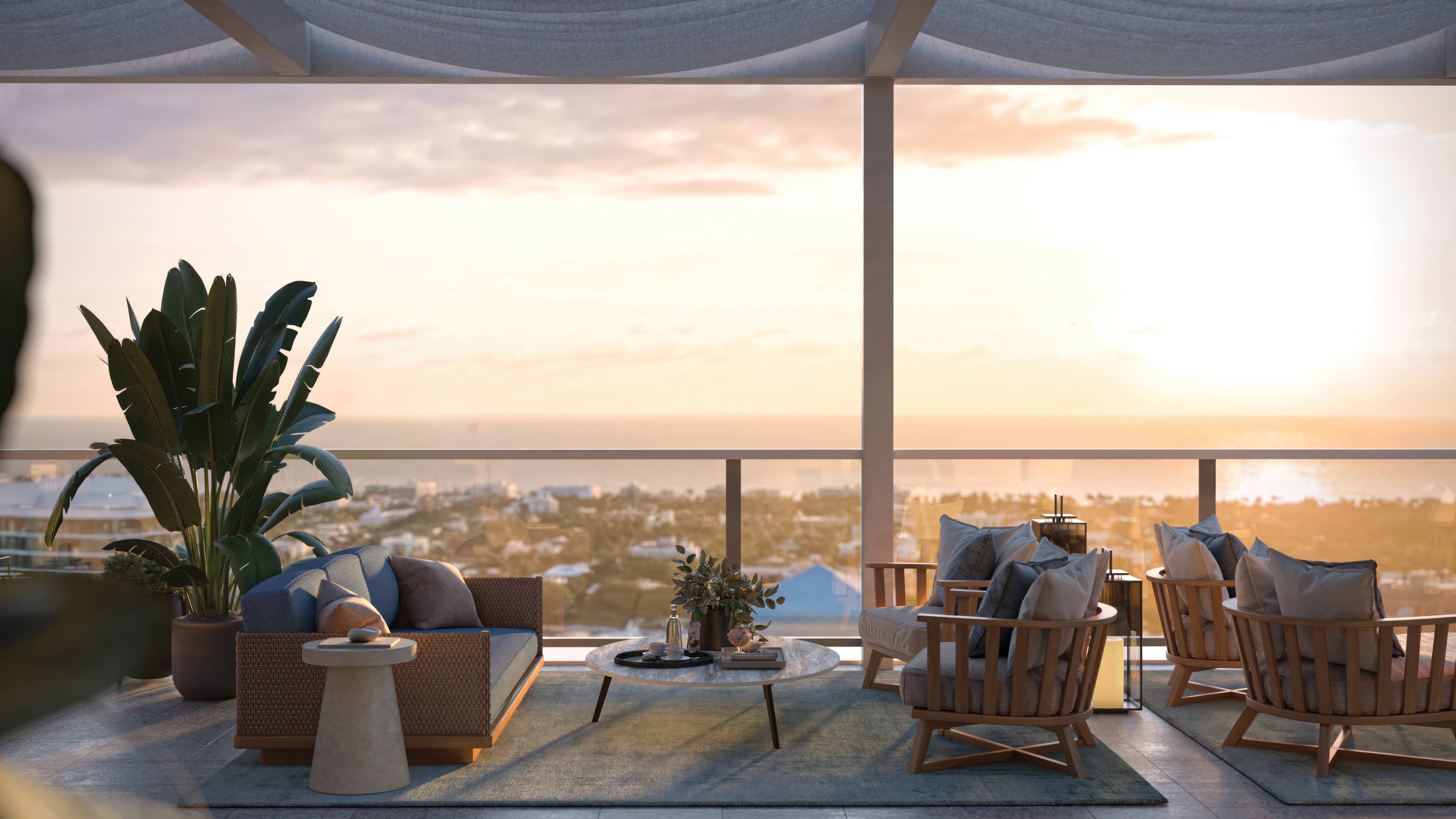
West Palm Beach has entered a new phase of luxury demand: less about sheer square footage, more about time, convenience, and a service ecosystem that feels effortless. In that context, Mr. C Residences West Palm Beach arrives with a clear thesis. This is not simply a condo tower with an attractive lobby. It is a branded residential and hospitality concept designed to function like a well-run private club, while preserving the privacy of home. The project is positioned in downtown West Palm Beach and is planned as a 27-story building with 146 residences alongside 110 hotel rooms. The developer team is Terra and Sympatico, partnering with the Cipriani family’s Mr. C brand, a lineage that traces back to the hospitality tradition that began with Harry’s Bar in Venice. For buyers accustomed to the cadence of Palm Beach and the rhythm of global cities, this combination matters. The value proposition is not only the address, but also the operating mindset: staffed, curated, and calibrated for owners who want daily life to feel effortless without feeling overseen.
Design carries the narrative. Architecture is led by Arquitectonica, with Bernardo Fort-Brescia named as project architect. Interiors are by Meyer Davis Studio, signaling a focus on tailored materials and hospitality-grade proportion. In practical terms, the design story is meant to deliver a specific emotion: arriving home should feel like checking into a place that already knows you. That takes more than finishes. It requires circulation that works, lobbies that read as arrival spaces rather than corridors, and amenity areas that feel like destinations instead of afterthoughts. Downtown West Palm Beach is increasingly the setting for this kind of lifestyle. Owners want culture and dining close by, while also expecting the building to support a full day’s arc: morning training, midday focus, sunset pool, and an easy dinner that does not require a car or a plan.
A key differentiator is the split residential program: 57 furnished “Resort Residences” and 89 unfurnished “Tower Residences.” This is more than marketing language. It acknowledges a luxury buyer pool increasingly divided between those who want a turnkey pied-a-terre and those who want a more traditional, personalized primary residence. The furnished Resort Residences are marketed as fully furnished with no rental restrictions, appealing to owners who want flexibility and usage patterns that resemble a condo-hotel lifestyle. The unfurnished Tower Residences are generally described with rental parameters such as a minimum 6-month lease and limited leasing frequency. In both cases, rental rules should be confirmed in the condominium documents, but the intent is straightforward: two tracks, each optimized for a different ownership strategy. Sizing referenced in broker-facing materials generally spans roughly 830 to 2,200 square feet across 1 to 3 bedroom plans. Pricing is often cited as starting around the mid-$1 millions and moving into multi-million-dollar territory depending on residence type, view, and configuration. For context, some buyers comparing West Palm Beach product also look at how “quiet luxury” expresses itself on the waterfront. A project like Forté on Flagler West Palm Beach reflects a more purely residential sensibility, which can be a useful counterpoint when deciding whether hospitality energy feels like a feature or a distraction.
Luxury amenities are common. Luxury service culture is rarer. Here, the programming emphasizes concierge and lifestyle services in the pattern of Mr. C-branded properties. The published amenity mix includes a fitness center with dedicated studio spaces such as yoga and Pilates, plus resident lounge and work areas designed for a more flexible day. Wellness is treated as a system, not a single room. Marketing materials describe spa and recovery elements such as sauna and steam, plus treatment rooms. Outdoors, the experience is anchored by pool programming with cabanas and a resort-forward attitude. Then there is the signature that signals the brand: food and beverage. Bellini-branded dining is called out directly, and the name is deliberate. Harry’s Bar is credited by the Cipriani tradition with the invention of the Bellini cocktail, and Mr. C uses that heritage to frame an everyday glamour that feels classic rather than loud. The result is a building designed to remove friction from the week. Owners are not just buying a residence; they are buying a default setting for living well.
Mr. C Residences West Palm Beach is likely to resonate with three buyer profiles.
The primary resident who wants downtown walkability but expects a staffed, hotel-grade standard of care.
The second-home owner who wants a turnkey arrival experience, with the option to rent in a way that feels integrated rather than improvised.
The investor-leaning buyer who values branded positioning and the potential demand that comes with a recognizable hospitality name.
This is also where the broader South Florida map becomes relevant. Buyers often triangulate between West Palm Beach and Miami’s lifestyle nodes depending on how they allocate time. For example, if your weeks are anchored in the city’s financial and dining corridor, Cipriani Residences Brickell offers a different expression of brand-driven living, more urban and vertical in feel. If your calendar leans toward neighborhoods with a softer, residential texture, Mr. C Tigertail Coconut Grove provides a useful comparison within the same brand family, often appealing to those who want tree canopy, water adjacency, and a village-like rhythm.
West Palm Beach and Palm Beach have been repeatedly framed as fast-growing wealth centers, and the effects are visible in what high-net-worth buyers now expect from new construction. They want buildings that can operate at the level of their lives: security, discretion, and staff who understand pace. Branded residences tend to perform best when they deliver two things consistently: design that feels timeless and an operations model that remains excellent after the first wave of move-ins. Mr. C’s hospitality-led premise is aimed directly at that second requirement. In resale terms, buyers often pay a premium for a building that makes living easy. That premium typically shows up in liquidity, especially for residences that can be used as an occasional base without needing to set up the home each visit.
If you are evaluating Mr. C Residences West Palm Beach, focus on alignment rather than headlines.
Decide whether you want furnished, turnkey usage or a more customized, unfurnished home.
Clarify your intended rental pattern early, then match it to the residence type.
Treat wellness and dining as daily drivers: will you actually use them, and do they reduce your weekly friction?
Consider how much you value a hospitality environment versus a quieter residential tone.
Branded living is ultimately a lifestyle contract. When it works, it feels invisible: the elevator is quick, the staff is discreet, the spaces are consistently composed, and your time stays focused on what you value.
What is Mr. C Residences West Palm Beach? It is a branded residential and hospitality project in downtown West Palm Beach featuring residences alongside hotel accommodations.
How many stories is the tower planned to have? The building is planned as a 27-story tower.
How many residences are planned? The plan calls for 146 residences.
Is there a hotel component? Yes. The program includes 110 hotel rooms.
Who is the architect for the project? Arquitectonica is the project architect, with Bernardo Fort-Brescia listed as lead.
Who designs the interiors? Interiors are planned by Meyer Davis Studio.
What is the difference between Resort Residences and Tower Residences? Resort Residences are marketed as furnished, while Tower Residences are marketed as unfurnished with different rental parameters.
Are there wellness amenities? Yes. The amenity program includes fitness spaces and marketed spa features like sauna and steam.
Will there be a pool experience? Yes. Outdoor pool programming with cabanas is part of the resident amenity concept.
What is the Bellini connection? The Bellini name ties back to the Cipriani family hospitality tradition associated with Harry’s Bar and the Bellini cocktail.
To explore more ultra-premium South Florida residences, visit MILLION Luxury
If branded residences are on your mind — as a home or as an allocation — we would be glad to share what we are seeing, privately.
Begin a quiet conversation