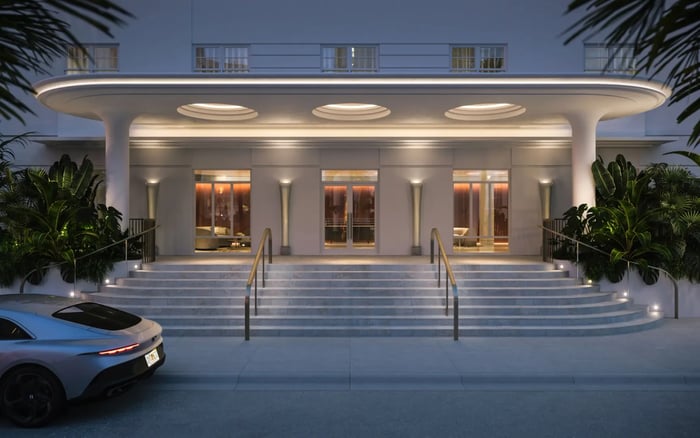
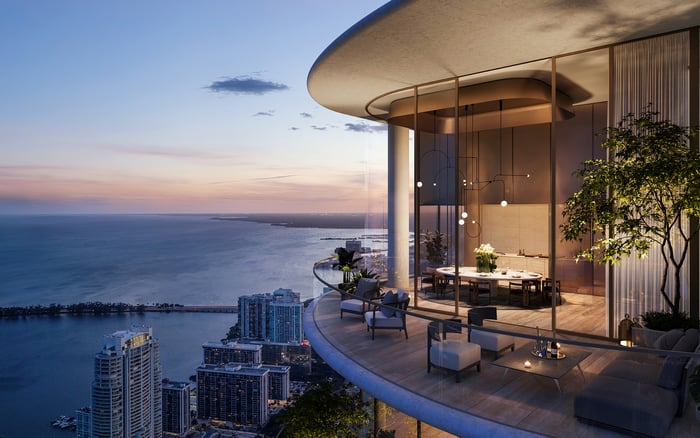
Shore Club Private Collection in Miami Beach pairs preserved heritage architecture with a new RAMSA-designed tower and Auberge service, aiming to redefine oceanfront ownership with resort-caliber ease.
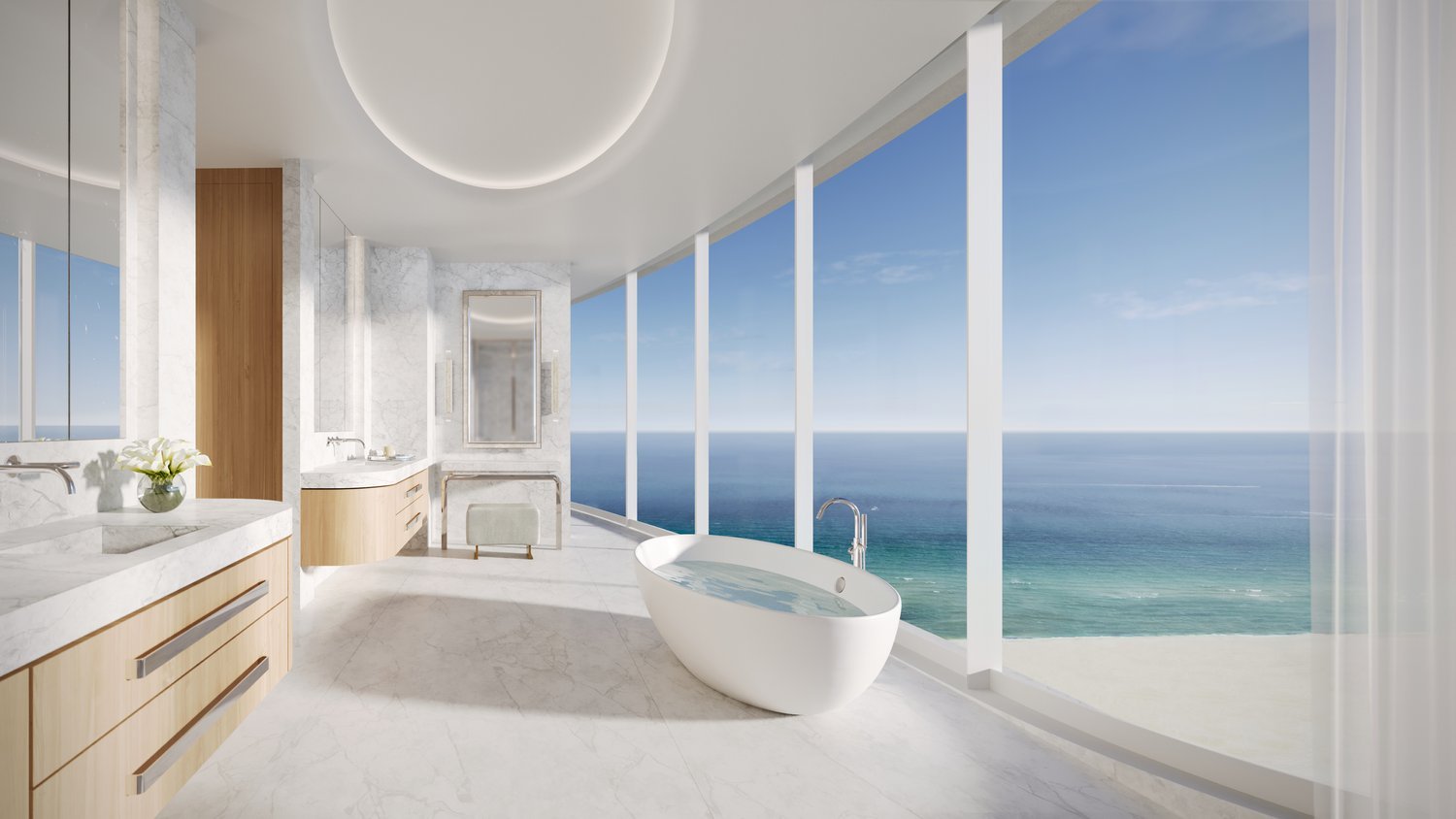
Oceanfront Miami Beach is entering a new chapter where buyers no longer choose between legacy and novelty. They want both: the cultural weight of preserved architecture and the performance of a newly built, amenity-rich residence that lives like a private club. That is the premise behind Shore Club Private Collections Miami Beach, a roughly three-acre, oceanfront redevelopment that pairs restored historic structures with a new 20-story residential tower. The residential program totals 49 residences, positioned as a boutique collection rather than a high-volume condominium. The project’s identity is shaped by two forces that rarely align at this level: preservation and precision. On one side, it leans into Miami Beach’s heritage and the enduring cachet of a landmark corridor. On the other, it meets contemporary expectations for privacy, service, and wellness-driven living.
In ultra-premium markets, design authorship is no longer a nice-to-have. It is a proxy for long-term desirability. Here, the new residential tower is designed by Robert A.M. Stern Architects, with a design language the firm describes as inspired by classic yacht design and the patterns of waves and wind on sand. That reference point is telling: Miami Beach luxury increasingly rewards projects that feel native to the shoreline, not simply placed on it. Equally important is the preservation-led redevelopment approach. Rather than erase the past, the plan preserves and reinvents historic Shore Club era structures alongside the new tower. For buyers, this can translate into a rarer kind of neighborhood permanence. In a city that reinvents itself quickly, retained architectural DNA can help stabilize value and identity. Miami Beach’s broader Art Deco context is part of the appeal. Ownership in this corridor is not only about views, it is about participating in a global design narrative that has endured for decades.
The residences are branded and serviced in partnership with Auberge Resorts Collection, with the adjacent hospitality component operating as the Shore Club Hotel by Auberge Resorts Collection. For many buyers, that pairing is the point: a private home supported by a resort platform designed to make everyday life feel frictionless. Branded residence buyers tend to be exacting about two things that standard luxury condos can struggle to deliver consistently:
Service continuity that does not depend on a single staff member or a changing board
A hospitality mindset that treats the owner experience as curated, not merely maintained
Auberge’s brand emphasis on wellness and experience is part of the positioning, and it aligns with where South Florida luxury demand has moved. The modern buyer is not just assembling square footage. They are buying time, ease, and the confidence that their residence can operate like a well-managed resort while still feeling discreet.
Public marketing frames the offering as two- to six-bedroom residences within the tower, with published size ranges that span from roughly 1,900 square feet to 10,000 plus square feet depending on unit type. That spread matters because it places Shore Club Private Collection in a rare competitive set. At the lower end of the range, buyers may cross-shop newer Miami Beach product where design and amenities are strong, but the legacy factor is thinner. At the upper end, buyers are implicitly comparing against trophy penthouses across the barrier island and beyond, including ultra-private, low-density benchmarks that shape pricing psychology. This is where Miami Beach’s current market dynamic becomes relevant. South Florida’s luxury thresholds have climbed to record highs, and that shift registers even for buyers who do not track market statistics. As the top of the market keeps resetting, buyers become more willing to underwrite premium pricing for projects that feel structurally differentiated. For context, shoppers weighing oceanfront lifestyle against a different kind of neighborhood energy often also consider wellness-leaning boutique options like The Well Bay Harbor Islands, or pure beachfront minimalism such as 57 Ocean Miami Beach. The common denominator is not just newness. It is the promise of a specific way of living.
Ultra-luxury buyers may pay for vision, but they underwrite certainty. Visible construction progress can change the tenor of a purchase decision, particularly for out-of-market buyers who want tangible proof that a project is advancing. Shore Club Private Collection has publicly cleared a major structural milestone with a significant concrete pour operation, a signal that the site is moving through the heavy-lift phase of vertical construction. In practical terms, milestones like this can reduce perceived execution risk and sharpen buyer urgency, especially when the project is positioned as a finite 49-residence collection.
In luxury residential towers, the penthouse is not merely a top unit. It is a gravitational force. Public coverage has linked the Shore Club residences to price talk around a $120 million penthouse, framed as record-setting for Miami Beach condos. Whether a buyer is pursuing the top of the stack or something far below it, that kind of headline can elevate the project’s narrative. The effect is not purely emotional. Trophy pricing, even when discussed as price talk, can change how the entire building is perceived:
It reframes the address as a global-caliber asset rather than a local luxury choice
It establishes a premium reference point for larger residences and upper-floor homes
It attracts a buyer cohort that values scarcity and discretion over broad market comparables
This is also where branded service matters. At nine-figure valuations, owners expect their home to operate as seamlessly as their favorite hotel, without the visibility that can come with traditional condo living.
Luxury today is increasingly modular. Buyers assemble a lifestyle across multiple assets: a primary residence, a beach residence, perhaps a golf membership, and hospitality relationships that make transitions effortless. Shore Club Private Collection is marketed within a broader ecosystem that includes access tied to Shell Bay Club, adding a second axis of lifestyle beyond the beachfront. For buyers who already think in terms of networks rather than single addresses, that can be compelling. It also clarifies the project’s intended audience: not simply local end-users, but global second-home owners who want Miami Beach as a base of operations supported by service, privacy, and curated experience. Buyers evaluating that club-plus-residence concept sometimes compare it to other resort-forward ownership models in the region, including Shell Bay by Auberge Hallandale, where the Auberge connection similarly signals a hospitality-driven approach.
Miami Beach luxury is bifurcating. One lane is ultra-modern, clean-lined new construction that prioritizes panoramic glass, minimalism, and efficiency. The other lane, now resurging, prizes heritage, craft, and an authored sense of place. Shore Club Private Collection sits firmly in the second lane, paired with a modern service platform that keeps it competitive with the first. For buyers, the practical takeaway is to evaluate the project on three enduring dimensions:
Architectural permanence: a design that can look better in 20 years, not merely current
Scarcity: 49 residences on an oceanfront site is inherently limited supply
Service model: branded hospitality can protect the day-to-day experience over time
Within Miami Beach itself, a buyer might also consider how their lifestyle differs between a South Beach energy profile and a more residential, design-forward calm. Options like The Perigon Miami Beach can reflect a different architectural and neighborhood posture, even when the oceanfront promise is similar.
Shore Club Private Collection reads as a fit for buyers who want Miami Beach at its most polished and intentional. Typically, that means someone who values:
A finite, boutique residence count rather than a high-density tower experience
A preservation-forward atmosphere that feels culturally anchored
A service layer that makes arriving, departing, and living feel effortless
This is also a strong match for owners who already live in a high-service environment elsewhere and want their Miami Beach home to meet the same standard without constant management.
What is Shore Club Private Collection? It is an oceanfront redevelopment in Miami Beach combining restored historic structures with a new ultra-luxury residential tower.
How many residences are planned? The residential offering totals 49 residences across multiple components on a roughly three-acre site.
Who designed the new tower? The new 20-story residential tower is designed by Robert A.M. Stern Architects.
What is the design inspiration behind the architecture? The tower’s design language is described as drawing from classic yacht design and patterns of waves and wind on sand.
Is this a branded residence with hotel services? Yes, the residences are branded and serviced in partnership with Auberge Resorts Collection.
What is the adjacent hotel component? The hospitality component is Shore Club Hotel by Auberge Resorts Collection.
What residence layouts are expected? Residences have been marketed as two- to six-bedroom homes within the tower.
How large are the residences? Published marketing ranges describe homes from roughly 1,900 square feet to 10,000 plus square feet depending on unit type.
Has there been meaningful construction progress? A major concrete pour milestone has been publicly disclosed, indicating active progress through a key structural phase.
Why do buyers care about preservation in Miami Beach? Preservation supports a sense of place and long-term identity, especially in a corridor shaped by enduring design heritage.
For private guidance on Miami Beach’s next-generation branded residences, explore MILLION Luxury
If branded residences are on your mind — as a home or as an allocation — we would be glad to share what we are seeing, privately.
Begin a quiet conversation