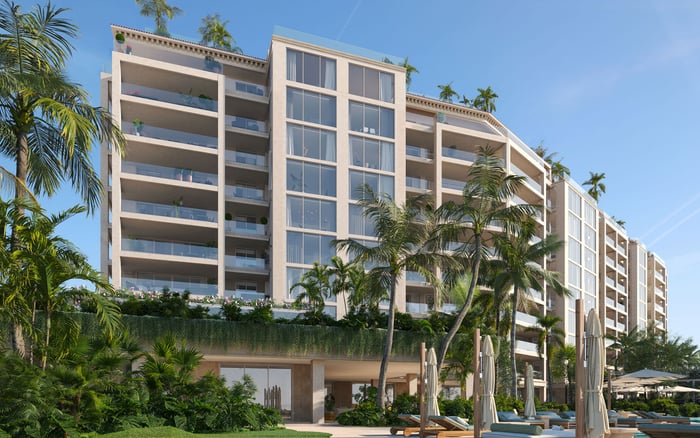
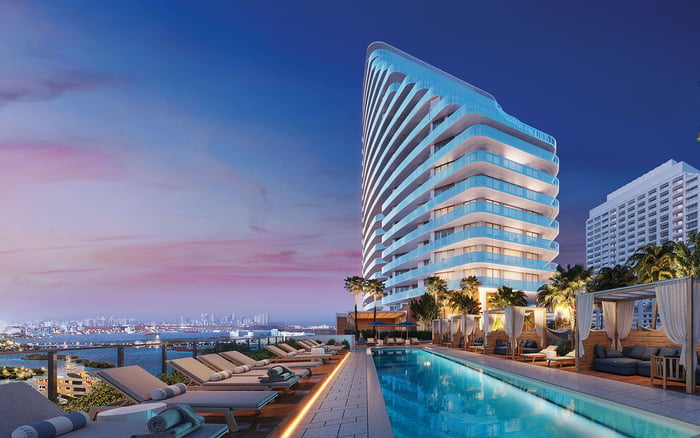
A growing share of younger wealth is meeting a market built for global, service-led living. In South Florida, that intersection is reshaping where ultra-luxury buyers focus, what they value, and how they choose between legacy trophy addresses and the new class of branded, amenity-rich towers.
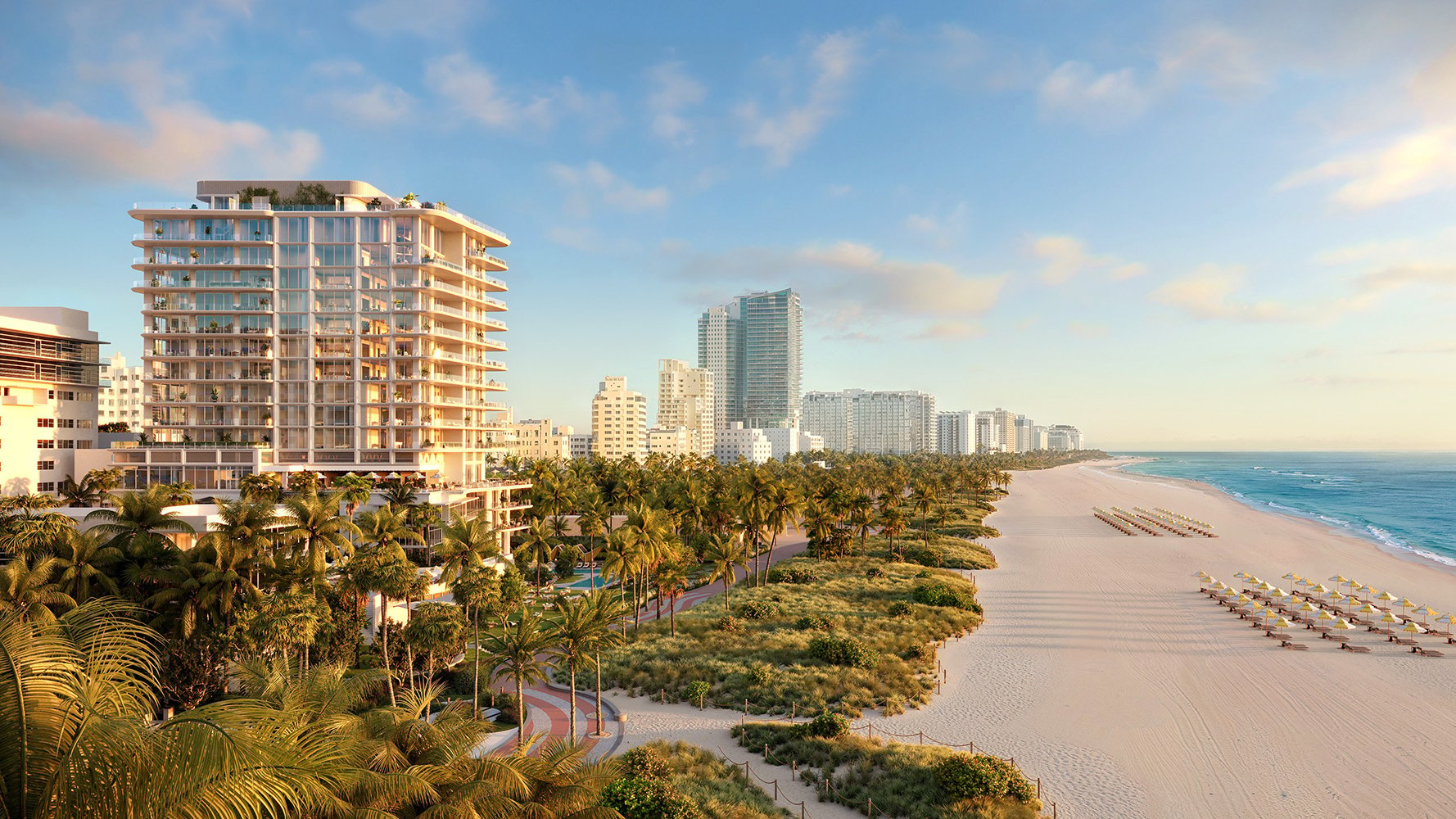
South Florida luxury has long been international, design-forward, and unapologetically lifestyle-led. What is changing is not the market’s ambition, but the age profile of the buyer who can realistically transact at the top. Florida has been reported as a top-five state for “millennial millionaires,” and the broader narrative across housing research is consistent: millennials are purchasing more expensive homes than earlier generations did at the same stage of life.
In practical terms, this is less about a single cohort suddenly “discovering” Miami and more about the existing market meeting a newer buyer profile with real purchasing power. These buyers are often entrepreneurial or finance-adjacent, globally mobile, and comfortable paying for convenience and brand, not only square footage. They tend to reward environments that reduce friction: walkable streets, privacy by design, wellness infrastructure, and a sense of cultural proximity that makes daily life feel connected rather than isolated.
That preference set helps explain why neighborhoods that blend density with waterfront adjacency have become central to the ultra-luxury conversation. For many younger high-net-worth buyers, the home is both a residence and an operating platform, a place that needs to support work, travel, entertaining, and recovery in the same week.
The outcome is not a replacement of traditional ultra-high-net-worth demand. It is an additional layer of demand that is increasingly visible in pre-construction decisions, in the appetite for hospitality-grade services, and in the willingness to pay for finish and operational polish when the product truly aligns. In other words, the top end is not simply selling space. It is selling a calibrated experience.
Even as some segments of the market soften, the very top has remained comparatively resilient. In the first nine months of 2025, South Florida recorded 262 home sales priced at $10 million and above across Miami-Dade, Broward, and Palm Beach, putting the region on pace to approach record annual volume.
That level of liquidity matters. It supports a particular kind of confidence that is difficult to manufacture in less active markets. Developers can underwrite ambitious amenity programs with credible absorption assumptions, and sellers can maintain a high bar on finished quality because the buyer pool remains engaged. For younger buyers who view real estate as both lifestyle and balance-sheet discipline, the message is straightforward: the top end is active, and the best product tends to trade even when the broader market pauses.
This is also where Miami’s segmentation becomes most obvious. A buyer financing a rate-sensitive purchase behaves differently from a buyer whose offer is guided by timing, privacy, and long-term positioning. In the $10M+ tier, the decision is often less about monthly payments and more about how the property fits into a larger portfolio, a larger life, and a larger sense of place.
Two forces continue to stabilize South Florida’s luxury ecosystem.
First, cash remains a dominant factor in Miami-Dade transactions, insulating many luxury purchases from mortgage-rate pressure. That does not mean every deal is cash. It does mean that the marginal buyer at the top is often less sensitive to financing conditions and more focused on product fit, execution, and timing. When a buyer can move without waiting for financing approvals, the market’s rhythm changes, and well-positioned homes and new-development inventory can continue to clear.
Second, international demand remains a structural pillar of new development. In a Miami Realtors study covering 9,115 units across 37 projects in the 18 months ending June 2025, international buyers purchased 49% of South Florida new construction, pre-construction, and condo conversion sales.
For millennial buyers, the implication is direct: you are not only competing locally. You are competing with buyers comparing Miami Beach and Brickell to London, Dubai, Mexico City, São Paulo, and New York, often through the lens of security, service standards, and currency diversification. That comparison set naturally elevates the value of buildings that feel globally legible, with operations, staffing, and finishes that meet expectations shaped by top cities and top hotels.
This dynamic also helps explain why Miami Beach branded residences, when executed well, can command premiums beyond what a simple cost-per-square-foot model would predict. At the apex, buyers frequently pay for certainty: certainty of service, certainty of discretion, and certainty that the building’s day-to-day experience will match the marketing.
One of the clearest expressions of millennial luxury is the shift from ownership-as-asset to ownership-as-platform. The buyer wants a home that functions like a private club: discreet arrivals, thoughtful staffing, seamless maintenance, and a social fabric that feels organic rather than forced. They are not only purchasing a view or a floor plan. They are purchasing time, predictability, and ease.
This is where branded and hospitality-linked residences can outperform. A widely reported Surfside sale, an $86 million penthouse at Seaway at the Surf Club, was described as a Miami-Dade condo sale record. Beyond the headline price, the signal is instructive. When buyers can choose virtually anything, they tend to pay for a specific combination of location, scarcity, and service culture.
In Miami Beach, that service-forward positioning is increasingly visible in offerings such as Casa Cipriani Miami Beach, where the promise is not only a residence, but a day-to-day operating standard associated with hospitality. Similarly, Shore Club Private Collections Miami Beach speaks to the same buyer thesis: design, beach access, and an ownership experience calibrated for clients who may live in multiple cities each year.
Branded luxury is not a shortcut. It is a more complex product to execute because the expectation is higher and the margin for operational inconsistency is lower. The market tends to reward developments that deliver genuine service quality, not just a name. In that sense, the premium is often the point. It signals an intent to buy into a system that is engineered to feel effortless, not merely impressive.
For younger wealth, the neighborhood decision is often an operating decision. Where can you run your week, stay connected to airports and meetings, and still have a real lifestyle once you close the laptop?
Brickell’s profile aligns with this reality. It ranks highly on lists focused on young professionals, reflecting a preference set that includes walkability, a concentration of dining and nightlife, and an urban cadence that is still rare in much of the United States. For a globally mobile buyer, that density is not a compromise. It is a feature that supports a fast schedule and reduces the distance between work, wellness, and social life.
For millennial buyers, this is often less about conspicuous consumption and more about clarity. Branded design can provide a predictable aesthetic and a cohesive set of decisions that feel deliberate. A global buyer, in particular, may value predictability when purchasing pre-construction across time zones, especially when the purchase is being made alongside commitments in other cities.
Brickell also benefits from a simple truth of modern luxury: the more time becomes the scarce resource, the more proximity becomes valuable. In an environment where your calendar can change by the hour, living in the middle of the action can be its own form of privacy.
If Brickell is the weekday engine, the barrier island is the lifestyle engine. Demand in Miami Beach and Surfside often reflects a desire for privacy, clean design, and a more resort-like cadence, without leaving the cultural core. For many ultra-luxury buyers, the beach location is not a vacation plan. It is the default backdrop for daily life.
This is where the market’s strongest signals tend to print, particularly in product that integrates service. The Surfside record trade referenced earlier sits within a broader pattern: at the apex, buyers respond to scarcity and a sense of protected waterfront positioning. They value a building’s ability to create quiet, controlled experiences, from arrival to amenities to staffing.
For those prioritizing an established luxury hospitality environment, Setai Residences Miami Beach offers a shorthand for the kind of ownership experience many globally mobile buyers now expect. The appeal is not only oceanfront living. It is the operational ecosystem that keeps the residence feeling effortless, even when the owner is in and out of town.
In this context, Surfside is not merely a neighboring zip code. It is part of a continuum of trophy beach addresses where the difference between “beautiful” and “exceptional” is often management, discretion, and how the building makes daily life feel. At the high end, a calm, well-run building can be as valuable as the view itself.
While every buyer is personal, several preferences show up repeatedly in this market cycle.
Service that protects time. Concierge, valet, housekeeping coordination, and preventive maintenance are not indulgences for many younger buyers. They are efficiency tools.
Design credibility. Buyers are often willing to pay for architecture and interiors that feel intentional, not generic. Design becomes a form of long-term value insurance.
Amenities that replace memberships. Wellness suites, spa programs, pool environments designed for adults, and food and beverage experiences that feel on-property but not hotel-crowded.
Security and discretion. Discreet arrival sequences, controlled access, and a building culture that respects privacy.
Flexibility for a global life. The ability to lock and leave, to host confidently, and to treat the residence as a base rather than a burden.
These priorities intersect cleanly with the rise of pre-construction purchasing. When you buy early, you are not only buying a home. You are buying the delivery of a lifestyle system, with all the operational assumptions that come with it. That is why execution and developer track record matter so much, and why experienced buyers tend to ask detailed questions about staffing, building flow, and long-term management.
Paying for brand and service can be rational, but only if you evaluate it the way sophisticated buyers do.
Start with the operational promise. Is the building designed to deliver service efficiently, or is service being layered onto a layout that will always feel compromised? Look for tangible planning decisions: resident-only lobbies, back-of-house circulation, and an amenity program that is sized to the resident count. In the ultra-luxury tier, the architecture is not just aesthetic. It is logistics. If the building’s bones support staff movement, privacy, and maintenance, the resident experience typically holds up over time.
Then assess liquidity. South Florida’s $10M+ activity suggests depth at the top, but not all luxury is equally liquid. Properties that align with global tastes, strong management, and waterfront adjacency often retain a broader buyer pool. Liquidity is also a function of clarity. The more a building communicates its value through reputation and performance, the easier it is for future buyers to understand what they are paying for.
Finally, separate “brand” from “product.” A name can attract attention and establish expectations, but the resale market tends to reward buildings that are truly well-run. Younger wealth, in particular, is often brand-aware but not brand-dependent. Many buyers will pay for a label once. They will pay repeatedly for a building that delivers on the daily details.
When these pieces align, the lifestyle premium becomes more than a splurge. It becomes a form of risk management: fewer headaches, more predictability, and a residence that remains attractive to the next buyer who is comparing South Florida to other global markets.
The Great Wealth Transfer is widely expected to move enormous capital to younger generations over the coming decades. In South Florida, that tailwind lands in a market already engineered for global wealth: favorable lifestyle positioning, a strong pipeline of ambitious development, and a proven ability to attract both domestic and international buyers.
Add the visibility of high-profile wealth moving into the region, including widely covered reporting on tech and finance leaders purchasing in the Miami area, and the narrative becomes less speculative. The ecosystem is attracting capital, and real estate is one of the clearest, most tangible expressions of that confidence.
For millennial millionaires, the opportunity is to buy with intention. The best outcomes tend to come from selecting a building whose service culture matches your life, and a neighborhood that supports your week, not just your weekends. In a market where brand, operations, and location are increasingly intertwined, the most valuable skill is not chasing the loudest headline. It is choosing the product that will still feel right when the market’s tempo changes.
Are millennial buyers materially impacting South Florida luxury? Yes. Florida has been reported as a top-five state for millennial millionaires, and broader housing research indicates millennials are buying more expensive homes than prior generations at the same age, which supports rising participation in luxury tiers.
Is the $10M+ market still active even when other segments cool? Yes. South Florida recorded 262 $10M+ home sales in the first nine months of 2025, and the top end has been characterized as comparatively resilient versus more rate-sensitive segments.
Why do branded residences often command premiums? Because buyers may value a predictable standard of design and a hospitality-grade service model. A widely reported Surfside penthouse sale at $86 million underscores how brand and service can correlate with exceptional pricing.
How important is international demand in new development? It is significant. International buyers were reported to have purchased 49% of South Florida new construction, pre-construction, and condo conversion sales in a study covering 9,115 units across 37 projects.
To explore South Florida’s most coveted addresses with discretion, visit MILLION Luxury.
If branded residences are on your mind — as a home or as an allocation — we would be glad to share what we are seeing, privately.
Begin a quiet conversation