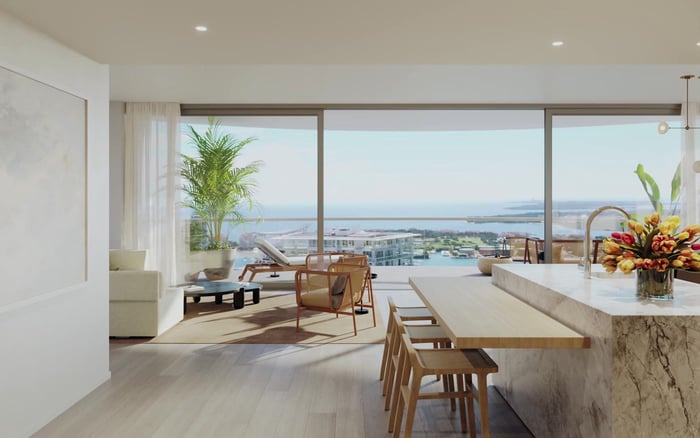
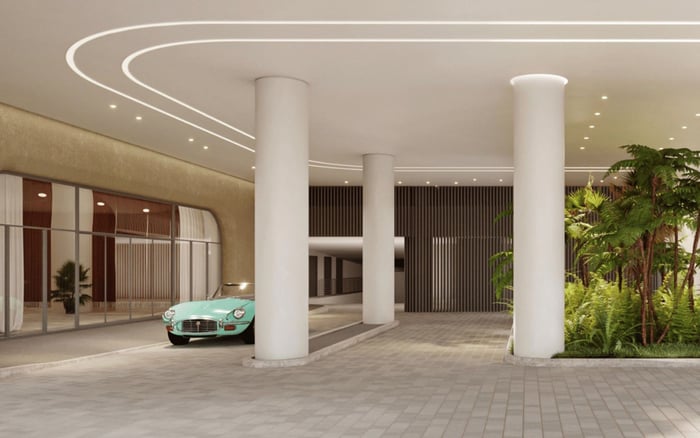
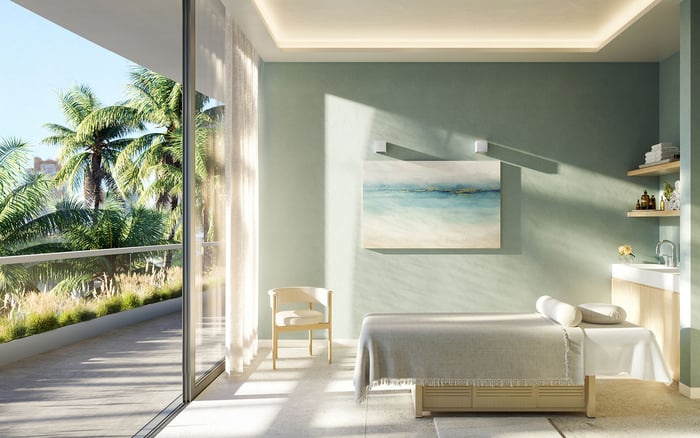
South Florida’s luxury market is increasingly defined by one clear priority: living like you are on holiday, without ever leaving home. From guard-gated bayfront enclaves in Coral Gables to headline-making Miami Beach compounds, the private-residence playbook now borrows directly from five-star hospitality: layered outdoor programming, wellness-first interiors, staff-ready service zones, and amenities that replace the need for a club membership. At the same time, the region’s newest ultra-luxury towers are translating that resort logic into “estate-in-the-sky” ownership, where residents trade acreage for altitude, ocean views, and curated service. For buyers and sellers navigating this moment, the opportunity is not simply to own waterfront, but to own a lifestyle ecosystem that performs year-round.
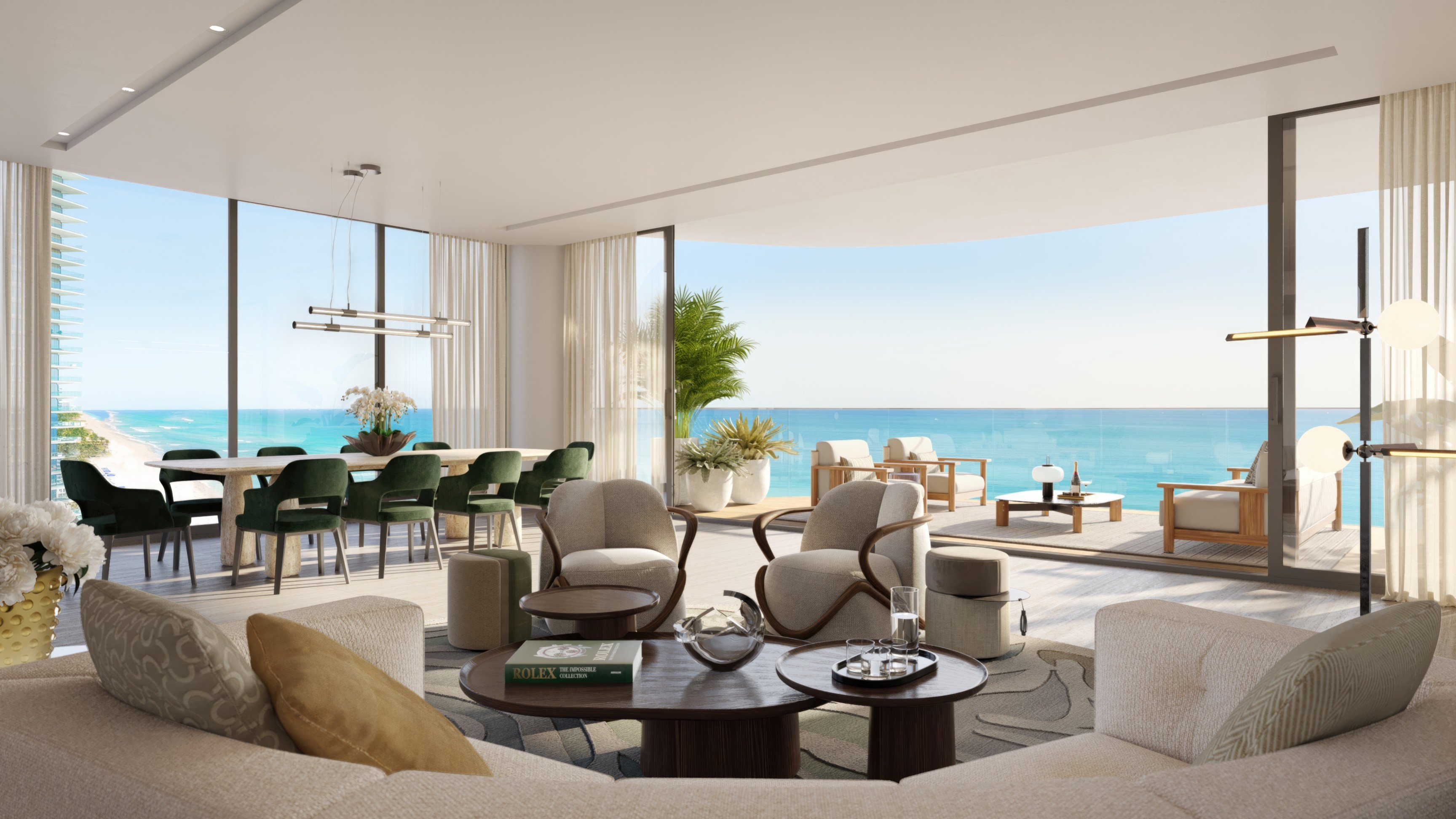
In South Florida, luxury has quietly pivoted from a question of size to a question of choreography. The most compelling properties, whether single-family estates or high-rise residences, are designed to deliver the rhythm of a well-run resort: morning wellness, midday poolside ease, golden-hour entertaining, and the calm assurance that every square foot was planned for real life.
That planning is increasingly what separates “expensive” from truly elite. Buyers are looking for homes that function as an ecosystem, with outdoor rooms that feel like destinations, interiors that support wellness without sacrificing elegance, and service circulation that keeps staff, guests, and owners in sync. The goal is simple: zero friction.
This is why “resort-at-home” has evolved from marketing language into a buyer requirement. The premium is no longer reserved only for water frontage or headline square footage. It is reserved for performance across the week: privacy that feels intentional, spaces that transition cleanly from intimate to event-scale, and amenities that make leaving the property optional.
In practical terms, the new definition of luxury is control. Control over time, arrival, privacy, and how the day unfolds. In a market as lifestyle-driven as Miami, a property’s value is increasingly measured by how well it protects that control, not just how well it photographs.
When a listing becomes a market-wide talking point, it is usually because it compresses multiple luxuries into a single address: land, water, security, and a lifestyle narrative that reads like a five-star destination.
In Coral Gables, a bayfront listing at 41 Arvida Pkwy, in the Gables Estates area, is marketed as a nearly 19,000-square-foot waterfront home. The appeal is not simply scale. It is the promise of a self-contained world, where the water is part of the daily experience and the home functions as the destination rather than a stop between destinations.
Gables Estates itself is widely positioned as a guard-gated, waterfront-focused luxury community, and that positioning matters. For the buyer, the purchase is not only about architecture and finishes. It is also about the access-controlled environment that protects privacy, reduces unpredictability, and supports a sense of order. In South Florida, where visibility can be constant, that discreet infrastructure is a major part of the value.
Across the bay, Miami Beach continues to show the upper ceiling for trophy compounds. A waterfront estate at 5940 N Bay Rd, on what is often called Billionaires Row, has been widely covered after hitting the market at $169 million. Coverage describes the estate as spanning 2.34 acres with significant Biscayne Bay waterfrontage. Even without debating the finer points of finishes, the headline is land. In Miami Beach, large bayfront parcels are not just scarce; they are increasingly irreplaceable.
Together, these listings point to a single market truth: the highest premiums are paid where lifestyle, location, and scarcity intersect, and where the property can credibly deliver a private-resort standard year-round.
For buyers who prioritize legacy as much as lifestyle, Coral Gables remains one of South Florida’s most coherent luxury environments. Its appeal is reinforced by architectural continuity, a sense of civic design, and the gravitational pull of the historic Biltmore Hotel, which continues to shape the area’s Mediterranean Revival aura.
Within that context, a guard-gated waterfront enclave such as Gables Estates fits the discreet buyer profile: privacy first, water access second, and proximity to the best of the city without the theater of constant visibility. The smartest way to evaluate a Coral Gables waterfront home is to assess more than the structure itself. Look closely at the quiet infrastructure: the gate, the approach, the neighbor profile, and how the property sits relative to the bay. In this tier of the market, those details can be as influential as the floor plan.
Coral Gables also rewards a particular kind of lifestyle: elegant hosting, efficient movement, and a residential narrative that feels established rather than newly minted. For buyers comparing it to more overt coastal addresses, it helps to treat the decision as lifestyle math. Do you want the energy of being seen, or the ease of being protected? Do you want a constant resort environment, or a refined neighborhood rhythm that still keeps the water close?
The throughline for purists is consistency. Coral Gables offers a polished, predictable luxury experience that can feel more enduring than trend-driven markets. For many owners, that stability is the point.
Miami Beach has always supported trophy single-family ownership, but the newest wave of high-design towers is reshaping how sophisticated buyers build a second-home portfolio. The equation is clear: outsource maintenance, keep the view, and add a service culture that runs whether you are in town or not.
On the new-build side, ultra-luxury projects are leaning into hospitality-grade programming and daily convenience. The Perigon Miami Beach reflects the appetite for oceanfront living with an intentionally curated, low-friction lifestyle. Meanwhile, Five Park Miami Beach has helped push the conversation beyond raw square footage and toward how amenities structure the day, with a clubhouse mentality designed for residents who want community on their own terms.
The subtle advantage of an amenity-driven tower is operational performance. A well-run building can feel like a private club where you happen to own real estate, with the consistency of staffing, security protocols, and predictable upkeep. For owners who split time between cities, that reliability can be more valuable than another guest wing.
This shift does not diminish the appeal of Miami Beach compounds. It expands the menu. Buyers can now choose between land-based privacy and vertical service certainty, both aligned with the same goal: living inside a resort logic, without managing resort-level complexity.
If Miami Beach is the theater of style, Sunny Isles is increasingly the laboratory for branded residence ownership. The proposition is not only beachfront access. It is the translation of hotel expectations into private homes, with wellness, service, and design positioned as the primary currencies.
Two examples illustrate how this segment is being packaged. Bentley Residences Sunny Isles is marketed around brand-led design and a multi-level amenity concept, signaling that buyers want more than a lobby and a pool. They want a destination stack: a clear arrival experience, resident programming, and spaces that feel intentionally calibrated for different hours of the day.
Similarly, St. Regis® Residences Sunny Isles is promoted as a branded luxury tower with an amenity program designed to mirror hotel-style service and wellness. Even when owners do not use every offering weekly, the existence of a refined operating standard can support long-term positioning and resale confidence.
The headline here is oceanfront access paired with a controlled, elevated lifestyle. For many ultra-high-net-worth buyers, the building becomes a proxy for a private staff structure, delivering the feeling of being looked after without the permanence and complexity of a full household operation.
Not every buyer wants a compound, and not every buyer wants the beach. Downtown Miami’s appeal is a more metropolitan kind of resort: skyline views, waterfront energy, and the ability to move from residence to dining, culture, and the marine lifestyle in minutes.
In that context, Aston Martin Residences Downtown Miami is often discussed as a super-luxury waterfront tower aligned with the yachting rhythm of the city. The broader point is that the “resort” downtown is not acreage. It is access, pace, and the option to live at the water’s edge with fewer operational obligations.
This model resonates with buyers who want a high-touch lifestyle but prefer a lock-and-leave footprint. It also suits owners who value spontaneity: the ability to arrive, settle in immediately, and plug into the city’s waterfront cadence without managing the day-to-day maintenance that comes with larger properties.
For buyers toggling between a primary home in Coral Gables and a pied-à-terre downtown, the pairing can be elegantly complementary: one address optimized for retreat and hosting, the other optimized for proximity and momentum.
The smartest luxury decisions in South Florida begin with a simple clarification: what kind of control do you want to own?
If your goal is total privacy, land remains the most defensible asset. Miami Beach bayfront parcels and gated Coral Gables waterfront communities command premiums because they offer what towers cannot: separation, latitude, and the ability to shape the environment over time. Land also allows for the most personalized version of resort living, where outdoor programming, arrival sequencing, and social flow can be tailored precisely to the household.
If your goal is certainty and ease, a well-capitalized, well-managed condo can outperform a house in quality-of-life terms. Branded and amenity-forward buildings are engineered to reduce friction through security protocols, staff support, and an ecosystem of wellness and social spaces that can replace multiple memberships. The value is not only what exists on the amenity list. It is how reliably those amenities work when you want them.
If your goal is a hybrid, evaluate how your calendar actually behaves. Many owners discover that one “resort” property can do everything adequately, but two properties can do everything well: a quieter base for family time and hosting, and a more activated base for the beach or the city. The right answer is personal, but the framework is consistent. Choose the form of control that best matches how you live.
Resort-style is an experience, and experiences are only as strong as the infrastructure behind them. In South Florida, where climate, seasonality, and visibility all shape daily life, the details matter.
Single-family buyers should look beyond waterfront views and ask operational questions. How is privacy protected at the waterline? Does the arrival sequence keep service functions discreet? Do the outdoor rooms actually work for shade, wind, and midday heat, not only for evening photos? In a trophy market, the winners are homes that live comfortably at noon in August, not only at sunset in January.
Pay attention to how the house supports staffing and events. A true resort-at-home residence anticipates the flow of catering, maintenance, and guests without putting daily life on display. It also separates quiet zones from entertaining zones so the home can host without feeling like it is always hosting.
Condo buyers, meanwhile, should scrutinize governance and operations. Amenities are only as valuable as the building’s capacity to maintain them. Ask how spaces are staffed, how reservations work, and how the building handles peak periods. Service should feel present but not performative, with standards that hold whether the tower is full or quiet.
Across both categories, remember that a “resort” home is ultimately a time-saving device. The highest luxury is not another feature. It is the feeling that the property gives time back, through design that anticipates your needs and operations that do not require your attention.
Is a waterfront single-family estate always a better investment than a luxury condo? Not always. Land scarcity can be powerful, but condos can offer stronger lifestyle certainty through managed operations, security, and service, especially for part-time owners.
What makes Gables Estates different from other luxury neighborhoods? It is widely positioned as a guard-gated, waterfront-focused community in Coral Gables, which appeals to buyers prioritizing privacy, controlled access, and bay proximity.
Why are branded residences gaining traction in Sunny Isles Beach? Branded towers emphasize hotel-style service and wellness programming, which can simplify ownership and support a consistent living experience for second-home buyers.
How should buyers evaluate “resort amenities” in a condo tower? Focus on how amenities are operated, staffed, and maintained, not just the size of the amenity list. The best value comes from reliability, ease of use, and consistent standards.
For tailored guidance on South Florida’s most discreet resort-style addresses, connect with MILLION Luxury.
If branded residences are on your mind — as a home or as an allocation — we would be glad to share what we are seeing, privately.
Begin a quiet conversation