A luxury South Florida condo succeeds under real household pressure not because it is large, but because it is organized. The best residences for family life, staff circulation, and frequent guests combine scale with separation: enough bedrooms, multiple living zones, thoughtful service access, reliable elevator flow, and building-level amenities that absorb overflow. For buyers in Brickell, Downtown, Miami Beach, Coral Gables, and Coconut Grove, the real question is not simply how beautiful a floor plan appears during a showing. It is whether the residence can handle simultaneous arrivals, entertaining, off-site staff, school mornings, and weekend guests without turning daily life into choreography.
In South Florida, a condominium can look generous on paper and still fail the moment real life begins. Children return from activities, a housekeeper arrives, grandparents come upstairs, dinner is being set, and a driver is waiting below. In that moment, a residence is being tested for circulation, separation, and operational calm.
For households that entertain frequently or rely on staff support, a practical starting point is roughly 3,500 to 6,000 or more square feet, with enough bedrooms and enough distance between them that family, guests, and service functions do not compete for the same territory. The ideal plan is not simply larger. It is layered. It gives adults a formal entertaining zone, children a secondary place to gather, guests a bedroom that feels separate, and staff an unobtrusive route through the home.
That is why four-bedroom-plus residences continue to hold such strong appeal. They are more adaptable for multigenerational living, frequent visitors, and executives relocating with a fuller household footprint. A large unit that behaves like a private home is often more valuable than a dramatic but single-purpose layout.
The first stress test should happen before you reach the front door. Ask how the building handles simultaneous arrivals. In a busy tower, at least three elevators or dedicated service-elevator access is a meaningful advantage. Buildings with only one or two elevators may feel refined during a quiet midday tour, but they can become visibly inefficient during school hours, dinner deliveries, weekend entertaining, or holiday occupancy.
Private elevator lobbies and express-access systems are especially valuable because they reduce congestion and protect privacy at the same time. Buyers who value discretion should think of the elevator lobby as part of the residence itself, not merely a transition.
Parking deserves the same scrutiny. A sensible target is at least two deeded spaces, plus a genuine valet or drop-off zone that operates separately from the main resident entry. If cars, visitors, and service traffic are forced into a single sequence, the building may never feel fully composed under pressure.
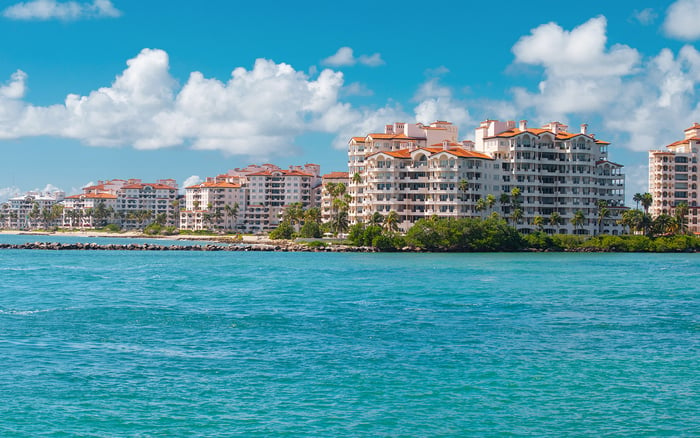
In areas where service standards and full-time staffing are part of the appeal, projects such as St. Regis® Residences Brickell, The Residences at 1428 Brickell, and Waldorf Astoria Residences Downtown Miami naturally fit the conversation because Brickell and Downtown tend to offer a strong combination of vertical access, valet infrastructure, and entertaining-oriented condo stock.
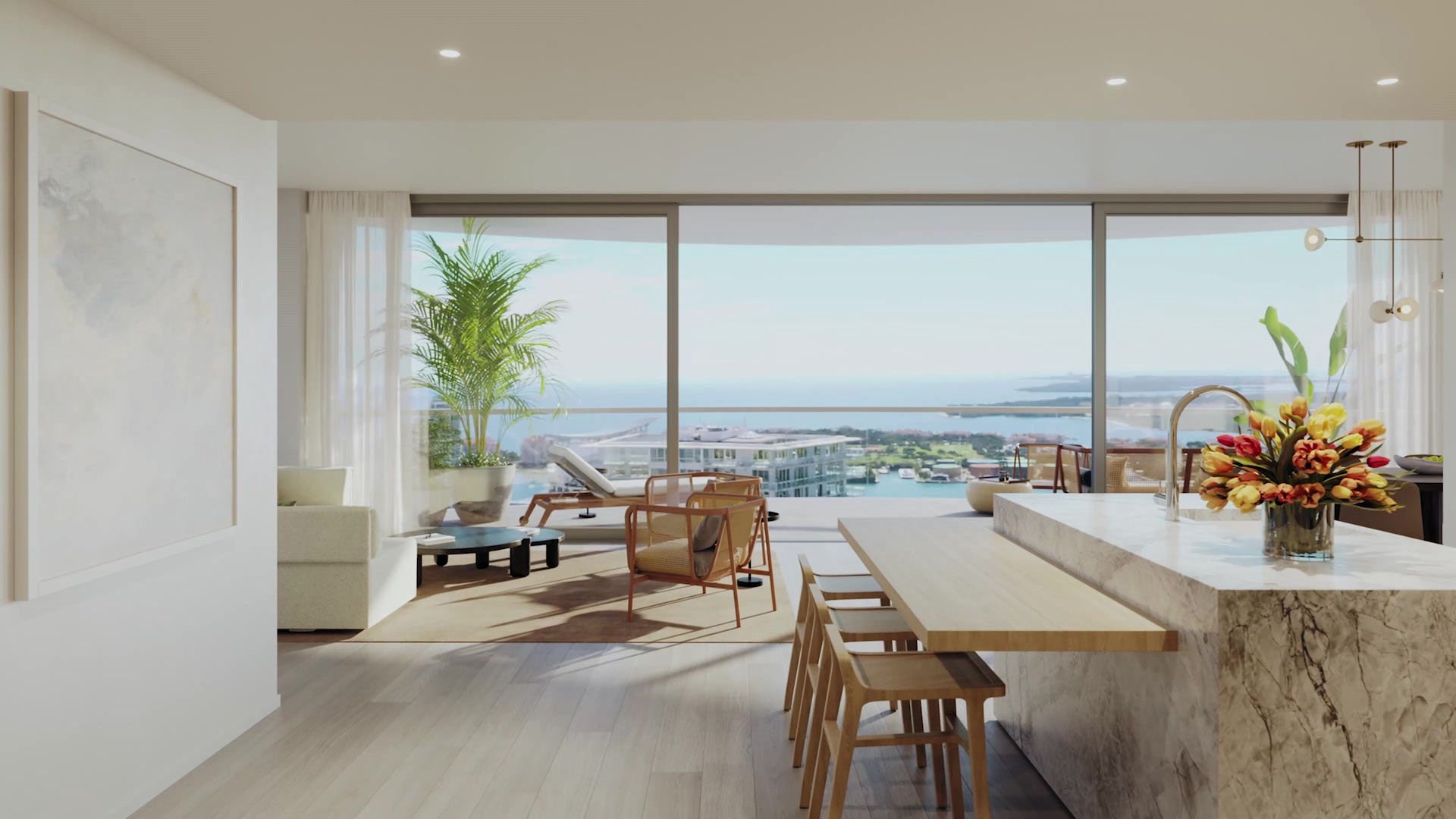
The best family-scale condos in South Florida are not just open. They are intelligently divided. That often means a proper foyer, formal and informal living areas, a den or office, and terrace access that allows children and adults to occupy the home differently at the same hour.
Service spaces are just as important. In well-considered layouts, work happens quietly in the background through a maid’s suite, a separate laundry room, a powder room, and some degree of service-entry logic. Since many household staff members live off-site, the residence performs better when service providers can enter and exit without moving through family or guest zones.
The kitchen is often the clearest dividing line between a beautiful condo and a functional one. If you entertain often, a main kitchen alone may not be enough. A secondary prep kitchen, butler’s pantry, or wet bar allows catering, cleanup, and beverage service to happen without overtaking the central living space. This is one of the details that keeps a home feeling serene even when it is full.
One of the great advantages of luxury condominium living is that some of the pressure can move outside the unit. Buildings with guest suites or hotel rooms, private dining rooms, wine storage, and neutral entertaining spaces effectively give the owner a second layer of hosting capacity.
That matters because even a large residence should not be required to solve every social function. A well-amenitized building lets owners host dinner downstairs, place visiting relatives nearby, or move an event into a separate private room rather than forcing the home to absorb every guest at once.
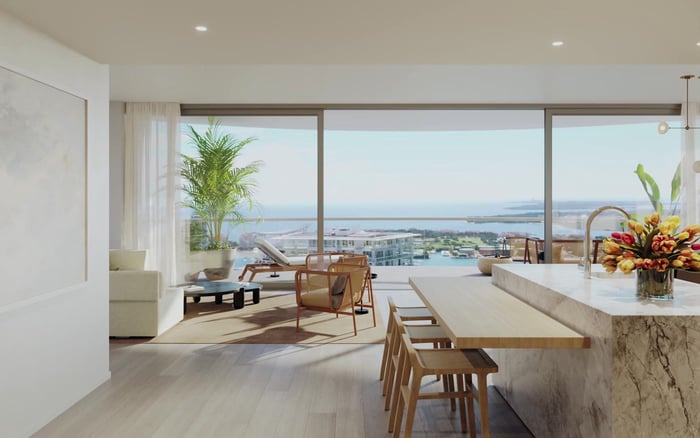
Terraces play a similar role. Large outdoor spaces, particularly around 1,000 square feet or more, create meaningful circulation relief. They let guests step outside, allow children to spill outward, and keep interior rooms from feeling crowded. In Miami Beach and the broader coastal market, residences such as The Perigon Miami Beach and 57 Ocean Miami Beach reflect the kind of indoor-outdoor bias buyers should prioritize when they expect to host regularly.
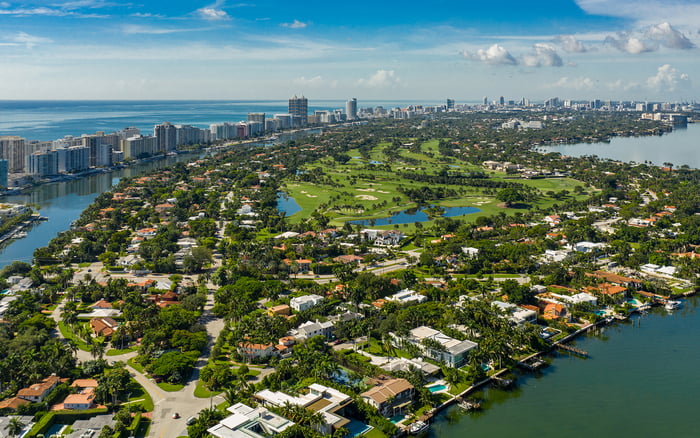
Not every condo district in South Florida serves this lifestyle equally well. The most practical search zones tend to be Brickell, Downtown Miami, Miami Beach, Coral Gables, and Coconut Grove, where larger residences, stronger service infrastructure, and entertaining-friendly layouts are more common.
Brickell and Downtown often suit buyers who want urban service intensity: valet, vertical access, and newer building systems that can support active households. Miami Beach tends to favor buyers who want larger terraces and destination-style entertaining. Coral Gables and Coconut Grove often attract families seeking a quieter, more residential rhythm while keeping the ease of lock-and-leave condominium living.
For buyers drawn to a lower-density family setting, Park Grove Coconut Grove fits naturally into the Coconut Grove conversation, where privacy, greenery, and a more domestic cadence often matter as much as spectacle. In Coral Gables, inventory with formal entertaining bones and a composed arrival experience can be especially compelling for multigenerational households.
Price expectations should be calibrated accordingly. For larger three- and four-bedroom residences that can plausibly handle this level of use, buyers should expect a broad range beginning around $2.5 million to $6 million or more in Brickell and Downtown, with Miami Beach and Coral Gables often pushing into roughly $5 million to $12 million or higher depending on scale, location, and finish.
A sophisticated purchase process goes beyond finishes, views, and staging. Ask operational questions. How are guests cleared and announced? How is valet coordinated during peak periods? Are elevators programmed differently for residents, service providers, or moves? Are there restrictions on contractor or staff use of service elevators or side entrances?
Condo documents and HOA rules matter here because some buildings place meaningful limits on service circulation. A residence can be perfect, but if the building restricts staff patterns in ways that conflict with your household, the fit may not last.
Then move to infrastructure. Verify water pressure, electrical capacity, and HVAC zoning. A luxury condo should be able to absorb simultaneous showers, laundry, dishwashing, kitchen use, and aggressive cooling demand without strain. These are not glamorous questions, but they often separate a residence that photographs beautifully from one that genuinely performs.
Integrated access and management systems also deserve attention. In newer or recently renovated buildings, coordinated guest entry, valet communication, and zone-by-zone controls can make daily life substantially smoother.
A South Florida luxury condo should not merely impress when it is empty. It should remain elegant when everyone is there at once. That usually means enough square footage, yes, but also enough zones, enough service logic, enough elevator capacity, enough parking, and enough infrastructure to keep family life and hospitality from colliding.
For discerning buyers in Brickell, Downtown, Miami Beach, Coral Gables, and Coconut Grove, the winning residence is rarely the one with the most dramatic first impression alone. It is the one that still feels gracious after the children are back, the guests have arrived, dinner is underway, and the household is fully in motion.
What size condo usually works best for this kind of household? In most cases, buyers should begin around 3,500 square feet and often look up to 6,000-plus for meaningful separation and comfort.
Is bedroom count more important than total square footage? Both matter, but the layout is decisive. Four-bedroom-plus plans generally adapt better to family life, guests, and multigenerational use.
Why do elevators matter so much in a condo purchase? Elevator flow shapes daily life. Buildings with at least three elevators or dedicated service access tend to handle peak arrivals more gracefully.
Do private elevator lobbies really make a difference? Yes. They improve privacy, reduce hallway congestion, and make simultaneous arrivals feel far more controlled.
What kitchen setup is best for entertaining? A main kitchen plus a prep kitchen, butler’s pantry, or wet bar is ideal because service can happen without overtaking family areas.
Should buyers prioritize large terraces? Absolutely, especially if they entertain. A substantial terrace creates overflow circulation and keeps guests from crowding the interior.
Are building amenities part of the decision or just a bonus? They are part of the decision. Guest suites, private dining rooms, and similar spaces reduce pressure on the residence itself.
What should staff circulation look like in a well-run building? Ideally, service providers can enter and exit through a dedicated route without crossing primary family or guest zones.
Which South Florida areas are strongest for this lifestyle? Brickell, Downtown, Miami Beach, Coral Gables, and Coconut Grove are the primary submarkets to evaluate first.
What is the most overlooked part of due diligence? Many buyers underweight building operations and infrastructure. HOA rules, water pressure, HVAC zoning, and electrical capacity all deserve close review.
To compare the best-fit options with clarity, connect with MILLION Luxury.
If branded residences are on your mind — as a home or as an allocation — we would be glad to share what we are seeing, privately.
Begin a quiet conversation