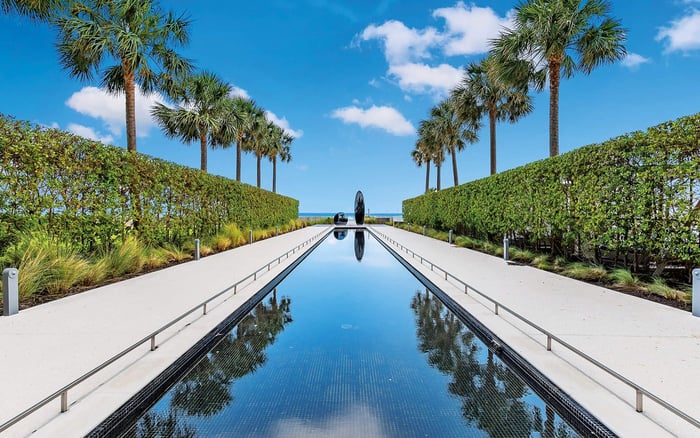
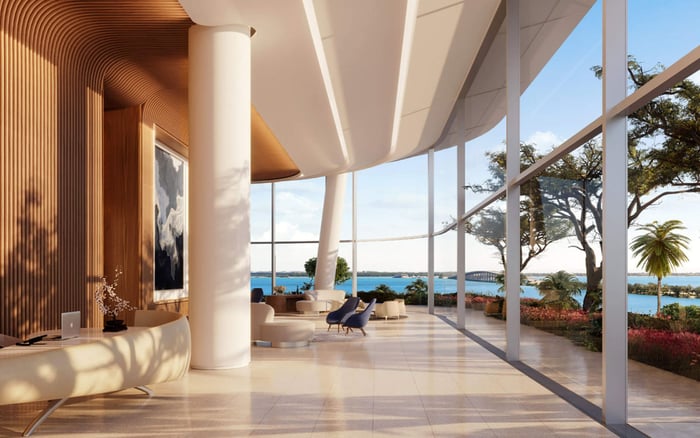
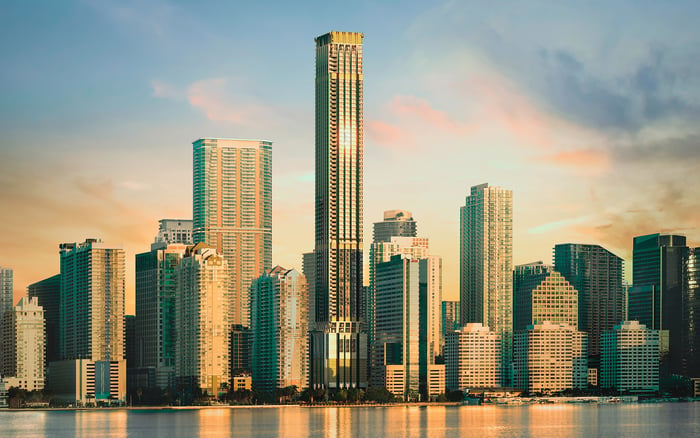
For serious collectors in Miami, the ideal residence is less about a single tower and more about the right fit between display-friendly interiors, stable living environments, and immediate access to the city’s cultural core. The strongest options center on the Design District, Wynwood, Downtown and Brickell, Coconut Grove, and select Miami Beach addresses that keep owners connected to art season without sacrificing privacy or polish.
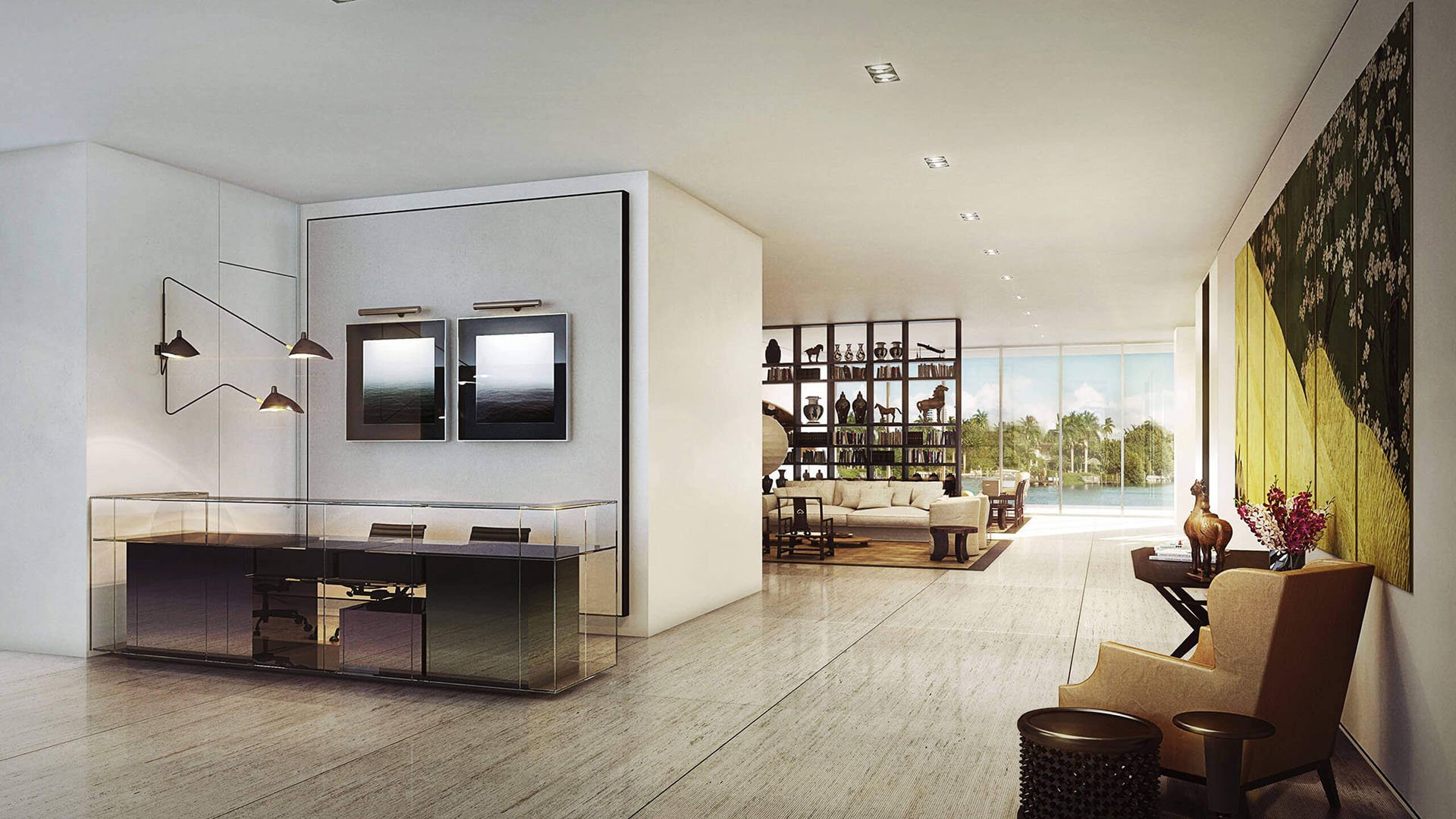
For collectors, the strongest residence is rarely defined by square footage alone. More important are the quality of the walls, the clarity of the floor plan, and the ease with which art can live in the home every day. In Miami, that means prioritizing large uninterrupted wall planes, generous ceiling heights, and a setting composed enough to support a serious collection.
Climate stability matters as well, even when exact building specifications vary from project to project. Buyers in this segment tend to favor residences with well-managed interiors, refined building systems, and layouts that avoid excessive fragmentation. The practical goal is straightforward: a home where paintings, works on paper, sculpture, and collectible design can be displayed confidently rather than treated as an afterthought.
Cultural proximity is just as important. Miami’s art-driven residential appeal is not concentrated in a single district. Instead, it clusters around a handful of neighborhoods where daily life can include galleries, museums, public art, and the kind of visual fluency collectors value. The question is not simply where to buy, but which neighborhood best matches the temperament of the collection itself.
1. Design District and its immediate surroundings - curated cultural luxury
For collectors who want immersion without improvisation, the Design District ranks first. It combines luxury residential momentum with dense access to galleries, public art, design showrooms, and a polished retail environment that feels intentionally composed. The nearby contemporary museum presence deepens the appeal further, giving owners a cultural routine that extends well beyond fair week.
This is the right fit for buyers who want a residence aligned with collecting as a lifestyle. Buildings such as Kempinski Residences Miami Design District and Miami Design Residences Midtown Miami are especially relevant for those seeking a home base in or near this highly visual part of the city.
2. Downtown and Museum Park - institutional proximity first
If the priority is proximity to major museum programming, Downtown and Museum Park offer one of Miami’s clearest cultural plays. Here, the museum anchor is part of the district rather than a destination that requires planning around traffic and distance. That creates a rhythm collectors appreciate: exhibitions, events, and repeat visits can become part of ordinary weekly life.
For buyers who also want full-service tower living, this area holds a natural advantage. Residences such as One Thousand Museum Downtown Miami and Waldorf Astoria Residences Downtown Miami fit the profile of owners who value concierge support, vertical living, and fast access to cultural institutions.
3. Brickell - polished tower living with easy cultural access
Brickell appeals to art-oriented buyers for a different reason. It is less about historic character and more about modern luxury towers, service, convenience, and quick access to Downtown’s cultural core. For collectors with demanding schedules, that can be especially persuasive. The home functions as a secure, professionally managed setting, while museums and exhibitions remain close at hand.
This is often the right choice for buyers who collect actively but live globally. Projects like The Residences at 1428 Brickell and St. Regis® Residences Brickell speak to that polished, service-driven version of collector living in Brickell.
4. Wynwood - loft sensibility and open-plan walls
Wynwood remains one of Miami’s most compelling addresses for collectors who prefer a rawer spatial character. Its gallery-heavy ecosystem, mural-lined streets, and ongoing art programming give the neighborhood an energy that feels more improvisational than the Design District, but no less relevant. For many buyers, the draw lies in the built form itself: loft-style and converted-space sensibilities naturally favor open plans and display-friendly walls.
Collectors who gravitate toward contemporary works, large-format canvases, and a less formal domestic environment often find Wynwood especially appealing. Frida Kahlo Wynwood Residences feels naturally aligned with that conversation. The Wynwood identity carries real meaning here because the neighborhood is as much an art ecosystem as it is a residential choice.
5. Coconut Grove - privacy, scale, and estate-style calm
For collectors with larger private holdings, Coconut Grove offers something urban-core districts often cannot: discretion and room. Its lower-rise character and established luxury enclaves make it a logical fit for buyers who want larger homes, more privacy, and the possibility of dedicated display rooms rather than art folded into a conventional condo plan.
The area also benefits from proximity to a major cultural landmark, reinforcing its appeal to owners who want estate-style living without losing touch with arts programming. In this setting, projects such as Park Grove Coconut Grove and Four Seasons Residences Coconut Grove suit buyers who value calm architecture, layered landscaping, and a more residential tempo.
A contemporary collection with large canvases, sculptural furniture, and an appetite for gallery circulation will often feel most at home in the Design District or Wynwood. Those districts offer the strongest sense of daily visual engagement. One is more curated and luxurious; the other is more industrial and experimental.
A collection built around institutional engagement, patronage, and frequent museum visits may be better served by Downtown or Brickell. In both areas, the residence supports a fast, service-rich lifestyle while the city’s major cultural venues remain part of a short, practical routine. Downtown is especially relevant for buyers who want museum adjacency to be a primary buying criterion, while Brickell tends to suit those who want that access wrapped in a highly managed residential environment.
Collectors with established holdings, family needs, or a desire for private viewing spaces should look closely at Coconut Grove. The area offers a different luxury proposition: less spectacle, more repose. It is especially persuasive for buyers who view their residence not simply as a backdrop for art, but as a long-term setting for living with it.
Even when the best year-round fit lies inland, Miami Beach remains part of the collector map. During art-fair season, proximity to exhibitions, events, dinners, and private showings becomes a lifestyle advantage in its own right. For some buyers, a beach address works best as a complement to a collecting life centered elsewhere in the city. For others, it is the preferred primary residence because it combines hospitality, privacy, and seasonal access with a strong international social circuit.
That is why Apogee South Beach continues to resonate with owners who want a refined coastal base while staying connected to Miami’s wider cultural calendar.
For art collectors, value in Miami is best understood as a three-part equation: wall space, environmental steadiness, and cultural proximity. Remove any one of those, and even a beautiful residence can feel incomplete. A spectacular view does not compensate for broken wall lines. A glamorous address is less persuasive if the art has nowhere meaningful to live.
The most successful purchases align architecture with habit. Some buyers want to step out into galleries and public art. Some want tower services and museum access. Others want private rooms where a collection can breathe. Miami offers each of those possibilities, but in different neighborhoods and with very different atmospheres.
For the discerning buyer, the right choice is less about chasing the loudest address and more about selecting the district that understands the collection’s scale, mood, and daily use.
What is the best Miami area for art collectors overall? The Design District stands out for its combination of luxury living, galleries, public art, and nearby museum access.
Is Wynwood a good fit for serious collectors? Yes. It is especially compelling for buyers who prefer loft-style layouts, open plans, and a more experimental art environment.
Why do Downtown residences appeal to collectors? Downtown offers unusually direct access to Museum Park, making institutional programming part of daily life.
How is Brickell different from Downtown for art buyers? Brickell is more service-driven and tower-oriented, while still offering quick access to major cultural venues nearby.
Who should consider Coconut Grove? Collectors who want privacy, larger homes, and room for dedicated display areas often find Coconut Grove especially attractive.
Does Miami Beach still matter if the collection is city-focused? Yes. It remains highly relevant during art-fair season and for buyers who value a coastal social base.
What makes a residence display-friendly for art? Large uninterrupted walls, high ceilings, and clear floor plans are usually the most important fundamentals.
Should buyers prioritize a building or a neighborhood first? The neighborhood usually comes first because cultural access and daily context shape how a collector actually lives.
Are high-rise condos suitable for important collections? They can be, particularly in Brickell and Downtown, when the layout is disciplined and the environment feels well managed.
What is the best way to shortlist comparable options for touring? Start with location fit, delivery status, and daily lifestyle priorities, then compare stacks and elevations to validate views and privacy.
For a tailored shortlist and next-step guidance, connect with MILLION Luxury.
If branded residences are on your mind — as a home or as an allocation — we would be glad to share what we are seeing, privately.
Begin a quiet conversation