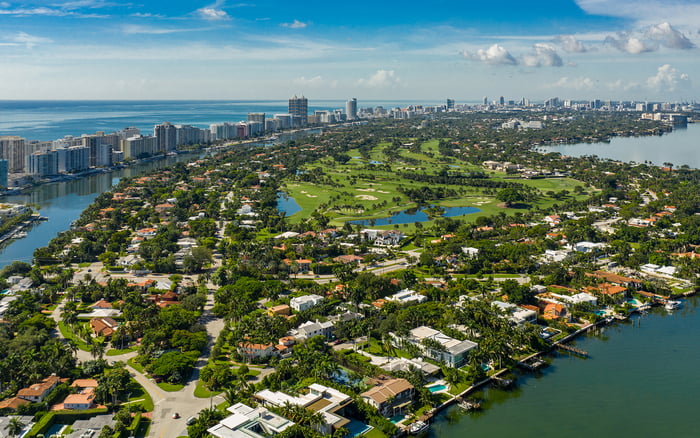
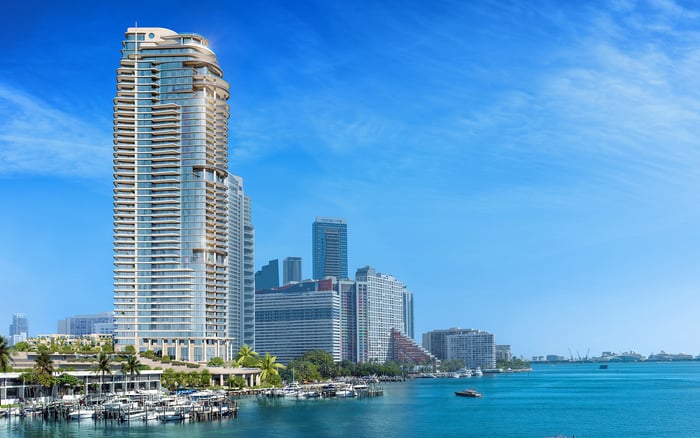
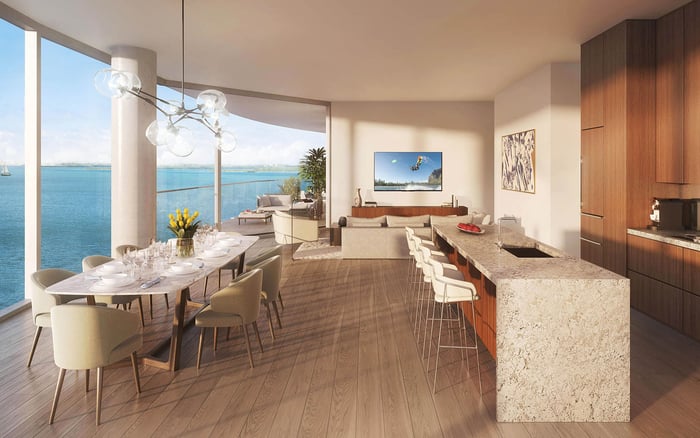
For luxury buyers in Miami, true walkability means more than a favorable score. It is the ability to step from a residence into a fully realized neighborhood with dining, culture, waterfront access, daily conveniences, and an active street life that does not require constant reliance on a car. Within that lens, five neighborhoods stand apart: Brickell, Downtown Miami, Coconut Grove, Coral Gables, and Wynwood.
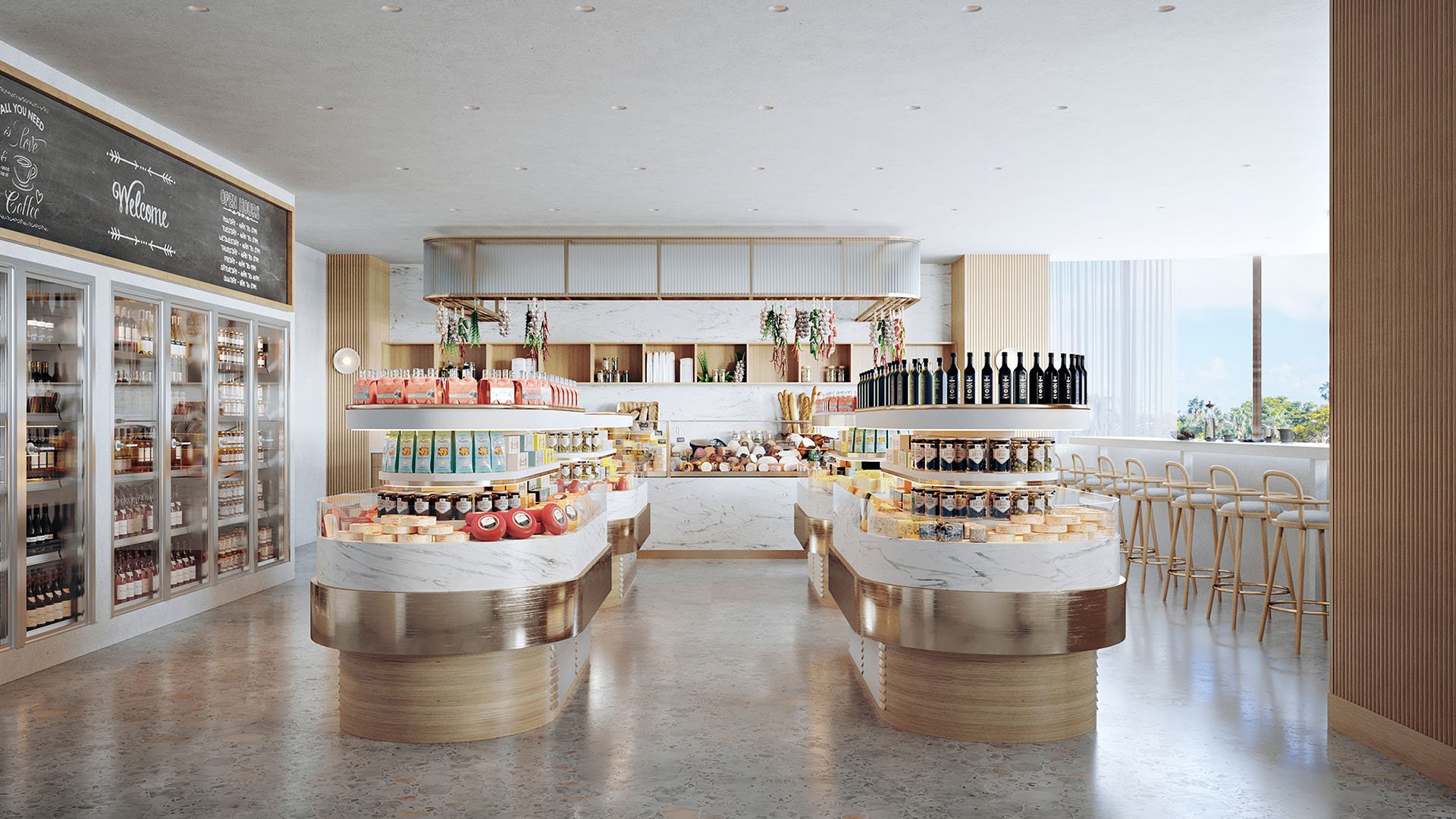
In Miami, walkability takes on a different meaning through a luxury lens. Buyers at the high end are not simply looking for a neighborhood where errands can be handled on foot. They are looking for places where daily life feels edited and immediate: morning coffee without a drive, dinner a few blocks away, waterfront promenades for evening walks, and access to culture, retail, and social energy that begins at the lobby rather than in traffic.
That distinction narrows the field considerably. Many prestigious Miami addresses offer privacy, views, and scale, but far fewer deliver a genuinely pedestrian lifestyle. The neighborhoods below stand out because they pair established or emerging walkable cores with the kind of residential product that appeals to affluent full-time owners, second-home buyers, and those seeking a more urban expression of South Florida luxury.
1. Brickell, Miami - the city’s most complete live-work luxury district
Brickell ranks first on this list because it combines a dense luxury condo environment with dining, retail, and transit connectivity in one of Miami’s most complete urban districts. As a major neighborhood south of the Miami River, it offers a version of vertical living where daily needs and social life are tightly integrated.
For luxury buyers, Brickell’s appeal extends beyond convenience. It is density with polish. The neighborhood has the cadence of an international financial district, yet its riverfront and bay-adjacent setting soften the experience. This is the address for those who want immediate access to the city’s pulse without giving up a high-design residential environment.
2. Downtown Miami (Omni / Museum Park area) - culture and waterfront access in the urban core
Downtown Miami places second, distinguished by its relationship to waterfront public space and major cultural anchors. The Omni and Museum Park area in particular offers an urban environment where residents can walk not only to dining and entertainment, but also to bayfront scenery and institutions that make the neighborhood feel more layered than a purely commercial district.
The result is a luxury proposition built on proximity. Buyers who value skyline living with a cultural component often see Downtown as a compelling counterpart to Brickell: slightly different in mood, still highly connected, and increasingly attractive to those who want their residence integrated with the broader public life of the city.
3. Coconut Grove, Miami - village character with waterfront prestige
Coconut Grove ranks third, and it earns its place for a very different reason than the urban core. Here, walkability is less about towers and transit interchanges and more about a village-style center around CocoWalk, Main Highway, and the neighborhood’s park-lined waterfront edges. It is one of the few Miami neighborhoods where luxury can feel leafy, intimate, and pedestrian all at once.
For many affluent buyers, the Grove’s value lies in that atmosphere. It offers the ability to walk to lunch, boutiques, and the bay while maintaining a residential identity that feels gentler and more private than Brickell or Downtown. The lifestyle is refined, social, and distinctly local.
4. Coral Gables - historic planning and polished pedestrian streets
Coral Gables ranks fourth. Its strength lies in a historically planned urban form that continues to support walkable commercial corridors, especially around Miracle Mile. In a market where many luxury enclaves privilege seclusion over street life, Coral Gables stands apart for its architectural consistency, established retail streets, and deeply finished sense of place.
This is a neighborhood for buyers who prefer elegance over intensity. The luxury experience here is more composed than overtly vertical, and the walkable appeal comes from mature streetscapes, civic coherence, and an affluent residential backdrop that feels enduring rather than trend-driven.
5. Wynwood, Miami - an emerging luxury walkability story
Wynwood rounds out the list in fifth place. It ranks here as an emerging luxury district rather than a fully established one. Its advantage is unmistakable street energy: galleries, murals, restaurants, nightlife, and dense pedestrian activity create an on-foot lifestyle that is among the city’s most animated.
For luxury-minded buyers, Wynwood is less about classic prestige and more about cultural immediacy. It appeals to those who want design-forward residences in a neighborhood defined by creativity, movement, and momentum.
The most valuable walkable neighborhoods do more than cluster restaurants near residential buildings. They support an entire daily rhythm. Brickell and Downtown do this especially well because walkability is reinforced by transit access, dense services, and public circulation that extends the reach of the neighborhood beyond a single street. In practical terms, this means residents can choose when to use a car rather than being forced to.
Coconut Grove, Coral Gables, and Wynwood show different versions of the same principle. In the Grove, the reward is village continuity and waterfront leisure. In Coral Gables, it is the refinement of planned pedestrian corridors. In Wynwood, it is the immediacy of culture and nightlife. Each neighborhood proves that luxury walkability is not one-size-fits-all. It can be metropolitan, residential, historic, or creative, so long as life on foot feels natural rather than occasional.
This distinction matters to buyers relocating from other global markets where walkability is expected rather than treated as a bonus. Within Miami, these five neighborhoods come closest to meeting that expectation while still offering a credible ultra-luxury residential context.
In Brickell, the appeal of a walkable urban core is reinforced by new-generation residences such as 888 Brickell by Dolce & Gabbana, Baccarat Residences Brickell, and The Residences at 1428 Brickell. These projects fit the neighborhood because they are embedded in a district where dining, office life, and social activity are part of the residential equation.
Downtown’s luxury profile is equally legible in statement towers. Residences such as Aston Martin Residences Downtown Miami reflect the neighborhood’s appeal to buyers who want skyline drama paired with close access to the waterfront and cultural institutions.
In Coconut Grove, the value proposition becomes more residential and more understated. Projects like The Well Coconut Grove align with a buyer profile that prioritizes walkable village life, greenery, and bay proximity over maximum urban intensity.
Coral Gables remains more selective in tone, but that selectivity is precisely the point. Developments such as Ponce Park Coral Gables suggest how luxury residential product can integrate with one of Miami’s most polished pedestrian environments. In Wynwood, the story is still developing, yet projects like Frida Kahlo Wynwood Residences underscore the neighborhood’s push toward a more design-conscious residential future.
Brickell is best for the buyer who wants immediacy, transit adjacency, and the fullest expression of urban luxury in Miami. Downtown suits someone who values that same centrality but prefers stronger ties to the waterfront and the cultural life of the city.
Coconut Grove often attracts buyers who want walkability without sacrificing a quieter, more residential atmosphere. Coral Gables suits those who appreciate legacy planning, architectural continuity, and a more classically composed streetscape. Wynwood is for the buyer who sees luxury through the lens of creativity, nightlife, and an evolving neighborhood identity.
For MILLION Luxury clients, the key question is not simply which neighborhood is most walkable. It is which version of walkability best supports the life they actually want to lead.
Which Miami neighborhood ranks first for walkability in this luxury-focused list? Brickell ranks first in this ranking because it offers the strongest blend of luxury towers, dining, and transit-connected urban living.
Why does Downtown Miami rank just behind Brickell? Downtown pairs a walkable urban core with bayfront access and cultural destinations, giving it a strong lifestyle profile for luxury buyers.
What makes Coconut Grove different from Brickell and Downtown? Coconut Grove offers a more village-like experience, with a quieter residential atmosphere and walkable access to shops, dining, and the waterfront.
Why is Coral Gables included in a walkability ranking? Coral Gables stands out for planned pedestrian corridors, especially around Miracle Mile, and for its polished, established streetscape.
Is Wynwood already a fully established ultra-luxury neighborhood? No. In this context, Wynwood is better viewed as an emerging luxury district with strong pedestrian energy and design-forward appeal.
Do these neighborhoods offer different versions of walkable luxury? Yes. Some feel more urban and high-rise, while others feel more historic, residential, or creative, depending on the buyer’s lifestyle preferences.
Which neighborhood may appeal most to buyers seeking a quieter walkable setting? Coconut Grove is often the strongest fit for buyers who want walkability with a softer, more residential character.
Which area best suits buyers who want culture near home? Downtown Miami is especially appealing for that, thanks to its connection to waterfront public space and major cultural institutions.
How do luxury residential projects support walkability in these neighborhoods? They place residents close to dining, shopping, and neighborhood activity, making daily life feel more immediate and connected.
What is the best way to shortlist comparable options for touring? Start with location fit, delivery status, and daily lifestyle priorities, then compare stacks and elevations to validate views and privacy.
If you'd like a private walkthrough and a curated shortlist, connect with MILLION Luxury.
If branded residences are on your mind — as a home or as an allocation — we would be glad to share what we are seeing, privately.
Begin a quiet conversation