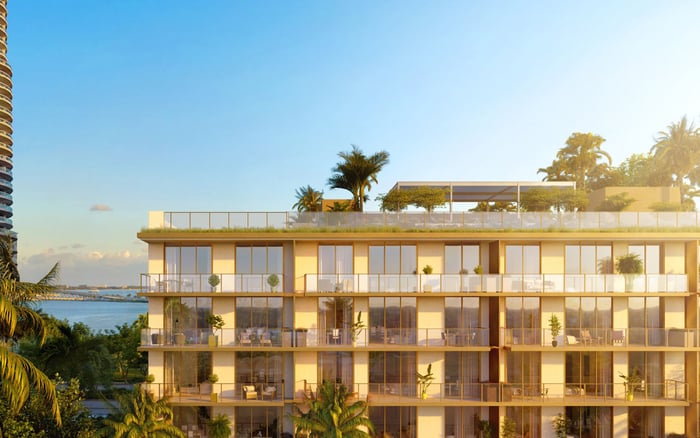
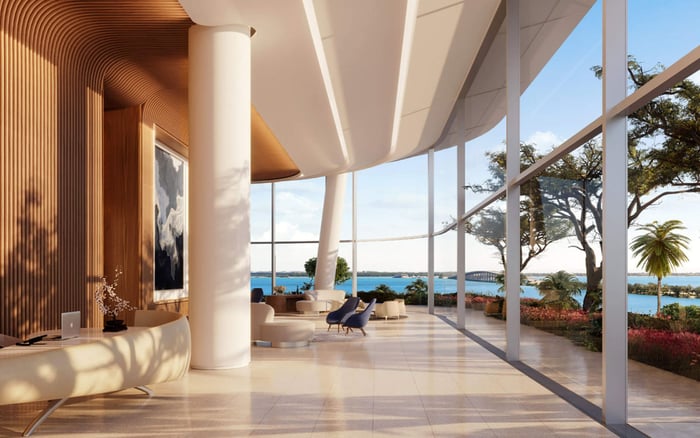
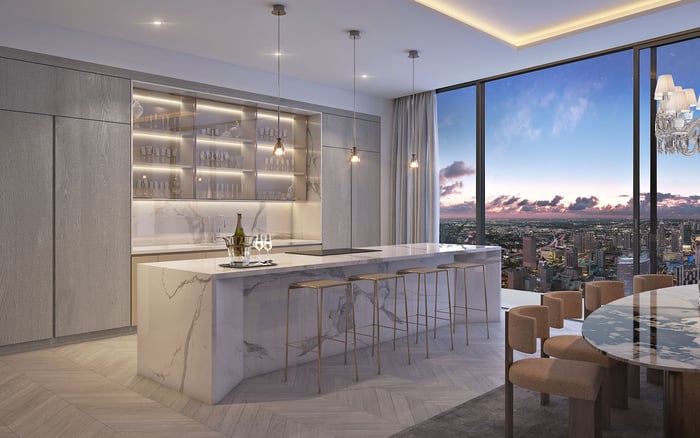
South Florida’s ultra-luxury market has stayed remarkably liquid, with cash continuing to define the $10M+ tier even as financing friction slows much of the condo landscape. For private buyers, the advantage now is strategic: clarity on liquidity, product quality, and neighborhood-level scarcity.
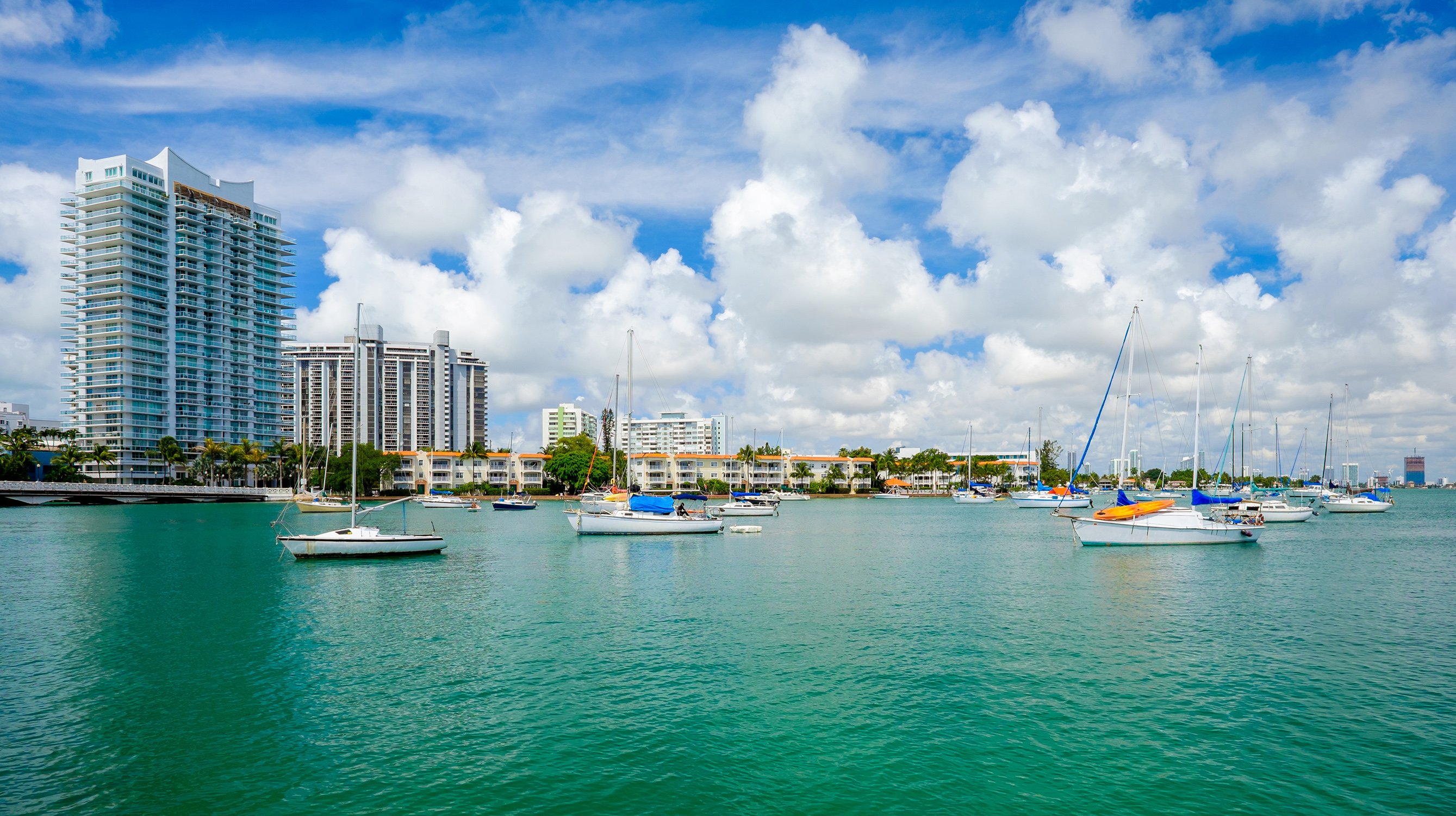
Liquidity shapes negotiations. In markets where $10M+ inventory rarely trades, sellers can anchor to mythology rather than reality, and buyers are forced into slow, expensive price discovery. In South Florida’s current cycle, the top lane produces enough transaction volume to establish reference points, even when each property remains singular. The result is a market that can be discreet without being opaque.
The next implication is quieter but consequential: liquidity draws quality. Developers, architects, and luxury operators calibrate risk to the depth of the buyer pool. When the top end moves, it supports a pipeline of better-designed residences, stronger service models, and more ambitious amenities across Miami Beach, Brickell, and the coastal cities that frame the region.
At the highest end, South Florida is governed by cash in plain view. In the $10M+ tier, 81% of closings were all-cash. That is not a footnote-it is a structural reason the segment can stay active even when rates rise or underwriting tightens elsewhere.
Cash dominance changes the mechanics of a deal. First, it compresses timelines. Second, it alters the character of competition. Instead of leverage-driven bidding wars, premiums are often paid for certainty, discretion, and clean execution. If you are financing, you can still win-but the offer must read like cash: substantial deposits, limited contingencies, and a clear path to closing.
That cash culture is not limited to trophy homes. In Miami overall, cash sales represented 40% of all closings in December 2025, compared with 27% nationally. For sellers, that supports confidence that the right buyer can close without being derailed by appraisal gaps or building-level restrictions. For buyers, it means the other side will expect a professional-grade process, even when the property is marketed as “lifestyle.”
Condominiums in South Florida remain active, but the market is increasingly split by financeability and perceived building quality. Miami existing condo sales rose 7.91% year-over-year in December 2025, yet financing constraints are real-and widening.
Across Miami-Dade, Broward, and Palm Beach counties, only 21 of 2,397 condo buildings were FHA-approved, roughly 0.9%. FHA is not the toolset for most $10M+ buyers, but the signal is broader: a meaningful share of buildings can be difficult to finance, difficult to insure, or simply hard to underwrite cleanly. That friction doesn’t always translate into linear price drops, but it does lengthen time-to-contract and raises the standard for diligence.
Median condo days-to-sale in Miami sat at 109 days. For buyers, that can create opportunity-if you can distinguish “slow because it’s overpriced” from “slow because the building is complicated.” The smartest offers in 2026 are not always the lowest. They are structured around the building’s approval path, reserve posture, and any future capital plans.
For those seeking turnkey, low-drama ownership, newer luxury product can feel like a different asset class. In Brickell, residences such as 2200 Brickell present a modern ownership proposition that often aligns with the priorities of time-sensitive, globally mobile principals.
Miami single-family pricing has moved dramatically over the long arc: the single-family median rose 144.8% from December 2015 to December 2025, from $278,500 to $660,000. That decade-long climb is not, by itself, a reason to buy. But it does explain why land, privacy, and adjacency to water now price more like a world city than a seasonal resort.
Demand at the upper end continues to build. Miami-Dade $1M+ single-family sales increased 12% year-over-year in December 2025. Even if your search begins well above that threshold, the $1M+ lane is where trade-up buyers, second-home buyers, and newly arrived executives often secure a first foothold. Strength there supports the full ladder above it.
For luxury buyers, the takeaway is to think in terms of scarcity types:
Irreplaceable lots: waterfront, point lots, long views, and usable docks.
Irreplaceable neighborhoods: where zoning and community character limit new supply.
Irreplaceable architecture: modern estates and historically significant homes that cannot be replicated at today’s costs.
In Boca Raton, the single-family experience is often defined by discretion, schools, and an ease-of-living that translates well to multi-generational use. A property like 749 Bamboo Dr Boca Raton speaks to the buyer who wants a residential address first and a market thesis second.
One of the most persistent reasons South Florida attracts global capital is not only weather or lifestyle. It is value-per-square-meter relative to other elite nodes. Today, $1 million buys roughly 58 square meters in Miami, compared with about 19 in Monaco and around 34 in New York and London.
This does not mean Miami is “cheap.” It means Miami can still deliver scale, light, and water adjacency in ways many legacy luxury markets ration aggressively. For buyers who think in global portfolios, that value proposition lowers the emotional cost of choosing space: you can have the large terrace, the family layout, the staff accommodation, the marina proximity-and still feel you are paying for a lifestyle rather than surrendering to scarcity.
Miami Beach remains the region’s most symbolic address, particularly where coastal privacy and curated services intersect. Buildings such as 57 Ocean Miami Beach capture a quieter expression of the beach lifestyle: less nightlife headline, more morning light and direct shoreline orientation.
Luxury housing follows wealth, but it also follows confidence-and confidence often comes from economic identity. Miami has become a credible startup ecosystem, ranking #28 globally and #11 in the U.S. in 2025, with 28.5% annual ecosystem growth.
That growth shows up directly in the luxury market. It increases executive relocation, expands the base of founders and early employees who become buyers, and strengthens the city’s international capital networks. Miami is also increasingly positioned as a bridge for Latin American fintech expanding into U.S. capital markets, reinforcing the city’s role as a bilingual, cross-border business hub.
The contrast with certain Northern California submarkets is illustrative. Palo Alto remained highly competitive in late 2025, with homes selling in about 19 days and receiving around five offers on average. Yet the same period also reflected notable net outflow, with far more people moving out than moving in from outside metros. The point is not to declare a winner between coasts. It is to note that South Florida is no longer merely receiving “retirees”; it is receiving decision-makers.
That decision-maker profile is visible in publicly disclosed examples of high-profile buying activity tied partly to the political debate around a proposed California wealth-tax measure. In 2026, tax sensitivity, privacy, and quality-of-life are increasingly bundled into the same purchase decision.
When the ultra-luxury buyer is “in control,” it does not mean prices fall. It means buyers can be selective and still execute. The current South Florida setup offers three advantages:
1) Choice without paralysis.
The market now has enough $10M+ turnover to support real comparison across product types: waterfront estates, branded high-rise residences, boutique beachfront buildings, and newer wellness-oriented enclaves.
2) Negotiation leverage in the middle, not the top.
The very top still trades on rarity. But in the broader luxury condo segment, financing friction and longer days-to-sale often create room for concessions, stronger terms, and more deliberate inspections.
3) A premium on simplicity.
Buyers are increasingly paying for “low-friction ownership”: clear building governance, strong reserves, predictable insurance posture, and amenity sets that are actually deliverable. Newer towers and carefully managed boutique buildings tend to benefit.
In Brickell, residences like Una Residences Brickell reflect the market’s appetite for strong design and a sense of permanence. In Sunny Isles, the rise of statement towers continues to appeal to buyers who want a lock-and-leave home with a resort-grade service profile, a category that includes Bentley Residences Sunny Isles.
Luxury buyers are often told to “buy the best house on the best block.” In 2026 South Florida, the more useful guidance is to buy the cleanest asset in the most constrained micro-market.
Consider these diligence priorities:
Liquidity cues: recent trades in the immediate neighborhood or building, not just the broader city.
Exit optionality: who your next buyer is likely to be, and how they will finance, insure, and staff the home.
Operational reality: carrying costs, building assessments, and any deferred-maintenance narrative.
Lifestyle integrity: morning-to-night noise patterns, privacy sightlines, and day-to-day access.
The market is rewarding buyers who treat the purchase as both a residence and an operating asset. In a cash-led environment, disciplined underwriting becomes a form of luxury.
Is South Florida still seeing meaningful $10M+ demand? Yes. The region recorded 361 residential sales above $10M in 2025, signaling sustained depth at the top.
How cash-dominant is the ultra-luxury segment? In the $10M+ tier, 81% of closings were all-cash, so clean terms often matter as much as price.
Are Miami condos selling, or is the market frozen? Condo sales have risen year-over-year, but many buildings face financing friction that slows absorption.
Why do condos take longer to sell than single-family homes right now? A longer median days-to-sale reflects building-level diligence, financing constraints, and buyer selectivity.
Does FHA approval matter to luxury buyers? Indirectly. Low approval rates highlight broader financeability issues that can affect resale liquidity.
How does Miami compare globally on value for luxury real estate? On a space basis, $1M buys more in Miami than in several legacy luxury hubs, supporting global demand.
Is the buyer pool limited to retirees and second-home owners? Increasingly no. More executives and founders are purchasing as Miami’s business ecosystem expands.
What is the key risk to underwrite in a condo purchase? Building governance and future capital needs, because those factors can affect both costs and resale.
Is single-family still the prestige play in South Florida? Yes, especially for privacy and land value, but top-tier condos compete on services and simplicity.
What’s the smartest posture for a $10M+ buyer in 2026? Be selective, underwrite the asset like an operator, and prioritize clean execution in a cash-led market.
To compare the best-fit options with clarity, connect with MILLION Luxury.
If branded residences are on your mind — as a home or as an allocation — we would be glad to share what we are seeing, privately.
Begin a quiet conversation