A discreet look at why affluent households are reallocating residential real estate capital from Paris to Miami and the broader South Florida corridor in 2026, from inventory depth and buyer mix to tax posture, financing, and rental-rule friction.
In 2026, the most consequential move in luxury real estate is rarely a dramatic “exit” from one city to another. It’s quieter: a deliberate repositioning of capital from older, regulation-dense markets toward places that offer broader choice, steadier year-round liquidity, and a lifestyle that doesn’t require compromise.
For buyers weighing a prime Paris apartment against a South Florida residence, the decision increasingly resembles portfolio construction. The question is how you want to hold real assets when rental rules, tax posture, financing costs, and buyer demand are all shifting at once.
In ultra-prime markets, scarcity can read as status. But at seven figures and above, scarcity can also translate into friction: fewer viable options, longer search windows, and a narrower resale audience.
South Florida’s advantage right now is selection. The region’s $1 million-plus inventory has been notably steady across the year rather than purely cyclical. That steadiness creates optionality: buy now and renovate later, or buy now and relocate later, without needing perfect timing.
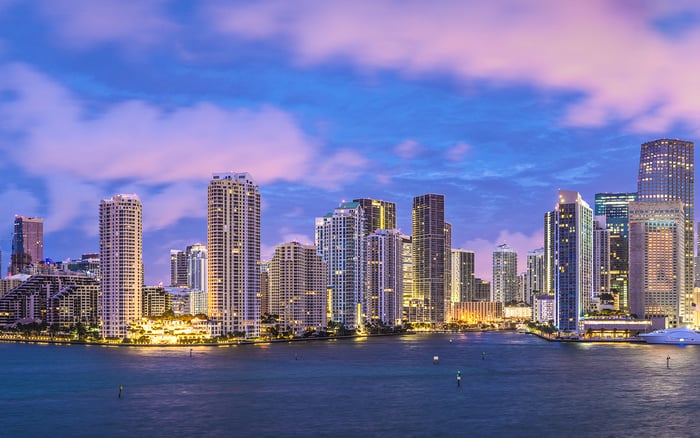
That’s one reason Brickell and the urban core remain a focal point for global buyers seeking a high-service condo experience with walkable access to dining and culture. Residences in buildings such as 2200 Brickell align with a specific 2026 preference set: privacy, newer construction standards, and a turnkey lifestyle that can flex between primary and pied-à-terre use.
South Florida luxury demand isn’t coming from a single channel. It’s a layered buyer pool: domestic migration, international capital, and second-home purchasers who want personal use with intelligent carrying costs.
A defining dynamic in the Miami metro is the gravitational pull of the New York region. More than one-quarter of local luxury demand is sourced from the New York metro area, a share that outweighs the combined contribution of several other feeder markets. Practically, that creates a familiar resale audience; when your eventual buyer already lives between two cities, liquidity tends to strengthen.
International purchasing has expanded meaningfully as well. South Florida international buyers purchased about $4.4 billion of residential property in 2025, up from roughly $3.1 billion in 2024. Foreign buyers also represented about 15% of South Florida residential sales by dollar volume in 2025-well above national norms. For sellers and long-term holders, that wider demand base expands exit options, particularly for prime, well-located condominiums.
In 2026, the condominium isn’t a compromise. For many globally mobile households, it’s the most efficient ownership format: a smaller operational footprint, professional management, and a predictable service environment.
International buyers in South Florida disproportionately purchase condos, accounting for about 51% of foreign purchases. The cash profile is equally instructive: about 51% of South Florida international residential transactions in 2025 were all-cash. Cash buying reduces sensitivity to U.S. mortgage rates and streamlines execution in competitive situations.
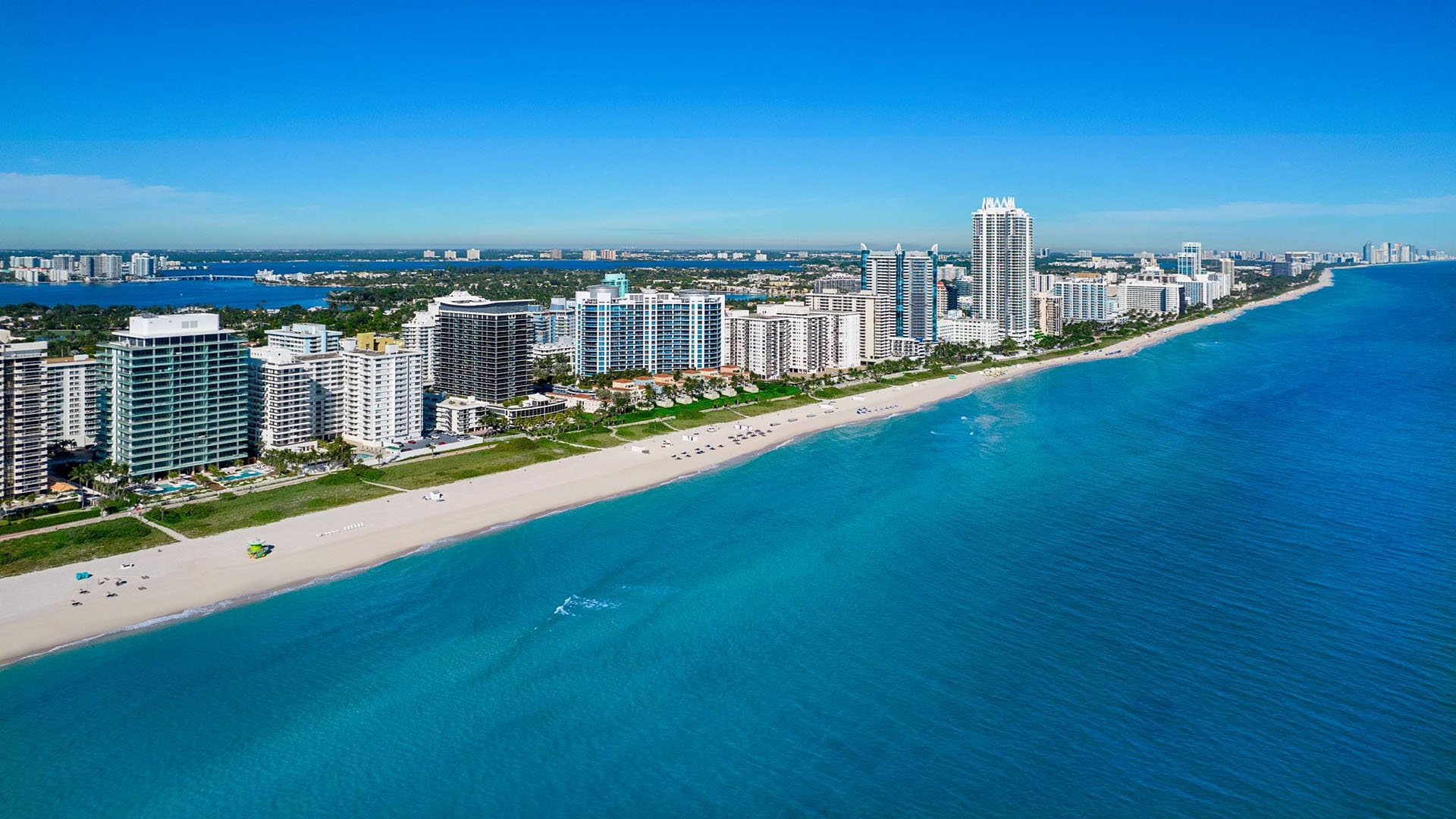
That preference helps explain why waterfront, full-service product in Miami Beach remains exceptionally durable. Buyers looking for an address that functions both as a residence and as a recognizable asset often gravitate to new, design-forward beachfront inventory. In that context, properties like 57 Ocean Miami Beach reflect a broader theme: the luxury condo as a “stored lifestyle,” ready to be activated on demand.
Paris remains one of the world’s most beautiful residential markets, and for many families it will always be non-negotiable. Still, the holding calculus is changing.
One clear signal has been the contraction in high-end transactional activity: sales above €1 million fell sharply between 2022 and 2024. At the same time, the rental rulebook has tightened in ways that affect investors and part-time users alike. Starting January 2025, properties with the lowest energy rating tier (G-rated) can no longer be rented, with expansion scheduled to F-rated properties in 2028. For owners, this shifts the cost curve: renovations become less optional, and timelines become increasingly policy-driven.
This is where the comparison to South Florida sharpens. The decision isn’t “Paris or Miami.” It’s where you want regulatory risk to sit on your personal balance sheet-and how much flexibility you want if you hold a home you may rent part of the year.
For U.S. domestic buyers, Florida’s lack of state income tax remains a decisive draw, particularly for households relocating from higher-tax states. For international buyers, the considerations differ-but can be just as consequential.
Ownership structures, reporting requirements, and disposition planning can be as important as the property itself. Foreign sellers of U.S. real estate may be subject to FIRPTA withholding, commonly 10% of gross proceeds, although reductions can be possible through specific procedures. The point isn’t to intimidate; it’s to reflect a 2026 norm: sophisticated buyers treat acquisition as the beginning of planning, not the end.
In Paris, residency pathways for investors exist, but they can come with clear thresholds. One business-investor pathway requires at least €300,000 of direct investment and commitments tied to job creation or protection within a set timeframe, along with defined government fees. For globally mobile principals, these details influence how they allocate capital and where they choose to center their time.
Financing costs have become a lifestyle variable. In city-to-city comparisons, mortgage-rate assumptions can materially change the monthly carrying cost of ownership.
Directional comparisons suggest U.S. mortgage rates have been meaningfully higher than Paris benchmarks recently, while prime Paris city-center purchase prices per square foot can exceed Miami’s. That combination often pushes decisions toward either (a) paying cash in South Florida to sidestep rate exposure or (b) selecting a smaller, higher-quality unit with stronger long-term desirability.
The sophistication is in aligning the asset with the use case. If your South Florida home is a high-usage base, you may prioritize floorplan efficiency and neighborhood access. If it’s an occasional residence, you may prioritize service, security, and lock-and-leave ease.
South Florida isn’t a single market. It’s a corridor of distinct micro-lifestyles, each with its own buyer profile and resale audience.
Brickell remains the default for global executives who want a modern skyline address close to business and dining. Miami Beach appeals to buyers who want ocean adjacency and a resort-like cadence. Sunny Isles offers a high-rise beachfront experience with a strong international orientation. Bal Harbour and Bay Harbor Islands skew toward privacy and boutique luxury.
For buyers seeking a highly curated, wellness-oriented residential environment at a more intimate scale, Bay Harbor Islands has become a compelling alternative to larger beach markets. Developments such as The Well Bay Harbor Islands speak to a 2026 priority: daily life designed around calm, discretion, and longevity.
Further north, Fort Lauderdale continues to refine its luxury identity with beachfront living and yachting access-often with a slightly more relaxed tempo than Miami’s core. West Palm Beach adds another layer, with increasing appeal for those who want Palm Beach adjacency and a more residential tone.
The underlying reason wealthy households are repositioning real estate capital isn’t a single number. It’s the convergence of four ideas:
First, inventory depth creates choice, and choice reduces regret. Second, South Florida’s buyer pool is unusually diversified, with domestic and international demand supporting liquidity. Third, the condo format is increasingly the preferred instrument for globally mobile owners, and the market has built a high-quality supply to match. Fourth, regulatory and energy-efficiency constraints in parts of Europe have introduced a new layer of holding friction that’s difficult to price until you live it.
None of this diminishes Paris’s cultural primacy. It simply clarifies why a growing cohort is building a dual-city strategy: maintain a European anchor for heritage and identity, while adding a South Florida base for climate, access, tax simplicity for U.S. residents, and resale liquidity.
Why are affluent buyers looking at South Florida in 2026? Inventory depth, a broad buyer pool, and lifestyle flexibility make it a practical second center.
Is South Florida’s $1M+ market really that large? Yes. The region’s million-dollar listing inventory recently surpassed the New York metro’s.
Where is South Florida luxury demand coming from domestically? A meaningful share originates from the New York metro area, supporting ongoing liquidity.
How important are international buyers to the market? International purchases are substantial by dollar volume and represent a meaningful share of sales.
Do foreign buyers prefer condos or single-family homes in South Florida? Condos represent a major share of foreign purchases, reflecting lock-and-leave preferences.
Are international South Florida buyers typically paying cash? Many do; just over half of international transactions have been reported as all-cash.
What is changing in Paris rentals that affects investors? Low energy-rated properties face rental bans starting with G-rated units in 2025 and expanding later.
How do Miami and Paris compare on price per square foot? Directional comparisons suggest prime Paris city-center pricing per square foot can exceed Miami’s.
What should foreign owners know about selling U.S. property? FIRPTA withholding can apply to foreign sellers, so disposition planning should start early.
What is the simplest way to start exploring South Florida neighborhoods? Start by matching your lifestyle to a submarket, then refine by building type and service level.
To compare the best-fit options with clarity, connect with MILLION Luxury.
If branded residences are on your mind — as a home or as an allocation — we would be glad to share what we are seeing, privately.
Begin a quiet conversation