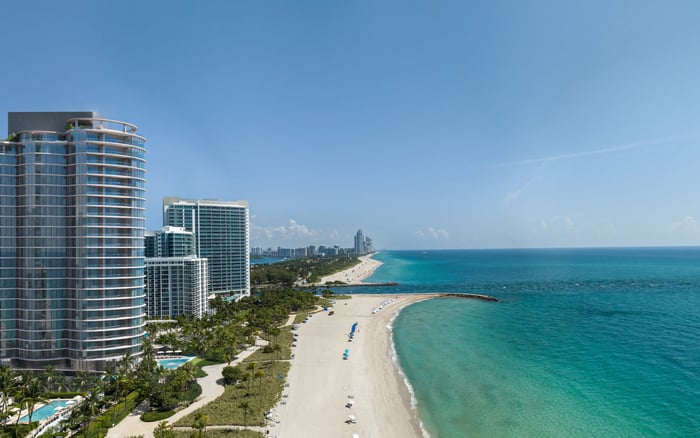
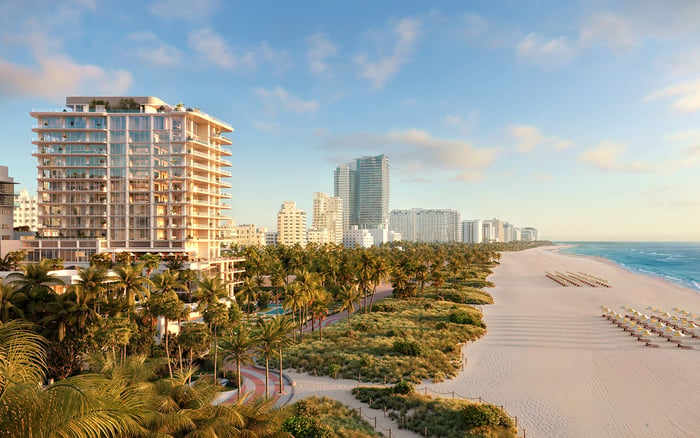
For ultra-high-net-worth buyers in South Florida, the decision between a Miami-beach penthouse and a Palm-beach estate is less about prestige and more about operating style: service, governance, privacy, land, and how much control you want to keep in your own hands. This editorial breaks down the real tradeoffs, from HOA economics and due diligence to wellness-driven amenities and the emerging “lock-and-leave” logic that’s reshaping trophy demand.
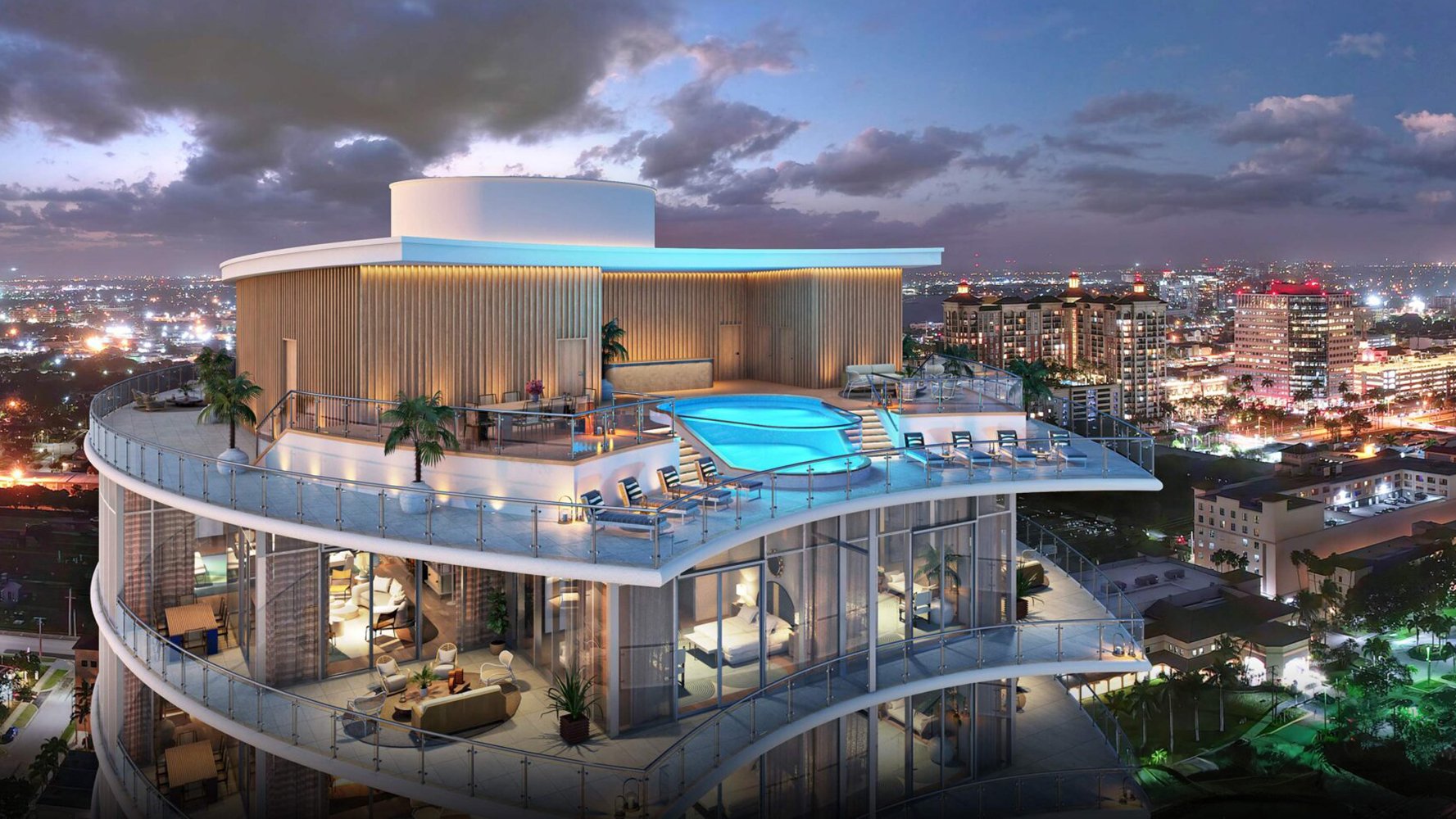
In South Florida’s ultra-luxury market, “penthouse or estate” is rarely decided by square footage alone. It is a decision about operating style.
A penthouse implies top-floor elevation, cinematic views, and the quiet confidence of a home that feels finished on day one. A Palm Beach oceanfront estate signals land, separation, and the freedom to shape finishes, improvements, and house rules without waiting for a board vote.
Both can be trophies. Both can work as long-term holds within a multi-home strategy where luxury real estate supports preservation, diversification, and daily life. The deciding variable is usually more discreet: which decisions do you want to outsource, and which ones do you insist on owning?
A penthouse is generally understood as a luxury residence on the top floor of a building. In practice, the term captures a stack of premiums that often arrive together: unobstructed views, increased privacy (no one above you), and outdoor space that reads as a terrace rather than a balcony.
That premium is not only aesthetic. It is functional. Top-floor homes can feel calmer, brighter, and more separated from the building’s daily motion. When the arrival experience is exceptional and the service and amenity program are truly first class, a penthouse can behave less like a condo and more like a private home with institutional support.
This is why the best Miami Beach penthouses are often discussed as turnkey residences with hospitality-grade operations. When the operations layer is excellent, the home stays “ready” in a way that is difficult to replicate with a standalone property.
Miami Beach penthouse living shines when the building delivers what private homes struggle to match at the same level of consistency: staffing, maintained shared spaces, and an amenity ecosystem that expands the residence.
In that context, a penthouse becomes a platform. You wake up above the city, train downstairs, host without reconfiguring your entire property, and leave without managing a complex shutdown sequence.
For buyers drawn to this model, Miami Beach’s newer inventory is increasingly aligned with global expectations. Consider the quiet magnetism of Five Park Miami Beach, where top-of-building living is prized not only for skyline and water views, but for the promise of a highly managed daily experience.
Nearby, Shore Club Private Collections Miami Beach reflects a related idea: at the highest tier, vertical living needs cultural gravity. The address should feel like a destination, not simply a collection of units.
This is also where wellness-forward amenities matter. Demand has been shaped by buyers who want fitness, spa sensibilities, outdoor space, and privacy built into the building’s offering. The modern penthouse is not just about interiors; it is about the life the building enables.
If a penthouse functions like an operating system, a Palm Beach estate can feel like a sovereign state.
The appeal is direct: land, privacy, and control. Single-family ownership carries a different kind of upside because you hold the structure and the land beneath it. Equally important is autonomy. There is no association setting renovation windows, regulating use, or defining the standards of shared spaces.
That autonomy can be priceless when the home is meant to operate as a true family compound, a collecting environment for art and automobiles, or a sanctuary calibrated to personal rituals. For some buyers, privacy is not a feature. It is the product.
But sovereignty is operational, not theoretical. Estates require management. Landscaping, staffing, security systems, major repairs, and the ongoing cadence of decisions become the owner’s responsibility, either directly or through hired teams.
In short, an estate can feel more private and more personal. It can also feel like running a small enterprise.
At the ultra-high end, cost is rarely the issue. Predictability is.
With condos, ownership costs are often dominated by HOA or common charges. Those fees can rise over time and may be supplemented by special assessments tied to major building projects. This is not a flaw; it is simply the condominium model. You are buying into shared infrastructure, and shared infrastructure carries a shared balance sheet.
Public listings in other global trophy markets illustrate how large the operating line can become. One example: the Sotheby’s listing for the penthouse at 111 West 57th Street in Manhattan shows monthly common charges of $18,669. South Florida buildings vary widely, but the point is universal: operating costs can be significant even when the residence is the best in the building.
A private estate shifts the equation. You may avoid HOA governance over the structure, but maintenance and capital projects become owner-managed. The cost line can be less standardized, and major repairs can arrive in concentrated bursts. Some buyers prefer this because they control timing, scope, and vendors. Others prefer the condo model’s scheduled predictability, even when the fees are substantial.
A clean way to evaluate the tradeoff is to separate fixed recurring costs from variable, owner-managed costs. Penthouses often win on convenience and predictability. Estates often win on control and the ability to allocate spend exactly as you choose.
Penthouses can deliver privacy, but they do not deliver full independence.
A defining reality of condo ownership is reliance on the building and HOA for rules, maintenance standards, and shared decision-making. Even the most refined penthouse is part of a collective ecosystem, with decisions ranging from lobby renovations to reserve contributions to policies that shape daily life.
Due diligence, therefore, is not only financial. It is a lifestyle audit. A common starting point is reviewing the HOA budget, reserve funding, and assessment history to understand how the building plans for its future. Buyers who treat this lightly can feel surprised later, not necessarily because the building is mismanaged, but because expectations were never aligned with the governance model.
For buyers who want Miami Beach but prefer a brand-forward, service-heavy environment, The Ritz-Carlton Residences® Miami Beach is a useful reference for what “managed living” is intended to feel like at the top end.
At the trophy level, liquidity is often psychological. The rare thing attracts attention, and attention supports pricing.
In New York, contract roundups and deal coverage repeatedly spotlight penthouses and supertall trophy condos as headline moments. Nationally, maps of the most expensive U.S. home sales show how coastal, global-gateway markets dominate the very top. These are not just transactions; they are signals.
Global context matters, too. Dubai recorded 500 residential transactions above $10 million in 2025 totaling about $9.05B, with year-over-year growth cited in both deal count and total value. Even for a South Florida buyer, that volume reinforces a broader point: ultra-prime demand is increasingly international, and buyers compare lifestyles across cities.
Within that frame, a true penthouse behaves like a scarcity asset. An estate can be scarce as well, especially when it combines land, location, and privacy. The distinction is that penthouse scarcity is often easier for the market to recognize quickly. There is typically only one true top floor.
Use these questions to clarify which asset type fits your actual life.
First, define your mode. If your South Florida home is a second home designed for effortless arrivals and departures, penthouse living can be the more elegant solution. If it is meant to be a family anchor with privacy and permanence, a Palm Beach estate may align more naturally.
Second, define your tolerance for governance. If you prefer controlled standards, shared staffing, and professional management, a condo can feel like a relief. If you want to shape every detail, including when and how capital improvements occur, a single-family estate will likely feel more coherent.
Third, define your wellness and social habits. If you want the building to extend your life with wellness amenities and shared spaces that feel curated, a well-executed Miami Beach address can be compelling. For a design-forward, hospitality-anchored concept of oceanfront living, Setai Residences Miami Beach is a useful reference point for how a branded, serviced environment can elevate daily rhythm.
Finally, define your exit plan. Even if resale is not top of mind, you are always buying into a future market. Scarcity, clarity, and global comparability tend to support liquidity, whether that scarcity is “the top floor” or “the right parcel.”
What qualifies as a penthouse?
Generally, it is a luxury unit on the top floor of a building, often marketed with premium finishes and private outdoor space.
Why do penthouses usually cost more than lower floors?
They commonly command a premium for views, privacy, and larger terraces or outdoor areas.
Is a penthouse as private as a single-family estate?
It can be very private, but it still shares a building and is subject to association rules.
Are HOA fees always a disadvantage?
Not necessarily. They can represent professional operations and maintained shared infrastructure, but they can rise and may include special assessments.
What condo documents should a buyer review first?
Start with the HOA budget, reserve funding, and recent assessment history to understand future fee risk.
Can ultra-luxury condo operating costs be significant?
Yes. Public listings in trophy markets show that monthly common charges can be substantial even at the very top.
What is the biggest advantage of an estate in Palm Beach?
Land, privacy, and autonomy, including control over the structure without HOA governance.
What is the biggest operational burden of an estate?
Owner-managed maintenance and capital projects, which can be less predictable than a condo’s scheduled fee structure.
Are penthouses good “scarcity assets”?
Often, yes, because there is typically only one true top-floor residence, and trophy markets frequently spotlight them.
How should I choose between Miami Beach and Palm Beach?
Choose Miami Beach for convenience and lock-and-leave operations, and Palm Beach for privacy, land, and control.
Explore South Florida’s most rarefied residences with MILLION Luxury.
If branded residences are on your mind — as a home or as an allocation — we would be glad to share what we are seeing, privately.
Begin a quiet conversation