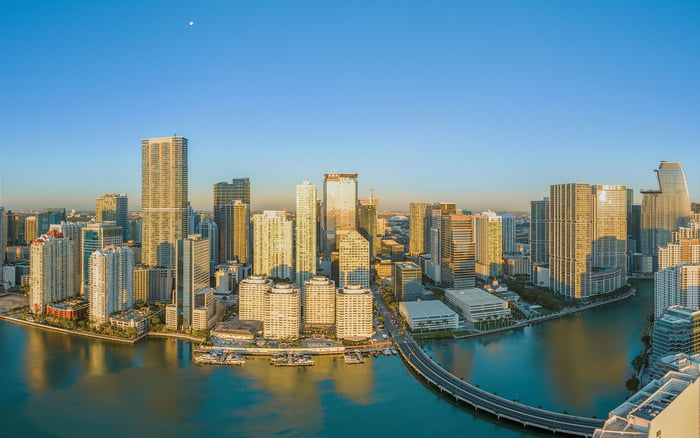
South Florida enters 2026 with ultra-luxury momentum that is broad-based but not uniform: $10M-plus closings remain frequent, Miami Beach condo pricing is pressing higher on a per-square-foot basis, and trophy transactions are resetting expectations without necessarily rewriting everyday comps. For buyers and sellers operating at the top of the market, the story is less about a single headline sale and more about liquidity, supply, and the persistent pull of branded, service-forward living.
South Florida’s high end enters 2026 with a trait that matters more than headlines: repeatable liquidity. Miami-Dade recorded 361 residential sales at $10M-plus in 2025, the second-highest year on record after 2021. That is effectively one $10M-plus closing per day, roughly double 2020’s pace. For trophy-market participants, this is the signal. It indicates that capital can be placed in the region, enjoyed as a lifestyle asset, and later exited with credible options.
The strength is not confined to the topmost tier. In December 2025, Miami-Dade total home sales rose 5.9% year-over-year to 1,869 transactions. In that same month, single-family sales over $1M increased to 233, up 12% from 208, while condo sales over $1M reached 167, up 2.45%. The market is active across product types, but the intensity differs by category.
For ultra-premium buyers and sellers, the 2026 takeaway is straightforward: pricing power concentrates where scarcity is structural, lifestyle value is measurable, and the ownership experience meets a global standard.
Some transactions quickly become part of local real estate lore. In 2025, a $120M sale at 26 Star Island Drive in Miami Beach set a Miami-Dade residential record, surpassing the prior $107M record set in 2022, as widely reported. Even when they are not usable comps for typical listings, these trades still matter.
Trophy deals raise the room temperature. They shape what sellers believe is possible, what buyers begin to treat as normal, and how quickly serious bidders decide to act when a truly singular property appears. Yet even in Miami Beach, where waterfront scarcity and brand value can produce extraordinary outcomes, most negotiations still come back to fundamentals: view corridors, privacy, condition, and the real set of alternatives.
For buyers, record sales function less as a price map and more as a timing cue. They often arrive alongside rising confidence and a willingness to pay for certainty, discretion, and irreplaceability.
For luxury condo buyers, price per square foot is the metric with the most discipline behind it. In Q3 2025, Miami Beach luxury condos posted a median sale price of about $2.0M, up 8.1% year-over-year, while median $/SF reached $1,292, up 15.1%. In South Beach, luxury condo $/SF was reported up roughly 37% year-over-year, from $1,123 to $1,538.
This matters because $/SF is where the market assigns premiums to the elements that cannot be replicated: direct beach access, frontage, orientation, and amenity quality. It is also where buyers separate “high price” from “high value.” In 2026, buyers prioritizing operational ease, privacy, and hotel-caliber arrival experiences often gravitate toward branded or hospitality-adjacent living such as Casa Cipriani Miami Beach, or established luxury benchmarks like Setai Residences Miami Beach.
Running parallel is a preference for residential calm within a resort setting. For those who want understated scale, ownership simplicity, and a more intimate building feel, boutique oceanfront product can read as the antidote to high-density glamour, a theme that aligns naturally with projects like 57 Ocean Miami Beach.
At the top of the single-family-homes segment, South Florida is increasingly defined by compound logic: privacy, water access, and the ability to host across generations. A widely covered example comes from Coconut Grove, where Larry Page purchased the “Banyan Ridge” waterfront compound for $101.5M and later acquired a second nearby waterfront mansion for about $72M, totaling roughly $173M-plus.
The significance is not only the price. It is the strategy. Ultra-wealthy buyers often want adjacency without cohabitation: separate structures, separate staff circulation, and the flexibility to accommodate extended family, security protocols, and long-stay guests. This fits a broader demand driver highlighted in industry reporting: multigenerational living, with roughly 1 in 5 U.S. home purchases made to live with relatives beyond the immediate family.
In 2026, the single-family checklist becomes more practical and more exacting. Can the home support long seasonal stays, remote work, and full-service entertaining without feeling like a hotel? Can it provide true separation and still feel cohesive? When the answer is yes, buyers pay for a frictionless lifestyle, not just the address.
South Florida’s luxury market now operates as a global meeting point for lifestyle, capital, and jurisdictional diversification. Florida’s international-buyer profile reported that international residential purchases rose about 50% in dollar volume to roughly $10.4B (Aug 2024 to Jul 2025 versus the prior period). The Miami–Fort Lauderdale–West Palm Beach area accounted for about 45% of Florida’s international buyers.
Origin mix influences liquidity and negotiation behavior. By dollar volume, top origins included Canada (about $1.9B), Colombia (about $925M), Brazil (about $762M), Argentina (about $627M), and Mexico (about $489M). Payment method is equally decisive: roughly 60% of international buyers paid all cash, and about 67% were “Type A,” meaning their primary residence remains abroad.
For sellers, that profile typically means fewer contingencies at the top and a buyer pool that is often less rate-sensitive. For buyers, it means competition can arrive quickly and cleanly, especially for assets with unmistakable uniqueness: beachfront orientation, iconic design, or gated privacy.
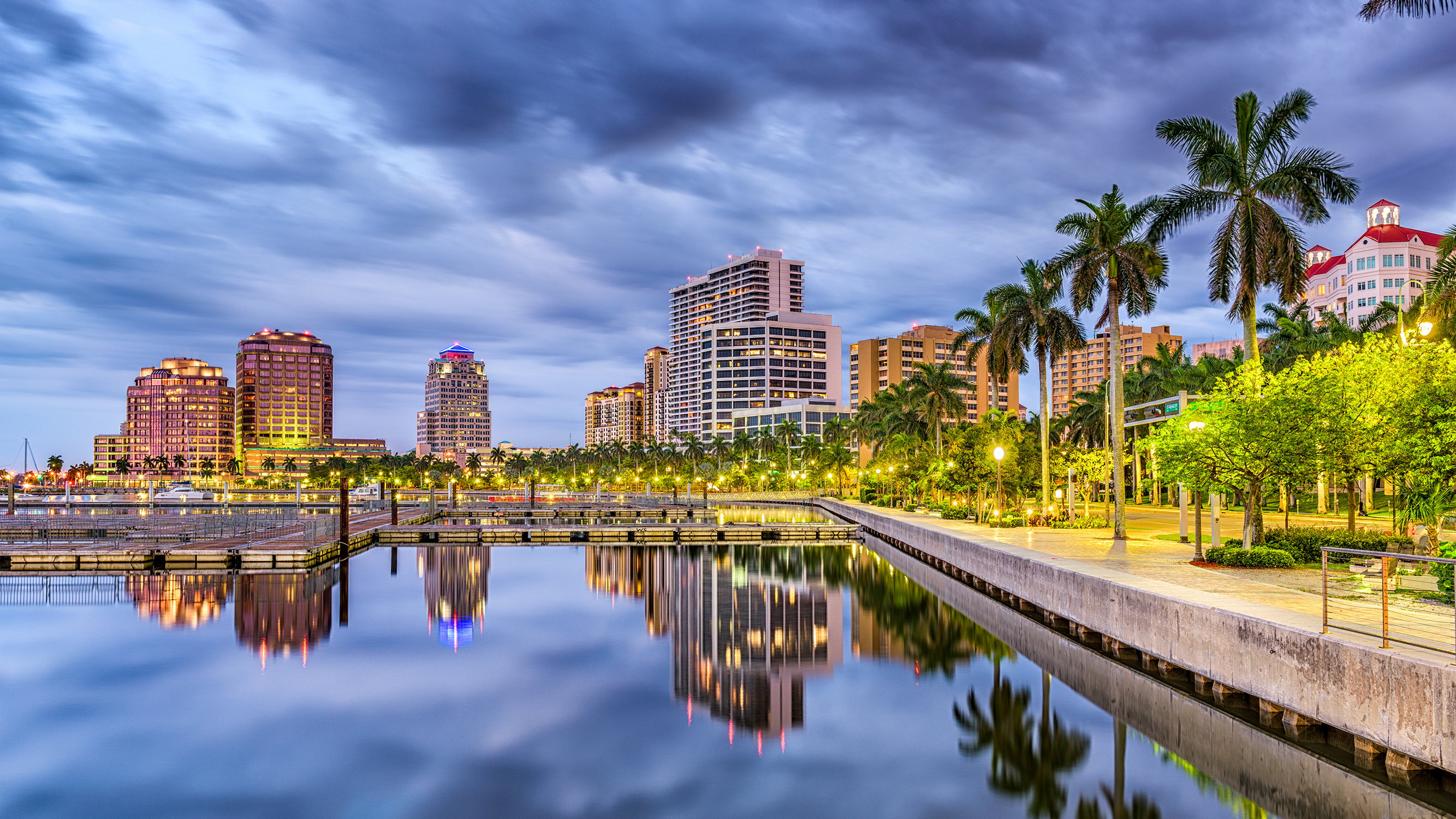
Palm Beach continues to run on a distinct tempo, shaped by social cachet and architectural scarcity. A market forecast cited about 94 homes for sale with a reported midpoint asking price around $18M, underscoring how quickly “supply” becomes “availability” at the top.
At the trophy edge, ultra-premium listings help define the ceiling. A prominent Palm Beach listing at 800 S County Road, “Casa del Ensueños,” was marketed at $175M, with coverage noting its Addison Mizner design and 1920s-era provenance. These offerings trade less on typical metrics and more on legacy value, land, and pedigree.
In 2026, Palm Beach still reads as a long-term identity purchase, while Miami-Dade can feel more like a cosmopolitan portfolio of lifestyles, from beachfront and bayfront to vertical, service-forward living.
Southeast Florida forecasts point to a constructive market, with important differences by product type. Single-family months’ supply is projected to tighten from 5.7 at end-2025 to 4.9 at end-2026 and 4.2 at end-2027. Single-family median prices are projected to rise about 2.8% in 2026 and 3.5% in 2027, while single-family sales volume is projected to increase about 4.9% in 2026 and 5.4% in 2027.
Condo and townhome dynamics look different in the same forecasts. Months’ supply is projected to ease from 12.9 at end-2025 to 11.6 at end-2026 and 9.6 at end-2027, while condo/townhome sales are projected to decline about 5.3% in 2026 and then be roughly flat (+0.2%) in 2027.
Two practical implications follow. First, the best single-family inventory may feel tighter than broader “balanced market” headlines suggest. Second, condos can offer selection, but only if buyers separate truly prime product from the merely expensive.
Mortgage rates matter at the margin, but the high end increasingly trades on other drivers: cash positioning, cross-border allocation, and lifestyle certainty. Forecasts anticipate average mortgage rates easing to about 5.8% by end-2026 and 5.7% by end-2027, yet in many ultra-luxury deals, speed and certainty still set the terms.
A defining feature of South Florida’s luxury evolution is the normalization of service as part of the asset. Buyers who once defaulted to estates for privacy are also choosing vertical residences for operational ease: staffed arrivals, curated amenities, and a predictable ownership experience.
In Miami Beach, this preference shows up in demand for premium, hospitality-aligned living, including The Ritz-Carlton Residences® Miami Beach, where the brand promise serves as shorthand for standards and staffing.
Downtown, the conversation shifts to skyline identity and long-horizon planning. Public project information describes Waldorf Astoria Residences Downtown Miami as a planned 100-story, 360-residence branded tower with delivery targeted for mid-2028. For certain buyers, that timeline is an advantage. It supports deliberate planning, balance-sheet timing, and coordination with broader family and business calendars.
In 2026, “best” increasingly means best-run. The properties that hold value are often the ones that quietly remove friction through predictable service, thoughtful privacy, and maintenance that feels inevitable.
Is the $10M-plus market still active in Miami-Dade? Yes. Miami-Dade recorded 361 residential sales at $10M-plus in 2025, one of the strongest years on record.
Do record sales like Star Island reset pricing for everyone? They often reset expectations and urgency, but they are not always direct comps for typical luxury inventory.
What is the key Miami Beach condo metric to track? Price per square foot. In Q3 2025, Miami Beach luxury condos were reported at a $1,292 median $/SF.
How did South Beach luxury condo $/SF change year-over-year? It was reported up about 37% year-over-year, from $1,123 to $1,538 in Q3 2025.
Are $1M-plus sales still growing in Miami-Dade? In December 2025, single-family sales over $1M rose 12% year-over-year and condo sales over $1M rose 2.45%.
What is driving demand for larger single-family estates? Privacy and flexible use, including multigenerational living, which has been cited as a meaningful luxury driver.
How important are international buyers to South Florida? They are significant. The Miami–Fort Lauderdale–West Palm Beach area accounted for about 45% of Florida’s international buyers in the latest profile.
Are international luxury buyers typically financing? Many are not. Florida’s international-buyer profile reported roughly 60% paid all cash.
What is the top-of-market ceiling entering 2026? At the extremes, listings and trades have reached $120M in Miami-Dade sales, with active asking prices reported as high as $200M.
What should buyers watch most closely in 2026–2027? Inventory quality and months’ supply, especially as Southeast Florida forecasts suggest tightening conditions for single-family homes.
For confidential guidance on sourcing and evaluating South Florida’s rarest inventory, connect with MILLION Luxury.
If branded residences are on your mind — as a home or as an allocation — we would be glad to share what we are seeing, privately.
Begin a quiet conversation