In South Florida, ultra-luxury buyers increasingly choose between two distinct definitions of “the good life”: the full-service, hospitality-led condo and the private, land-forward single-family estate. This editorial breaks down how amenities, wellness, staffing, security, and long-term ownership realities shape that decision in Miami-beach and Palm-beach markets.
South Florida’s highest tier is no longer judged purely by size. At the top of the market, “luxury” has moved from the idea of owning more space to the reality of living inside a managed experience. Programming, staffing, wellness, and carefully run amenities now sit alongside the traditional benchmarks of view corridors, finishes, and frontage. National coverage has framed this shift as an “amenities arms race,” where ultra-prime apartments and condos compete as much on the way life is supported as on the way a residence looks.
That framing matters because South Florida is, in practical terms, a condo ecosystem. Much of the coastline is defined by towers that can deliver frictionless daily living: controlled arrivals, discreet staffing, and a home that stays stable while you are traveling. For many buyers, the most valuable feature is not a floor plan. It is the ability to leave for Aspen or the Riviera and return to a residence that has been professionally maintained, secured, and quietly managed.
At the same time, the counter-proposition is equally powerful. A private, land-forward, single-family estate offers separation, autonomy, and the freedom to tailor every decision without shared governance. The right choice is rarely about what is “better.” It is about which form of luxury aligns with how you live, how often you are away, and how much you want to personally direct the day-to-day operations of your home.
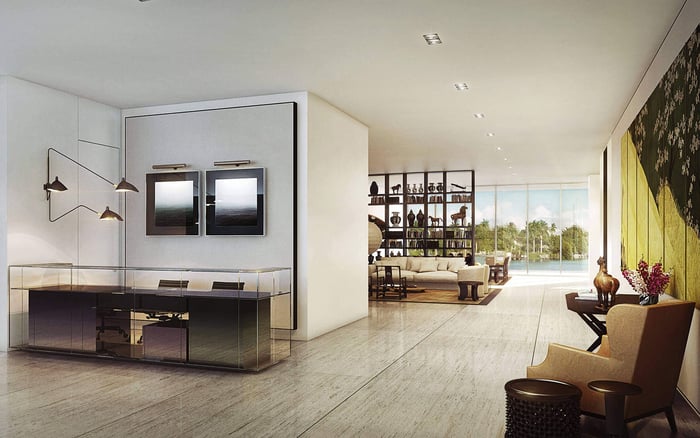
Condo design trends heading into 2026 place unusual weight on the threshold: the arrival sequence, the lobby, and the transition from public space to private life. The language used by designers and operators is telling: discretion, circulation clarity, and “quiet confidence.” These are not aesthetic slogans. They are operational priorities.
In an ultra-luxury condo, privacy is not only a function of walls and glazing. It is produced through choreography: who sees you, when you are seen, and how quickly you can move from car to residence. Staffing, access control, elevator programming, and physical layout work together to reduce exposure and avoid unnecessary contact. When executed well, the building functions like a private club with a calm front-of-house and a disciplined back-of-house.
That is one reason branded and hospitality-adjacent projects resonate with buyers who want a refined entrance without the visibility that can come with a single-family driveway. The experience is designed to be intentional, consistent, and repeatable.
Single-family homes offer a different kind of control. Your arrival is yours to design, but it is also yours to secure and maintain. A private gate, a long drive, and layered landscaping can be extraordinarily effective. The outcome, however, depends on your team, your protocols, and the rigor with which you maintain those standards.
Industry observers increasingly describe new condo development as “full-service,” with buildings offering hotel-style programming and amenities to compete for affluent buyers. In practice, “full-service” tends to mean three things: staffing depth, amenity variety, and a resident experience built to feel consistent year-round.
At the highest tier, the promise is not simply a pool and a gym. It is the feeling that life runs smoothly without you coordinating vendors or supervising maintenance. Packages are handled, common areas are maintained to a standard, arrivals are managed, and requests are routed through a team trained for discretion. The buyer is purchasing time, predictability, and a low-friction routine as much as they are purchasing a residence.
This is why many buyers consider projects such as The Ritz-Carlton Residences® Miami Beach when they want ownership paired with a service-led lifestyle. The value proposition is explicit: concierge and team support, plus curated experiences as part of living there.
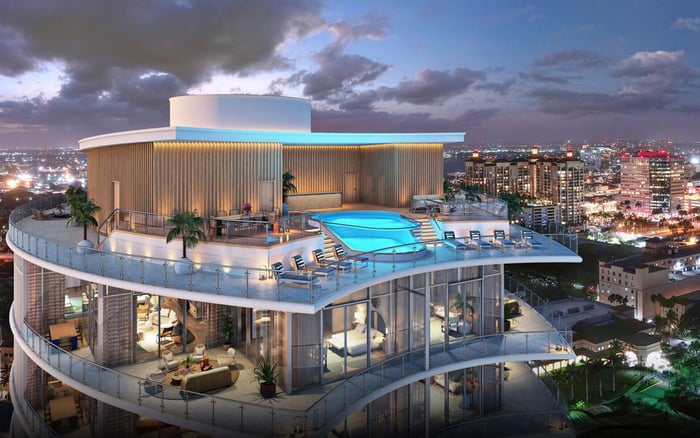
The “club model” is another differentiator. Five Park Miami Beach, for example, has marketed a large, multi-zone amenity program including its Canopy Club concept at the top of the tower and a separate amenity deck. In buyer terms, this is not just more amenities. It is more micro-environments, which means more ways to live privately inside a shared building.
The estate parallel exists, but it is built differently. Ultra-high-net-worth households often replicate convenience by hiring private concierge and lifestyle management. The difference is integration: condos bake those functions into the property; estates require you to assemble, supervise, and continuously manage the ecosystem.
Wellness has become a core luxury promise across the market, reinforced by trend coverage showing measurable growth in wellness-related features within luxury listings. In South Florida, where climate and outdoor living are already part of the appeal, wellness is increasingly packaged as programming as much as infrastructure.
In other words, the market has moved beyond “a nice gym” as a differentiator. Buyers now expect well-considered environments for recovery and routine, supported by operations that make it easy to use them consistently. Consider how 57 Ocean Miami Beach positions amenities with an explicit wellness category, including curated wellness experiences. The most important takeaway is not any single feature. It is the framing: wellness is treated as a resident service, closer to a lifestyle subscription than a room with equipment.
An oceanfront estate can be a perfect wellness canvas. You can create exactly what you want, from a cold plunge to a Pilates studio to a meditation garden, tuned to your preferences and your schedule. The trade-off is operational. The “residential resort” feel depends on staffing, maintenance, and consistency, especially when you travel.
A condo can deliver a ready-made routine supported by an on-site team. An estate can deliver total customization and total privacy. The decision often comes down to whether you value a turnkey wellness rhythm or a fully bespoke one that you direct.
Branded residences have grown as a segment because they blend real estate ownership with luxury brand and hospitality positioning. For many South Florida buyers, the brand is not about logos. It is shorthand for standards: staffing expectations, security posture, and a predictable level of service.
At the top of the condo market, predictability is a form of confidence. Buyers are often less interested in novelty than in repeatable performance: a building that operates quietly, protects privacy, and maintains a disciplined resident experience.
In boutique settings, exclusivity is frequently expressed through limited residence counts and controlled access. Fendi Château Residences Surfside is marketed as boutique and security-and-service-forward, illustrating how privacy can be delivered through staffing and controlled entry in a shared building.
This is an important nuance for the condo-versus-estate decision. Buyers sometimes assume a condo is inherently less private than a house. In reality, the most private condo experiences are engineered: fewer neighbors per floor, secured elevators, staff trained to be discreet, and an arrival sequence designed to minimize exposure.
An estate typically wins on separation, especially when land, setbacks, and landscaping create real distance from public space. But well-run condos can reduce day-to-day visibility in ways that surprise first-time buyers, particularly those who value controlled access over physical acreage.
The most sophisticated comparison is not “condo fees are high” versus “houses are more work.” It is a balance sheet of recurring obligations and a decision about who holds responsibility.
Condo ownership typically includes HOA fees that fund shared services, building maintenance, and amenity operations. You trade recurring dues for a reduced personal maintenance burden and for scale efficiencies: a single team maintaining a large property and its systems. In exchange, you accept governance, rules, and the reality that shared decisions shape your environment, from budgets to building policies.
Single-family homes shift responsibility back to you. If you want a doorman-level reception, you hire it. If you want flawless landscaping year-round, you retain the crew. If you want a true lock-and-leave experience, you build an operations plan around security, storm prep, and vendor oversight. The home can be run to an extraordinary standard, but it requires leadership and continuity.
The decision often compresses into one question: do you want your home to run like a hotel, or do you want it to run like a private estate? Both can be perfected. Only one is designed to be effortless by default.
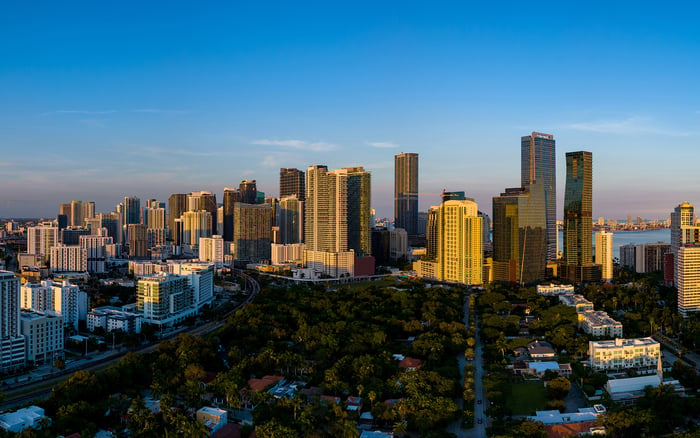
Within South Florida, the condo-versus-estate decision is also a geography decision. MILLION Luxury market commentary has framed Miami as a condo ecosystem, while Palm-beach is often associated with privacy and land-oriented appeal. Those identities influence everything from inventory mix to buyer expectations.
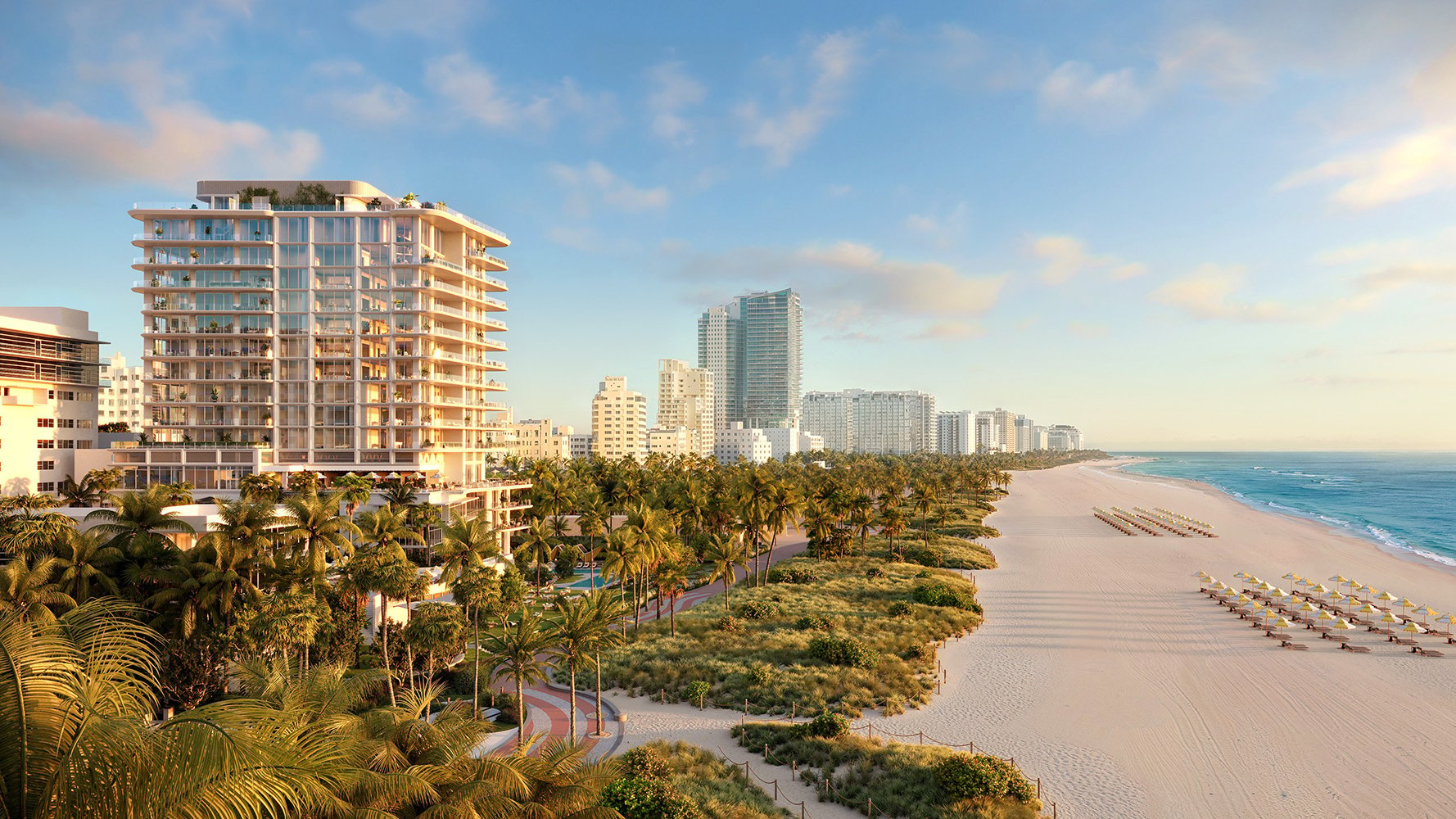
In Miami-beach, the vertical lifestyle is part of the cultural fabric. The premium you pay often buys proximity, views, and services delivered at scale. This is also where the “amenities arms race” is most visible, as new projects compete to offer the most complete environment, with multiple amenity zones and increasingly sophisticated staffing.
In Palm-beach, land, setbacks, and the feeling of separation can carry outsized value. Buyers who want autonomy, long driveways, and fewer points of interaction often find the estate model aligns more naturally with their priorities.
At the same budget level, the lived experience can diverge sharply. MILLION Luxury has highlighted comparisons that contrast what ultra-luxury money buys in a Miami penthouse versus a Palm Beach oceanfront estate, emphasizing density and service on one side, and land and privacy on the other.
This is why “condo versus estate” is rarely an abstract debate. It is a decision about how you want to move through your day, what you want handled for you, and how comfortable you are with either shared infrastructure or private operational responsibility.
Trend reporting for 2026 highlights increasing expectations for smart-home automation and eco-conscious features in luxury housing. In the condo context, this often appears as a blend of building-wide systems and in-residence technology: controlled access, advanced climate controls, and integrated service requests.
The advantage is not only the presence of technology. It is the operating model around it. In a professionally managed building, systems are maintained, protocols are standardized, and upgrades can be implemented without you running a vendor process for every component. For buyers who travel frequently, that operational continuity is often the real luxury.
In estates, the opportunity is broader and the burden is heavier. You can tailor the entire environment to your preferences, from automation choices to sustainability decisions, but you will also own the complexity of maintaining it. When something needs attention, it is your team, your schedule, and your oversight.
A useful way to think about “future-ready” is to separate what you want to customize from what you want to outsource. If you want absolute control over technology and sustainability choices, an estate provides the cleanest canvas. If you want systems to be maintained by a professional operator without daily involvement, the condo model can feel more resilient.
Most clients arrive thinking they are choosing a property type. In practice, they are choosing a lifestyle contract, with different forms of friction, different obligations, and different degrees of control.
Choose a luxury condo if you value:
Choose an oceanfront estate if you value:
There is also a hybrid reality that sophisticated buyers often pursue. Some keep both: a service-led pied-à-terre for travel-heavy seasons and a private estate for longer stretches. The point is not to chase an idealized category. It is to be honest about management. What do you enjoy directing, and what do you want handled for you?
If you prefer decisions made once and executed repeatedly, a top-tier condo can be the clearest fit. If you prefer the freedom to change, rebuild, and refine without shared governance, an estate will often feel more aligned. The best answer is the one that matches your habits, not your assumptions.
Is a condo ever as private as an estate? In the right building, privacy can be engineered through controlled access, staffing, and discreet arrival design. An estate typically wins on separation and land, but not always on day-to-day exposure.
Do HOA dues replace hiring staff? They can replace much of the baseline operational load, including maintenance and shared services. Estates can match the service level, but you will usually assemble and oversee a private team.
Is wellness programming really becoming standard? Yes. Luxury trends increasingly treat wellness as a core expectation, and some South Florida projects market curated wellness experiences as part of resident life.
Which is better for frequent travelers? Condos often excel for lock-and-leave convenience because staffing and building systems continue operating while you are away. Estates can work beautifully with the right team, but require more active oversight.
For discreet, buyer-aligned guidance on South Florida’s highest-performing residences, connect with MILLION Luxury.
If branded residences are on your mind — as a home or as an allocation — we would be glad to share what we are seeing, privately.
Begin a quiet conversation