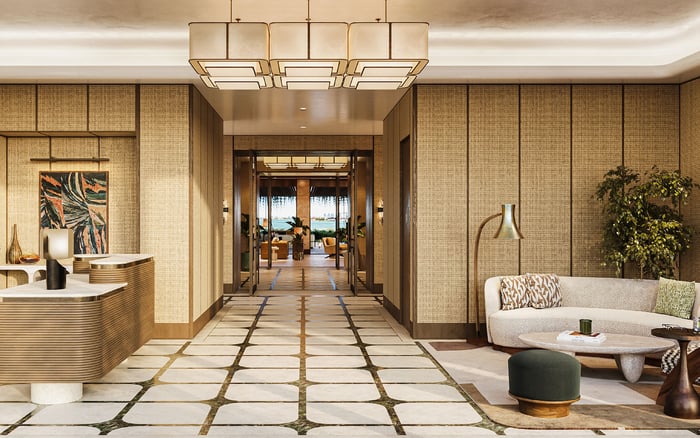
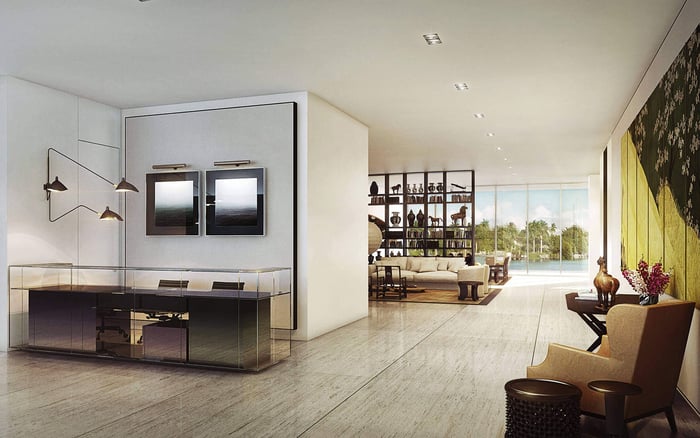
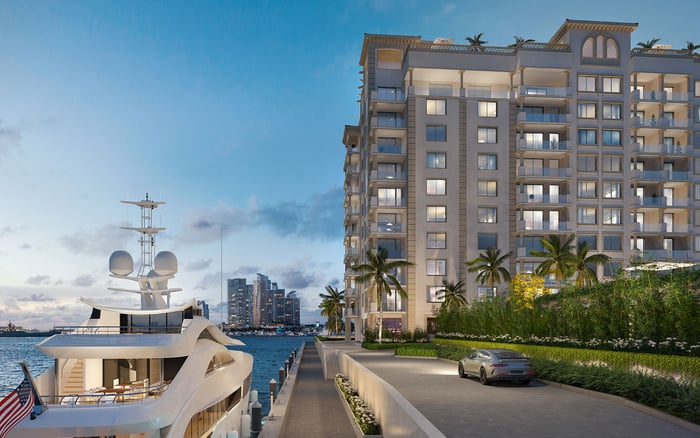
From aging parents to long-stay guests, today’s South Florida estates are being rethought as quietly flexible compounds. A true in-law suite or ADU is not a glorified guest room. It is a self-contained residence within the residence, designed for privacy, autonomy, and longevity. This MILLION Luxury guide focuses on the features that matter most at the top of the market: independent access, acoustic separation, hotel-level baths, intelligent climate control, and universal design details that feel intentional, not clinical.
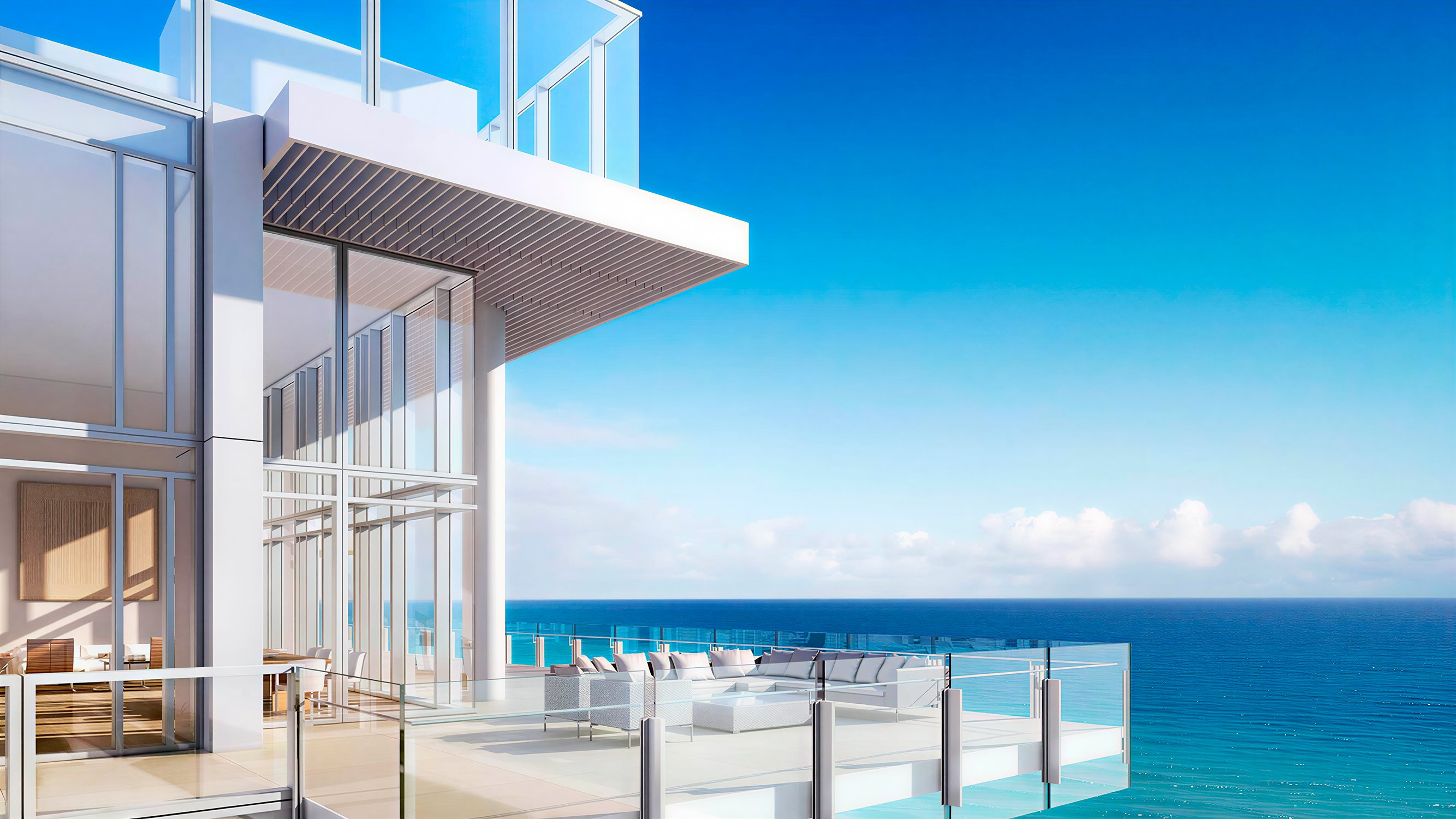
South Florida has long been a market of extended stays: family visits that turn into seasons, business partners who want a reliable landing, and parents who value proximity without giving up independence. In that context, the in-law suite has shifted from a practical extra to a quiet signal of considered ownership. The strongest examples read as a small, beautifully resolved residence within the main home, or as an ADU-style annex that operates with real autonomy.
For buyers assessing a purchase or planning a renovation, the question is not whether a “guest suite” exists. The question is whether the space can function as a dignified, self-sufficient home day after day, with the same ease and intention as the primary residence.
A true in-law suite is defined by self-containment. At minimum, that means a bedroom, a dedicated bathroom, and a kitchen or kitchenette that supports independent daily living. A coffee bar alone rarely meets the spirit of the category if the resident must rely on the main kitchen for basic meals.
Access is the second threshold. A private exterior entry is widely treated as essential because it protects autonomy and reduces friction inside a multigenerational household. At the luxury level, the entry should feel designed, not improvised: a discreet path, a gracious door, and hardware that reads as main-residence quality rather than service access.
When comparing properties, look for practical cues of independence: room for a sitting area (not just a bed), circulation that does not route through the home’s busiest zones, and a kitchenette that includes a sink, refrigeration, storage, and cooking capability appropriate to the intended length of stay.
In multigenerational living, privacy is not solved by a single door. The most livable suites are planned so the resident can keep their own rhythm without colliding with the household’s peak traffic.
Start with acoustics. Sound control is often underestimated in beautiful homes, yet it is one of the clearest drivers of long-term comfort. Sound-rated assemblies, insulated walls and ceilings, and solid-core doors can materially reduce noise transfer between the suite and the main residence. That matters both ways: early risers, late-night television, and entertaining schedules can coexist without constant negotiation.
Then consider spillover space. Even a modest patio, porch, or outdoor seating pocket gives the resident a sense of ownership over their environment. In South Florida’s climate, that outdoor threshold can be the moment a suite stops feeling like a spare room and starts reading as a private residence.
In condominium settings, privacy is often achieved through zoning within the footprint: a secondary wing, a den configured as a sitting area, and a clear separation between sleeping and living functions. For Miami-beach buyers, the goal is a complete daily cadence: arrive, unwind, dine, sleep, and work without depending on the main household.
Long-stay comfort is less about square footage than control. Separate or zoned HVAC is commonly recommended so residents can set their own temperature without affecting the rest of the home. In practice, the suite should not feel “downstream” from the primary system, with inconsistent airflow or limited thermostat authority.
For a premium finish, prioritize underfoot comfort in the bath. Radiant or heated floors are often positioned as a high-end upgrade, delivering even, draft-free warmth. They are also frequently discussed for energy-efficiency advantages because they heat from the floor up and can reduce temperature stratification. In a well-executed suite, it reads as a quiet assurance that the home was planned for real living.
Natural light does similar work. Larger windows, glazed doors, and skylights where feasible can make compact suites feel more generous and more hospitable. In luxury terms, daylight becomes part of the plan: morning light in the sitting area, soft light in circulation, and privacy where the bedroom demands it.
Many buyers plan suites for parents who are healthy today but may need easier circulation tomorrow. Universal design focuses on removing barriers early: no-step entry, wider doorways and halls, and reachable controls. The objective is longevity that feels intentional rather than clinical.
Bathrooms are the highest-impact zone. Curbless showers, reinforced walls for future grab bars, and slip-resistant flooring can be integrated without compromising aesthetics. The best suites treat these elements as part of a spa-grade composition with excellent lighting, refined stone selections, and fixtures that mirror the main residence.
A simple test holds: would you feel proud to host a discerning guest here for an extended stay, and would the room still work if mobility needs evolve.
A dedicated kitchenette or full kitchen is a defining feature of an in-law suite because it enables autonomy and reduces reliance on the main home. The goal is rarely a chef’s kitchen. It is a compact, complete setup that supports breakfast, light cooking, and the rituals that make independence feel natural.
Look for the fundamentals done well: sink, refrigeration, cooking capability appropriate to building rules and venting realities, and storage that prevents clutter from taking over. If the suite is used seasonally, pantry-style cabinetry and integrated appliances help keep the space visually calm.
In high-end condominiums, “suite living” is often solved through a well-appointed secondary kitchen zone plus a sitting room that makes room service, takeout, and casual hosting feel effortless. When exploring branded environments like Setai Residences Miami Beach, buyers can use the hotel-residence mindset as a benchmark: privacy, service-adjacent convenience, and spaces that support longer stays without friction.
Nothing exposes whether a suite was planned as a residence more quickly than storage. For extended stays, storage should be specified like a primary home: closets plus linen and utility capacity. Without it, the suite becomes visually busy, and overflow inevitably migrates into the main house.
Finish continuity matters just as much. Consistency of flooring, millwork, fixtures, and hardware prevents the suite from reading like a conversion and supports resale appeal. In a luxury property, the suite should feel like a deliberate wing of the estate, not an afterthought.
That discipline applies across property types. In a single-family home, it can show up as matching woodwork and stone selections. In a condominium, it may show up in refined lighting, high-quality doors, and a layout that treats the suite as a residence within a residence.
Smart-home features can reduce friction for older residents and make suites easier to use independently. Voice control, smart lighting, and simplified interfaces can support daily movement through the space without confusing panels or overly complex switch banks.
Safety technology is often considered valuable for seniors in secondary suites, including video doorbells, smart locks, and emergency-response integrations. The guiding principle is discretion. The best systems increase confidence without making the resident feel monitored.
For buyers who travel, these features also provide peace of mind when the suite is occupied by family, staff, or long-stay guests.
An in-law suite is commonly discussed as a value-add that can increase buyer appeal, though the impact depends on layout quality and local demand. In South Florida’s top tiers, execution is the differentiator. Independence, privacy, and finish continuity are what elevate a “nice extra room” into a meaningful lifestyle asset.
Costs vary widely depending on whether you are converting existing space, adding an addition, or building detached, and the finish level is a major variable. Because cost guidance varies by source and market, budgeting typically requires local contractor bids and a careful review of permitting and zoning constraints.
If rental flexibility is part of the plan, understand that separate entrances and kitchen facilities may trigger additional code, fire separation, parking, and zoning requirements depending on jurisdiction. Even when rental use is not the intent, those rules can shape what is feasible.
When extended family shares an estate, legal and estate planning can prevent disputes later. Ownership structure, expense-sharing, and inheritance planning become more important when a home functions as a multigenerational compound.
Across coastal markets, privacy and resilience often sit alongside design on the decision list. In Miami-beach, buyers frequently prioritize layouts that separate sleeping from living and provide a calm arrival sequence. In certain beachfront and branded settings, the suite concept is less about an add-on and more about how the residence is zoned.
If your lifestyle leans toward pied-a-terre living with a resident parent or long-stay guest, look for plans where the “second bedroom” can behave like a mini-apartment with its own sitting area and strong acoustic separation. Hospitality-adjacent residences can be a helpful reference for seamless privacy, as seen in environments like Shore Club Private Collections Miami Beach.
For buyers who prefer a more intimate, club-like atmosphere, Casa Cipriani Miami Beach offers a reference for discreet luxury and the idea that lived experience can matter as much as the floor plan. Even outside branded projects, the lesson holds: the suite should feel curated, not merely functional.
In Surfside, calm and privacy are part of the lifestyle itself. If you are building or renovating, use natural light and outdoor spillover to create that same quiet cadence. In Bal-harbour, where discretion is prized, suites with true acoustic and visual separation often read as the most luxurious, even without being the largest.
Inland, Coconut-grove is a reminder that multigenerational living is also about daily ease. A suite with its own entrance and patio can transform household dynamics by giving everyone room to move at their own pace.
For oceanfront buyers who want a distinctly residential feel with strong separation between private and shared moments, 57 Ocean Miami Beach is a useful reference point for how coastal living can still prioritize intimacy and autonomy within the residence.
What makes an in-law suite “real” versus a guest room? A true suite is typically self-contained, with a bedroom, a dedicated bathroom, and a kitchen or kitchenette that supports independent daily living.
Is a separate entrance necessary? It is widely considered a core feature because it preserves independence and reduces day-to-day friction.
What is the single most overlooked luxury feature? Acoustic control. Soundproofing and solid-core doors can dramatically improve comfort on both sides of the wall.
Do I need a full kitchen or will a kitchenette work? For extended stays, a well-designed kitchenette with a sink, refrigeration, cooking capability, and storage often delivers the right level of autonomy.
How do I make the suite comfortable for different ages? Prioritize universal design fundamentals like no-step entry, wider doorways, and reachable controls so the space stays usable as needs change.
What bathroom details support aging-in-place discreetly? Curbless showers, reinforced walls for future grab bars, and slip-resistant flooring can be integrated into a spa-like design.
Why is zoned HVAC important in a suite? Separate or zoned temperature control lets the resident set comfort without affecting the main household.
Are heated floors worth it? They are often positioned as a premium comfort upgrade, especially in bathrooms, because they provide even warmth underfoot.
Will adding a suite increase resale value? It is commonly discussed as a value-add that can increase buyer appeal, but outcomes depend on layout quality and local demand.
What planning issues should I address before building an ADU-style suite? Confirm permitting and zoning constraints, and consider legal and estate planning if the home will be shared by extended family.
Explore South Florida residences designed for elevated everyday living with MILLION Luxury.
If branded residences are on your mind — as a home or as an allocation — we would be glad to share what we are seeing, privately.
Begin a quiet conversation