Coconut Grove’s most coveted condos are increasingly defined by amenity philosophy: design-led resort living versus an embedded, club-grade wellness ecosystem. Park Grove, designed by OMA/Rem Koolhaas with gardens by Enzo Enea, set an early benchmark for architecture-forward, hospitality-style services in the neighborhood. THE WELL Coconut Grove arrives as a New Project with a more structured wellness framework, including a dedicated wellness club and recovery modalities, though it remains Pre-construction and subject to approvals and final programming.
Coconut Grove has long held a particular kind of South Florida prestige: lush privacy, a walkable village rhythm, and waterfront access that still feels personal. What is changing is the definition of “luxury” inside the neighborhood’s most sought-after condominiums. The next premium is less about raw square footage and more about how a residence supports the way you actually live: recovery, sleep quality, social cadence, and the ease of moving from home to marina to dinner without logistical friction.
Two projects highlight this shift with unusual clarity. One is a delivered icon with an architecture-first identity and a resort-style amenity stack. The other arrives as a wellness-forward New Project, putting a health club concept at the center of the residential experience. Together, they sharpen the buyer’s question that matters in 2026: are you purchasing a beautiful home with excellent services, or a lifestyle system designed to keep you operating at your personal best?
Most luxury buyers say they want “great amenities.” In practice, they are underwriting a philosophy.
The first is hospitality-driven living: a building that behaves like a discreet private resort. It prioritizes concierge support, entertaining infrastructure, and a social layer that can be present when you want it, and invisible when you do not.
The second is wellness-integrated living: a building that treats health as infrastructure. It layers a programmatic wellness club, recovery modalities, and residence-level design considerations into the core promise, not as an afterthought.
In Coconut Grove, the contrast between Park Grove Coconut Grove and The Well Coconut Grove offers a clean lens on that divide.
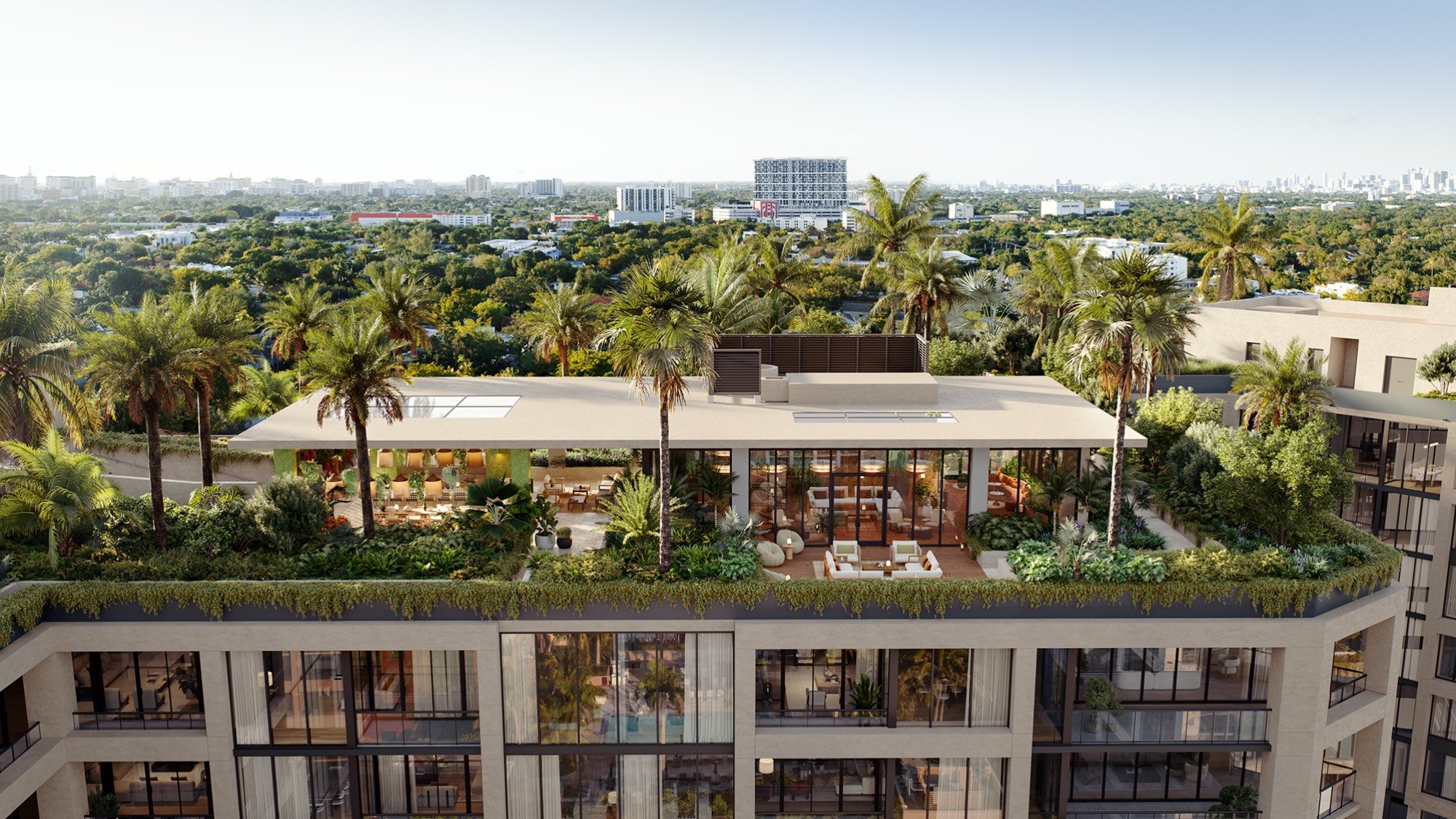
Park Grove is a three-tower condominium development designed by OMA/Rem Koolhaas, with a sculptural façade that reads as intentionally architectural rather than simply glass-and-height. For design-literate buyers, that distinction carries durability. You are not only buying a view corridor; you are buying into a recognizable work of contemporary architecture.
Equally important, Park Grove’s landscape master plan was designed by Enzo Enea and positioned as a signature garden environment. In daily life, this shows up in quiet ways: how the property feels early in the morning, how the paths invite a walk before calls, and whether the arrival experience signals calm rather than spectacle.
The amenity stack is developer-branded and notably broad, with multiple pools and extensive indoor and outdoor lifestyle spaces. It also includes a dedicated spa and wellness component, framed more as luxury hospitality than clinical care. For many households, that balance is the point: enough wellness to support routine, without making wellness the building’s entire identity.
Park Grove also leans into private entertaining. A dedicated theater or screening-room-style amenity supports a certain kind of hosting, as do wine-focused amenities such as a wine room or cellar and adjacent gathering space. For buyers who actually entertain, these are not throwaway perks. They reduce the pressure to overbuild inside the residence itself.
Service is a central part of the value proposition. Park Grove markets a hospitality-style lifestyle layer that includes 24-hour concierge and valet, plus a Nautical Concierge concept tied to Coconut Grove’s boating and sailing culture. Practically, this is a bet on time: high-touch coordination can be as valuable as finishes.
Finally, Park Grove’s lifestyle story is reinforced by Tigertail + Mary, the on-site or associated restaurant concept connected to the development and led by chef Michael Schwartz. In luxury communities, an embedded dining anchor can meaningfully shift behavior, keeping residents local more often rather than defaulting to Brickell or Miami Beach.
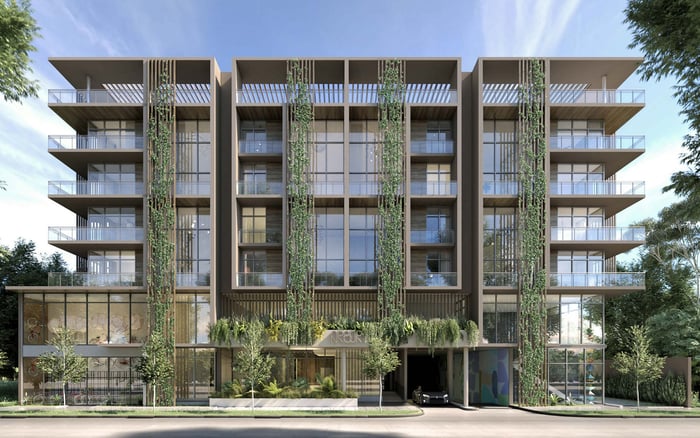
THE WELL Coconut Grove arrives with a different thesis: wellness is not a side amenity, it is the organizing principle. Publicly shared materials describe a wellness-focused condominium at 2855 Tigertail Avenue, planned as an eight-story building with 194 residences. The project is designed by Arquitectonica with interiors by Meyer Davis, placing it firmly within contemporary Miami design.
The concept is positioned around a structured framework with pillars spanning nutrition and food, movement, mind and spirit, body and skin care, and lifestyle and community. That structure matters because it signals program, not just a spa menu. For buyers who value consistency, a defined methodology can be more persuasive than a beautiful but generic amenity deck.
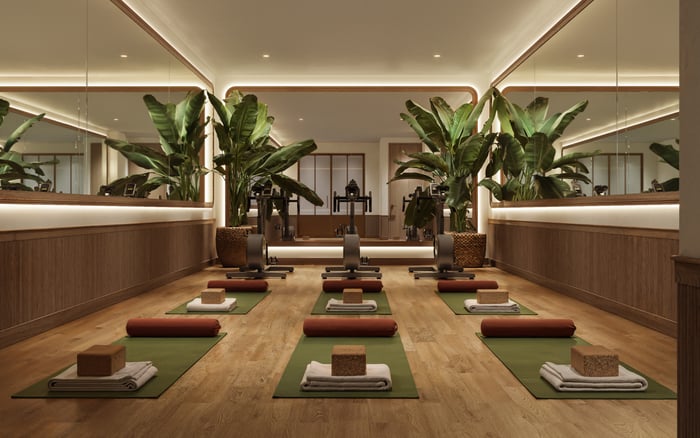
Program scale has been reported as meaningful: approximately 13,000 square feet of dedicated wellness club space and roughly 40,000 square feet of rooftop outdoor amenities. Disclosures have included a bathhouse concept with thermal and recovery features, hyperbaric chamber(s), and “Crystal Cave” relaxation lounges.
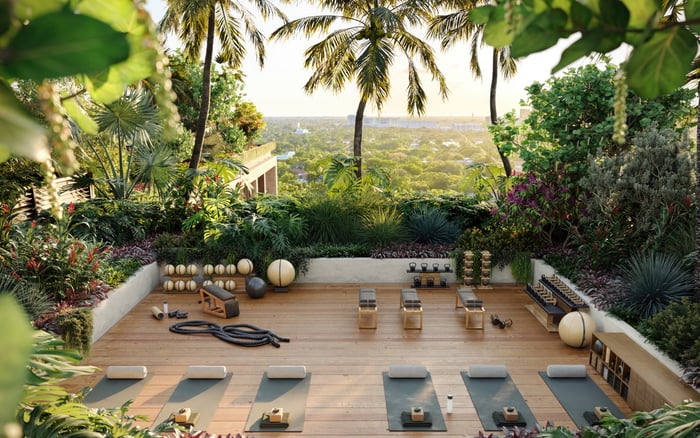
On the rooftop, plans have been described to include pools and cabanas alongside fitness-forward outdoor programming, including a “Fitness Forest” and a pickleball court. Importantly, the narrative extends beyond shared spaces. Design interventions cited in reporting include circadian lighting and health-oriented air-quality considerations, pointing to a building that aims to influence how you sleep and recover, not only how you socialize.
For the right buyer, that promise is compelling: the building is not simply offering wellness; it is attempting to remove friction from being well.
Because The Well Coconut Grove has been discussed as a pre-construction launch in Miami’s development pipeline, the most sophisticated approach is to separate philosophy from deliverables. A local report in January 2025 stated that the eight-story Center Grove tower on the site lacked final approval and permits at that time. That does not negate the concept, but it should shape expectations around timing, final programming, and the exact form of the amenity experience.
In other words, buy the direction and underwrite the details.
For pre-construction buyers, the right questions are not only aesthetic. They are contractual and operational: what is the developer’s obligation to deliver specific modalities, what membership structures are contemplated for the wellness club, and how the building plans to manage privacy if wellness programming introduces non-resident traffic. Even when a project is designed as resident-forward, operating decisions can meaningfully reshape lived experience.
Meanwhile, Park Grove represents the opposite posture: a known environment with established amenity rhythms and a proven service identity. If you value certainty and prefer to avoid delivery variability, that stability can carry its own premium.
Some buyers cross-shop Coconut Grove against Miami Beach for a simple reason: they want walkability and culture, but they also want discretion.
Miami Beach’s newest residential offerings often emphasize skyline views, branded hospitality, and a more overt social scene. If your lifestyle leans in that direction, it is useful to compare how amenity intent shifts across neighborhoods. For example, Five Park Miami Beach speaks to the city-forward, design-centric energy shaping South Beach’s evolution, while Shore Club Private Collections Miami Beach represents a different strand of Miami Beach luxury: legacy location paired with a private-collection sensibility.
Coconut Grove, by contrast, typically prioritizes day-to-day calm. The value proposition is less about being inside the scene and more about having access to it, with an easier return to quiet. That distinction tends to sharpen for primary residents, young families, and buyers who travel frequently and want their home base to feel restorative.
A recent luxury market summary described Coconut Grove and Coral Gables as the fastest-moving submarket among those analyzed, citing low days-on-market and inventory. Even without debating every metric, the takeaway is straightforward: when product is scarce and demand is decisive, buyers pay a premium for fit. They move when a building aligns with how they live.
In that environment, the practical choice is to decide which “luxury system” suits you.
Choose a design-led resort model if you want architecture, gardens, service, and entertaining infrastructure that supports both privacy and hosting without turning your home into a wellness destination.
Choose a wellness-led model if you want built-in recovery and programming, and you prefer a building that actively reinforces routines that can be difficult to protect in a high-demand life.
A sophisticated purchase in Park Grove Coconut Grove or The Well Coconut Grove is less about comparing amenity counts and more about testing day-to-day usefulness.
Start with flow. How quickly can you move from residence to pool, to gym, to car, to dinner, without crossing public zones? Then evaluate privacy: are wellness spaces designed for quiet use, or do they function as social stages? Look at service as an operating system. A 24-hour concierge and valet are only as strong as the culture behind them.
Finally, measure how the building supports your habits. If wellness is central, ask which modalities are core versus optional, and how they will be staffed and maintained over time. If entertaining is central, prioritize screening rooms, wine storage, and dining adjacency. Your residence should reduce decisions, not add them.
What is the defining difference between Park Grove and THE WELL? Park Grove centers on design, gardens, resort amenities, and concierge service; THE WELL centers on a structured wellness framework with dedicated recovery programming.
Who designed Park Grove? Park Grove was designed by OMA/Rem Koolhaas.
What is notable about Park Grove’s landscaping? The landscape master plan was designed by Enzo Enea and is positioned as a signature garden environment.
Does Park Grove include wellness amenities? Yes. It includes a dedicated spa and wellness component positioned in a luxury, hospitality style.
What lifestyle services does Park Grove emphasize? It markets hospitality-style services including 24-hour concierge and valet, plus a Nautical Concierge concept.
Where is THE WELL Coconut Grove planned? Public materials describe it at 2855 Tigertail Avenue in Coconut Grove.
Who are THE WELL Coconut Grove’s designers? It is designed by Arquitectonica with interiors by Meyer Davis.
What wellness features have been publicly described for THE WELL? Reported features include a bathhouse with thermal and recovery elements, hyperbaric chamber(s), and Crystal Cave relaxation lounges.
Is THE WELL Coconut Grove already delivered? It has been described as pre-construction, and a January 2025 report stated the site lacked final approval and permits at that time.
Why do buyers look at Coconut Grove instead of Miami Beach? Many prefer the Grove’s quieter, residential rhythm while still retaining access to dining, marinas, and the broader Miami lifestyle.
For tailored guidance across Coconut Grove, Miami Beach, and beyond, explore MILLION Luxury.
If branded residences are on your mind — as a home or as an allocation — we would be glad to share what we are seeing, privately.
Begin a quiet conversation