A buyer-oriented underwriting guide to evaluating Jade Ocean Sunny Isles Beach and The Estates at Acqualina Sunny Isles through the practical lens of chef-ready kitchens, service circulation, catering logistics, and private dining utility.
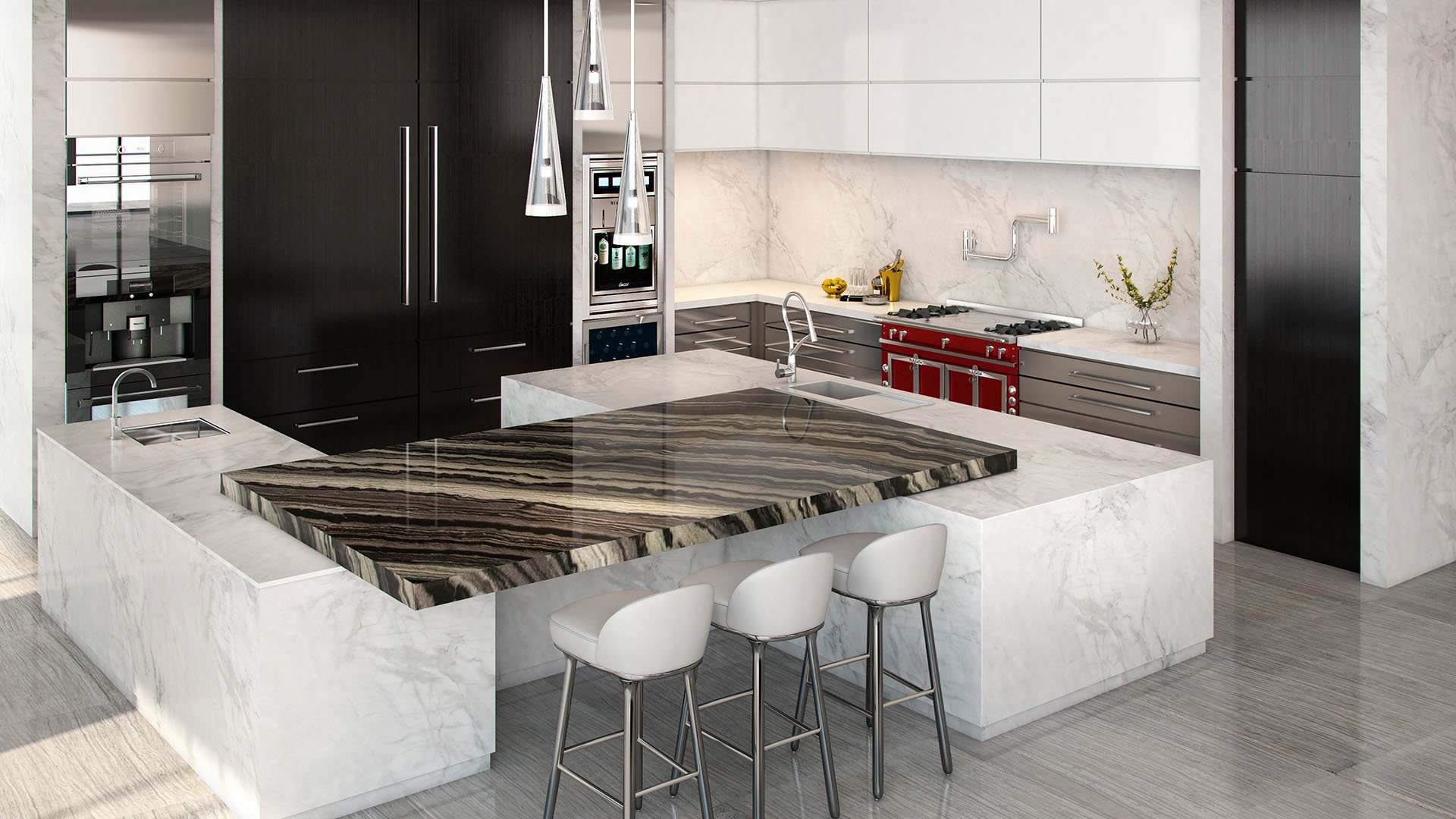
For a certain South Florida buyer, the kitchen is no longer a decorative room attached to an oceanfront residence. It is a performance space. The private dining room is not simply a formal table setting. It is the stage for family rituals, hosted weekends, chef-led dinners, philanthropic gatherings, and the quiet choreography of service that separates a polished residence from a merely expensive one.
That is the proper frame for comparing Jade Ocean Sunny Isles Beach and The Estates at Acqualina Sunny Isles. This is not about which tower photographs better at sunset. It is about which residence best supports how an owner actually entertains, staffs, stores, serves, and lives. In a market where many buyers already expect views, security, wellness, and resort-caliber amenities, the culinary layer becomes a more precise underwriting tool.
For buyers using search categories such as Sunny Isles, Oceanfront, Investment, and Second-home, the most useful exercise is to move beyond surface finishes and study the systems that are harder to see: circulation, preparation zones, service separation, acoustic control, storage volume, appliance logic, and guest comfort before and after dinner.
A chef-ready kitchen is not defined only by premium appliances or stone slabs. Those may matter, but they are also the easiest elements to see and the easiest to overvalue. The better question is whether the kitchen can support a professional rhythm without disrupting the household.
Start with the work triangle, then go further. A primary kitchen should allow multiple people to move through preparation, cooking, plating, and cleanup without collision. If a residence is intended for regular entertaining, confirm whether there is enough landing space near ovens, refrigeration, sinks, and serving points. A beautiful island becomes a liability if it forces staff, guests, and family members into the same narrow path.
Ventilation deserves particular attention in oceanfront condominiums. Buyers should understand how cooking odors, heat, and humidity are managed, especially when a dinner menu involves searing, roasting, or extended preparation. The same scrutiny applies to refrigeration capacity, pantry depth, wine storage, small-appliance concealment, and durable surfaces that can withstand repetition without looking tired.
At Jade Ocean Sunny Isles Beach, the underwriting lens should be practical: how does the individual residence support daily family cooking versus occasional catered use? At The Estates at Acqualina Sunny Isles, the question is similar but often framed around a more expansive ownership lifestyle: how well does the culinary infrastructure support extended hosting, visiting family, and a higher-touch service model? The answer depends on the specific floor plan, condition, and fit-out, not the name alone.
The most revealing part of a residence is often the route a tray takes from elevator to table. If that route crosses the main arrival moment, cuts through a living room conversation, or forces staff to stage in a visible corner, the home may feel less composed in actual use.
Buyers should map the catering flow as if an event were happening that evening. Where does food arrive? Where can it be unpacked? Is there a secondary preparation zone or a discreet staging area? Can staff move between kitchen, dining, terrace, and service areas without repeatedly interrupting guests? Are trash, glassware, linens, and floral arrangements handled gracefully before and after the event?
In many luxury purchases, buyers are seduced by the ocean view from the dining table and postpone the service questions until after closing. That sequence is backwards. The more spectacular the room, the more important it becomes to protect its atmosphere. Service doors, elevator proximity, corridor widths, powder room placement, and back-of-house storage all affect whether entertaining feels effortless or improvised.
This is especially important for a Second-home owner who may entertain in concentrated bursts during winter, holidays, or school breaks. A home used only part of the year still needs to perform at full capacity when family and guests arrive. Underwriting should test whether the residence can scale from breakfast for two to a seated dinner without feeling strained.
Private dining rooms can create tremendous value when they are proportioned and located correctly. They can also become underused showrooms if the plan does not support modern living. The key is to determine whether the room is formal in a productive way or formal in a fragile way.
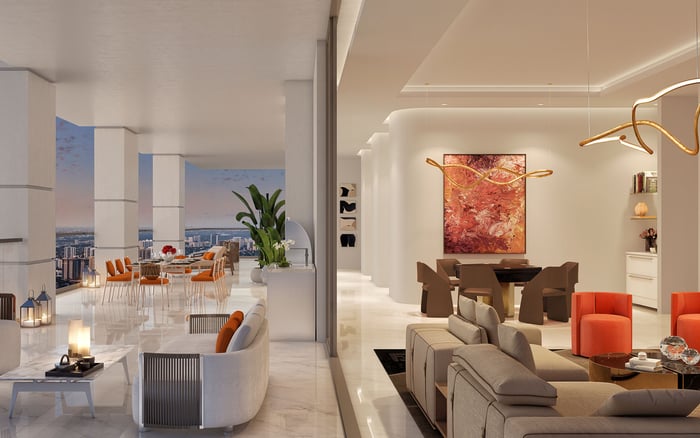
A strong private dining room should have enough separation to create occasion, but not so much isolation that guests feel removed from the energy of the home. It should have access to service without feeling like a corridor. It should allow art, lighting, and table scale to work together. It should also manage acoustics, since hard surfaces, glass, and open-plan volumes can make a dinner feel louder than expected.
For Jade Ocean Sunny Isles Beach, a buyer may prioritize a dining arrangement that integrates with light, water views, and a more fluid social plan. For The Estates at Acqualina Sunny Isles, a buyer may place greater emphasis on ceremonial dining, entertaining volume, and the possibility of a more layered hospitality experience. Neither priority is inherently better. The right choice depends on how often the owner hosts, who attends, and whether service is casual, professional, or a mix of both.
Flexibility matters. A dining room that can shift from family meals to chef tastings, holiday dinners, children’s celebrations, and intimate business hosting will usually have more enduring utility than a room designed for a single scenario.
Culinary infrastructure can influence resale, but it must be legible. Future buyers need to understand why the residence works within minutes of entering it. If the kitchen is visually impressive but operationally awkward, the premium may be harder to defend. If the dining room is dramatic but undersized, circulation-heavy, or disconnected from service, the experience may not translate into value.
An Investment-minded buyer should separate replaceable finishes from embedded planning. Cabinet fronts, fixtures, and appliances can be updated. Structural circulation, elevator relationships, room proportions, and ceiling conditions are harder to change. That distinction is central when comparing two high-end Sunny Isles options.
Also consider staff friendliness. A residence that makes it easy for a chef, housekeeper, assistant, or event team to work discreetly often lives better and shows better. In the ultra-premium segment, operational grace is part of the architecture, even when it is not the first thing a guest notices.
Before choosing between Jade Ocean Sunny Isles Beach and The Estates at Acqualina Sunny Isles, walk the residence as both owner and host. Open the pantry. Stand where a chef would plate. Trace the path from entry to kitchen. Sit at the dining table and listen. Imagine twelve guests, then four, then only the family. Ask where flowers go, where luggage waits, where catering equipment disappears, and where morning coffee happens when the home is full.
The best choice will not necessarily be the residence with the most theatrical kitchen or the most formal dining room. It will be the one where beauty, privacy, service, and daily comfort align. In Sunny Isles, that alignment is the quiet luxury worth underwriting.
What is the main difference to evaluate between these two Sunny Isles options? Focus on how each residence supports real entertaining, especially kitchen performance, catering circulation, and dining room usability.
Should buyers prioritize appliances or layout first? Layout should come first because circulation, staging, and storage are harder to correct than appliance specifications.
Why does catering flow matter in a luxury condo? It determines whether service feels discreet and composed or whether guests are constantly crossing paths with staff and deliveries.
Is a formal private dining room always better for resale? Not always. A flexible, well-proportioned dining area may outperform a formal room that feels disconnected or rarely used.
What should a chef-ready kitchen include? Buyers should look for strong ventilation, durable surfaces, ample refrigeration, pantry depth, and generous plating space.
How should a Second-home buyer think about culinary spaces? The residence should perform during peak family visits and hosted periods, even if it is used seasonally.
What is easy to renovate after purchase? Finishes, fixtures, and some appliances are usually more adaptable than room proportions, plumbing locations, and service routes.
What is the biggest mistake during a showing? Many buyers admire the view and finishes but forget to test how food, staff, guests, and cleanup will actually move.
Does Oceanfront living change kitchen underwriting? Yes. Humidity, ventilation, terrace access, and entertaining patterns can make operational details more important.
What is the best way to shortlist comparable options for touring? Start with location fit, delivery status, and daily lifestyle priorities, then compare stacks and elevations to validate views and privacy.
To compare the best-fit options with clarity, connect with MILLION.
If branded residences are on your mind — as a home or as an allocation — we would be glad to share what we are seeing, privately.
Begin a quiet conversation