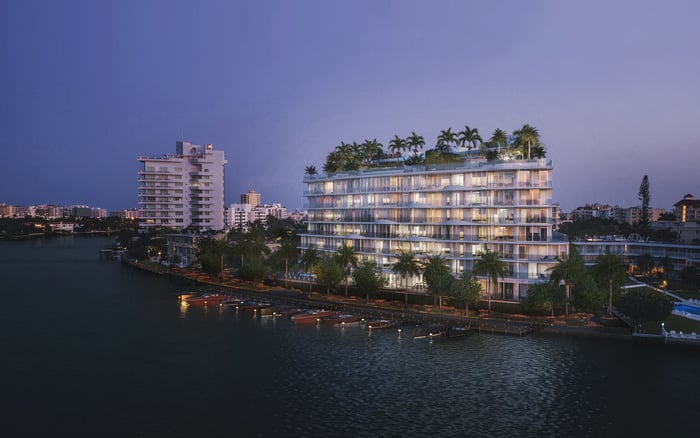
A discreet guide for Argentine and international buyers evaluating how mortgage interest strategy can shape liquidity, leverage, and luxury property decisions in Bal Harbour.

For a Buenos Aires buyer considering Bal Harbour, the financing conversation should begin well before a preferred residence is selected. At the high end, a mortgage is rarely just an affordability tool. It is a balance-sheet instrument, a liquidity decision, and, at times, a currency-risk conversation in a single structure.
That is especially true for international buyers whose assets, income, business interests, or family obligations may span jurisdictions. A cash purchase can feel elegant, but it can also concentrate capital in one illiquid asset. A mortgage can preserve optionality, but it introduces interest exposure, documentation requirements, and long-term planning questions. The right strategy depends less on the headline rate than on how the buyer intends to hold, use, and eventually transfer or sell the property.
Bal Harbour magnifies these decisions because the market is defined by scarcity, discretion, and trophy positioning. A residence at Rivage Bal Harbour, for example, may be evaluated not only as an oceanfront address, but as part of a broader family capital plan. In that context, the mortgage structure deserves the same attention as architecture, views, services, and privacy.
Buyers arriving from Buenos Aires often bring a sophisticated instinct for capital preservation. They may be accustomed to thinking across currencies, jurisdictions, and asset classes. For that reason, the question is not simply whether to finance, but how financing can protect flexibility.
A U.S. mortgage may allow a buyer to keep part of their capital available for business, family office needs, investment reserves, or future real estate opportunities. It may also reduce the pressure of converting or transferring a larger amount of capital at a single moment. For some, the psychological benefit is meaningful: they can secure the lifestyle asset without making the property the only major move in the portfolio.
Still, leverage is not automatically sophisticated. A high-end buyer should test the mortgage against several scenarios: a longer hold, a faster resale, changing income sources, a renovation or furnishing budget, family use patterns, and the possibility of refinancing later. The best mortgage interest strategy is the one that remains acceptable even when timing is imperfect.
At the luxury level, buyers typically compare three broad approaches: fixed-rate certainty, adjustable-rate flexibility, and interest-only payment design. Each can be sensible, but each serves a different owner profile.
A fixed-rate mortgage appeals to buyers who value predictability. It can be particularly useful when the residence is intended as a long-term family base, rather than a seasonal asset. The tradeoff is that the initial rate may not always be the lowest available option, and the buyer is paying for stability.
An adjustable-rate mortgage can suit a buyer with a defined time horizon or a high probability of refinancing, selling, or paying down principal. It may be attractive when the buyer wants flexibility rather than a decades-long rate commitment. The risk is that the future rate environment may not cooperate.
Interest-only structures can be useful when liquidity preservation is the dominant goal. They may reduce required payments during the initial period and allow capital to remain deployed elsewhere. But they should not be treated as a discount. Principal still matters, and the eventual payment profile must be understood in detail.
The practical point is simple: do not choose the lowest starting payment without modeling the full ownership period.
Bal Harbour is not a generic luxury market. Buyers are often motivated by privacy, beach access, building quality, security, service culture, and proximity to refined retail and dining. Those attributes can support a long hold, but they do not remove the need for a careful exit plan.
If a buyer expects to keep the residence for many years, fixed-rate discipline may create emotional and financial calm. If the buyer sees the residence as a five-year lifestyle chapter, a more flexible structure may be appropriate. If the property is one piece of a larger international portfolio, interest-only financing might help preserve liquidity for other obligations.
The specific building also matters. A buyer evaluating Oceana Bal Harbour may think differently from someone comparing nearby boutique or new-development options. The more unique the residence, the more the financing should be tailored to the owner’s intended use rather than a generic lending template.
In high-end real estate, liquidity is often undervalued because the focus naturally turns to finishes, terraces, views, and amenities. Yet liquidity is one of the great luxuries. It gives the owner freedom to move quickly, negotiate calmly, and absorb surprises without selling an asset at the wrong time.
For an Argentine buyer, this can be especially important when capital is moving between personal, business, and family channels. A mortgage may allow the buyer to avoid overcommitting cash to closing, while still securing a residence that fits the family’s Florida strategy.
This is where investment thinking becomes more nuanced. The property itself may be a lifestyle purchase, but the financing can still be investment-grade in its discipline. Buyers should understand prepayment options, reserve expectations, rate-reset mechanics, and the relationship between cash down payment and overall portfolio exposure.
The same logic applies just outside Bal Harbour. In Surfside, a buyer considering The Delmore Surfside may prefer a different financing posture than one buying a completed resale with immediate personal use. In Miami Beach, a residence such as The Perigon Miami Beach may invite a longer discussion about delivery timing, lifestyle goals, and future liquidity.
International buyers should expect the mortgage process to require organization. Lenders may ask for evidence of assets, income, liabilities, entity ownership, source of funds, and identification documents. For high-net-worth buyers, the key is not volume of paperwork, but clarity.
The cleanest borrowers usually prepare before they find the property. They align advisers, translate or summarize relevant financial materials when necessary, and decide whether the purchase will be held personally, through an entity, or in another structure. The ownership vehicle can affect lending terms, estate planning, tax review, and future transfer flexibility.
Discretion also matters. Luxury buyers often prefer to limit the number of parties reviewing sensitive materials. A coordinated advisory circle can make the process smoother, especially when legal, tax, banking, and real estate professionals are communicating before a contract is signed.
A mortgage should never be chosen in isolation. It should match the property type, building stage, closing timeline, and intended use. A pre-construction purchase, a new finished residence, and a resale condominium can each require different timing assumptions.
For Bal Harbour buyers, the first question is personal: will this be a primary base, a seasonal retreat, a family legacy residence, or a flexible asset? The second is financial: should the property absorb cash, preserve cash, or create a measured leverage position? The third is tactical: what interest structure leaves the buyer comfortable if rates, currency movements, or personal plans change?
The most refined answer is rarely the most aggressive one. It is the structure that lets the buyer own beautifully, sleep well, and retain control.
Should a Buenos Aires buyer finance a Bal Harbour purchase or pay cash? It depends on liquidity goals, ownership horizon, and the buyer’s broader balance sheet. Cash can simplify closing, while financing may preserve flexibility.
Is the lowest mortgage rate always the best choice? No. Payment stability, prepayment flexibility, reset risk, and the expected holding period can be more important than the initial quoted rate.
When does a fixed-rate mortgage make sense at the high end? It suits buyers who value certainty and expect to hold the residence for a long period. It can also reduce decision fatigue after closing.
Why would a luxury buyer consider an adjustable-rate mortgage? An adjustable structure may fit a buyer who expects to refinance, sell, or reduce principal before later rate changes become relevant.
Are interest-only mortgages appropriate for luxury buyers? They can be appropriate when liquidity preservation is the priority. The buyer should understand how payments change when principal repayment begins.
Should currency exposure influence the mortgage decision? Yes, especially when assets, income, or family commitments are spread across countries. Financing can be part of a broader currency and liquidity plan.
Does the building choice affect financing strategy? Yes. Delivery timing, resale profile, carrying costs, and intended use can all influence which mortgage structure feels most prudent.
What should buyers prepare before applying for financing? They should organize asset statements, income documentation, ownership records, identification materials, and adviser contacts before active negotiations.
Can a buyer refinance later if conditions improve? Often that is part of the plan, but it should not be assumed as the only exit. A strong strategy works even if refinancing takes longer than expected.
Who should be involved in the mortgage strategy discussion? The buyer’s lending, legal, tax, and real estate advisers should coordinate early. That alignment helps protect discretion and execution quality.
When you're ready to tour or underwrite the options, connect with MILLION.
If branded residences are on your mind — as a home or as an allocation — we would be glad to share what we are seeing, privately.
Begin a quiet conversation