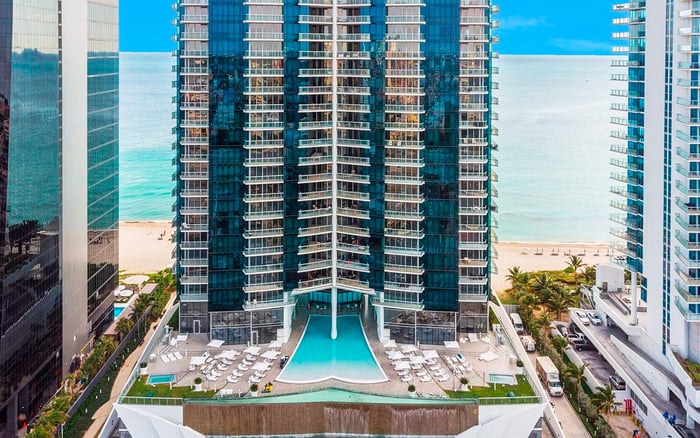
A discreet buyer guide for families evaluating Jade Ocean in Sunny Isles Beach, focused on parking rights, collector-car storage, valet operations, EV charging, storm exposure, and the condominium documents that should be reviewed before contract deadlines.

Jade Ocean Sunny Isles Beach sits within the oceanfront condominium lifestyle that defines this stretch of the coast. For family buyers, that setting is exactly why car-collection storage warrants early, careful diligence. A vertical oceanfront residence is not a suburban estate with a private garage, separate motor court, and unilateral homeowner control. It is a condominium environment where parking rights, storage practices, access, insurance, and daily operations are typically governed by building documents and procedures.
The key shift is conceptual. Do not ask only, “How many spaces come with the residence?” Ask what those spaces are, how they are controlled, who may use them, what vehicles they can accommodate, and whether a serious car collection can function there comfortably over time.
In portfolio shorthand, this is a Sunny Isles, oceanfront, resale, second-home, and investment question as much as a lifestyle question. A family buying for daily use, school runs, weekend entertaining, and occasional seasonal occupancy will use the garage differently than a single owner with one car.
Before submitting an offer, family buyers should clarify whether parking spaces tied to a specific residence are deeded, assigned, leased, valet-controlled, licensed, or treated as limited common elements. Those categories are not interchangeable. A deeded space may carry different transfer and financing implications than an assigned or association-controlled space. A valet-controlled arrangement may feel effortless day to day, but it also raises operational questions for rare, high-value, or low-clearance vehicles.
The diligence should be unit-specific. Multi-car households should confirm the exact number of spaces included with the residence under consideration, not rely on a general impression of what larger residences usually receive. If a family needs capacity for parents, older children, a nanny, a driver, or seasonal guests, the standard allocation may not be sufficient.
Buyers should also ask whether additional spaces can be purchased, leased, transferred, or licensed from another owner or from the association. Just as important, they should ask whether any such arrangement can be documented before closing and whether it survives a future resale.
For collectors, the central question is not simply whether the garage has room. It is whether the building can accommodate the actual vehicles. Oversized SUVs, low-front-splitter sports cars, specialty vehicles, and rarely driven exotics each create different concerns.
A serious checklist should include garage height limits, ramp angles, turning radii, tire stops, lift systems if any, and areas where a low car might scrape. The buyer should understand where the vehicle is parked, how it reaches that location, whether it can be self-parked, and whether the route requires valet handling.
Long-term storage is a separate issue. Some buildings may restrict non-operational vehicles, covered cars, accessories, or storage behavior that appears to convert a parking space into a private garage bay. Families with collector cars should ask whether battery tenders, trickle chargers, car covers, tire cradles, and similar preservation tools are permitted. Electric-vehicle owners should separately confirm whether charging exists, whether chargers are private or shared, and whether new charging equipment can be installed under building rules.
If any part of the parking experience involves valet, buyers should treat the valet operation as part of the asset. Key control, driver training, incident reporting, insurance coverage, and procedures for high-value cars all matter. A family should know who can request a vehicle, whether children or household staff may retrieve cars, and how the building verifies authority.
Damage responsibility should be addressed directly, not assumed. Ask who is financially responsible if a vehicle is damaged by valet handling, another resident, a leak, fire, theft, flooding, or mechanical parking equipment. The answer may involve association insurance, operator insurance, owner insurance, deductibles, exclusions, or dispute procedures. For a collection, vague reassurance is not enough.
The oceanfront address is part of the appeal, but it also creates garage questions that inland buyers may overlook. Salt air, humidity, corrosion, storm surge, and hurricane-related flooding can all affect how vehicles are stored and accessed. Families should request information on garage drainage, flood barriers, generator-backed systems, elevator access, and post-storm vehicle procedures.
This is especially important for owners who travel, use the residence seasonally, or keep cars parked for extended periods. A second-home buyer may need to know who monitors the vehicle, how the building communicates storm protocols, and whether access can be interrupted after severe weather. An investment-minded buyer should consider how parking limitations may affect future desirability for another multi-car household.
Luxury family living is logistical. School pickups, caregivers, drivers, visiting grandparents, contractors, tutors, and private events all place pressure on a building’s parking systems. Buyers should verify guest parking, visitor valet, contractor parking, and service-provider access before relying on assumptions.
The final review should include the condominium declaration, bylaws, house rules, parking amendments, insurance materials, and recent board minutes for parking-related restrictions or disputes. The objective is not to create friction. It is to move uncertainty to the correct side of the closing date. For a family with valuable cars, parking diligence should be completed before contract deadlines, not after the keys are in hand.
Is Jade Ocean a private-garage property? Jade Ocean is an oceanfront condominium, so buyers should not assume suburban-style private garage control. Parking is likely shaped by condominium documents, rules, and operations.
What is the first parking question a family buyer should ask? Ask whether the spaces are deeded, assigned, leased, valet-controlled, licensed, or limited common elements. That answer frames nearly every other parking issue.
Should buyers rely on a general parking allocation? No. Confirm the exact number of spaces included with the specific residence and whether any additional rights can be documented before closing.
Can a collector car be stored long term? Buyers should ask directly whether long-term vehicle storage is permitted and whether covers, chargers, tire cradles, or battery tenders are allowed.
What should low-clearance sports-car owners verify? Confirm ramp angles, height limits, turning radii, tire stops, and any areas where a front splitter could scrape during entry or parking.
Does valet service change the diligence? Yes. Valet introduces questions about key custody, driver training, authority to retrieve vehicles, incident reporting, and insurance coverage.
What should EV owners ask? Ask whether EV charging exists, whether it is private or shared, and whether new charging equipment can be installed under building rules.
Why does the oceanfront location matter for cars? Salt air, humidity, storm surge, and hurricane-related flooding can affect vehicle storage. Buyers should ask about drainage, barriers, and post-storm access.
Which documents should be reviewed? Review the declaration, bylaws, house rules, parking amendments, insurance materials, and recent board minutes for parking limits or disputes.
What is the best way to shortlist comparable options for touring? Start with location fit, delivery status, and daily lifestyle priorities, then compare stacks and elevations to validate views and privacy.
If you'd like a private walkthrough and a curated shortlist, connect with MILLION.
If branded residences are on your mind — as a home or as an allocation — we would be glad to share what we are seeing, privately.
Begin a quiet conversation